

 Travel Essentials
 Travel Essentials

A comprehensive guide to bikepacking in New Zealand, covering route selection, essential gear, transportation options, and regional highlights for cyclists of all abilities.
 Travel Essentials
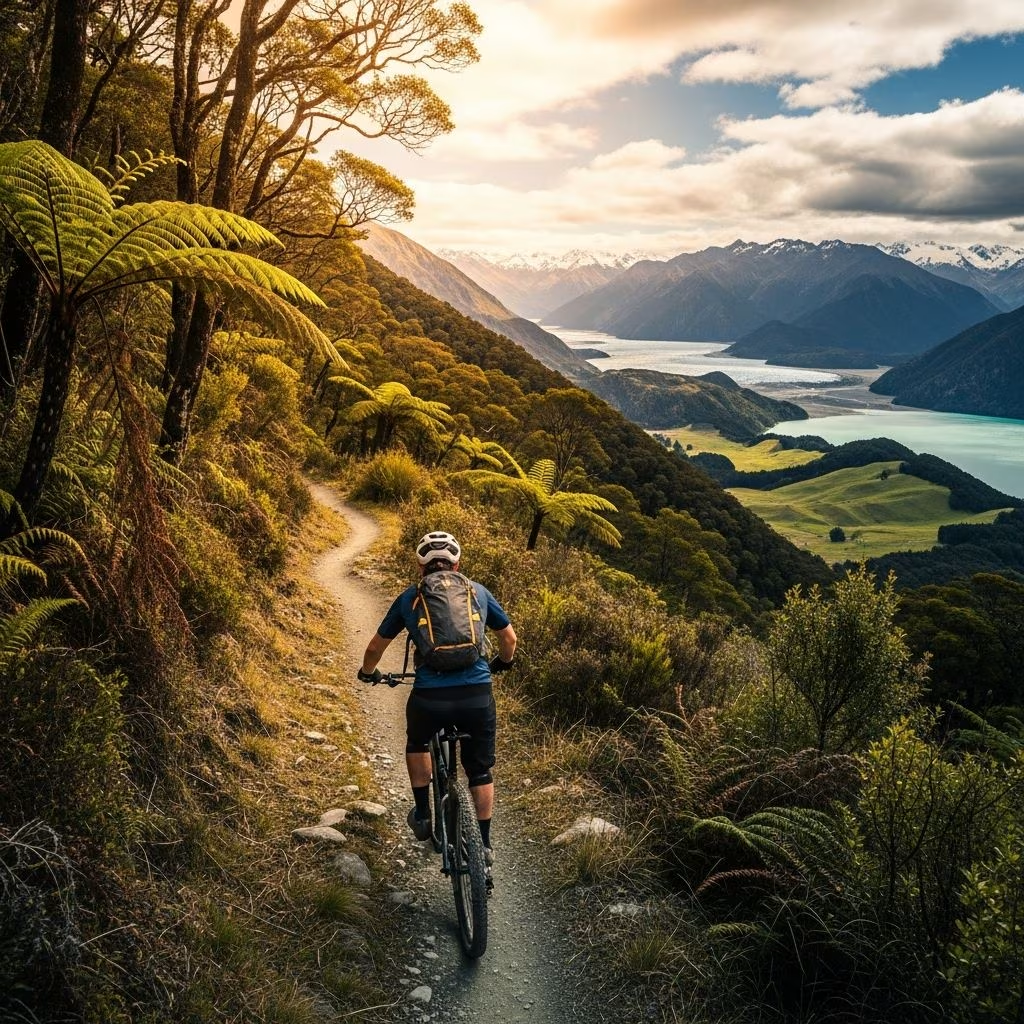
New Zealand has emerged as a premier destination for cyclists seeking diverse terrain, breathtaking landscapes, and well-maintained trail infrastructure. Whether you are a seasoned mountain biker or someone exploring cycling for the first time, the country offers an extensive network of routes that cater to various skill levels and preferences. The combination of coastal paths, mountain passes, rail trails converted for cycling, and remote backcountry roads creates a unique bikepacking experience that attracts enthusiasts from around the globe.
The foundation of New Zealand’s cycling appeal lies in its comprehensive trail network and support systems. The NZ Cycle Trail website serves as the central hub for route information, offering detailed descriptions of terrain difficulty, elevation profiles, and recommended completion timeframes. This centralized resource simplifies trip planning and helps cyclists select routes matching their experience and fitness levels.
The country’s cycling infrastructure is organized into three primary categories that structure the available routes. The Great Rides collection comprises 23 primarily off-road routes distributed across both islands, offering varied experiences from gentle pedaling through vineyards to challenging mountain terrain. The Heartland Rides focus predominantly on on-road cycling, providing access to rural communities and scenic countryside. Connector Rides link different trail systems together, allowing cyclists to design custom multi-day or multi-week journeys by combining various segments.
Getting your bicycle to New Zealand and moving it between regions requires understanding the available transport options. Most city buses throughout the country feature bike racks accommodating two to three bicycles on a first-come, first-served basis, making local transfers convenient. For longer journeys, InterCity buses allow bikes but require disassembly and charge an additional NZ$10 per bike.
Train travel presents another viable option for transporting bicycles between regions. Unlike buses, trains do not require bike disassembly, though panniers and other baggage should be removed from bicycles. Space on both bus and train services remains limited, making advance notification essential for ensuring bike accommodation on your intended journey.
Successful bikepacking hinges on thoughtful gear selection tailored to your specific trip duration, terrain difficulty, and route remoteness. Establishing a comprehensive packing system ensures you carry necessary items without excess weight that impairs performance and enjoyment.
Fundamental items for any bikepacking adventure include:
Beyond these essentials, experienced cyclists maintain specialized saddle bag contents addressing common mechanical issues. Hand pumps, spare tubes, tubeless repair kits, multi-tools, chain quick links, and tire levers represent standard maintenance items. Proficiency in using these tools proves crucial, as remote sections of trails may lack immediate access to bike shops or assistance.
Gear sharing among travel companions reduces individual weight loads while maintaining redundancy for critical items. This approach works particularly well for group trips where individuals can specialize in carrying different repair supplies and backup equipment.
The North Island presents lesser-known but equally compelling cycling opportunities beyond the most famous routes. The Forgotten World Highway spans 183 kilometers over two to three days, combining rural charm with accessible terrain. The Remutaka Cycle Trail covers 125 kilometers and typically requires two to three days, offering progressive difficulty levels.
Coastal enthusiasts benefit from the Twin Coastal Cycle Trail at 87 kilometers, completable in two days with spectacular maritime views. The Bay of Plenty region features the Papamoa cycle trail offering 30 kilometers of beachside cycling. Around Lake Taupo, the Great Lake Trail provides 88 kilometers of varied terrain over one to three days, allowing flexible trip planning based on individual pace preferences.
The South Island establishes New Zealand’s reputation as a world-class bikepacking destination. The Alps2Ocean route covers 315 kilometers from mountainous terrain to coastal regions, accommodating one to five days depending on pace and routing preferences. This route exemplifies the terrain variety that characterizes South Island cycling.
The Otago Central Rail Trail spans 152 kilometers along a converted railway corridor, offering 1-5 days of adaptable travel through historic mining regions and rural farmland. The Nelson Great Taste Trail provides 200 kilometers through renowned vineyard areas over 1-4 days. The Queenstown Trail offers 138 kilometers of diverse terrain over 1-4 days, combining alpine scenery with accessible sections. Christchurch’s Little River Rail Trail presents a more compact option at 60 kilometers, suitable for 1-2 days.
For cyclists seeking ultimate challenges, extended routes provide month-long or longer adventures traversing the entire country. The Tour Aotearoa represents the flagship ultra-distance bikepacking experience, covering 3000 kilometers from Cape Reinga at the North Island’s northern extremity to Bluff at the South Island’s southern terminus. Completing this route typically requires 30-100 days depending on pace, terrain difficulty navigation, and personal factors.
Originally conceived by the Kennett Brothers as an annual brevet challenge, the Tour Aotearoa follows diverse terrain including beach sections at Ninety Mile Beach, flat rail trails, technical mountain bike tracks, gravel roads through remote regions, and passes through major cities including Auckland, Wellington, Palmerston North, and Invercargill. An optional jet boat excursion on the Whanganui River adds adventure variety to the route.
The Kōpiko Aotearoa provides a challenging alternative spanning 1071 kilometers across the central North Island from East Cape to Cape Egmont over 5-12 days. This route condenses significant challenge into a shorter timeframe compared to the complete Tour Aotearoa.
Otago region in the South Island presents ideal conditions for cyclists initiating their bikepacking journey. The combination of varied but accessible terrain, spectacular scenery, and continental climate conditions creates an excellent learning environment. The region hosts five Great Rides within a 500-kilometer network, providing multiple options for different experience levels and available time.
The Otago Central Rail Trail and Clutha Gold Trail offer particularly gentle introductions to multi-day cycling, featuring predominantly flat terrain, clear signposting, and regular access to cafes, wineries, and country establishments. Trail towns throughout these routes provide bike-friendly accommodations and services suitable for cyclists preferring alternatives to camping.
Modern technological advancement has expanded bikepacking accessibility through electric bike integration. All 23 Great Rides accommodate e-biking experiences, ranging from short day trips to multi-day journeys. The Hawke’s Bay Trails and Remutaka Cycle Trail have received specific funding to establish 10 e-bike charging stations, directly addressing the range concerns that historically limited e-bike use on extended tours.
Trail towns supporting the Great Rides network provide comprehensive infrastructure including bike-friendly accommodations, strategic charging points, cycle tour operators offering bike rentals, instruction services, and rescue capabilities when needed.
Cyclists preferring structured experiences benefit from numerous local shuttle and tour operators throughout New Zealand. These professionals offer comprehensive services including bike hire with e-bike options, self-guided tour planning, all-inclusive guided experiences, shuttle services for baggage transport, professional bike servicing, and support vehicle accompaniment.
Guided tours provide particular value for international visitors unfamiliar with terrain, weather patterns, or local regulations. Support vehicles enable cyclists to travel with minimal luggage while maintaining access to camping equipment, repair supplies, and provisions. Professional guides navigate route logistics, arrange accommodation, and provide local knowledge about regional attractions and cultural highlights.
Selecting appropriate routes requires honest assessment of your cycling fitness, technical skill level, available time, and equipment capabilities. Beginners benefit from starting with established rail trails featuring consistent terrain, clear signposting, and regular support infrastructure. Multi-day adventurers ready for technical terrain should research specific track conditions, elevation profiles, and seasonal weather patterns affecting route difficulty.
The NZ Cycle Trail website provides elevation profiles and suggested completion timeframes, enabling realistic assessment of whether routes match your capabilities. Consulting user reviews and completion reports from cyclists with similar experience levels offers practical insights into actual difficulty versus official classifications.
New Zealand’s weather variability demands careful seasonal planning and comprehensive weather-appropriate gear. Summer months (December-February) offer extended daylight and generally favorable conditions but attract peak visitor volumes. Autumn (March-May) provides moderate temperatures and reduced crowds, making it attractive for extended trips.
Winter cycling (June-August) introduces challenges including shorter daylight hours, temperature drops in mountainous regions, and potential snow or ice on higher elevation passes. Spring (September-November) offers improving conditions with wildflower blooms and increasing daylight hours. Weather-appropriate layering, waterproof protection, and temperature-suitable sleeping systems prove essential regardless of season.
| Route Name | Distance (km) | Duration (Days) | Region | Difficulty Level |
|---|---|---|---|---|
| Tour Aotearoa | 3,000 | 30-100 | Full Country | Advanced |
| Alps2Ocean | 315 | 1-5 | South Island | Intermediate |
| Otago Central Rail Trail | 152 | 1-5 | South Island | Beginner-Intermediate |
| Nelson Great Taste Trail | 200 | 1-4 | South Island | Beginner-Intermediate |
| Queenstown Trail | 138 | 1-4 | South Island | Intermediate |
| Forgotten World Highway | 183 | 2-3 | North Island | Beginner-Intermediate |
| Kōpiko Aotearoa | 1,071 | 5-12 | North Island | Advanced |
Summer (December-February) offers extended daylight and favorable weather but attracts peak crowds. Autumn (March-May) provides moderate temperatures and fewer visitors, making it ideal for many cyclists. Spring (September-November) features improving conditions with increasing daylight. Winter cycling is possible but requires additional preparation and cold-weather gear.
Most trails are open to public use without permits. However, some private land sections may require advance notification or authorization. Consulting local trail authorities and the NZ Cycle Trail website provides specific permit requirements for individual routes.
Yes. Many routes offer flexible timeframes allowing beginners to complete sections over longer periods. Starting with rail trails featuring gentle terrain builds confidence and fitness before attempting more challenging terrain.
Carrying essential repair tools and learning basic maintenance procedures addresses most common issues. For serious problems, contacting local emergency services or nearby trail towns provides assistance. Many cyclists travel in groups to share repair expertise and support.
