

 Travel Essentials
 Travel Essentials

Bird strikes pose real risks to aircraft safety, causing millions in damages yearly. Learn what happens during a strike, common scenarios, and prevention strategies from official sources.
 Travel Essentials
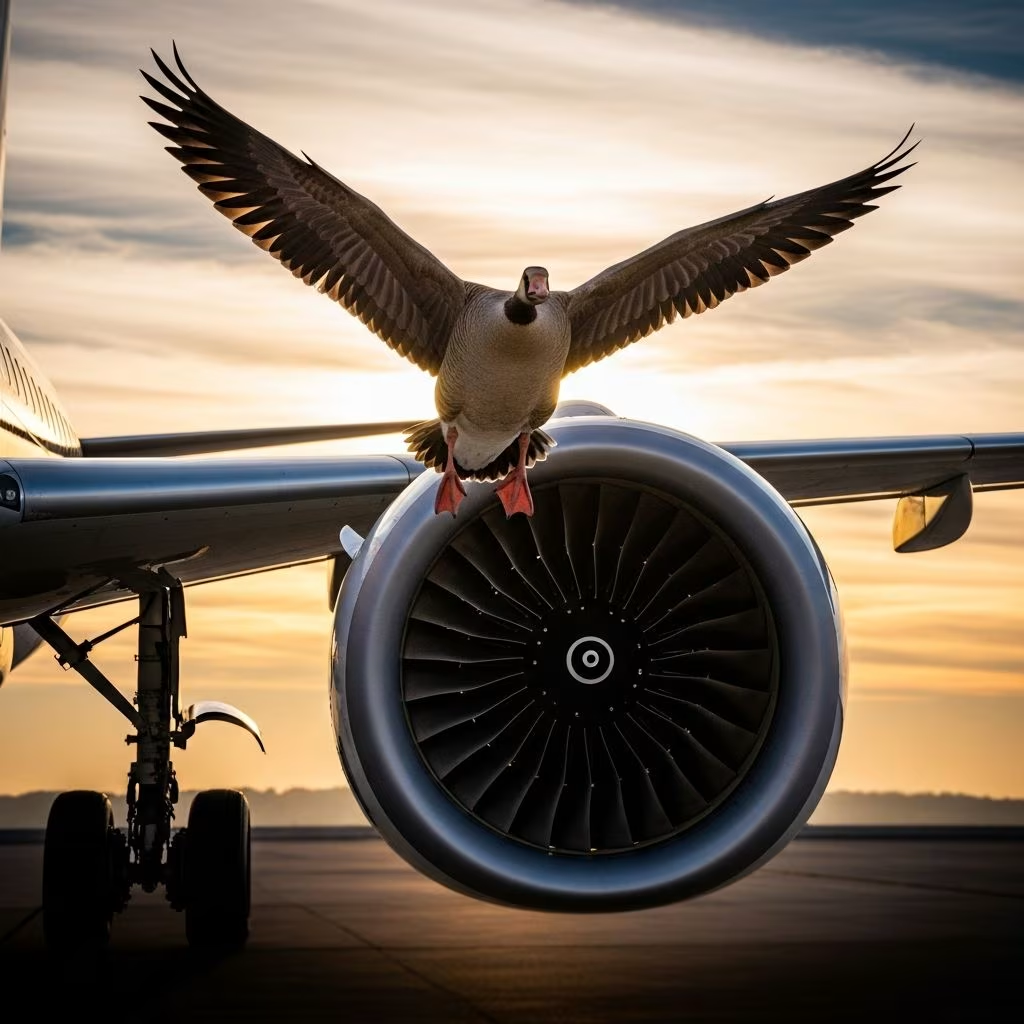
Collisions between birds and aircraft, known as bird strikes, represent a persistent challenge in aviation, inflicting substantial financial losses and occasional threats to flight safety. These incidents occur when birds collide with planes in flight, during takeoff, or landing, often at low altitudes where bird activity peaks.
Aviation authorities report a steady rise in bird strikes, driven by expanding bird populations, increased air traffic, and urban development near airports. In the U.S. alone, wildlife strikes caused over $900 million in annual damage to civil and military aircraft. Globally, such events have resulted in more than 250 human fatalities since 1988, underscoring the need for vigilant management.
Statistics reveal that 61% of bird strikes with fixed-wing civil aircraft happen during descent, approach, and landing rolls, while 36% occur during takeoff and climb. Only 3% take place en route. For helicopters, 75% occur mid-flight. About 70% of all strikes happen below 500 feet above ground level, aligning with phases where birds are most active near airports.
When a plane traveling at high speeds—often 150-200 knots during takeoff or landing—encounters a bird, the impact delivers immense kinetic energy. A bird weighing just a few pounds striking at these velocities can equate to the force of a small projectile. The high relative speed causes birds to disintegrate on contact, embedding fragments into critical components.
For smaller propeller aircraft, strikes more commonly cause direct structural harm, such as empennage damage or propeller nicks. Larger jets face greater risks from multiple engine ingestions, potentially affecting flight control.
A bird strike triggers a cascade of potential issues. Engine ingestion might produce bangs, vibrations, or flames as blades shear bird remains, reducing power output. Pilots report unusual noises, loss of thrust indications, or warning lights activating instantly.
| Aircraft Type | Primary Risk | Potential Outcome |
|---|---|---|
| Small Propeller Planes | Structural Damage (Windscreen, Controls) | Loss of Control, Instrument Failure |
| Commercial Jets | Engine Ingestion | Thrust Loss, Rejected Takeoff |
| Helicopters | En-Route Collisions | Rotor Damage, Emergency Landing |
Rare high-altitude strikes above 20,000 feet can puncture pressurized hulls, causing depressurization, though most remain low-level. Damage to pitot tubes may falsify airspeed readings, complicating navigation.
Historical incidents illustrate the spectrum of outcomes. In 2009, a US Airways Airbus A320 struck a flock of geese shortly after takeoff from New York, ingesting birds into both engines and forcing an emergency ditching in the Hudson River—miraculously, all survived. Military operations face heightened risks, with faster low-level flights increasing strike probabilities.
Another example: a departing jet ingested birds into three of four engines at 200 feet, disabling one and impairing others, yet the crew managed a safe return. Light aircraft strikes, like a vulture collision causing wing root failure, have led to fatal crashes. From 1990-2023, U.S. civil aircraft saw 357 human injuries from wildlife strikes.
Trained pilots follow standardized procedures post-strike. Immediate actions include:
Modern engines are certified to ingest birds up to 8 pounds without catastrophic failure, but multiple or larger birds exceed design limits. Crews often opt for conservative responses, like rejected takeoffs, prioritizing safety.
Bird strikes exact a heavy financial price. U.S. airlines face $500 million yearly in repairs from 1990-2019 data, with single events costing $90,000 for a windshield or $500,000 for wing repairs. Globally, 19,400 strikes hit 713 U.S. airports in 2023 alone. Delays, cancellations, and out-of-service days compound losses through compensation and lost revenue.
Worldwide, strikes destroyed 350+ aircraft and killed 491 people from 1988-2023, with 76 U.S. fatalities and 126 destroyed planes in that period.
Mitigation blends habitat control, deterrence, and tech. Airports deploy:
Federal programs like FAA-USDA Wildlife Services strike committees coordinate efforts. Military bases emphasize aggressive dispersal due to higher risks.
Climate change and urbanization boost bird numbers, especially large species like geese, heightening risks. Drones and electric aircraft introduce new variables. Ongoing research focuses on AI-driven detection and bio-mimicking repellents.
In 2023, international strikes totaled 236 at 92 airports across 55 countries, signaling a global issue demanding unified strategies.
Remain seated, follow crew instructions, and brace if directed. Strikes rarely affect cabin safety directly.
Rarely; most planes land safely, but they contribute to 491 global deaths since 1988.
Uncommon; 31 U.S. commercial strikes occurred at 20,000-32,000 feet from 1990-2023.
No, but jets are vulnerable; small planes face more structural hits.
Controllers provide warnings, but low-altitude flocks are hard to evade fully.
