

 Travel Essentials
 Travel Essentials

Dive into birdwatching fundamentals: select gear, master identification, find hotspots, and track sightings to elevate your nature adventures.
 Travel Essentials
Observing birds in their natural environments offers a profound connection to nature, blending patience, curiosity, and discovery. This guide equips newcomers with practical knowledge to start spotting and identifying species confidently, whether in local parks or remote wilds.
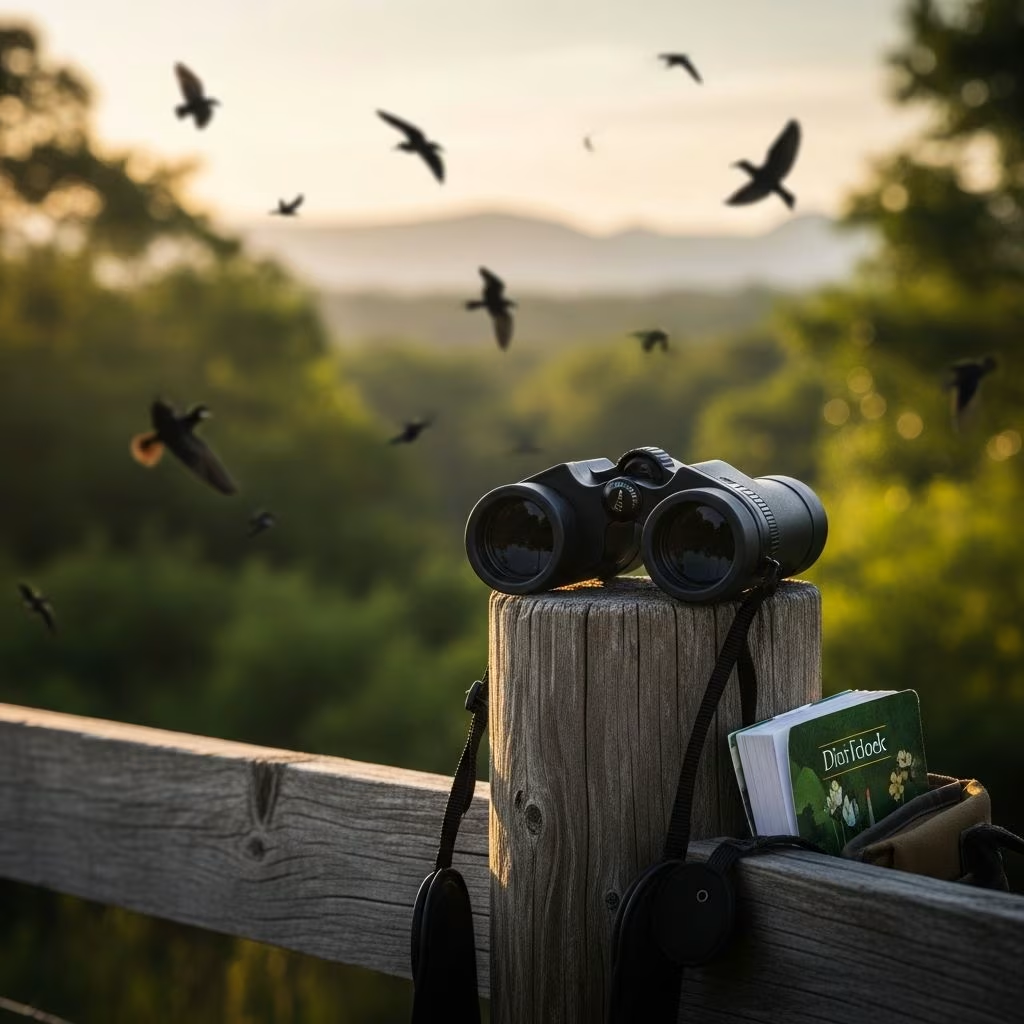
Essential equipment forms the foundation of successful birdwatching. Begin with reliable binoculars, which magnify distant views without disturbing wildlife. Opt for models around 8×42 magnification—8 times zoom with 42mm objective lenses—for a balance of brightness and portability.
Field guides complement binoculars by providing visual references. The Sibley Guide to Birds excels with detailed illustrations showing natural poses and plumage variations. Regional editions, like Eastern or Western North America, fit pockets better for fieldwork.
| Item | Beginner Pick | Why It Works |
|---|---|---|
| Binoculars | 8×42 Celestron | Clear, lightweight, durable for daily use. |
| Field Guide | Sibley Eastern/Western | Accurate drawings, range maps, behavior notes. |
| App | Merlin Bird ID | Free ID by photo/sound, migration alerts. |
Apps like Merlin, Audubon, and eBird revolutionize identification with sound clips, photos, and community data. eBird tracks global sightings, highlighting nearby hotspots.
Identifying birds relies on observing key traits: size, shape, color patterns, behavior, calls, and habitat. Start locally—familiarize with backyard regulars like sparrows or robins to build confidence.
Size and Shape: Compare to known birds; a sparrow-sized bird differs from crow-sized ones. Note bill shape (seed-crackers are conical), wing length, tail style.
Color and Pattern: Look beyond overall hue—check eye rings, wing bars, under-tail coverts. Lighting alters appearance, so note field marks from multiple angles.
Behavior: Foraging style reveals identity; woodpeckers cling vertically, warblers flit in foliage.
Voice: Songs and calls are vital, especially in dense cover. Apps play recordings for matching.
Habitat: Wetlands host herons, woodlands warblers. Cross-reference with guides.
Birds peak in activity at dawn and dusk, when foraging intensifies. Early mornings yield the most species during breeding seasons.
Weather matters: overcast days mute songs but improve visibility; winds scatter flocks.
Seek edges where habitats converge—forest-meadow borders, shorelines—maximizing food/water access. Urban parks, refuges, national sites like Rocky Mountain parks offer checklists.
eBird hotspots map high-diversity areas; join local groups for guided walks.
Log sightings in notebooks or apps: date, location, species, notes on behavior. Life lists motivate, revealing patterns over time.
Waterproof journals withstand elements; eBird shares data for conservation.
Progress to spotting scopes (20-30x) for shorebirds, needing tripods. Learn taxonomy for family groupings. Volunteer in citizen science via eBird.
Ethics: Stay on trails, silence phones, no playback luring during nesting.
Start with budget pairs; practice sharpens skills more than gear.
Merlin for ID, eBird for lists/hotspots, Audubon for sounds.
Practice panning binoculars smoothly; note jizz (overall impression).
Group outings ideal; inform others of plans in remote areas.
Migrate with birds—spring warblers, winter finches.
