

 Travel Essentials
 Travel Essentials

Explore the Blackfoot Confederacy's enduring ties to lands split by the US-Canada border, revealing Indigenous views on sovereignty, culture, and cross-border life in the Great Plains.
 Travel Essentials
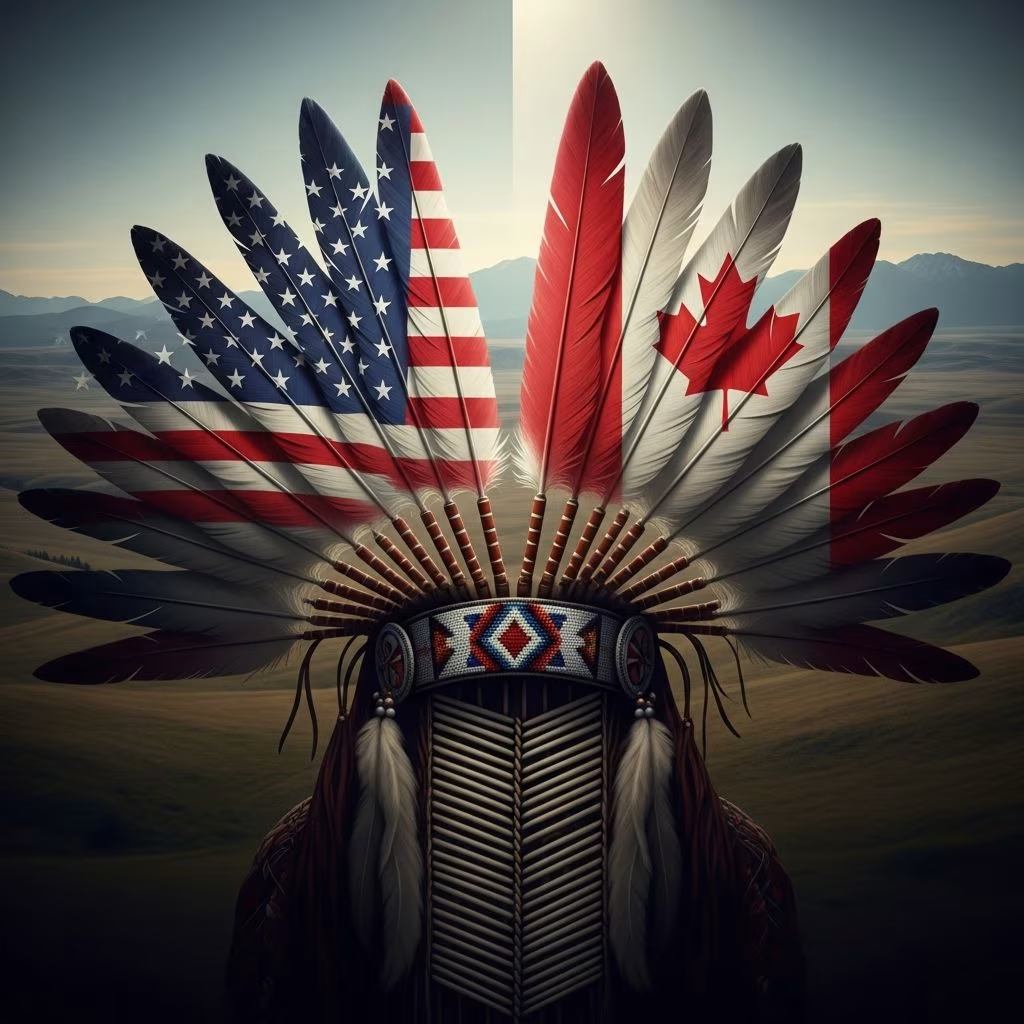
The imposing line of the US-Canada border slices through the heart of Blackfoot territory, yet for the Niitsitapi—meaning “real people”—this artificial division holds little meaning. Spanning the vast grasslands of northern Montana and southern Alberta, the Blackfoot Confederacy has thrived for centuries in a homeland that defies colonial maps. This article delves into their worldview, historical mastery of borderlands, contemporary realities, and immersive travel experiences that bridge the divide.
Encompassing over 50,000 square miles of the northern Great Plains, the Blackfoot territory includes rolling prairies, towering mountains, and sacred waterways. The Confederacy comprises four nations: the Blackfeet (Aamskapii’pikuni) in Montana, USA; the Kainai (Blood Tribe) and Siksika (Blackfoot) in Alberta, Canada; and the Piikani (Peigan) straddling both sides. This expansive domain, rich in bison herds and buffalo jumps, sustained a sophisticated society long before European arrival.
Historically, from 1720 to 1877, the Blackfoot dominated these borderlands amid fur trade rivalries and intertribal conflicts. Their strategic use of geography—controlling key passes and rivers—allowed them to maintain autonomy despite ecological shifts and colonial pressures. Mastery of the landscape enabled vibrant trade networks and defensive prowess, creating one of North America’s most enduring Indigenous homelands.
The 49th parallel border, established in 1846 via the Oregon Treaty and solidified in 1877 with Canada’s Treaty 7, fractured Blackfoot unity. In the US, the Blackfeet Reservation was formalized in 1888 after the Sweetgrass Hills Treaty, confining them to diminishing lands amid railroad expansion. North of the line, Treaty 7 at Blackfoot Crossing promised reserves but led to confusion over land title surrender—many leaders misunderstood the terms, viewing it as a sharing agreement rather than cession.
These pacts ignored Blackfoot transnational families and bands, who continued crossing freely for hunts, marriages, and ceremonies. Canadian policies like the Indian Act further complicated identities, tying bands to specific reserves while blurring citizenship status. Despite this, Blackfoot resilience shone through leaders like Crowfoot, who navigated treaties to preserve core territories.
| Event | Date | Impact on Blackfoot |
|---|---|---|
| Oregon Treaty | 1846 | Imposed 49th parallel, splitting hunting grounds. |
| Treaty 7 | 1877 | Created Alberta reserves; ambiguous land rights. |
| Sweetgrass Hills Treaty | 1888 | Shrunk Montana reservation by half. |
Today, border enforcement disrupts daily life. Blackfoot families separated by the line face visa hurdles for funerals, powwows, and harvests. The Jay Treaty of 1794 theoretically allows Indigenous cross-border travel with proof of status, but bureaucratic red tape—passports, status cards, and customs delays—frustrates this right. During COVID-19, essential crossings for wild rice harvesting or medical care highlighted inequities.
Environmental threats compound issues: Glacier National Park (US) and Waterton Lakes National Park (Canada) form the world’s first international peace park, yet mining proposals and oil sands expansion in Alberta endanger shared watersheds. Blackfoot advocacy pushes for transboundary conservation, emphasizing their role as original stewards.
Despite divisions, Blackfoot culture pulses across the border. The Sun Dance, Okan (transfer ceremonies), and medicine pipe bundles unite participants from all nations. Annual gatherings like the North American Indian Days in Browning, Montana, draw Kainai and Siksika visitors, fostering kinship ties. Language revitalization efforts, with Blackfoot (Siksikaapiihsinii) taught in immersion schools, preserve a dialect spoken fluidly on both sides.
Artisans craft beaded regalia and ledger art depicting border-crossing narratives, while youth programs teach horsemanship and archery in traditional camps. These practices affirm a Niitsitapi identity that predates and transcends nation-states.
Visitors can authentically engage this world via guided tours and cultural hubs. Start in Glacier National Park’s Blackfeet-approved Going-to-the-Sun Road, where interpreters share stories of Chief Mountain visions. Cross into Waterton for hikes tracing ancient trails.
**Pro Tip:** Book through Native-owned outfitters for respectful, insider access. Respect protocols: ask permission for photos, support tribal businesses.
Blackfoot economies blend tradition with innovation. On the US side, Blackfeet ranchers manage bison herds on reservation lands, supplying ethical meat markets. In Canada, Kainai enterprises include agritourism and cannabis cultivation on treaty lands. Cross-border trade in medicinal plants and crafts persists informally, echoing pre-colonial exchanges.
Tourism booms with glamping in tipis and cultural festivals, generating revenue while educating outsiders. Initiatives like the Blackfoot Crossing Historical Park offer interactive exhibits on confederacy history, drawing 100,000+ visitors yearly.
From a ridge in northern Montana, Blackfoot elders recount grandparents’ seamless crossings for berry picking or horse racing. One Kainai artist shares: “The border is a fence on paper; our songs carry us over.” These stories underscore a philosophy where land owns people, not vice versa.
Blackfoot leaders advocate for “borderless” policies, like streamlined Jay Treaty implementation and joint environmental councils. Youth movements blend tech—drones mapping sacred sites—with ancestral knowledge. As climate change intensifies, their transboundary worldview offers models for global cooperation.
Four allied nations: Blackfeet (US), Kainai, Siksika, and Piikani (Canada), sharing language, culture, and territory.
Under the Jay Treaty, yes, with proper documentation, though practical barriers remain.
Summer for powwows and parks; fall for harvest festivals.
It disrupts families and ceremonies but fuels resilience through shared advocacy.
Yes, via peace park programs and tribal outfitters.
