

 Travel Essentials
 Travel Essentials

Explore Blarney Castle's rich past from ancient origins to modern tourism, the magical Blarney Stone's lore, architectural marvels, and lush gardens drawing visitors worldwide.
 Travel Essentials
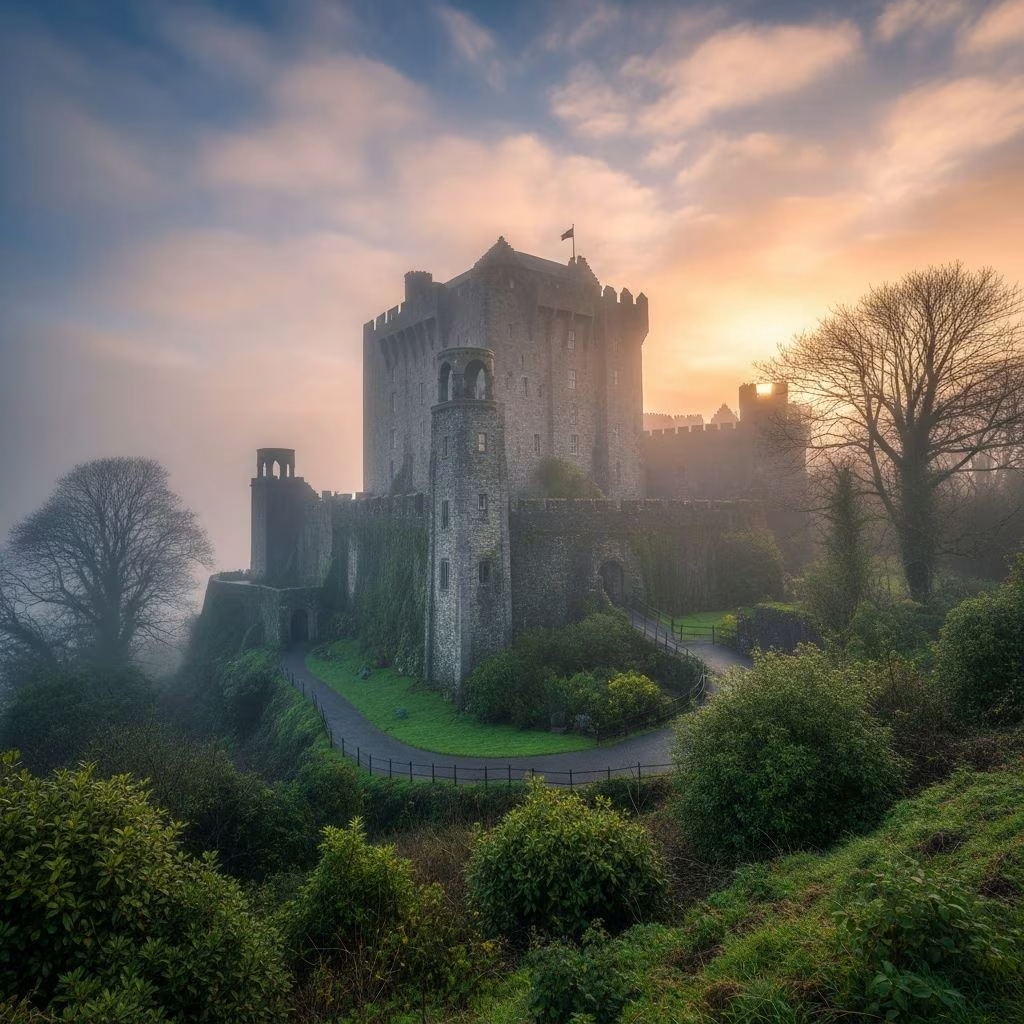
Perched on a rocky outcrop near Cork City, Blarney Castle stands as one of Ireland’s most celebrated medieval landmarks. Constructed in the 15th century, this imposing tower house has witnessed centuries of conflict, intrigue, and folklore, drawing over 500,000 visitors annually to its battlements and grounds.
The site of Blarney Castle has layers of history dating back over a millennium. Archaeological evidence suggests a wooden fortification occupied the hill as early as the 10th century, later replaced by a stone structure around 1210 by early Norman settlers. This initial fortress was demolished in 1446, paving the way for the current edifice built by Cormac Laidir MacCarthy, chieftain of the Muskerry branch of the powerful MacCarthy clan.
Standing at 85 feet tall, the castle exemplifies the tower house design prevalent among Gaelic lords from the 15th to 17th centuries. These fortifications combined residential comfort with defensive prowess, featuring walls up to 18 feet thick in places to repel invaders. Key defensive elements include machicolations—overhanging openings at the top from which defenders could drop stones or boiling substances on attackers—and a notorious murder hole in the entrance passage.
Descending into the castle’s dungeons reveals a chilling reminder of its martial past. These underground chambers, now accessible to tourists, once confined prisoners in damp darkness, their echoes lost to time. Badly damaged passages that once honeycombed the site are no longer traversable, adding to the ruins’ atmospheric mystery.
The MacCarthys of Muskerry, a cadet branch of the Kings of Desmond, ruled Blarney for generations, transforming it into a symbol of Gaelic power. Cormac Laidir’s construction not only rebuilt the castle but also integrated legendary elements that would define its fame. The clan navigated alliances and enmities with English forces, employing cunning diplomacy that birthed the term ‘Blarney’—meaning persuasive flattery.
During the Irish Confederate Wars, Parliamentarian Lord Broghill besieged and captured the castle in 1646. It was briefly restored to Donough MacCarty, 1st Earl of Clancarty, after the Restoration, only to be confiscated again amid the Williamite War in the 1690s. Passing through speculative land deals to entities like the Hollow Sword Blade Company, ownership eventually settled with James St John Jeffreys, who erected a Georgian mansion nearby—destroyed by fire in 1820. Today, the castle remains a partial ruin, its skeletal form evoking both grandeur and melancholy.
Atop the castle’s northwest battlement sits the Blarney Stone, or Stone of Eloquence, a single block embedded in the parapet. Kissing it—requiring visitors to lean backwards over an 85-foot sheer drop while held by attendants—supposedly imparts the ‘gift of the gab,’ extraordinary persuasive speech.
Legends abound regarding its origins. One ties it to biblical patriarch Jacob’s pillow stone from his heavenly ladder dream, transported from the Holy Land via Crusaders. Another claims it’s the Stone of Scone, gifted by Robert the Bruce to Cormac MacCarthy for aiding Scottish forces against Edward II. A Celtic tale invokes the goddess Clíodhna or a fairy queen whose tears and magic infused the stone after a tragedy, granting eloquence to kissers.
The ritual’s daring nature has not deterred enthusiasts; steel railings and safety bars now mitigate risks, though the vertigo-inducing lean persists. Folklore credits the stone with aiding MacCarthy chiefs in outwitting Queen Elizabeth I through endless eloquent delays, coining ‘to talk Blarney’.
| Legend | Key Figure/Event | Power Granted |
|---|---|---|
| Biblical Pillow Stone | Jacob’s dream; Crusades | Eloquence |
| Stone of Scone | Robert the Bruce alliance | Persuasive speech |
| Fairy Queen Tears | Clíodhna or witch’s magic | Gift of the gab |
| Druidic Ritual Site | Ancient Celtic origins | Oratorical skill |
Blarney Castle’s 60-acre estate bursts with botanical splendor and quirky follies. The Rock Close, a prehistoric dolmen site, features the Witch’s Kitchen—a boulder cave—and Wishing Steps, where eyes-closed pacing seven times grants wishes. Fern-draped Poison Garden showcases toxic plants like ricin and hemlock, while the Bamboo Grove offers exotic seclusion.
These grounds elevate Blarney from mere ruin to immersive experience, blending nature’s beauty with supernatural lore.
Tourism surged in the late 18th century via travelogues romanticizing the stone’s powers. By the 19th century, it was Europe’s must-see, featured in 1850s periodicals. Today, Blarney Village—one of Ireland’s last intact estate villages—houses visitors near the site. Practical tips include booking tickets online (€20 adults), arriving early to beat crowds, and allowing 2-3 hours.
Owned by the MacCarthy descendants via Colthurst family trusts, the castle undergoes continuous restoration. Recent efforts focus on stabilizing battlements and conserving gardens amid climate challenges. As a symbol of Irish resilience, it hosts weddings, festivals, and educational tours.
Yes, with modern safety rails and trained attendants; over a million kisses annually without incident.
2-4 hours for castle, stone, and gardens; full day with nearby Cork attractions.
Spring for blooms or weekdays to avoid peak summer crowds.
No castle lodging, but Blarney Castle Hotel and village B&Bs nearby.
Limited; grounds partially accessible, castle stairs not.
From Cork Airport (15 minutes), buses or shuttles connect easily. Combine with Kinsale or Ring of Kerry for itineraries. Blarney’s blend of adrenaline, myth, and scenery ensures unforgettable memories.
