

 Travel Essentials
 Travel Essentials

Learn how blind and visually impaired travelers experience the world through alternative senses, adaptive technologies, and innovative travel programs designed for inclusive exploration.
 Travel Essentials
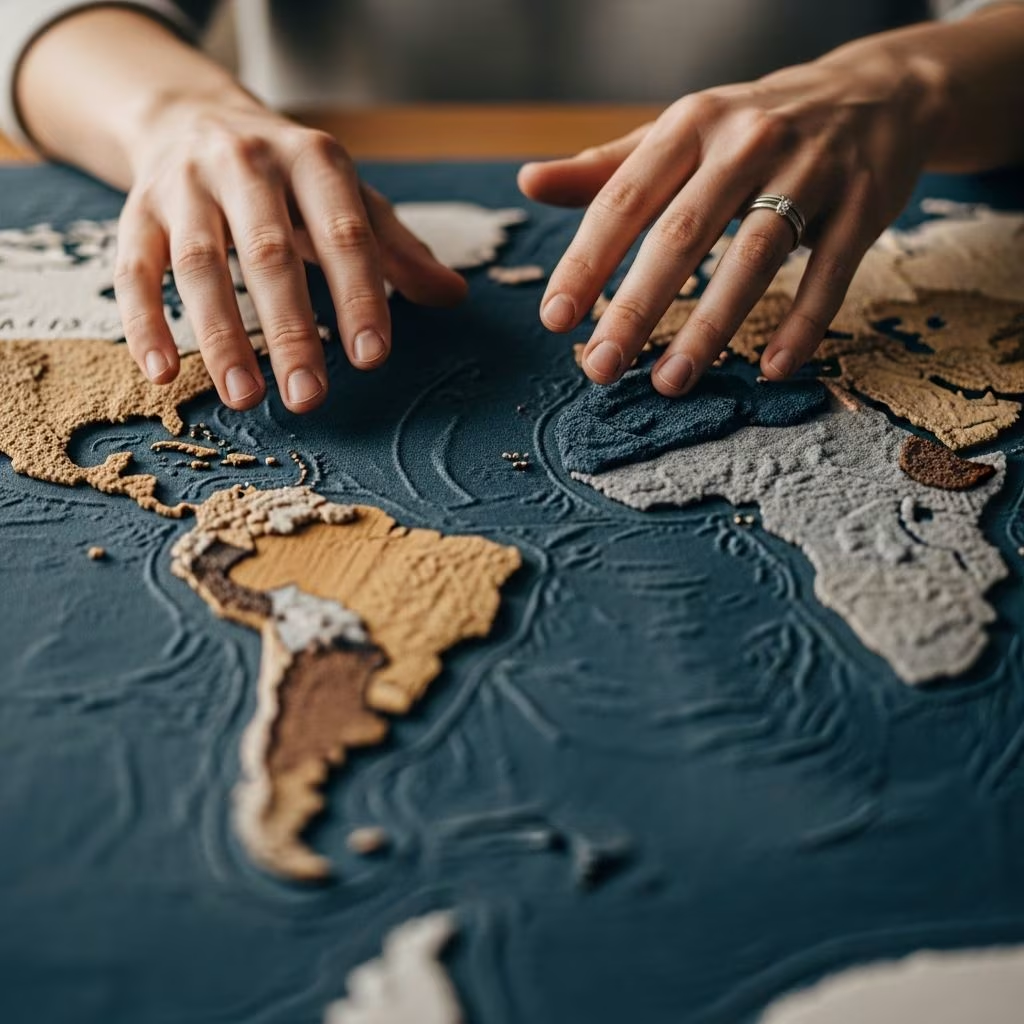
The conventional understanding of travel centers on visual spectacle—gazing at iconic landmarks, photographing scenic vistas, and collecting images of famous destinations. Yet this perspective overlooks a fundamental truth: authentic travel experiences extend far beyond what the eyes can capture. For blind and visually impaired individuals, travel has never been confined to visual observation. Instead, these adventurers have pioneered alternative pathways to exploration that engage the full spectrum of human sensory awareness. Their journeys reveal that meaningful travel encompasses cultural immersion, personal connection, and sensory engagement that sighted travelers often overlook.
When blind travelers venture into unfamiliar territories, they employ a fundamentally different approach to discovery than their sighted counterparts. Rather than prioritizing visual landmarks, they construct travel experiences built on taste, sound, smell, and tactile sensation. This distinction represents not a limitation but rather an alternative pathway to genuine cultural understanding.
The sensory richness available in any destination far exceeds what photographs can convey. Street food in Taipei offers complex flavor profiles and aromatic combinations that tell stories of regional culinary traditions. The soundscape of a rainforest—layered with bird calls, rustling leaves, and flowing water—creates an immersive environment that visual observation cannot fully capture. Historical sites become tactile experiences when hands trace centuries-old stone walls and architectural details. These sensory encounters often provide deeper cultural insights than visual tourism allows.
Blind travelers frequently report that their alternative approach enables more authentic connections with local communities. Rather than passing through destinations as observers, they engage as participants. They ask questions, listen to stories, and interact directly with residents. This interactive engagement often yields richer understanding of place-based culture and history than passive visual consumption.
Taste serves as a particularly powerful travel sense for blind explorers. Culinary traditions reflect regional history, geography, and cultural values in concentrated form. Sampling local cuisine—whether tapas in Spain, street food in Southeast Asia, or traditional dishes in lesser-known regions—provides direct access to local culture without requiring visual mediation. The flavors, textures, and preparation methods communicate far more about a place than looking at food ever could.
Sound creates equally compelling travel experiences. Music venues, cultural performances, natural soundscapes, and urban ambiance all contribute to destination character. Jazz clubs in New Orleans, traditional music in local villages, the acoustic signature of different environments—these auditory elements compose the emotional landscape of places. Blind travelers have demonstrated that listening deeply to these soundscapes creates powerful memories and authentic connections to destinations.
Fragrance serves as an often-overlooked sensory dimension of travel. Seasonal flowers in botanical gardens like Keukenhof in the Netherlands, aromatic markets, ocean air, mountain pine forests—scent creates immediate emotional responses and memory associations. Research on human perception indicates that olfactory experiences often produce more durable memories than visual ones, suggesting that smell-focused travel experiences may create particularly lasting impressions.
Touch and tactile sensation enable exploration of physical environments in ways vision cannot. Walking barefoot on different textures—sand, stone, grass, tile—provides immediate environmental information. Feeling architectural details, sculptures, and natural features creates three-dimensional understanding of spaces that visual observation alone does not provide.
Modern technology has expanded possibilities for blind travelers considerably. Accessible smartphones with screen-reader functionality, GPS navigation apps designed for vision impairment, and audio description services transform independent travel feasibility. Mobile applications now provide real-time environmental information, route guidance, and point-of-interest descriptions that enhance navigational confidence.
Beyond technology, human support systems remain essential. Travel companions—whether family members, hired guides, or fellow travelers—can provide navigation assistance, visual descriptions when desired, and emotional support. However, many blind travelers emphasize the importance of maintaining independence where possible. Some choose to travel solo, viewing this as an ultimate personal challenge and opportunity for self-discovery.
Specialized travel companies have emerged to address blind travelers’ specific needs. Group travel programs match blind and sighted travelers for shared experiences, combining independent exploration with community support. These programs eliminate logistical concerns about navigation while preserving the adventure of cultural exploration. Destinations increasingly develop sensory-rich attractions—tactile museums, fragrant gardens, and interactive tours emphasizing non-visual engagement—specifically designed for blind visitors.
Misconceptions often limit blind travelers’ activity options. In reality, adaptive programs worldwide offer skiing, scuba diving, hiking, tandem biking, and numerous other activities with appropriate support and training. Adrenaline-seeking blind travelers have successfully engaged in paragliding, rock climbing adapted for vision impairment, and other adventure sports.
Destination selection strategies differ for blind travelers. Rather than prioritizing visually famous landmarks, many focus on destinations offering strong sensory experiences, cultural richness, and established accessibility infrastructure. Regions known for distinctive cuisines, vibrant music scenes, aromatic natural environments, or tactile historical sites often appeal particularly to blind travelers.
Urban environments can present navigating challenges but also concentrate sensory experiences. Market districts offer rich aromatic and gustatory experiences. Cultural neighborhoods provide authentic soundscapes and interaction opportunities. Rural areas and natural destinations offer distinct advantages—fewer obstacles, more distinctive sensory environments, and opportunities for outdoor activities adapted for vision impairment.
Successful blind travel requires deliberate planning and realistic preparation. Pre-trip research into destination accessibility infrastructure, transportation options, and cultural practices enables more confident exploration. Understanding local taxi systems, public transportation accessibility, and communication methods prepares travelers for independent navigation.
Advance connections with local guides, accessibility coordinators, or tourism boards can provide valuable destination knowledge. Many destinations employ cultural guides who understand local accessibility resources and can facilitate meaningful experiences. Building these relationships before arrival reduces uncertainty and enables more confident exploration.
Mental preparation often exceeds logistical preparation in importance. Blind travelers emphasize the psychological shift from perceiving travel as something they “should” do to recognizing it as something they genuinely want to experience. This mindset reframes potential obstacles as navigable challenges rather than insurmountable barriers.
Successful blind travelers have visited numerous countries, demonstrating that global exploration remains possible and rewarding. Tony Giles, featured in travel media, has visited over 140 countries while blind, conducting solo travel that challenges both his personal capabilities and broader societal assumptions about disability and adventure. His experiences span developed nations with established accessibility infrastructure and developing countries where adaptation and creativity become essential travel tools.
Destinations worldwide increasingly recognize blind travelers as an important tourism segment. Museums and cultural sites develop audio description programs and tactile exhibitions. Hospitality businesses train staff in accessibility protocols. Transportation systems improve accessibility features. These infrastructure improvements benefit all travelers while specifically enabling blind exploration.
Society often conflates travel with visual tourism, creating misconceptions that blind individuals cannot travel. This perspective misunderstands both travel’s essential nature and human sensory capability. Travel fundamentally involves encountering difference, engaging with unfamiliar environments, and expanding personal perspective. These outcomes do not require vision.
Sighted travelers frequently emphasize visual landmarks as trip highlights, yet casual reflection reveals that memorable travel moments often center on non-visual experiences: conversations with locals, memorable meals, unexpected discoveries, physical sensations, and atmospheric feelings. These elements remain entirely accessible to blind travelers and often comprise the substance of meaningful travel regardless of visual capacity.
The assumption that blind travelers “miss out” inverts the reality. Blind travelers often experience destinations more deeply, engage more authentically with local culture, and develop more meaningful memories than visual tourists who move efficiently through landmark checklists. The alternative sensory engagement enables different—and often richer—travel experiences.
Many blind travelers choose solo travel to maximize challenge and personal growth, while others prefer group experiences or guided tours for social engagement and logistical support. Neither approach is inherently superior; preference depends on individual temperament, destination familiarity, and specific travel goals.
Accessibility infrastructure varies considerably globally. Developed nations typically offer better transportation accessibility, technology integration, and tourism infrastructure tailored to accessibility needs. Developing regions may lack these systems but often compensate with distinct sensory experiences, slower pace enabling adaptation, and welcoming communities. Effective blind travel simply requires different planning based on regional characteristics.
Blind travel may involve additional expenses for guides, accessible accommodations, or specialized services. However, many destinations offer competitive pricing for alternative transportation methods and increasingly integrate accessibility into standard tourism offerings, making blind travel financially feasible.
Evolving technology, increased awareness, and growing blind traveler communities are gradually transforming global tourism. Artificial intelligence, advanced GPS systems, and improved sensory description technologies continue expanding accessible travel possibilities. Simultaneously, tourism industry recognition of accessibility’s business value drives infrastructure improvements and accessibility-focused service development.
Blind travelers continue pioneering new exploration routes and demonstrating that travel transcends visual limitation. Their experiences challenge fundamental assumptions about disability, capability, and adventure. Every blind traveler who successfully navigates unfamiliar territory, engages authentically with foreign cultures, and discovers genuine connections in distant places expands possibilities for everyone.
Travel’s ultimate value lies not in collecting visual memories or photographing famous views, but in encountering difference, experiencing growth, and understanding humanity’s remarkable diversity. Blind travelers access these profound benefits through different sensory pathways, demonstrating that meaningful exploration remains universally possible. Their journeys invite all travelers—regardless of visual capacity—to engage more deeply with destinations, embrace alternative perspectives, and recognize that authentic travel extends far beyond what meets the eye.
