

 Travel Essentials
 Travel Essentials

The Blue Ridge Parkway's Asheville section has reopened after Hurricane Helene damage, with full restoration expected by year-end 2026.
 Travel Essentials
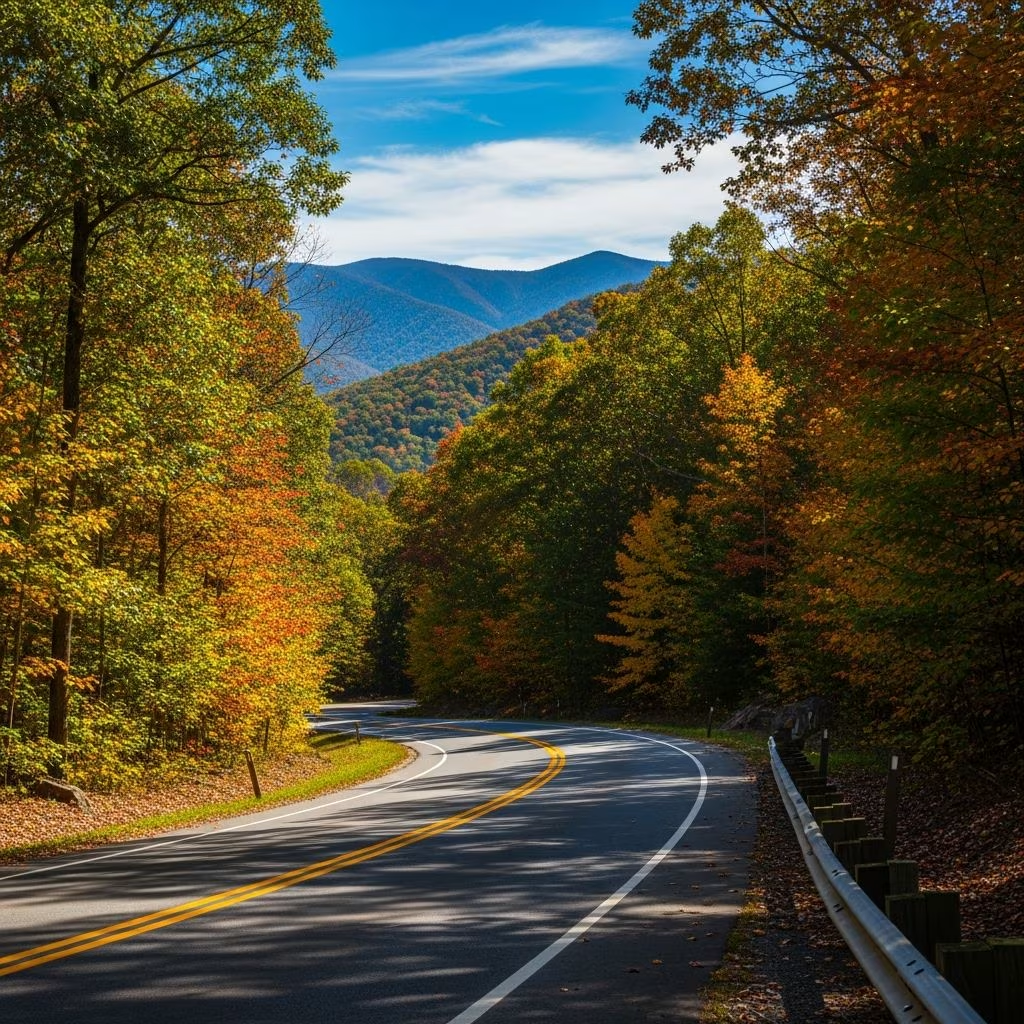
Western North Carolina’s most iconic scenic corridor has experienced a significant recovery milestone as a major section of the Blue Ridge Parkway reopened to vehicular traffic following extensive damage from Hurricane Helene. The reopening represents a crucial moment for regional tourism recovery and marks the beginning of a comprehensive restoration effort that will extend throughout 2026. This development brings renewed opportunities for visitors seeking to experience one of America’s most celebrated mountain drives while local communities anticipate economic benefits from returning tourism revenue.
When Hurricane Helene struck the region in September 2024, the Blue Ridge Parkway suffered unprecedented infrastructure damage across multiple sections. The 469-mile scenic corridor, which winds through North Carolina and Virginia under National Park Service management, experienced severe blowdowns where trees were uprooted across the roadway, extensive erosion that compromised road surfaces, and numerous landslides that rendered significant portions completely impassable. The total economic impact of the damage exceeded $1.7 billion, making it one of the most costly natural disasters affecting the parkway’s infrastructure.
The damage was not uniformly distributed across the parkway’s length. The most severely affected areas concentrated in the western North Carolina section, particularly between Asheville and Mount Mitchell State Park. This region, home to the tallest peak east of the Mississippi River, became essentially inaccessible for nearly a year, cutting off a vital route for both leisure travelers and local commerce. Communities throughout the region faced economic hardship as tourism, a critical economic driver, came to a near standstill in the affected areas.
The National Park Service developed a comprehensive three-phase restoration strategy to systematically address the damage and restore the parkway to full operational status. This structured approach allows for prioritized repairs, efficient resource allocation, and clear timeline communication to the public and stakeholders. Each phase targets specific sections and types of repairs, from immediate clearing and stabilization efforts to more complex infrastructure reconstruction.
The first phase of the restoration initiative focused on clearing the roadway of debris, removing fallen trees, and making the most critical routes accessible to traffic. This phase emphasized safety and quick restoration of basic functionality. The reopening of the 26-mile stretch from Asheville to Mount Mitchell State Park entrance represents the successful completion of this initial phase, demonstrating that the most heavily used and economically important section has been returned to operational status.
Subsequent phases will address additional closed sections and undertake more extensive reconstruction work. The second and third phases encompass the remaining approximately 35 miles of closed parkway, primarily in the Linville Gorge to Mount Mitchell area, along with comprehensive trail repairs, debris removal from surrounding areas, and facility restoration. These later phases require more intensive construction work and specialized engineering solutions to address structural damage and geological concerns.
As of spring 2026, the parkway is approaching substantial operational recovery. The 114 continuous miles of parkway between Cherokee and Asheville are currently open, providing visitors with an extensive scenic driving experience through the northern western North Carolina mountains. The newly reopened Asheville section extends this accessible corridor southward, connecting the northern route with communities and attractions in the Mount Mitchell area.
Blue Ridge Parkway Superintendent Tracy Swartout has communicated to regional stakeholders and government officials that repairs on the remaining closed stretch should be completed by the end of 2026. All projects for this final repair phase have been awarded to contractors and are actively under construction. This timeline, if achieved, would represent a complete restoration of the parkway just over two years after the hurricane struck.
| Restoration Phase | Primary Focus | Key Sections | Status |
|---|---|---|---|
| Phase 1 | Debris clearing and immediate reopening | Cherokee to Asheville to Mount Mitchell entrance | Complete – 114+ miles open |
| Phase 2-3 | Infrastructure reconstruction and trail repair | Linville Gorge to Mount Mitchell area (35 miles) | In construction – completion targeted end 2026 |
The reopening of the Asheville section carries significant implications for western North Carolina communities that depend substantially on tourism revenue. Small towns like Black Mountain, situated along or near the parkway corridor, anticipate renewed visitor traffic and corresponding increases in lodging, dining, and retail spending. The fall 2026 season represents the first complete tourism season in nearly two years for these communities, offering crucial economic recovery opportunities.
The Blue Ridge Parkway attracts millions of visitors annually under normal circumstances, generating substantial economic activity across western North Carolina and the border regions of South Carolina and Tennessee. Each mile of reopened parkway represents thousands of potential visitor trips, extended stays in mountain communities, and spending at local businesses. For regions severely impacted by hurricane damage, this tourism recovery provides a vital economic lifeline as reconstruction efforts continue in other sectors.
Beyond immediate tourism spending, the parkway’s reopening supports broader regional recovery efforts. When major attractions remain inaccessible, regional marketing efforts struggle, hotels and restaurants face reduced occupancy, and employment opportunities diminish. The restoration of full parkway access signals to the broader tourism market that western North Carolina is recovering and ready to welcome visitors, helping to restore business confidence and investment in the region.
Visitors should anticipate ongoing construction activities throughout the parkway during the remainder of 2026, particularly in the sections between Asheville and Mount Mitchell. Heavy equipment, construction vehicles, and material deliveries will be visible throughout the region as contractors work to complete the final phase of repairs. Road shoulders may be occupied by construction staging areas, and drivers should exercise caution in these zones.
The construction phase should not deter visitors from experiencing the reopened sections. The completed portions of the parkway are fully accessible and operational, offering the scenic vistas and mountain atmosphere that have made the route legendary among travelers. In fact, viewing the restoration work in progress provides visitors with visible evidence of the recovery efforts and can deepen appreciation for the achievement of restoring such critical infrastructure.
Once the primary structural repairs are completed, the National Park Service plans to initiate additional restoration projects that extend beyond basic road repair. These include comprehensive trail restoration throughout the parkway, removal of debris from surrounding areas, and facility repairs. Many trails that provide access to waterfalls, overlooks, and hiking destinations experienced damage similar to the main roadway and require restoration work.
The federal government has allocated resources specifically for these extended recovery efforts. An announcement of $75.8 million in federal funding for facilities damaged by Hurricane Helene and Tropical Storm Debby will be distributed through the North Carolina Department of Health and Human Services. This funding, available through 2030, will support new construction, repair of facilities, acquisition of materials and equipment, activities, and mental health services for affected communities.
Travelers planning to explore the Blue Ridge Parkway’s Asheville section should consider several factors for an optimal experience. The fall season remains the most popular visiting period due to peak autumn foliage colors, typically occurring from late September through mid-October. However, spring offers its own attractions with flowering rhododendrons and fresh greenery, while summer provides pleasant temperatures and longer daylight hours.
Visitors should check current road condition reports before traveling, as occasional temporary closures may occur due to construction or weather. The National Park Service maintains updated information about parkway conditions, and checking this information before departure ensures a smooth trip. The parkway is open 24 hours daily, though night driving should be approached cautiously due to winding mountain roads and limited lighting.
Mount Mitchell State Park, accessible from the reopened parkway section, offers visitors opportunities to reach the highest peak east of the Mississippi River. The combination of the scenic drive with access to this premier mountain destination makes the reopened section particularly attractive for visitors seeking comprehensive mountain experiences within a limited time frame.
The Blue Ridge Parkway reopening represents more than just restored vehicular access; it symbolizes the resilience of western North Carolina communities and the dedication of workers, engineers, and officials who directed recovery efforts. The relatively rapid restoration of such extensively damaged infrastructure demonstrates effective disaster response and recovery planning.
As 2026 progresses and additional sections of the parkway are restored, western North Carolina will continue its journey toward complete recovery from Hurricane Helene’s devastating impact. The full restoration expected by year-end 2026 will allow both regional tourism and broader economic activity to return to more normal patterns. Communities throughout the region look toward the complete reopening as a defining moment in the post-hurricane recovery process.
