

 Travel Essentials
 Travel Essentials

Explore Blue Spring State Park, home to over 700 manatees during winter. Learn visiting tips, best times, and conservation efforts protecting these endangered creatures.
 Travel Essentials
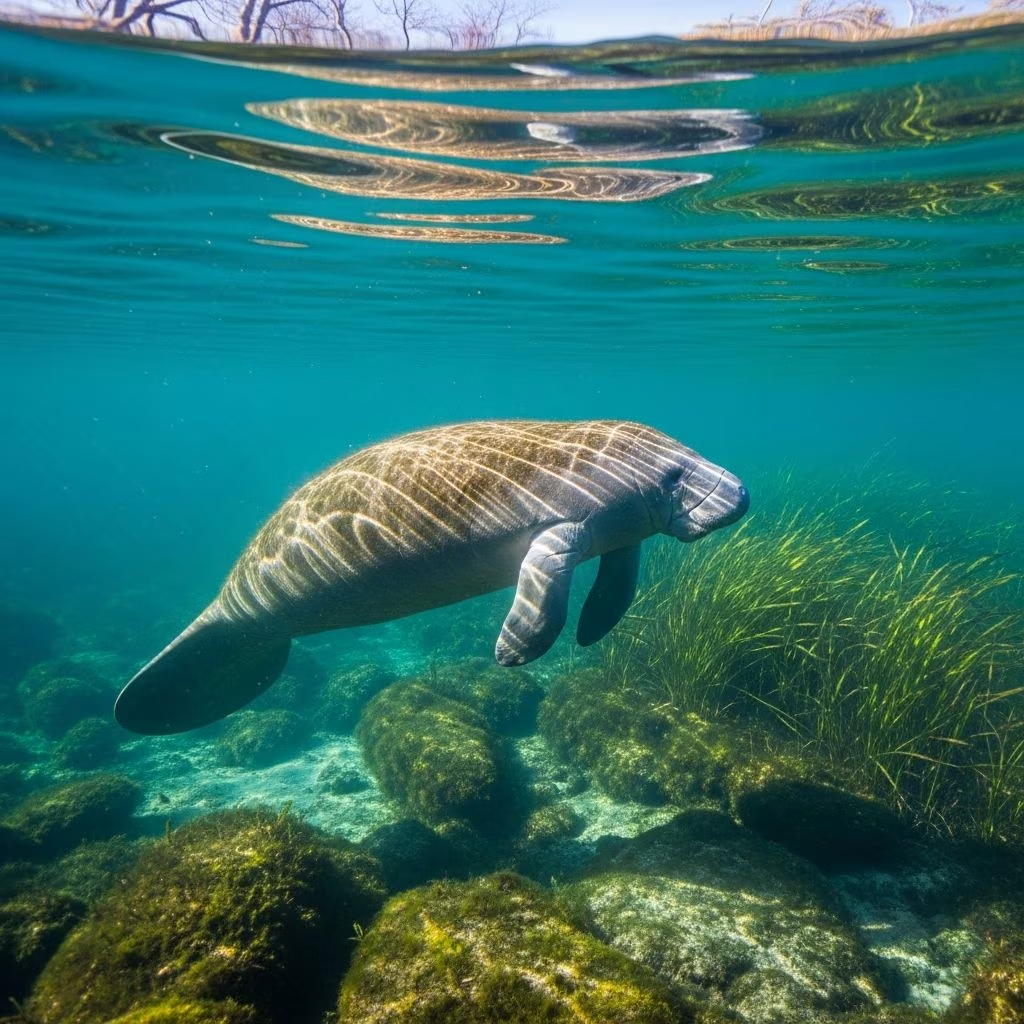
Nestled along the St. Johns River in Orange City, Florida, Blue Spring State Park stands as one of the most remarkable destinations for observing wildlife in its natural environment. The park has earned international recognition not merely as a scenic tourist attraction, but as a critical sanctuary where visitors can witness the remarkable Florida manatee during its seasonal migration. Each winter, hundreds of these gentle marine mammals gather in the park’s pristine spring waters, creating an extraordinary opportunity for nature enthusiasts to study and appreciate these endangered creatures without the intrusion that often accompanies wildlife tourism.
The foundation of Blue Spring State Park’s significance lies in its unique hydrological characteristics. The spring discharges approximately 101 million gallons of water daily from the Florida Aquifer, which is replenished annually through rainfall. More importantly for manatee survival, the spring maintains a constant temperature of 72 degrees Fahrenheit year-round. This consistent warmth proves absolutely essential for the manatees that depend on it.
Manatees possess biological limitations that make such thermal refuges vital. Despite their substantial appearance, these marine mammals have only about an inch of body fat and maintain exceptionally slow metabolic rates. This combination means they cannot generate sufficient heat internally and become vulnerable when water temperatures drop. Manatees cannot tolerate water colder than 68 degrees Fahrenheit for extended periods, making the spring’s stable 72-degree environment literally a matter of survival during months when ambient water temperatures plummet across Florida.
The spring itself is officially named Volusia Blue Spring and represents the largest spring along the St. Johns River. As a first-magnitude spring and designated critical habitat for Florida manatees, it functions as one of the most important congregating sites for this species during winter months.
The history of manatee populations at Blue Spring tells a powerful story about the impact of dedicated conservation efforts. When researchers first documented manatee presence in 1970, just two years before the state park’s establishment, only 14 manatees inhabited the spring run. This alarmingly low number reflected decades of uncontrolled hunting, habitat destruction, and watercraft collisions that had devastated the species.
The implementation of protection measures and park improvements gradually reversed this tragic trajectory. By 2005, after 35 years of consistent conservation work, wintering manatee numbers exceeded 200. The trajectory continued upward through subsequent decades. The most recent data from 2023 documented a record 729 manatees seeking refuge at the park during the winter season. This approximately 52-fold increase from the early 1970s represents one of the most successful wildlife recovery stories in modern conservation.
The recovery demonstrates that comprehensive protection strategies—including regulated boating zones, warm-water refuges, rehabilitation programs, and public education initiatives—can produce measurable, substantial results for endangered species. However, scientists emphasize that significant threats remain, including habitat loss, water pollution, harmful algae blooms, and continued boat strikes.
Blue Spring State Park distinguishes itself through its innovative approach to wildlife observation. The park’s most celebrated feature is its crystal-clear boardwalk that stretches approximately one-third of a mile from the St. Johns River to the natural headspring. This pathway allows visitors to view manatees from an optimal vantage point without entering the water, minimizing human disturbance to the animals’ natural behaviors.
The clarity of the spring water provides exceptional visibility. Visitors can observe intricate details of manatee interactions—mothers nursing calves, social groupings, and individual personality quirks—from the boardwalk without influencing the animals’ natural patterns. This passive observation approach protects manatee welfare while providing visitors with intimate wildlife encounters that rival more invasive tourism models.
The boardwalk environment also supports viewing of companion species. Visitors frequently observe tarpon, sailfin catfish that consume algae from manatee hides, tilapia, and occasionally alligators. This broader ecosystem perspective enriches the wildlife experience beyond the manatees themselves.
Successfully experiencing Blue Spring’s manatee populations requires understanding seasonal patterns and park regulations. The manatee season typically extends from November through March, with peak populations occurring in January and February when water temperatures across Florida are coldest. During this period, the park prohibits swimming in the spring itself to minimize disturbance to the concentrated manatee populations.
Visitors should plan visits during early morning hours when manatee activity typically peaks and lighting conditions are optimal for observation. Weather conditions significantly impact visibility, with calm, clear days providing superior viewing compared to overcast or windy conditions.
While manatees represent the primary attraction, Blue Spring State Park offers additional recreational and educational opportunities. The Hammock Trail traverses a grove of hardwood trees providing shaded exploration through natural Florida landscape. This short, manageable trail leads to the Blue Spring Boil, allowing visitors to witness the powerful spring emergence from closer proximity. The trail showcases beautiful native vegetation and provides excellent photography opportunities, though dogs are not permitted on this particular pathway.
The park’s natural springs ecosystem supports diverse fish populations and waterfowl species. Visitors interested in broader ecosystem observation find ample opportunity to study the interconnected relationships between spring hydrology, vegetation, and animal populations that characterize Central Florida’s natural heritage.
Blue Spring State Park has established collaborative relationships with multiple agencies to advance manatee protection and visitor education. The park’s Manatee Observer Volunteer program prevents visitor harassment of manatees while providing educational opportunities to enhance public understanding of these unique marine mammals.
The park functions as a rehabilitation release site where rescued manatees receive final assessment before returning to wild populations. The controlled spring environment and surrounding waters allow researchers to monitor rehabilitated animals, ensuring successful adaptation to natural conditions. Some manatees even return to the spring during summer months to birth calves in this protected area, indicating the psychological significance of the sanctuary to individual animals.
Digital engagement options extend the park’s educational reach. Save the Manatee Club operates 24/7 webcams providing above-water and underwater footage accessible through their ManaTV platform, allowing global audiences to observe manatee activity regardless of ability to visit in person.
Observing manatees at Blue Spring provides opportunities to study authentic behavioral patterns in a natural setting. Visitors frequently witness nursing calves, social interactions between individuals, and resting behaviors as manatees conserve energy in the cool winter season. The spring’s abundance attracts multiple generations simultaneously, with mothers teaching calves appropriate spring locations and behavioral protocols.
The concentrated manatee populations create a temporary society where individual personalities become apparent to attentive observers. Scarring patterns, swimming styles, and behavioral preferences vary significantly between individuals, allowing visitors to recognize specific animals across multiple visits. This individuality humanizes the species and strengthens emotional connections that drive conservation support among visiting tourists.
Visitors to Blue Spring must adhere to strict regulations protecting manatee welfare. The paramount principle is “passive observation”—viewing animals without active interference or pursuit. Swimming restrictions during peak season eliminate disturbance from bathers. Visitors cannot attempt to touch, feed, or otherwise interact with manatees, with park rangers and volunteer observers enforcing these protections.
Manatees are protected under the Endangered Species Act, making violations subject to significant legal penalties. However, many visitors report that understanding the animals’ vulnerability and the reasoning behind restrictions generates voluntary compliance and enhances appreciation for the viewing experience itself.
Successful Blue Spring visits require appropriate preparation. During warm months when swimming is permitted, visitors should bring swimwear, towels, water shoes, and floatation devices for safe spring exploration. Snorkeling equipment including goggles enhances underwater observation during non-manatee season months. Binoculars aid in viewing manatees from greater boardwalk distances. Camera equipment with macro capabilities captures exceptional wildlife photography opportunities.
Seasonal weather necessitates layered clothing during winter visits when morning temperatures can be surprisingly cool despite the warm spring water. Sunscreen and hats provide essential protection during extended boardwalk time. Most visitors allocate 2-3 hours for comprehensive park exploration, though enthusiastic wildlife observers often spend entire days documenting manatee behaviors and interactions.
The boardwalk design prioritizes accessibility, accommodating visitors with varying mobility levels. Paved pathways maintain relatively level grades suitable for wheelchairs and mobility devices. Restroom facilities, parking areas, and picnic zones provide standard state park amenities. Limited food services exist on-site, so many visitors bring provisions for extended stays.
The park’s relatively compact size and straightforward layout make navigation simple for first-time visitors. Interpretive signage provides context about manatee biology, spring hydrology, and conservation efforts. Park rangers stationed throughout the site offer educational programming and answer visitor questions about animal behavior and ecological principles.
Q: What is the best time to see the most manatees?
A: January and February typically offer peak manatee concentrations when Florida water temperatures are coldest. Early morning hours generally produce optimal viewing as manatees are most active.
Q: Can I swim with the manatees?
A: Swimming in Blue Spring is prohibited during manatee season (November-March). This restriction protects both manatees and visitors, as close human contact can stress the animals.
Q: How many manatees typically gather at Blue Spring?
A: Winter populations have grown from 14 manatees in 1970 to 729 in 2023. Daily counts vary but typically range from 200-400 during peak season.
Q: Are manatees dangerous to humans?
A: Manatees are generally gentle and non-aggressive. Documented attacks are extremely rare, making them one of the safest large marine animals to observe.
Q: What should I wear to visit?
A: Comfortable walking shoes, weather-appropriate clothing, sunscreen, and hats are recommended. During warmer months when swimming is permitted, bring swimwear and towels.
Blue Spring State Park transcends its function as a tourism destination to represent a living laboratory for manatee conservation science and policy. Research conducted at the park has informed species protection strategies, thermal refuge regulations, and wildlife rehabilitation protocols adopted across Florida and beyond. The park’s accessibility to visitors creates constituent support for continued conservation funding and political will to protect remaining natural springs and warm-water habitats.
The success documented at Blue Spring demonstrates that dedicated protection efforts can reverse species decline. However, scientists emphasize that the park alone cannot sustain manatee populations without broader habitat protection, watercraft speed regulation, pollution reduction, and climate change mitigation addressing threats throughout Florida’s marine and freshwater ecosystems.
Visiting Blue Spring connects tourists directly to conservation narratives, transforming abstract environmental concerns into personal experiences with charismatic wildlife. This emotional engagement frequently catalyzes long-term support for environmental protection efforts, extending the park’s influence far beyond its physical boundaries.
