

 Travel Essentials
 Travel Essentials

Explore Bolivia's premier national parks: biodiversity hotspots, high-altitude volcanoes, cloud forests, and vast wetlands await adventurers and nature lovers.
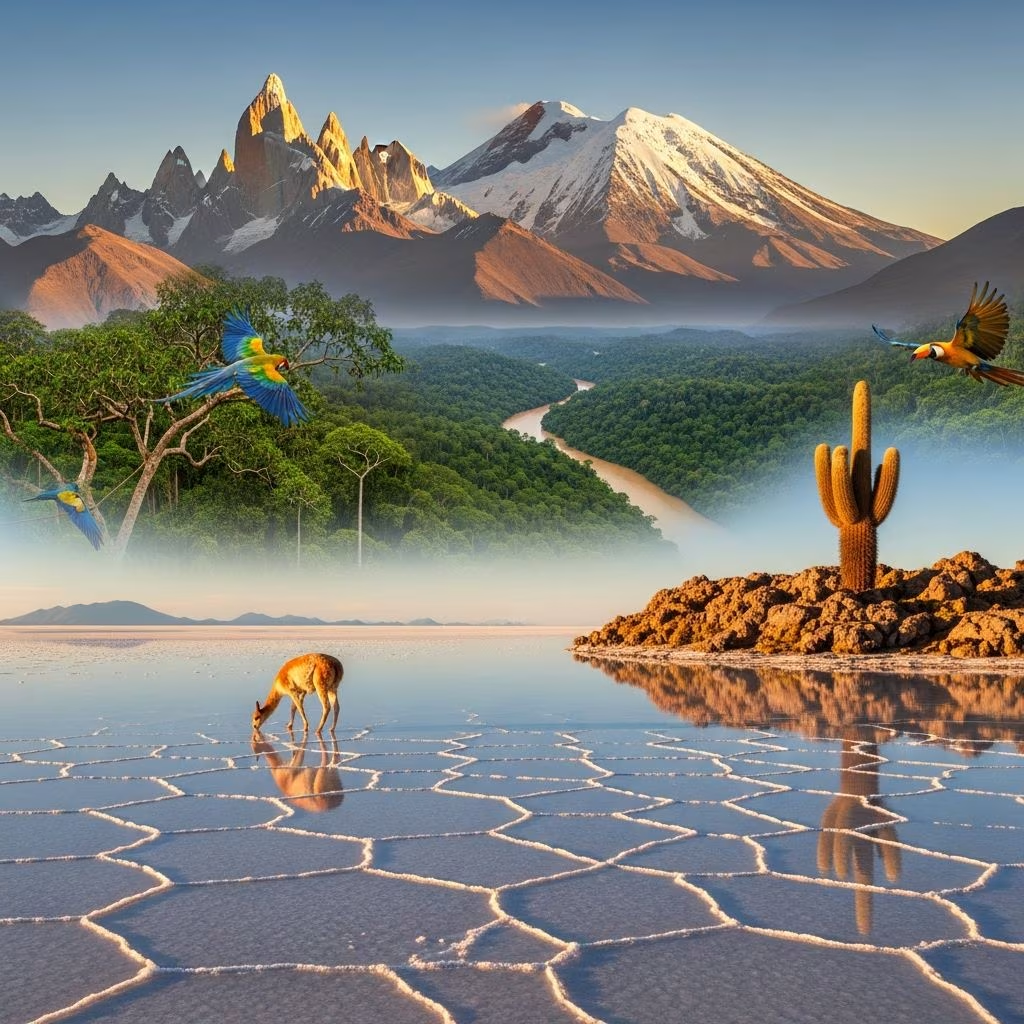 Travel Essentials
Bolivia boasts an extraordinary array of national parks that capture the essence of South America’s wild diversity. From towering Andean volcanoes to lush Amazonian rainforests, these protected areas offer unparalleled opportunities for adventure, wildlife viewing, and cultural immersion. Spanning high-altitude deserts, cloud-shrouded forests, and expansive wetlands, Bolivia’s parks protect some of the planet’s richest biodiversity while providing thrilling experiences for visitors.
Bolivia’s geography is a mosaic of extremes, influencing its national parks’ unique appeal. The country safeguards over 20 protected areas, many featuring ecosystems found nowhere else. These parks not only preserve endemic species but also support indigenous communities and sustainable tourism. Visitors can trek ancient trails, spot elusive jaguars, or witness geological wonders like dinosaur footprints.
Key attractions include volcanic landscapes in the west, tropical lowlands in the east, and transitional zones blending both. With areas larger than some European nations, such as Kaa-Iya del Gran Chaco at 34,411 km², these parks demand respect for their scale and fragility.
Enveloping a vast swath from Andean slopes to Amazon basin, Madidi National Park ranks among the world’s most biodiverse regions. Covering approximately 18,000 km², it harbors over 1,000 bird species, 200 mammals, and countless insects. Jaguars prowl the undergrowth, while rainbow macaws flash through the canopy.
Adventurers access Madidi via Rurrenabaque, embarking on multi-day river trips or jungle hikes guided by local experts. The park’s altitudinal range—from 300m to 5,500m—creates microclimates teeming with orchids, ferns, and rare primates like the black spider monkey. Conservation efforts here emphasize community involvement, ensuring tourism benefits indigenous groups.
Bolivia’s oldest national park, Sajama established in 1939, centers on Nevado Sajama, the nation’s highest peak at 6,542 meters. This high-plains reserve features geothermal hot springs, lava fields, and vicuña herds grazing on Andean grasslands. At elevations above 4,200m, the air is crisp, and vistas stretch to distant cordilleras.
Hikers challenge themselves with ascents to the summit or explore petrified forests and geysers. Aymara communities offer homestays, sharing traditions amid volcanic backdrops. The park’s isolation preserves its pristine quality, ideal for stargazing under some of the clearest skies in the hemisphere.
| Feature | Description | Difficulty Level |
|---|---|---|
| Summit Trek | Multi-day climb to 6,542m | Expert |
| Hot Springs Soak | Thermal baths in altiplano | Easy |
| Vicuña Viewing | Wildlife trails | Moderate |
In central Bolivia, Torotoro National Park unveils Earth’s prehistoric past through its fossil-laden landscapes. Dinosaur tracks from the Cretaceous period dot cavern walls and riverbeds, drawing paleontology enthusiasts. The park’s 164 km² includes blind valleys, caverns with underground rivers, and dramatic canyons carved by erosion.
Guided tours reveal over 100 track sites, alongside red quartzite formations resembling otherworldly sculptures. Caving in Humajalanta reveals crystal chambers, while trekking the Torotoro River offers rappelling opportunities. The dry season (April-October) minimizes flash floods, enhancing safety.
Straddling Andean foothills, Amboró National Park merges Yungas cloud forests with Amazonian lowlands across 4,425 km². Its three-colored clay cliffs—red, yellow, white—inspire the name ‘Amboró’ (three colors). Home to the rare Andean spectacled bear and red-and-green macaws, the park pulses with life.
Trails like the Fig Trees Path wind through epiphyte-draped giants, perfect for birders spotting 800+ species. Caving, rock climbing, and waterfall hikes add adrenaline. Santa Cruz serves as a gateway, with lodges catering to eco-tourists.
Near La Paz, Cotapata National Park descends from 6,000m peaks to 1,200m valleys, showcasing Yungas biodiversity. Toucans, orchids, and spectacled bears thrive in misty forests. The ‘Camino de la Muerte’ (Death Road) skirts its edges, offering biking thrills with jungle views.
Hiking routes vary from gentle paths to strenuous climbs, with waterfalls and viewpoints. It’s a vital corridor for migratory birds and a reforestation success story.
The colossal Kaa-Iya del Gran Chaco, at 34,411 km², dominates eastern Bolivia’s Gran Chaco ecoregion. Dry forests, savannas, and wetlands support jaguars, giant anteaters, and over 350 bird species. Managed with indigenous input, it emphasizes low-impact tourism like horseback riding and wildlife monitoring.
Remote access via Concepción rewards intrepid explorers with untrammeled nature. Wetlands teem with caimans during wet seasons.
Adjoining Kaa-Iya, Otuquis National Park mirrors Brazil’s Pantanal with its 9,000 km² of swamps, rivers, and grasslands. Jabiru storks, hyacinth macaws, and marsh deer abound. Boat safaris reveal capybaras and anacondas; fishing is world-class.
Best visited May-September, it’s a birder’s paradise with 400+ species.
Bolivia’s parks require thoughtful preparation: altitude acclimatization, vaccinations, and guides are essential. Public transport links major sites, but 4x4s aid remote areas. Sustainable practices—leave no trace—preserve these treasures.
| Park | Region | Size (km²) | Established |
|---|---|---|---|
| Madidi | La Paz/Beni | 18,000 | 1995 |
| Sajama | Oruro | 1,002 | 1939 |
| Torotoro | Potosí | 164 | 1989 |
| Amboró | Santa Cruz | 4,425 | 1984 |
| Cotapata | La Paz | 1,675 | 1993 |
| Kaa-Iya | Santa Cruz | 34,411 | 1995 |
| Otuquis | Santa Cruz | 9,000 | 1995 |
Dry season (May-October) offers optimal weather, though Madidi shines year-round for wildlife.
Yes, especially in Madidi and Torotoro for safety and regulations.
Fly to Santa Cruz, then 4×4 or organized tours.
Prevalent in Sajama and Cotapata; acclimatize in La Paz first.
Jaguars, condors, dinosaurs fossils, and 1,000+ birds across parks.
