

 Travel Essentials
 Travel Essentials

Borneo stands as a global hotspot for biodiversity, boasting thousands of plant species, rare mammals, and over 700 birds amid ancient rainforests and Mt Kinabalu's slopes.
 Travel Essentials
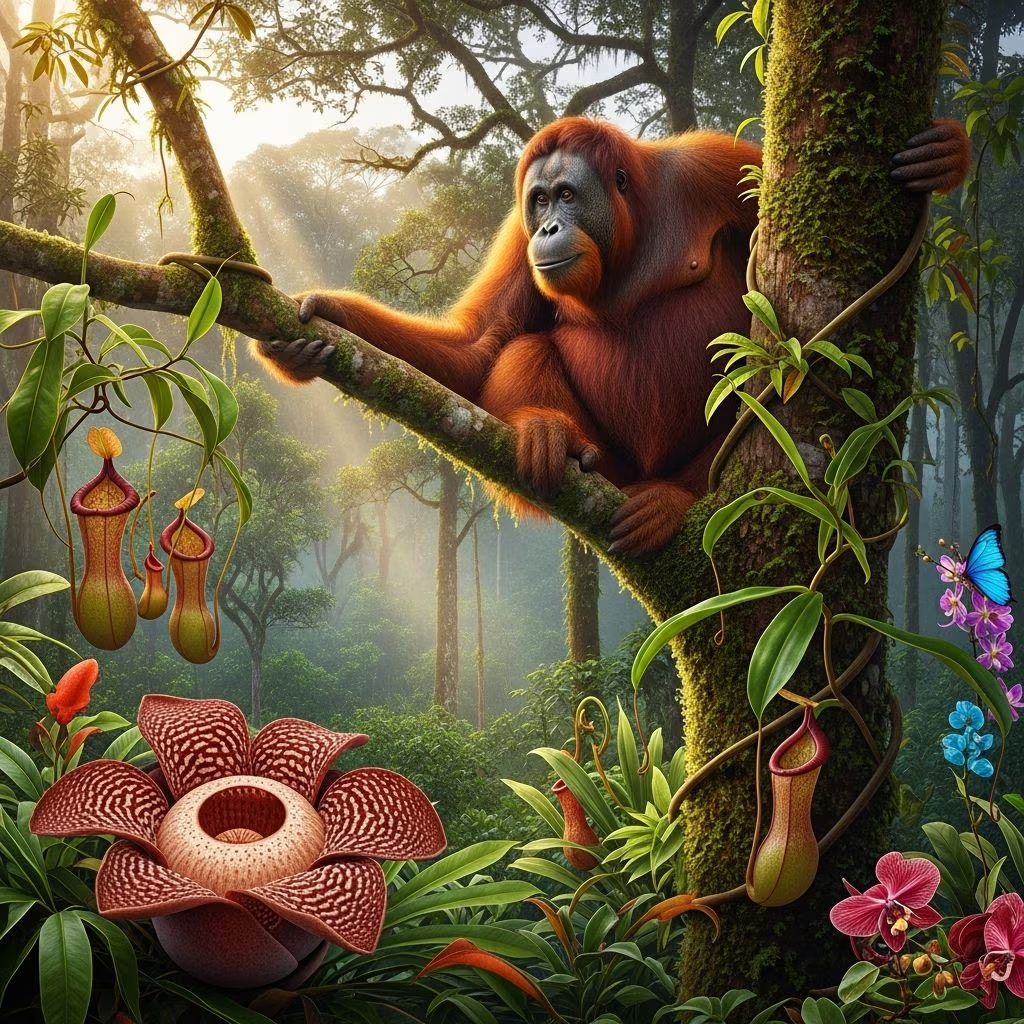
Borneo, the third-largest island on Earth, harbors one of the planet’s most extraordinary concentrations of life forms. Spanning Indonesia, Malaysia, and Brunei, its vast rainforests—among the oldest and most intact globally—support over 15,000 plant species, 222 mammals, and more than 700 birds, many found nowhere else. This natural wealth draws scientists, adventurers, and conservationists eager to witness pygmy elephants, orangutans, and the world’s largest flower.
Borneo’s dipterocarp-dominated rainforests, dating back 140 million years, form a lush canopy that shelters immense diversity. These forests host around 3,000 tree species and 5,000 flowering plants per some estimates, creating microhabitats for countless organisms. Dipterocarps, towering giants up to 60 meters tall, dominate the upper layers, while epiphytes, ferns, and mosses carpet the understory.
Exploration reveals bizarre adaptations: the rafflesia, a parasitic bloom reaching one meter wide with a putrid odor to attract pollinating flies, represents nature’s extremes. Flying frogs glide between branches using webbed feet, and colugos—gliding mammals—navigate the air like living kites. These rainforests also teem with insects; a single hectare might yield thousands of beetle varieties, underscoring Borneo’s role in global biodiversity.
Mount Kinabalu, in Sabah, Malaysia, rises to 4,095 meters, its young granite peak sculpted by glaciers. This mountain’s elevation gradient—from steamy lowlands to alpine meadows—spans multiple climate zones, fostering unparalleled plant richness with over 5,000 species identified, surpassing Europe’s total. Ferns number 608 species here, more than across Africa’s mainland, while mosses on the forest floor grow to record sizes.
Ascending the summit trail reveals montane oak forests transitioning to cloud-shrouded ridges. Orchids proliferate above 1,500 meters, including 800 varieties like the intricate Paphiopedilum slipper orchids. Trackside blooms such as giant buttercups, wild begonias, and raspberries add color. Wildlife includes 326 bird species and 100 mammals, from tree shrews to elusive clouded leopards. Night hikes at Laban Rata refuge (3,272 meters) spotlight nocturnal creatures under starry skies.
| Elevation Zone | Key Flora | Key Fauna |
|---|---|---|
| Lowland (0-1,000m) | Dipterocarps, figs, palms | Orangutans, proboscis monkeys |
| Montane (1,000-2,500m) | Ferns, orchids, mosses | Hornbills, pittas |
| Alpine (>2,500m) | Giant buttercups, pitcher plants | Mountain blackbirds, treeshrews |
Borneo claims over 700 bird species, including 50 endemics, positioning it as a premier birding destination. Sabah’s Danum Valley Conservation Area records 325+ species amid pristine rainforest. Standouts include the rhinoceros hornbill, Borneo’s national icon with its massive casque, and the critically endangered helmeted hornbill.
Labuk Bay and Semenggoh offer combined bird and primate views, with white-crowned shamas and fairy pittas migrating through.
Borneo’s 222 mammals include stars like Bornean orangutans, pygmy elephants, and clouded leopards. Danum Valley alone supports 124 mammals, 72 reptiles, and 56 amphibians per hectare profiles. Proboscis monkeys, with oversized noses, thrive in mangrove forests, while sun bears roam for honey.
Lesser-known treasures: the Bornean bristlehead, a crow-like endemic; mouse deer, the world’s smallest hoofed mammal; and pangolins, scaly anteaters facing poaching threats.
Deforestation from palm oil and logging endangers this bounty; Borneo has lost 30% of forest cover since 1980. Yet, protected areas like Danum Valley (438 sq km) and Kinabalu Park (UNESCO site) preserve core habitats. Community ecotourism at MY Nature Resort integrates lodging with trails showcasing 200 plant species per hectare.
Efforts yield results: rediscoveries like the black-browed babbler highlight resilient populations. Global attention, via organizations like the National Wildlife Federation, pushes for sustainable practices.
Best visited May-October for drier weather. Base in Kota Kinabalu for Kinabalu climbs (2-3 days, guided); fly to Lahad Datu for Danum. Permits required for parks; pack rain gear, binoculars, leech socks.
The rafflesia arnoldii, the largest bloom, emits a corpse-like scent.
Over 700, with hotspots like Danum Valley hosting 325+.
Moderate fitness needed; 6-8 hours up, early summit start.
At Semenggoh and Labuk Bay sanctuaries, yes, during feeding times.
Habitat loss from logging and agriculture; conservation areas mitigate this.
