

 Travel Essentials
 Travel Essentials

Comprehensive packing strategy for rainforest trekking in Borneo, covering specialized equipment, clothing systems, and hydration solutions for humid jungle environments.
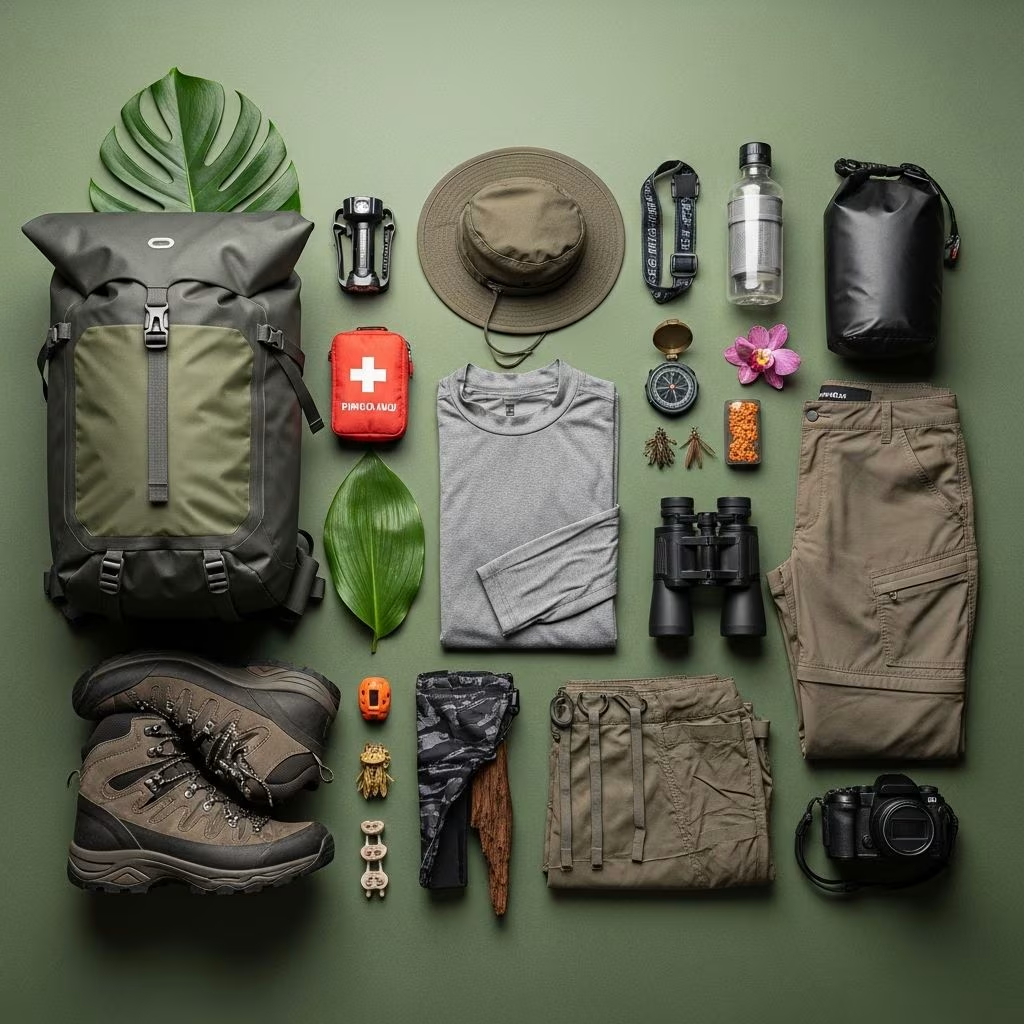 Travel Essentials
Preparing for a rainforest expedition in Borneo requires thoughtful consideration of environmental conditions, physical demands, and safety concerns unique to tropical jungle terrain. The combination of intense humidity, frequent rainfall, challenging topography, and specialized hazards like leeches demands a strategic approach to packing that balances weight management with comprehensive preparation. This guide provides an evidence-based framework for selecting and organizing gear that will maximize comfort, safety, and performance during extended time in Borneo’s demanding wilderness.
Before assembling your gear collection, comprehending the specific environmental conditions you’ll encounter is essential. Borneo’s rainforests maintain exceptionally high humidity levels year-round, with moisture saturation that challenges conventional fabric and equipment performance. Temperature fluctuations between humid lowlands and elevated regions like Mount Kinabalu create layering challenges, while the region’s precipitation patterns—characterized by intense but brief downpours—require specialized water-management strategies.
The jungle ecosystem also presents biological challenges distinct from other trekking environments. Leeches thrive in wet forest conditions and actively seek hosts during humid periods, making protective measures and early detection critical components of any packing strategy. Similarly, the combination of constant moisture, challenging terrain, and extended exposure creates foot health concerns that standard hiking gear may not adequately address.
Successful jungle expeditions in Borneo depend fundamentally on intelligent weight management. Your total luggage for flights should not exceed 20kg, with trek-specific gear limited to approximately 10kg when combined with water supplies. This constraint requires prioritizing absolutely essential items while eliminating redundancy and excess bulk.
The separation between base camp luggage and daily trekking load is critical. Main baggage remains at your hotel in Kota Kinabalu during jungle treks, accessible only upon return. This arrangement allows you to pack comfort items for non-trekking periods while maintaining strict weight discipline for daily jungle travel. A properly selected 60-65 liter backpack with an effective waist strap becomes your primary gear container, sized to accommodate daily supplies plus water without exceeding comfortable carrying capacity.
Maintaining adequate hydration in Borneo’s humidity is non-negotiable for health and performance. The combination of physical exertion and moisture-saturated air accelerates dehydration despite constant perspiration. A minimum of two liters of water capacity is essential, with many experienced trekkers carrying up to four liters depending on trail duration and resupply point spacing.
Modern hydration solutions offer distinct advantages in jungle conditions. Camelbak packs with dust caps protect your water supply from debris and insects while enabling hands-free drinking during active movement. Traditional water bottles remain valuable for their durability and visibility when monitoring consumption. For extended expeditions venturing into remote rainforest areas where water sources may be unreliable, portable water filtration or purification systems provide insurance against waterborne pathogens.
Refill opportunities typically exist at established camp locations and base stations, reducing the weight burden of carrying entire daily supplies from departure points. However, planning water consumption based on verified resupply locations rather than assumptions about availability prevents dangerous dehydration scenarios.
Tropical rainforest clothing selection directly impacts comfort, health, and safety outcomes. The fundamental principle underlying all clothing choices is prioritizing quick-drying synthetic or hybrid fabrics over cotton, which retains moisture and promotes fungal growth and skin degradation in sustained humid conditions.
Your shirt selection should include multiple quick-drying options enabling rotation throughout multi-day treks. Lightweight technical t-shirts designed for athletic activity provide superior moisture management compared to standard cotton alternatives. Long-sleeved trekking tops serve dual purposes: they protect exposed skin from sun exposure, insect contact, and vegetation irritation while maintaining the quick-dry characteristics essential in humid environments.
Packing at least two long-sleeved options allows one to dry while wearing the other, particularly valuable during overnight stops where clothing rotation prevents the skin maceration and fungal proliferation that accompanies constant dampness. If planning extended jungle time beyond five days, additional shirt options become increasingly valuable for maintaining functional dry clothing throughout the expedition.
Trousers serve critical protective functions beyond basic coverage. Long pants are essential defense against leeches, which cannot penetrate fabric to reach skin. However, trouser color selection significantly impacts leech management effectiveness. Leeches are easily visible against light-colored fabric, enabling rapid detection and removal before deep attachment occurs. Conversely, black trousers conceal leeches, allowing extended attachment periods that worsen bite outcomes.
Trouser fabric should be lightweight yet durable, with quick-drying properties matching your shirt system. Zip-off designs provide versatility when weather patterns change or when transitioning between trekking and camp settings. The combination of lightweight construction with synthetic fiber content prevents the weight penalty and moisture retention of traditional cotton trousers while maintaining movement freedom essential for challenging terrain.
Rainforest precipitation patterns—intense, brief, and often without warning—make waterproof protection mandatory rather than optional. A jacket with integrated hood provides chest and arm coverage while protecting your head during sudden downpours. Modern packable rain jackets fold into minimal bulk, integrating efficiently into day-pack storage without consuming critical space.
Waterproof trousers represent secondary protection particularly valuable during extended rainfall or stream crossings. While some experienced trekkers omit pants-level rain protection, their inclusion provides valuable backup insurance for sustained wet conditions that compromise lower body temperature regulation.
Foot health determines expedition success more decisively than any other single factor in rainforest environments. Leather or waterproofed fabric boots with ankle height coverage and thick soles provide essential protection from puncture hazards, unstable terrain, and moisture penetration. Boots must be thoroughly broken in before departure, as new footwear creates blister and friction injury risks incompatible with remote jungle locations.
Specialist trekking socks, worn in before departure, should include at least two pairs to enable rotation. Consider inner socks as an additional layer if your normal sock design supports this approach, creating friction barriers that prevent blister formation. Leech socks—specialized protective garments that cover exposed ankle and lower leg areas—provide targeted defense against leech attachment and represent valuable insurance despite occupying minimal pack space.
Foot powder application prevents moisture accumulation that creates fungal growth environments, particularly critical during overnight stays where feet remain damp for extended periods. Sandals reserved exclusively for in-camp use and river crossings protect foot skin from constant abrasion while providing opportunity for air drying during rest periods.
Headlamp technology fundamentally enables safe jungle movement during pre-dawn and twilight periods essential to many expedition itineraries. Mount Kinabalu treks, for example, require ascending during darkness to reach summits by sunrise, making reliable hands-free illumination absolutely essential. Professional-grade headlamps like those manufactured by established outdoor equipment companies provide brightness levels suitable for terrain navigation and hazard identification.
Spare batteries should constitute a non-negotiable pack item, as dead lighting sources create genuine safety risks in unfamiliar terrain. Fresh battery installations immediately before departure optimize lighting duration and brightness during critical usage periods.
Two to three-season sleeping bags provide temperature regulation appropriate for Borneo’s tropical conditions while remaining sufficiently warm for elevated regions where nighttime temperatures decline significantly. Lightweight construction minimizes pack weight while maintaining insulating function. A sleeping sheet or lightweight sleep liner protects you from unfamiliar sleeping surfaces while reducing direct contact with potentially damp or contaminated materials.
Inflatable sleep pads or air mattresses provide ground insulation and comfort cushioning that dramatically improves sleep quality during multi-night jungle stays. These items occupy minimal packed volume while delivering substantial quality-of-life improvements that enhance safety through better rest and recovery.
Gardening gloves with protective padding serve unexpected but critical functions in jungle trekking. Handholds on unstable terrain often require grasping small tree stumps, vines, and rough vegetation—situations where bare hands face laceration and splinter risks. Padded gloves prevent hand injuries that compromise grip strength and create infection risks in hygiene-limited environments.
Sunglasses with UV protection shield eyes from intense tropical radiation while preventing debris contact during rapid movement through vegetation. Hats with wide brims and neck coverings provide cumulative sun protection that reduces heat-related illness risk and prevents facial dehydration.
The perpetual moisture environment of tropical rainforests creates storage challenges for electronics, documents, and sensitive equipment. Multiple dry bags in varying sizes address this challenge comprehensively. A large dry bag can line your main backpack interior, providing complete compartment protection. Smaller specialized dry bags protect cameras, phones, and electronics from water penetration during river crossings and unexpected immersion scenarios.
Waterproof zip-lock bags of various dimensions serve supplementary storage functions, organizing separated clothing categories and preventing clean dry garments from contact with damp trekking wear. This organizational strategy facilitates the wet-dry clothing rotation essential to maintaining functional dry garments throughout extended jungle stays.
Lightweight plate, bowl, mug, and cutlery combinations minimize weight while providing essential meal consumption tools. Titanium or aluminum construction substantially reduces weight compared to traditional ceramic or heavy metal alternatives. Many experienced trekkers discover that multi-functional items—like cups serving double duty as water containers—maximize utility while minimizing total piece count.
Extended memory card supplies and backup batteries become critical as digital storage fills rapidly during visually rich jungle environments. Multiple memory cards distributed across separate dry bags protect against catastrophic data loss if one storage device fails or becomes damaged. Battery backup systems and portable charging solutions ensure continued documentation capability throughout extended expeditions.
Foot powder application prevents moisture-related fungal infections and maintains skin integrity during extended wet-boot wear periods. High-SPF sunscreen protects exposed skin from intense tropical radiation that accelerates sun damage despite cloud cover. Insect repellent appropriate for tropical environments helps minimize mosquito exposure and potential disease transmission. Basic first-aid supplies including blister treatment products, antibiotic ointment, and pain relief medications address predictable health challenges that arise during physically demanding expeditions.
Successful expedition preparation involves systematic organization that ensures no critical items are omitted while respecting weight constraints. Creating category-based packing lists—clothing systems, hydration, protection, sleeping, and miscellaneous—provides organizational frameworks that prevent overlooked essentials. Laying out complete systems before packing enables visual verification that each component is present and accounted for.
Consider how frequently you’ll need specific items when arranging pack organization. Daily-use items should occupy accessible external pockets or top pack sections, while heavier or infrequently accessed items belong in lower pack sections where weight distribution remains optimal.
A minimum of two liters represents the baseline, with four liters appropriate when refill points are distant or water quality is questionable. Terrain difficulty and individual perspiration rates influence actual requirements, making higher capacity valuable for safety margins.
Leech socks create physical barriers that prevent these parasitic creatures from reaching exposed skin on ankles and lower legs—areas where leeches commonly attach during humid jungle conditions. They provide reliable protection against uncomfortable bites that create infection risks in remote settings.
Long pants represent essential protection against leeches and vegetation hazards during trekking, while shorts provide comfort and ventilation around camp. Including both enables purpose-appropriate garment selection for different expedition phases.
Two to three-season bags suit tropical conditions while providing necessary warmth for elevated regions where nighttime temperatures decline significantly. This range balances weight constraints with adequate thermal protection.
