

 Travel Essentials
 Travel Essentials

Explore 16 historic sites that shaped the American Revolution. Complete guide to the Freedom Trail with maps, tips, and visitor information.
 Travel Essentials
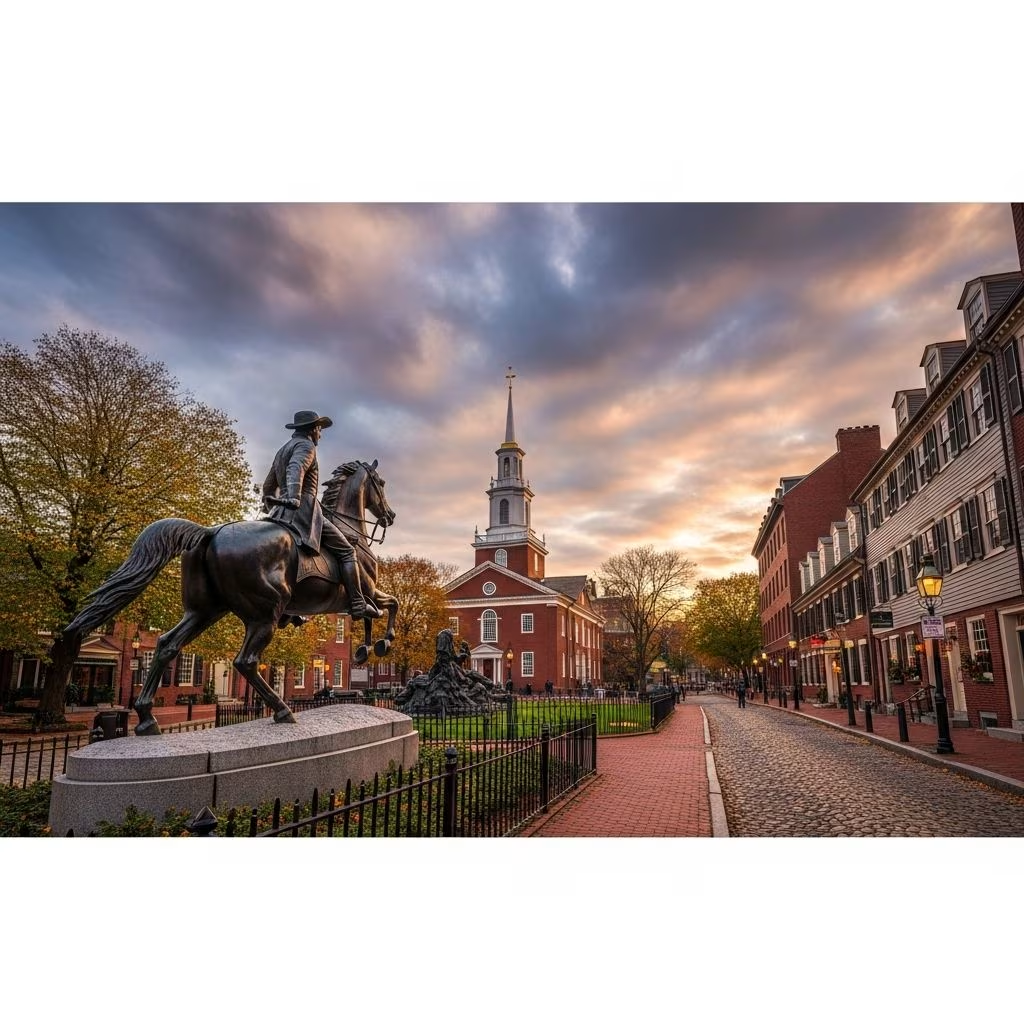
Boston’s Freedom Trail represents one of America’s most significant walking journeys, spanning 2.5 miles through the heart of the city. This distinctive red brick pathway connects 16 historically important locations that collectively tell the story of the American Revolution and the nation’s struggle for independence. The trail winds through multiple neighborhoods, including Downtown, the North End, and Charlestown, creating an accessible way for visitors to experience centuries of American history in a single outing.
The path itself serves as both a practical navigation tool and a symbolic representation of Boston’s role in shaping American democracy. Whether you’re a history enthusiast, a casual tourist, or a student of American heritage, the Freedom Trail offers an engaging way to connect with the events and figures that defined a nation.
Most visitors begin their exploration at Boston Common, America’s oldest public park, located in the downtown area. The official visitor information center is situated at 139 Tremont Street, providing maps and guidance for those planning their route. While the complete trail covers 2.5 miles, the time required to traverse it varies significantly depending on how extensively you explore each location.
Typical guided walking tours complete the journey in approximately 90 minutes and cover roughly one mile of terrain. However, visitors who wish to spend meaningful time at each historic site should budget three to four hours or more. The trail concludes in Charlestown at the USS Constitution, though visitors can explore the sites in any order they prefer.
One of the Freedom Trail’s greatest advantages is its accessibility. The route is entirely free to walk, with no admission required to follow the red brick line through Boston’s streets. Individual historic sites along the trail typically offer free admission as well, though some venues may charge optional entrance fees for enhanced experiences or museum exhibits. This affordability makes the Freedom Trail an excellent option for families and budget-conscious travelers.
The journey through downtown Boston introduces visitors to the political and civic centers of Revolutionary Boston. Boston Common serves as the logical starting point, representing America’s oldest public park and a gathering place for colonial political discourse. From this central location, visitors proceed to the Massachusetts State House, the seat of colonial government where important political decisions were made.
Park Street Church follows, an important religious institution that played a role in Boston’s spiritual and community life. The adjacent Granary Burying Ground contains the graves of Revolutionary icons including Paul Revere, John Hancock, and Samuel Adams, making it one of the trail’s most historically significant stops.
Continuing downtown, visitors encounter King’s Chapel and its adjacent burying ground, representing Boston’s Anglican religious heritage. The site of the first public school marks another important educational milestone in American history, followed by the Old Corner Bookstore, which served as an intellectual center for 19th-century Boston.
The Old South Meeting House holds particular significance as the location where the Boston Tea Party was organized, making it central to understanding colonial resistance to British taxation. Nearby, the Old State House Museum represents another crucial governmental building, and the adjacent Boston Massacre site marks where British soldiers fired on colonists in 1770, an event that intensified revolutionary sentiment.
Faneuil Hall, often called the “Cradle of Liberty,” functioned as a marketplace and meeting place where patriots gathered to discuss independence. This iconic structure remains one of the trail’s most recognizable and visited locations.
The trail’s path through the North End reveals residential and commercial aspects of colonial Boston. The Paul Revere House offers insight into the domestic life of one of the Revolution’s most famous figures. Nearby, the Old North Church holds legendary status as the location where the famous signal “one if by land, and two if by sea” was displayed to warn of approaching British forces.
Copp’s Hill Burying Ground provides another resting place for Revolutionary figures and offers views across to Charlestown. The trail then leads visitors across the Charles River to Charlestown’s historic waterfront.
In Charlestown, visitors encounter the USS Constitution, affectionately known as “Old Ironsides,” a naval vessel that served with distinction during the War of 1812 and represents American maritime power. The trail culminates at the Bunker Hill Monument, a towering obelisk commemorating one of the Revolution’s earliest major battles.
For independent travelers, walking the trail with a physical map or printed guide provides complete flexibility and control over pacing. The red brick line embedded in the sidewalk creates a clear pathway, though visitors should note that in some areas undergoing construction or repair, portions of the brick may be temporarily missing. The National Park Service offers a free official app that provides detailed information about each site, allowing visitors to function as their own guide with professional interpretive content.
Guided walking tours led by knowledgeable local experts or National Park Service rangers offer contextual information that enriches the experience. Some tours feature guides dressed in 18th-century costumes, creating an immersive historical atmosphere. These guided experiences work particularly well for families, school groups, and visitors seeking deeper historical context.
The Old Town Trolley Tours system provides hop-on, hop-off service with 17 designated stops, allowing visitors to explore at their own pace while minimizing walking fatigue. This option suits visitors with limited mobility or those preferring not to walk the entire 2.5-mile route.
For those unable to visit in person or seeking supplementary information, audio tours provide professional narration and historical context. The National Park Service app can be downloaded before visiting, enabling offline access to complete tour information.
| Aspect | Details |
|---|---|
| Total Distance | 2.5 miles |
| Number of Sites | 16 historic locations |
| Recommended Duration | 2-4 hours depending on depth |
| Starting Point | Boston Common, 139 Tremont Street |
| Ending Point | USS Constitution, Charlestown |
| Cost | Free (individual sites may charge) |
| Best Season | Year-round, though spring and fall offer ideal weather |
| Neighborhoods Covered | Downtown, North End, Charlestown |
Comfortable walking shoes are essential, as the trail involves continuous pavement walking over uneven historic streets. Weather-appropriate clothing, water, and sun protection will enhance your comfort. A camera or smartphone helps capture memories of iconic locations. Consider downloading the NPS app beforehand for offline access to interpretive information.
Morning hours typically offer the best conditions with fewer crowds and optimal lighting for photography. Spring and fall provide ideal weather, though the trail operates year-round with varying seasonal atmospheres. Summer weekends attract the largest crowds, while winter visits offer a quieter, more contemplative experience.
The trail’s central downtown location makes it easy to integrate with other Boston attractions. Faneuil Hall connects to the Quincy Marketplace for dining and shopping. The North End provides opportunities for Italian cuisine and shopping in historic surroundings. Charlestown offers additional Revolutionary War sites and waterfront attractions beyond the main trail.
Yes, a complete Freedom Trail visit can be accomplished in one day. A brisk 90-minute guided tour covers about one mile, while a comprehensive self-guided exploration taking 3-4 hours allows meaningful time at each site.
While the brick-lined walking path covers urban terrain with some uneven areas, the trolley option provides an excellent alternative for those with mobility concerns. Individual sites vary in accessibility; contact ahead for specific accommodation information.
Commercial areas like Faneuil Hall and the North End offer restaurant and retail establishments with public facilities. Public restrooms are also available at some of the historic sites themselves.
Absolutely. While the trail follows a geographically logical sequence, visitors can explore sites in any order they prefer. The only requirement is that they wish to experience Boston’s Revolutionary heritage.
The official Freedom Trail website offers detailed information about each location, while the NPS app provides downloadable audio content. Local bookstores and visitor centers distribute detailed guides with historical context.
The Freedom Trail transcends typical tourist attractions by serving as an educational pathway through America’s foundational moments. Walking the same streets where Revolutionary figures debated independence, where citizens resisted unjust taxation, and where the nation’s oldest institutions took root creates a visceral connection to history. For students, it provides immersive historical learning. For international visitors, it offers insight into American democratic values and their Revolutionary origins. For all visitors, it demonstrates how ordinary citizens in one historic city catalyzed extraordinary change that shaped a nation.
