

 Travel Essentials
 Travel Essentials

A comprehensive guide to Boston's diverse neighborhoods, each with unique attractions, culture, dining, and historical significance for travelers and residents.
 Travel Essentials
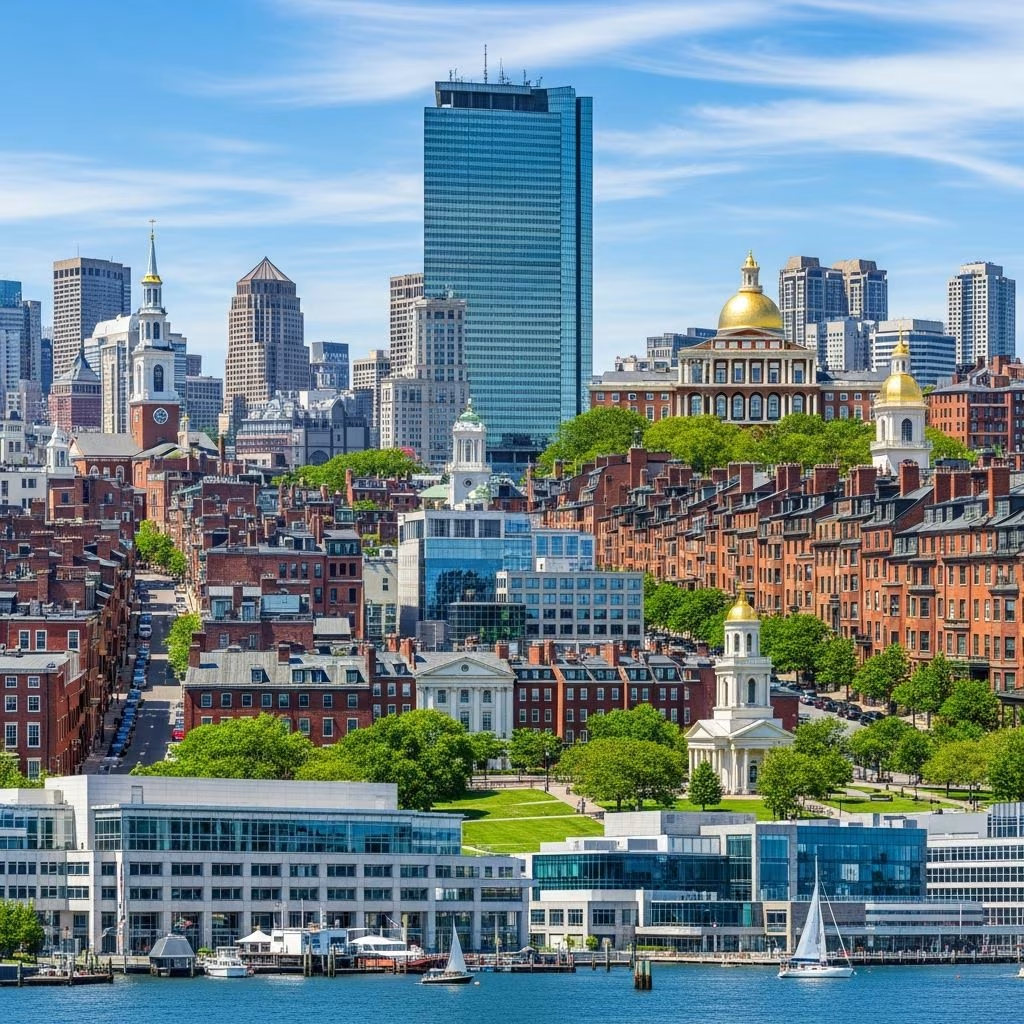
Boston’s geographic landscape extends far beyond its downtown core, encompassing numerous distinct neighborhoods that each contribute uniquely to the city’s character and appeal. From historic enclaves steeped in Revolutionary War heritage to contemporary revitalized districts brimming with culinary innovation, Boston’s communities offer visitors and residents an opportunity to experience authentic urban life across multiple dimensions. Understanding these neighborhoods provides crucial context for anyone seeking to navigate the city meaningfully and discover the authentic experiences that make Boston a compelling destination.
Boston’s oldest districts represent the physical embodiment of American colonial history. These neighborhoods, collectively known as Boston Proper, emerged during the 1600s when Puritan settlers established their communities in specific areas that would shape the city’s foundational character. The concentration of historic architecture, preserved landmarks, and cobblestone streets in these areas creates an immersive experience that transports visitors back several centuries.
Beacon Hill epitomizes the quintessential image many hold of historic Boston. The neighborhood is characterized by gas-lit lanterns lining narrow, winding streets, elegant federal-style rowhouses constructed from red brick, and window boxes overflowing with seasonal flowers. This picturesque setting creates an atmosphere of refined domesticity that has attracted residents seeking a harmonious blend of urban convenience and residential tranquility. Charles Street, which borders the base of Beacon Hill, functions as the primary commercial corridor, featuring antique dealers, independent boutiques, and neighborhood coffee establishments. As one progresses up the hill itself, the environment becomes progressively quieter and more decidedly residential in character.
The North End operates as Boston’s oldest continuously inhabited residential neighborhood, presenting an entirely different historical narrative centered on immigration and cultural continuity. Known colloquially as Little Italy, this district maintains a decidedly old-world atmosphere despite its position within the modern metropolitan area. The neighborhood’s narrow, densely packed streets contain numerous sites of historical significance, including the Paul Revere House, representing one of Boston’s oldest structures. The Old North Church, where the famous “one if by land, two if by sea” signal lanterns were hung to coordinate the American Revolution, remains standing as a testament to the neighborhood’s pivotal role in American independence. Contemporary visitors encounter this historical legacy alongside vibrant Italian cultural traditions, with numerous cafes, restaurants, and bakeries maintaining culinary practices passed through generations.
Historic Downtown and the West End complete this quartet of Boston Proper neighborhoods. Downtown Crossing, located along Washington Street, functions as a pedestrian-friendly commercial hub within the larger Downtown neighborhood, featuring modern retail establishments, restaurants, and revitalized buildings that coexist with contemporary condominium towers. The West End, following significant redevelopment, has emerged as a mixed-use district combining commercial activity with entertainment venues, including Massachusetts General Hospital and the TD Garden sports complex.
Back Bay represents Boston’s answer to European urban refinement, organized around a grid system and characterized by systematic planning that distinguishes it from older, more organically developed neighborhoods. The neighborhood centers on Copley Square, home to architectural landmarks including Trinity Church and the Boston Public Library, which regularly host cultural festivals and farmers’ markets. Newbury Street functions as the primary retail corridor, attracting shoppers seeking art galleries, designer boutiques, and sidewalk cafes that create an atmosphere of cosmopolitan leisure. Commonwealth Avenue provides an alternative promenade featuring monuments honoring significant figures in Boston’s historical development.
The South End offers an alternative expression of Victorian-era urban living, distinguished by distinctive architectural character and contemporary cultural vitality. The neighborhood contains numerous Victorian brownstone residences and has attracted a diverse demographic including young professionals, established families, and a vibrant LGBTQ+ community. The South End maintains one of Boston’s most dynamic food scenes, featuring establishments ranging from casual bistros to acclaimed fine dining restaurants. Beyond culinary attractions, the neighborhood hosts nearly 30 parks and has developed into a significant arts district. The SoWa district (the stretch of Harrison Avenue south of Washington Street) functions as the creative epicenter, containing artist studios, galleries, and a popular weekend market that draws visitors seeking handcrafted goods and artisanal products.
Chinatown-Leather District presents a unique cultural and commercial environment within Boston’s urban fabric. Boston’s Chinatown has maintained continuous cultural presence since the late nineteenth century, establishing itself as a premier dining destination offering authentic cuisine alongside vibrant nightlife options. The adjacent Leather District, located to the east, preserves beautiful nineteenth-century brick warehouse architecture and historic buildings that have been selectively adapted for contemporary use.
Bay Village occupies a distinct residential niche, featuring quiet tree-lined streets illuminated by elegant gas lamps and bordered by historic brick homes constructed during the 1800s. The neighborhood functions primarily as a residential enclave rather than a commercial destination, though it maintains cultural significance as a center for the city’s drag performance scene, centered around established venues such as Jacque’s Cabaret.
Fenway/Kenmore extends beyond its primary association with baseball culture to encompass Boston’s academic and cultural infrastructure. While Fenway Park remains the neighborhood’s most recognizable landmark, the district also hosts the Isabella Stewart Gardner Museum, the Museum of Fine Arts, and Symphony Hall, establishing it as a significant cultural nexus. The Lansdowne Street corridor contains numerous bars and clubs that attract students and young professionals seeking entertainment options.
Boston’s waterfront has undergone substantial transformation, creating the Seaport District as a contemporary embodiment of urban revitalization. This relatively recent addition to Boston’s neighborhood landscape features top-tier dining establishments, maritime history museums, and convenient access to harbor islands. The Seaport represents a successful integration of commercial development with cultural preservation, maintaining connections to Boston’s maritime heritage while facilitating modern amenities and attractions.
Mission Hill functions as an evolving neighborhood containing students, long-term residents, and working families within close proximity to significant institutions. The neighborhood’s character derives partially from its position adjacent to the Longwood Medical Area, housing Brigham and Women’s Hospital and other medical research facilities. Tremont Street functions as the primary commercial corridor, featuring neighborhood bars, coffee shops, and restaurants serving the diverse resident population.
West Roxbury, located approximately twenty minutes from downtown Boston, provides a more suburban atmosphere while maintaining convenient metropolitan access. Centre Street serves as the primary commercial spine, containing dining establishments, bakeries, coffee shops, specialty retailers, and boutiques. The neighborhood provides access to natural attractions including Allandale Woods and Millennium Park, offering scenic trails and landscaped recreational spaces.
Roxbury holds profound historical significance within American civil rights and cultural narratives. The neighborhood served as home to Malcolm X during his formative years and contains deep historical connections to the broader civil rights movement. Beyond its historical importance, Roxbury maintains a vibrant contemporary cultural scene, featuring excellent dining establishments, striking murals throughout the neighborhood, and active music venues that continue to produce artistic contributions with regional and national impact.
Jamaica Plain attracts residents and visitors seeking additional space and enhanced access to green areas in comparison to more densely developed neighborhoods. The district contains a strong community identity and offers a more residential character while maintaining convenient access to downtown employment and cultural attractions.
South Boston has established itself as one of America’s most recognizable Irish Catholic communities, serving as the setting for numerous films including The Town, The Departed, and Good Will Hunting. The neighborhood extends from the Broadway T stop to the waterfront, with the southern portions becoming progressively quieter and more residential. M Street and East Broadway function as primary commercial corridors, containing bars, coffee shops, and neighborhood establishments. The neighborhood undergoes dramatic transformation after dark, with quiet daytime streets yielding to one of Boston’s most significant nightlife scenes.
Dorchester represents Boston’s largest neighborhood while simultaneously maintaining exceptional diversity in terms of ethnic composition, cuisine, and cultural traditions. Major institutions including the John F. Kennedy Presidential Library and UMass Boston anchor the neighborhood, which provides access to numerous international dining options, public parks, beautiful murals, and bustling commercial districts in areas such as Upham’s Corner, Ashmont, Fields Corner, and Four Corners.
Boston’s public transportation system provides access to neighborhoods through multiple transit lines, including bus networks and the rapid transit system known as the T (Massachusetts Bay Transportation Authority). Different neighborhoods align with specific transit stations, making advance knowledge of transportation connections valuable for planning efficient visits. The Orange Line connects neighborhoods including Roxbury and Jamaica Plain with downtown areas, while other transit options facilitate access to more peripheral communities.
| Neighborhood | Primary Character | Key Attractions | Best For |
|---|---|---|---|
| Beacon Hill | Historic, upscale residential | Gas-lit streets, Charles Street shops, Boston Common | Historic charm, boutique shopping |
| North End | Historic Italian, walkable | Paul Revere House, Old North Church, Italian restaurants | Italian dining, history exploration |
| Back Bay | Victorian, upscale commercial | Copley Square, Newbury Street, Trinity Church | Shopping, fine dining, cultural venues |
| South End | Victorian, trendy, diverse | Brownstones, SoWa galleries, restaurants | Art scene, food culture, vibrant nightlife |
| Seaport | Modern, waterfront development | Harbor views, dining, maritime history | Contemporary attractions, waterfront recreation |
| Fenway/Kenmore | Academic, entertainment hub | Fenway Park, museums, concert venues | Sports, cultural institutions, nightlife |
| Roxbury | Historic, culturally significant | Civil rights sites, murals, music venues | Cultural exploration, local food scene |
| Dorchester | Diverse, largest neighborhood | JFK Library, international cuisine, parks | Authentic dining, diverse experiences |
The question of which Boston neighborhood best suits particular visitors or residents cannot be answered with universal prescriptions, as neighborhood preferences depend entirely on individual priorities, lifestyle preferences, and specific objectives. Visitors prioritizing historical authenticity and architectural preservation may find Beacon Hill or the North End most appealing. Those seeking contemporary cultural vitality and innovative dining establishments might prefer the South End or Seaport District. Individuals desiring suburban atmosphere with metropolitan convenience often gravitate toward Jamaica Plain or West Roxbury.
First-time visitors frequently concentrate their exploration on historically significant neighborhoods and established cultural institutions. Extended stays or permanent relocation might warrant investigation of less immediately visible neighborhoods that offer strong community identity, specific cultural advantages, or lifestyle compatibility unavailable in more prominent districts.
Each Boston neighborhood developed according to specific historical circumstances, demographic patterns, and economic forces, resulting in distinctive architectural character, community identity, and cultural emphasis. Colonial neighborhoods maintain original street patterns and period architecture, while Victorian districts feature systematic planning and distinctive design languages.
Beacon Hill, the North End, and Back Bay offer concentrated historical attractions, established dining and retail options, and convenient access to primary transit lines, making them particularly suitable for first-time visitors unfamiliar with the city.
South Boston, Roxbury, and the North End maintain strong community identities and local establishments that offer glimpses into authentic Boston culture less accessible in more commercialized neighborhoods. Each neighborhood contains distinctive food traditions, entertainment venues, and community spaces reflecting genuine resident experiences.
Beacon Hill, Back Bay, the North End, and the South End are particularly pedestrian-friendly, with narrow streets, interesting architecture, and numerous street-level retail and dining establishments encouraging exploration on foot.
The T (MBTA transit system) provides access to all major neighborhoods through bus and rapid transit lines. Parking availability varies significantly, with central neighborhoods offering limited street parking and commercial lots, while peripheral neighborhoods typically provide more abundant options.
