

 Travel Essentials
 Travel Essentials

Complete Boston travel guide featuring historic landmarks, cultural museums, neighborhood walks, dining recommendations, and practical visitor tips for an unforgettable experience.
 Travel Essentials
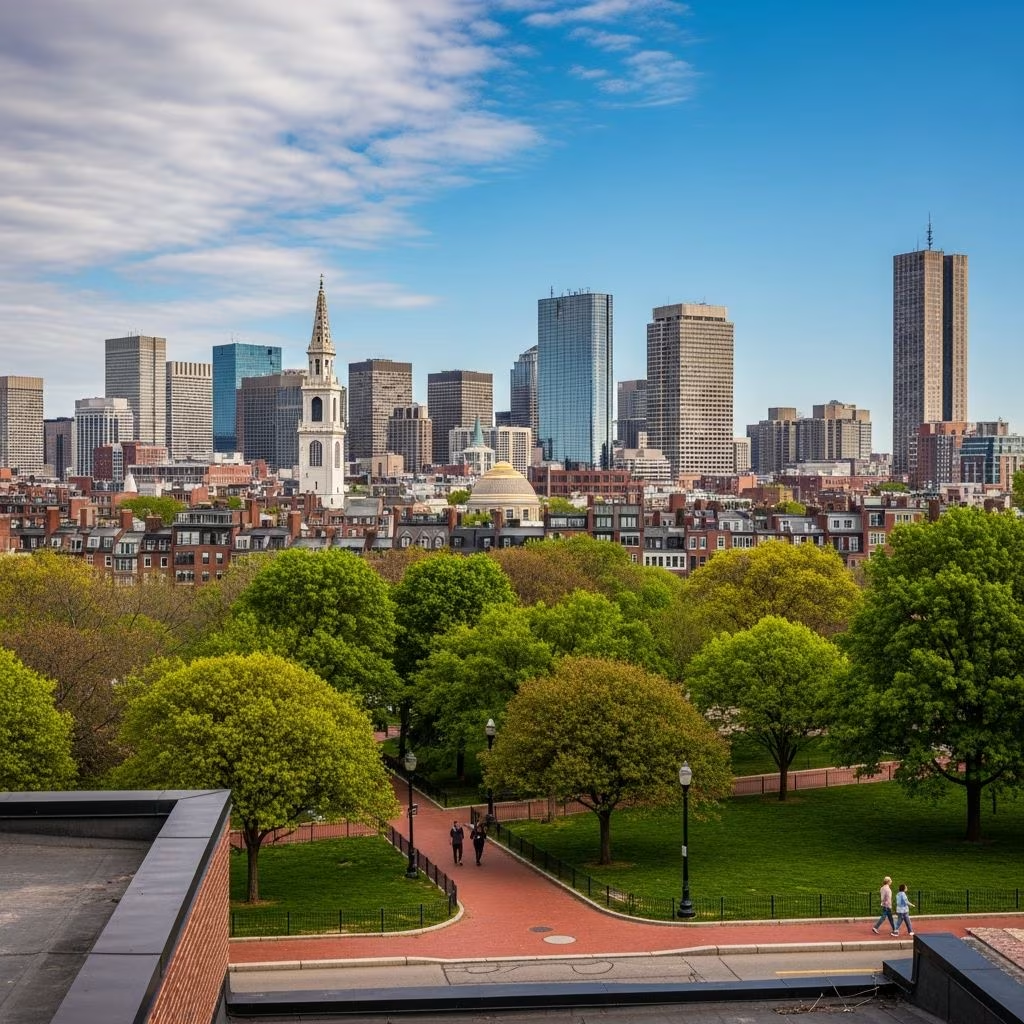
Boston stands as one of America’s most historically significant and culturally rich destinations, offering visitors an unparalleled blend of colonial heritage, contemporary arts, diverse neighborhoods, and exceptional cuisine. Whether you’re a first-time visitor or returning explorer, this comprehensive guide will help you navigate the city’s attractions, transportation options, and distinctive neighborhoods that make Boston a must-visit destination on the East Coast.
Boston’s compact size and walkable layout make it one of the most accessible major American cities for pedestrian exploration. The city center is densely packed with historic sites, museums, and neighborhoods that can be explored on foot, though understanding the various transportation options will enhance your visit.
The public transportation system, known locally as the “T,” provides comprehensive subway, bus, and trolley service throughout the city and surrounding areas. For frequent public transit users, a CharlieCard offers convenient payment across all modes of transportation at economical rates. The system’s accessibility and affordability make it an attractive alternative to expensive taxi services or ride-sharing apps.
Beyond the T, Boston’s walkability is one of its greatest advantages. The city’s relatively flat terrain and interconnected streets create natural pedestrian routes between major attractions. Comfortable walking shoes are essential, as many of the city’s best experiences—from discovering hidden alleyways to stumbling upon neighborhood cafes—happen at street level. Many visitors report that walking allows them to understand the city’s character in ways that other transportation methods cannot replicate.
No visit to Boston is complete without experiencing the Freedom Trail, a 2.5-mile red-brick pedestrian pathway that connects sixteen of the city’s most historically significant sites. This self-guided route begins at Boston Common, the nation’s oldest continuously maintained public park, and winds through downtown Boston, the North End, and Charlestown.
The trail’s design allows visitors to follow the red-brick line independently, though many choose to book guided tours where costumed historians bring Revolutionary War stories to life with dramatic presentations and detailed historical context. Whether self-guided or tour-led, the Freedom Trail provides comprehensive insight into the events and personalities that shaped American independence.
Key sites along the trail include:
The trail also connects to Faneuil Hall Marketplace and Quincy Market, historic gathering places that now combine dining, shopping, and cultural experiences in a lively pedestrian environment.
Each of Boston’s neighborhoods possesses its own character, history, and attractions. Understanding these distinct areas helps visitors experience authentic Boston beyond the major tourist sites.
Beacon Hill represents quintessential Boston elegance, featuring narrow gaslit streets, Federal-style townhouses, and antique brick sidewalks that transport visitors to the nineteenth century. Acorn Street, one of the neighborhood’s most photographed locations, showcases perfectly preserved colonial architecture and atmospheric streetscapes. The neighborhood’s winding lanes encourage leisurely exploration, with numerous boutiques, antique shops, and neighborhood restaurants tucked into ground floors.
Adjacent to Boston Common, the Public Garden offers a more cultivated landscape with formal flower beds, the famous Swan Boats that have operated since 1877, and manicured walking paths. The surrounding Back Bay neighborhood combines historic architecture with modern amenities, featuring tree-lined streets, upscale shopping on Newbury Street, and cultural institutions like Trinity Church and the Boston Public Library. This area’s blend of heritage and contemporary vitality makes it particularly appealing to visitors seeking both history and modern urban energy.
Boston’s oldest neighborhood, the North End, maintains strong Italian cultural traditions through family-owned restaurants, bakeries, and street-level social scenes. Narrow streets, historic buildings, and the neighborhood’s pedestrian-oriented character create an Old World atmosphere that contrasts sharply with modern Boston.
The Boston Harborwalk, a 43-mile network of public pathways and beaches, offers scenic waterfront experiences with views of Boston Harbor Islands and the city skyline. This area combines historic maritime heritage with contemporary waterfront development, featuring restaurants, museums, and recreational opportunities.
Boston’s world-class museums and cultural venues rival those of any American city. The Museum of Fine Arts houses an exceptional collection including the largest assemblage of Claude Monet paintings outside France, along with works by Van Gogh, Renoir, and artifacts from ancient Egyptian, Asian, and African civilizations. The museum’s comprehensive collection spans from ancient times to contemporary art.
The Isabella Stewart Gardner Museum presents an entirely different museum experience—a Venetian-style palace with a stunning interior courtyard filled with artistic treasures collected by the museum’s eccentric founder. The museum is also renowned for housing the world’s most famous unsolved art heist, adding intrigue to its cultural significance.
For those interested in specific historical narratives, the Black Heritage Trail and Women’s Heritage Trail offer walking tours that highlight Boston’s contributions to abolition movements and women’s rights activism—histories often underrepresented in mainstream historical narratives. These heritage trails provide context for understanding Boston’s broader social and political significance.
The Boston Public Library, completed in 1895, represents architectural grandeur and cultural aspiration, featuring ornate reading rooms, artistic murals, and an interior courtyard that creates a sanctuary-like atmosphere in the heart of the city.
Boston’s sports culture permeates the city’s identity. Fenway Park, home to the Boston Red Sox baseball team, combines historic architecture with passionate fan culture. Even visitors without particular baseball interest often find the stadium atmosphere contagious, and guided stadium tours are available during off-season periods. The nearby area offers excellent restaurants and bars catering to pre- and post-game crowds.
Beyond baseball, Boston hosts numerous sporting venues and recreational opportunities. The city’s geographic location near mountains, beaches, and coastal areas provides outdoor recreation options throughout the year, including whale-watching excursions available from April through October.
Boston’s food scene combines traditional New England classics with innovative contemporary cuisine. Lobster rolls and clam chowder remain signature dishes, but the city now offers diverse international cuisines reflecting immigration patterns and cultural evolution.
Boston’s Chinatown district provides authentic dim sum experiences, Hong Kong barbecue, and traditional herbal tea cultures. Food tours of the neighborhood allow visitors to sample multiple cuisines while learning about cultural history and immigration patterns. Time Out Market Boston and similar food halls aggregate offerings from multiple acclaimed restaurants and chefs, allowing visitors to sample diverse cuisines in single locations.
Neighborhood exploration often rewards visitors with independent restaurants, ethnic cuisines, and local establishments that represent Boston’s authentic dining culture more authentically than large chain restaurants.
Boston offers numerous free and low-cost attractions that allow budget-conscious visitors to experience the city’s highlights. Boston Common, Public Garden, portions of the Harborwalk, and Harvard Yard require no admission fees. The Freedom Trail can be self-guided without purchasing a guided tour.
For visitors planning to visit multiple museums and attractions, city passes that bundle admission to major sites can provide significant savings—up to 50 percent compared to purchasing individual admissions. These passes typically include Freedom Trail access, Fenway Park tours, and museum admissions.
Boston’s four distinct seasons each offer particular attractions. Autumn brings spectacular foliage throughout the city’s parks and tree-lined streets, creating visual splendor that photographers and nature enthusiasts particularly appreciate. Spring arrives with blooming flowers in the Public Garden and warming temperatures that encourage outdoor exploration. Summer supports outdoor concerts, waterfront activities, and evening strolls. Winter transforms the city into a snow-covered landscape with holiday decorations and ice-skating venues.
Boston offers diverse accommodation options ranging from luxury hotels to budget hostels and vacation rentals. Staying in different neighborhoods provides distinct experiences—Beacon Hill and Back Bay offer convenient location and upscale amenities, while staying in the North End or other neighborhood areas provide more local, authentic experiences with potentially better value.
Visitors with additional time can explore Harvard University’s historic campus in nearby Cambridge, examining museums and academic architecture that influenced American intellectual history. The New England Aquarium, Boston Harbor Islands, and nearby coastal towns provide day-trip opportunities that expand Boston’s geographic and experiential reach.
Boston represents a unique American destination where historical significance, cultural institutions, neighborhood character, and contemporary vitality converge. Whether visitors prioritize Revolutionary history, artistic experiences, diverse neighborhoods, or culinary adventures, Boston offers substantive engagement with American heritage and culture. The city’s walkability, efficient public transportation, and diverse attractions make it accessible to visitors of varying interests and physical abilities, while its distinctive character ensures that repeat visitors continually discover new aspects of this historically significant city.
