

 Travel Essentials
 Travel Essentials

Explore Botswana's integration of contemporary African art, museum collections, and historical sites with luxury safari experiences across the Okavango Delta and beyond.
 Travel Essentials
Botswana has emerged as a distinctive destination that transcends the traditional safari experience by weaving together world-class wildlife encounters with sophisticated cultural programming and artistic expression. This transformation reflects a broader shift in luxury travel, where discerning visitors seek meaningful engagement with local communities, artistic traditions, and historical narratives rather than passive observation of natural landscapes. The nation’s approach to hospitality now embraces curated collections of contemporary African art, partnerships with indigenous craftspeople, and preservation of archaeological heritage as integral components of the guest experience.
Recent renovations and reimaginations of Botswana’s premier accommodations have positioned them as more than just base camps for wildlife viewing. Properties like Xigera Safari Lodge exemplify this evolution, functioning as living galleries that celebrate southern Africa’s most accomplished artists and craftspeople. When establishments undergo comprehensive redesigns, architects and ownership teams increasingly prioritize collaboration with curatorial collectives such as Cape Town’s Southern Guild, which identifies and promotes emerging and established talents from across the region.
The integration of art into lodge design extends beyond mere decoration. Commissioned pieces often reflect the natural environment and cultural narratives of their surroundings. For instance, ceramic sculptures inspired by natural forms—such as those drawing from woodpecker nests and plumage—create dialogue between human creativity and the wildlife that guests encounter during their stays. This curatorial approach transforms accommodations into educational spaces where visitors develop deeper appreciation for regional artistic movements and contemporary African creativity.
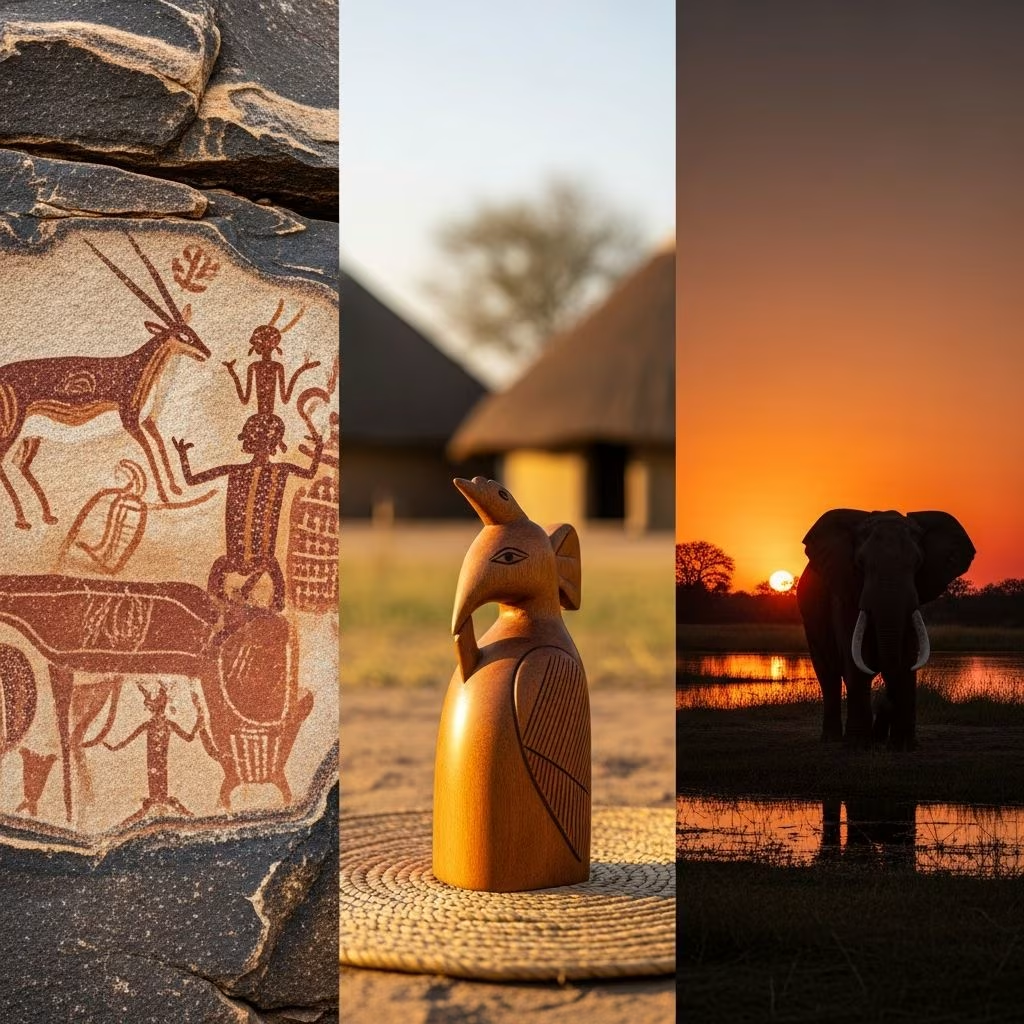
The foundation of Botswana’s artistic heritage rests upon millennia of creative expression by indigenous populations. The earliest documented artists in the region were the Bushman people, who developed distinctive mastery in rock painting and three-dimensional craftsmanship using materials including wood, leather, and ostrich shell. Their work demonstrates sophisticated understanding of composition, color application, and symbolic representation.
Contemporary Bushman artists have successfully transitioned their traditional visual language into the commercial art market. Their paintings characterize vibrant compositions populated by human and animal imagery, predominantly depicting the intricate relationships between their communities and the natural world. Modern artisan cooperatives continue these traditions while adapting them for contemporary collectors, producing items such as beaded necklaces, leather accessories, and reconstructed hunting implements based on historical designs.
The Lentswe-la-Oodi Weavers cooperative demonstrates how cultural preservation can sustain communities while maintaining artistic integrity. Established in 1973 through Swedish initiative in Oodi village north of Gaborone, this organization has evolved into a fully community-owned enterprise operated predominantly by women artisans. The cooperative produces hand-woven wall hangings, tapestries, runners, table linens, cushion covers, jackets, and bedspreads, with all designs originating from the weavers themselves.
The production process emphasizes authenticity and quality craftsmanship. Wool undergoes hand-dyeing before being hand-woven according to individual designer specifications. Motifs commonly depict rural landscapes, fauna from the surrounding environment, and geometric patterns rooted in cultural traditions. These pieces serve as functional art while providing economic opportunity for artisans who maintain creative autonomy over their work.
Beyond contemporary artistic expression, Botswana contains extraordinary archaeological and historical resources that inform visitor understanding of the region’s deep human occupation and cultural evolution. Multiple sites across the country preserve evidence of habitation patterns, technological development, and spiritual practices spanning thousands of years.
The Manyana rock painting site near Gaborone represents one of the most visited repositories of indigenous artistic expression in the region. The paintings, spread across five separate rock cliff faces, feature images of giraffes, antelope, human figures, and geometric designs dating between 1100 and 1700 AD, likely created by Khoe herders with distinctive click-language traditions. The site maintains gazetted status as a National Monument, with controlled access managed through an on-site custodian and a small museum at the entrance.
The Tswapong Gorges preserve some of southern Africa’s earliest evidence of Bantu-speaking peoples, with archaeological materials scattered throughout the landscape. Pottery fragments decorated with intricate patterns date to the first millennium, while collapsed iron smelters indicate sophisticated metallurgical practices. Red ochre paintings sheltered beneath rocky overhangs further demonstrate the region’s layers of artistic and technological achievement.
The Tswapong region additionally contains walled ruins constructed in the style characteristic of the Great Zimbabwe era, alongside remains of ancient village settlements and Iron Age archaeological sites. These remnants include stone arrangements, storage structures, ceramic vessels, and metal tools that collectively illustrate sophisticated settlement organization and resource management strategies.
The Moremi Gorge, designated as a National Monument and administered by the Department of National Museum, Monuments and Art Gallery, holds tremendous religious and spiritual significance for local communities. The Moremi Mannonye Conservation Trust, operating under Botswana Tourism Organisation support, engages residents in developing the area through non-consumptive ecotourism frameworks that respect cultural values while providing economic incentives for preservation.
Botswana’s institutional infrastructure for cultural preservation and contemporary artistic promotion reflects national commitment to heritage conservation and creative development. The Botswana National Museum functions as a multidisciplinary custodian of the nation’s cultural and natural heritage, overseeing the National Art Gallery, Octagon Gallery, National Library, and 78 national monuments distributed throughout the country. These institutions maintain extensive natural history and cultural collections while conducting mobile outreach programs that bring exhibitions and educational content to communities outside Gaborone.
The national museum system sponsors weekly radio programming dedicated to oral traditions, ensuring that knowledge transmission occurs through contemporary media channels while preserving storytelling practices fundamental to Batswana culture. The art galleries regularly host exhibitions featuring Africa’s most accomplished contemporary artists, providing platforms for established and emerging creators to reach national and international audiences.
Smaller communities maintain their own institutional repositories of local history and cultural material. The Phuthadikobo Museum in Mochudi, situated atop a hill overlooking the village, preserves the history of the Bakgatla tribe and broader Batswana heritage. Originally constructed as a secondary school in 1921 under Regent Isang Pilane’s direction—historically significant as Botswana’s first institution offering secondary education—the building transitioned to museum use in 1976 and has expanded its collections substantially through subsequent decades.
The museum houses numerous historical photographs donated by Isaac Schapera, the renowned anthropologist whose meticulous documentation of twentieth-century Batswana life provides invaluable insight into cultural transformation and societal change. The Khama III Memorial Museum in Serowe honors the legacy of the Khama family through its Victorian-era building, recently restored and containing furniture, uniforms, correspondence, and photographs that chronicle Botswana’s political and historical development.
The Kgosi Sechele I Museum in Kanye occupies the former colonial police station constructed in 1902, now devoted to preserving the disappearing cultural practices of the Bakwena people. Educational programming for schoolchildren, arts and crafts initiatives, and guided village tours provide comprehensive understanding of local history and contemporary cultural expressions.
The most sophisticated travel experiences in Botswana now deliberately sequence wildlife encounters with cultural programming, archaeological site visits, and artistic engagement. Lodges operating in the Okavango Delta and surrounding regions increasingly offer structured opportunities for guests to visit artisan communities, participate in museum tours, and explore historical sites alongside traditional game drives and water-based excursions.
This integrated approach allows visitors to understand the human dimensions of the landscapes they traverse. Rather than perceiving wilderness as pristine and unpopulated, guests develop awareness of millennia of human occupation, creative expression, and sustainable resource management that shaped contemporary ecosystems. Conversations with contemporary artists illuminate connections between traditional and contemporary African creativity, while visits to archaeological sites contextualize the depth of cultural continuity across generations.
Tourism infrastructure increasingly emphasizes direct relationships between visitors and artisan communities. Cooperative outlets throughout Botswana offer contemporary versions of traditional craft forms—bows, arrows, leather goods, beaded accessories—created by descendants of the original artisans who developed these techniques. This economic model provides sustainable income while incentivizing continuation of traditional skills transmission within families and communities.
When lodges and tour operators prioritize purchases from local artisans and support community-based cultural initiatives, tourism becomes a mechanism for cultural preservation rather than commodification. Visitors gain authentic engagement with living traditions while providing economic rationale for younger generations to maintain ancestral practices alongside contemporary opportunities.
Botswana’s dry season from May through September offers optimal wildlife viewing conditions, though cultural sites and museums remain accessible year-round. Some archaeological sites may become temporarily inaccessible during heavy rains, so verification with local contacts is advisable during the rainy season.
Yes. Cooperative outlets throughout Botswana facilitate direct purchases from artisans. Lodges frequently arrange visits to artisan communities, and urban galleries in Gaborone showcase contemporary works. Purchasing directly supports local economies more effectively than retail intermediaries.
Accessibility varies significantly. Popular sites like Manyana feature developed infrastructure with custodians and museums. Remote sites require specialized guides and may present physical challenges. Lodges and tour operators can arrange appropriate access based on visitor interests and abilities.
English functions as an official language in Botswana and is widely understood. Setswana serves as the primary indigenous language. Many artisans and cultural guides speak both languages, facilitating communication for international visitors.
Botswana’s contemporary hospitality sector demonstrates sophisticated understanding that meaningful travel experiences require integration of natural, artistic, and historical dimensions. By positioning safari lodges as curated galleries, supporting artisan communities, preserving archaeological heritage, and maintaining institutional collections, the nation has created a distinctive tourism model that benefits visitors, artists, historians, and local communities simultaneously. This approach transforms wildlife viewing from passive consumption into comprehensive cultural engagement, establishing Botswana as a premier destination for travelers seeking authentic connection with African creativity, history, and contemporary artistic expression.
