

 Travel Essentials
 Travel Essentials

Comprehensive guide to visiting Brasilia, Brazil's planned modernist capital, featuring top attractions, practical travel tips, and must-see architectural landmarks.
 Travel Essentials
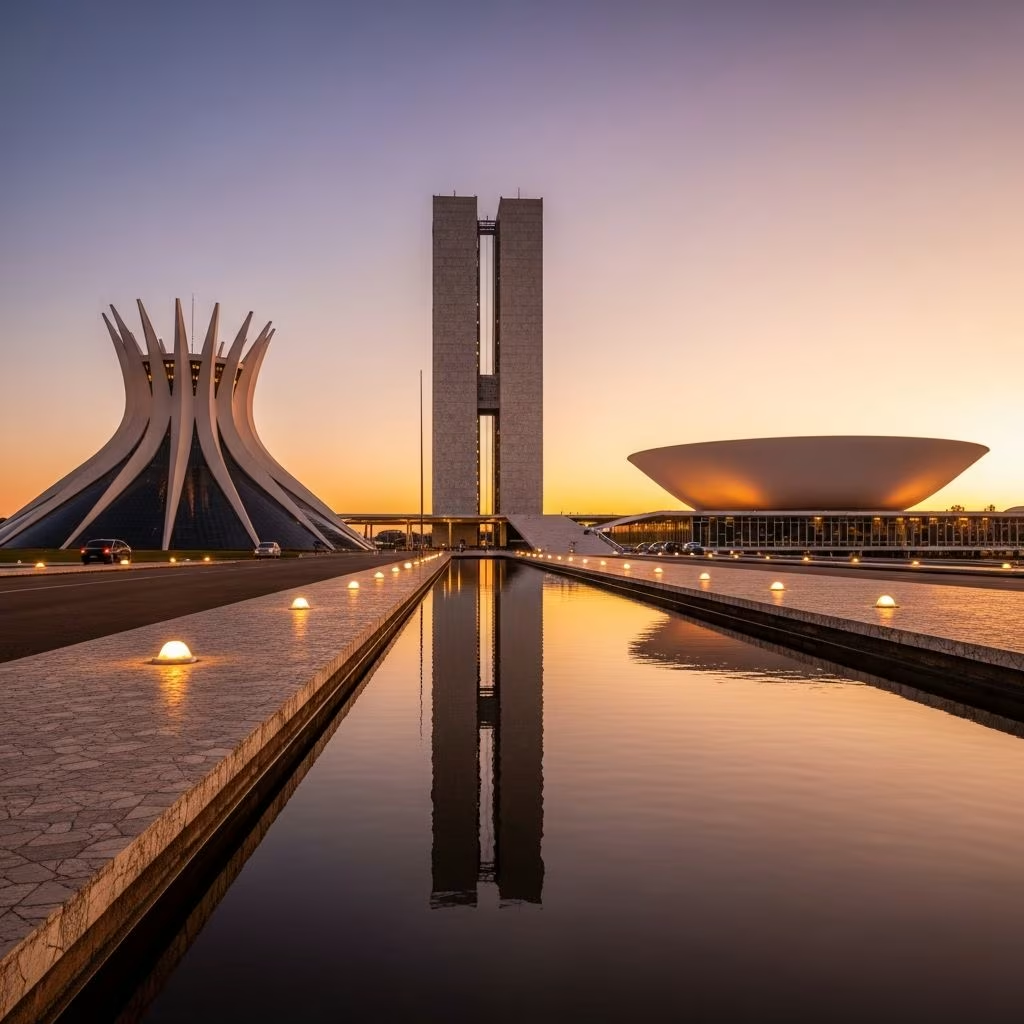
Brasilia stands as one of the world’s most distinctive capital cities, representing a bold experiment in urban planning and modernist design. Built in the late 1950s and inaugurated in 1960, this purpose-built city was created to shift Brazil’s focus inland and establish a new seat of government away from the coastal Rio de Janeiro. Today, Brasilia continues to captivate visitors with its stunning architecture, innovative city design, and vibrant cultural scene.
Unlike traditional cities that develop gradually over centuries, Brasilia was meticulously planned and constructed with remarkable speed. The city’s layout follows a distinctive pattern designed by Brazilian architect Lúcio Costa, with the city’s shape resembling an aircraft when viewed from above. This intentional design creates distinct sectors and zones, each serving specific purposes within the metropolitan area.
The city has been recognized as a UNESCO World Heritage Site, acknowledging its significance as a masterpiece of modernist architecture. The combination of bold architectural statements, wide avenues, and carefully organized neighborhoods makes Brasilia a living laboratory of 20th-century urban design philosophy. Architecture enthusiasts from around the globe visit Brasilia specifically to witness these innovative approaches to city planning and building design.
Brasilia is well-connected to other parts of Brazil through multiple transportation methods. The city serves as an important hub for both domestic and international travel within the country.
Most international and long-distance visitors arrive via Presidente Juscelino Kubitschek International Airport, which connects Brasilia to major Brazilian cities and some international destinations. The airport is located conveniently close to the city center, making it easily accessible for travelers.
For those traveling by car from other regions, Brasilia has two primary entrance routes. Visitors arriving from southern and center-west states typically use the Saída Sul entrance, while travelers from other states generally enter through the Saída Norte. Once inside the Federal District, directional signage for the Zona Central helps guide visitors to hotel areas and main attractions. The distinctive Eixo Rodoviário road, identifiable by its characteristic double strips of yellow raised pavement markers, runs through the city’s south, central, and north sectors.
While public transportation exists throughout the city, many visitors find that renting a vehicle provides greater flexibility for exploring Brasilia’s dispersed attractions. Several car rental companies operate in the city, offering various vehicle options to suit different travel needs.
Brasilia’s greatest attractions center on its remarkable buildings and public spaces that define modernist architecture.
This central plaza represents the heart of Brazil’s government and stands as one of Brasilia’s most significant spaces. The plaza accommodates buildings representing the three branches of government and serves as a symbolic center for the nation’s political authority.
The Planalto Palace functions as the official residence of the Brazilian President and serves the executive branch of government. This iconic structure exemplifies modernist design principles with its distinctive architectural features. The Itamaraty Palace, another important government building, showcases the sophisticated design aesthetic that characterizes Brasilia’s administrative sector.
The Metropolitan Cathedral represents a striking example of modernist religious architecture, featuring an innovative dome design that creates a unique worship experience. Beyond government buildings, the National Museum of the Republic houses important collections reflecting Brazilian culture and history.
Beyond its architectural achievements, Brasilia offers natural attractions and outdoor recreation opportunities for visitors seeking outdoor experiences.
This area encompasses Brasilia’s natural wonders and provides access to several significant natural sites. Three notable waterfalls dot the landscape: Cachoeira Poço Azul, Cachoeira Rainha, and Chapada Imperial. These cascades offer scenic beauty and attract visitors interested in water features and natural landscapes. The region also provides camping facilities for those wishing to immerse themselves in Brasilia’s natural environment.
This man-made lake has become a focal point for recreation and leisure activities. The water body supports various activities including swimming, paddle-boarding, and boating, making it popular for water sports enthusiasts. The lake’s surrounding neighborhoods feature restaurants, recreational facilities, and scenic viewpoints that enhance the visitor experience.
Brasilia National Park provides opportunities for nature exploration and hiking within the metropolitan area. Accessing these natural areas typically requires personal transportation, reinforcing the importance of car rental for comprehensive city exploration.
Brasilia’s restaurant scene reflects both Brazilian traditions and international influences. The city offers dining options ranging from casual establishments to upscale restaurants. Local cuisine emphasizes regional Brazilian flavors, while many establishments cater to international tastes. The diversity of dining venues means visitors can experience authentic local food or familiar international cuisines depending on their preferences.
Brasilia provides various lodging options to accommodate different travel styles and budgets.
Brasilia welcomes visitors throughout the year, though climate considerations and seasonal factors may influence travel preferences. The city sits in the Central Highlands of Brazil, contributing to its mild climate compared to coastal regions.
Travelers should plan sufficient time to explore architectural landmarks, potentially booking guided tours to understand the design philosophy behind significant structures. Tour operators offer specialized architectural tours that provide insights into the modernist principles shaping the city. Such guided experiences enhance appreciation for Brasilia’s unique urban environment.
Like any major city, visitors should exercise standard travel safety precautions. The organized nature of Brasilia’s grid-like design makes navigation more straightforward than many Brazilian cities, though orientation can initially seem challenging due to the unfamiliar layout.
Brazil uses the Real (BRL) as its currency. Credit cards and debit cards are widely accepted in hotels, restaurants, and shops throughout Brasilia. ATMs are readily available for cash withdrawals.
Portuguese is the primary language spoken in Brasilia. While English may be spoken in tourist-oriented establishments, learning basic Portuguese phrases enhances interactions with locals and enriches the travel experience.
Beyond architectural sightseeing, Brasilia hosts various cultural institutions showcasing Brazilian art, history, and contemporary creativity. Museums and galleries provide deeper understanding of Brazilian culture and complement architectural exploration. These institutions contribute to Brasilia’s identity as a cultural hub beyond its role as a political center.
A well-structured visit to Brasilia should balance architectural sightseeing with cultural exploration and natural experiences. First-time visitors often benefit from combining self-guided exploration with organized tours to maximize understanding of the city’s unique character.
Brasilia represents a complete modernist urban experiment created within a short timeframe. The city was designed according to unified architectural principles, creating a coherent visual environment unlike traditional organically-developed cities. UNESCO recognized these qualities by designating Brasilia as a World Heritage Site.
A minimum three-day visit allows time to see major architectural landmarks, explore cultural institutions, and experience the city’s unique layout. Extended visits provide opportunity for more leisurely exploration and visits to natural attractions in surrounding areas.
The organized, planned nature of Brasilia’s design makes it more navigable than many cities, though the unfamiliar grid-based layout may initially seem confusing. Having a map or GPS device assists orientation, and many attractions are clearly signposted.
Access to some government buildings may be restricted, though some offer tours during specific times. Contacting local tourism information beforehand helps determine current access policies for official buildings.
While public transportation exists, renting a car provides maximum flexibility for visiting dispersed attractions throughout the city. Public transit works for hotel and downtown areas, but natural attractions and some sites require personal transportation.
Brasilia offers a distinctive travel experience unlike other Brazilian destinations. The city appeals particularly to architecture enthusiasts and those interested in innovative urban planning, though cultural amenities and natural attractions provide interest for diverse visitor preferences. The combination of architectural achievement, cultural institutions, and outdoor recreation creates a well-rounded destination worthy of inclusion in Brazilian travel itineraries.
