

 Travel Essentials
 Travel Essentials

Explore Brazil's diverse landscapes, rich cultural heritage, vibrant cities, and authentic experiences that extend far beyond beaches and jungles.
 Travel Essentials
Brazil captivates millions of travelers annually, yet many arrive with incomplete expectations shaped by iconic imagery and tourist branding. The reality is far richer and more multifaceted than postcards suggest. Understanding what truly defines Brazil as a destination—from its staggering ecological diversity to its layered cultural complexity—transforms how visitors experience the country. This comprehensive guide reveals dimensions of Brazil that savvy travelers should know before packing their bags.
While sandy shores and dense rainforest ecosystems dominate popular imagination, Brazil’s natural landscape encompasses far more sophisticated and varied environments. The country’s northeastern corridor features dramatic geographical formations that challenge conventional perceptions of tropical destinations. The states of Ceará and Maranhão showcase expansive dune systems paired with crystalline natural pools, creating desert-like formations that seem impossibly placed within South America. These environments offer adventure seekers authentic experiences diverging sharply from crowded coastal resorts.
Interior plateaus reveal additional ecological treasures. Tocantins, Brazil’s landlocked state, preserves vast savannah terrain punctuated by the extraordinary Jalapão park, a landscape so distinctive it feels like an entirely different continent. The park’s unique combination of mineral formations, natural springs, and endemic species creates hiking opportunities that rival better-known destinations.
Mountain regions present another dimension entirely. Chapada Diamantina and Chapada dos Veadeiros national parks deliver dramatic elevations, expansive valley vistas, and powerful waterfall systems. These highland ecosystems support distinct wildlife communities and vegetation types adapted to cooler temperatures and higher altitudes. The crown jewel of Brazilian waterfalls, Iguaçu, surpasses most visitors’ expectations with its scale and power. Comprising over 200 individual cascades, Iguaçu represents one of the world’s most impressive freshwater spectacles.
Travelers prioritizing natural immersion should understand that Brazil’s biodiversity extends across multiple distinct environments, each requiring different preparation, seasonal timing, and activity levels. The Pantanal wetlands, for instance, offer unparalleled wildlife viewing during specific seasons, rivaling African safari experiences for animal encounters and photographic opportunities.
Brazil’s cultural signature reflects centuries of interaction among Indigenous peoples, African diaspora communities, European settlers, and Middle Eastern immigrants. This convergence created a uniquely Brazilian aesthetic that permeates daily life, artistic expression, and culinary traditions. Understanding these layers enriches cultural tourism substantially.
The nation’s visual identity, from the football team’s iconic color scheme to Carnival’s spectacular costumes, broadcasts Brazilian confidence and creative energy globally. Yet these symbols represent just surface expressions of deeper cultural currents. Afro-Brazilian heritage profoundly shapes Brazilian music, martial arts, spiritual practices, and regional identities. This influence extends beyond entertainment into the philosophical fabric of Brazilian society, emphasizing community, rhythm, and celebration as primary values.
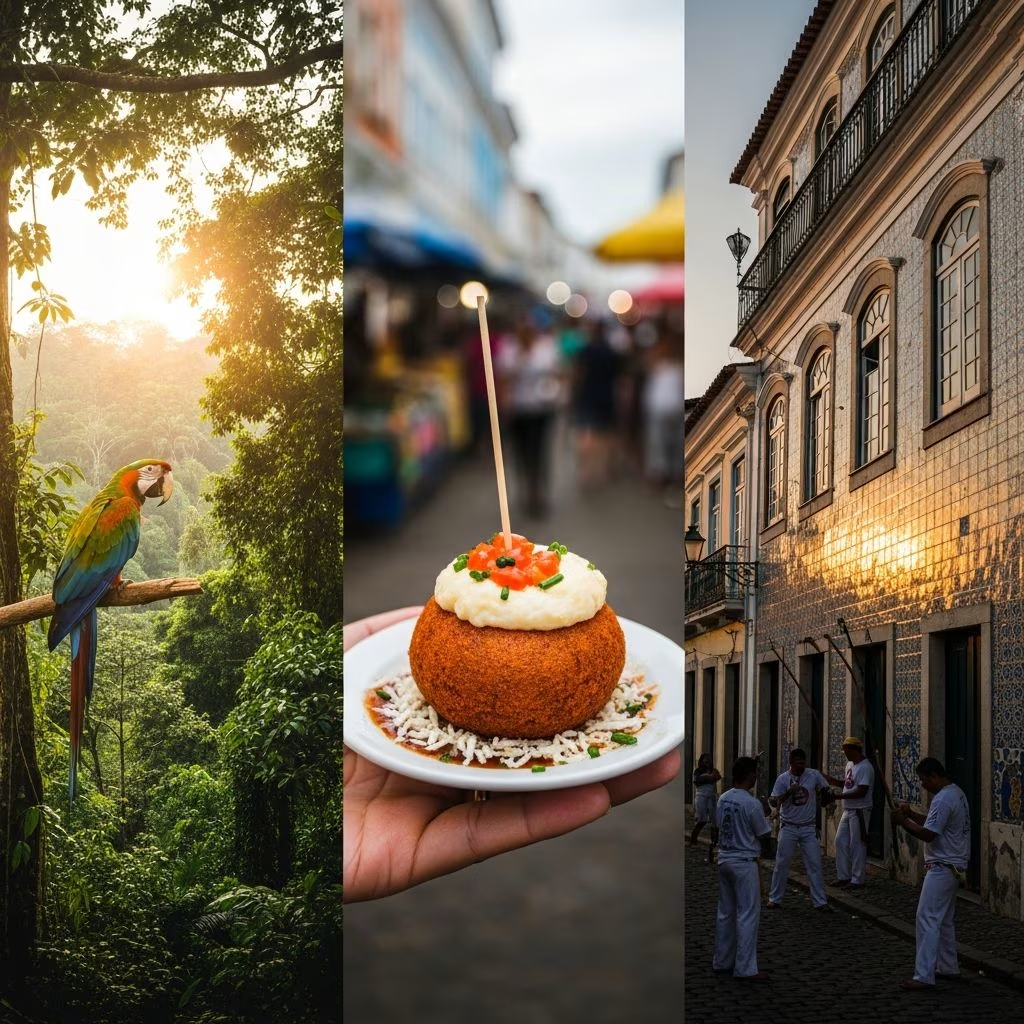
Culinary traditions reveal cultural complexity through everyday dining. The national dish, feijoada—a hearty bean and meat stew—originated within Afro-Brazilian and Indigenous communities, with cassava flour functioning as a foundational ingredient for generations before European contact. This preparation method persists in farofa, the toasted cassava flour accompaniment that defines authentic feijoada experiences. Street food traditions showcase additional cultural layering, with kibbeh (Lebanese-origin fried bulgur preparations) and pizza standing as beloved late-night sustenance throughout urban centers. This fusion demonstrates how immigration waves integrated seamlessly into Brazilian food culture, creating hybrid cuisines that feel authentically Brazilian despite their mixed heritage.
Salvador represents the geographic and spiritual heart of Afro-Brazilian culture. The city’s Pelourinho district preserves colonial architecture while functioning as the epicenter for capoeira circles, religious ceremonies, and musical traditions with direct ancestral connections to African communities. During Carnival season, Salvador’s energy transforms into an unforgettable street celebration where cultural expression reaches crescendo.
International travel marketing disproportionately emphasizes Rio de Janeiro’s iconic landscape and São Paulo’s economic significance, obscuring equally compelling urban destinations throughout Brazil. Visitors who venture beyond these two cities discover distinct regional identities, specialized cultural institutions, and less crowded attractions.
Brasília stands apart as an architectural anomaly—a purpose-built capital designed according to modernist principles by legendary architect Oscar Niemeyer. The city’s buildings showcase futuristic forms and ambitious spatial planning that challenge conventional urban design. For architecture enthusiasts, Brasília offers intellectual fascination and photographic opportunities unavailable elsewhere.
Belo Horizonte, capital of Minas Gerais state, has earned reputation among Brazilians as a gastronomic destination. The state’s culinary identity draws from mining-era traditions, colonial influences, and regional agricultural specialties. Travelers prioritizing food experiences should allocate time exploring Belo Horizonte’s restaurant scene and regional markets.
Salvador’s colonial charm combines with unmatched cultural authenticity. The city breathes Afro-Brazilian spirituality, musical heritage, and historical significance. Wandering cobblestone streets in Pelourinho provides context for understanding Brazilian identity formation in ways Rio and São Paulo cannot match.
Ouro Preto and surrounding Minas Gerais colonial towns preserve baroque architecture, steep hillside geography, and gold rush history. These municipalities offer slower travel rhythms, art galleries, and cultural institutions focused on regional heritage rather than international tourism convenience.
Paraty functions as a transitional destination between Rio and São Paulo, offering colonial architecture, protected bays, and cachaça distillery experiences. The town appeals to travelers seeking atmospheric charm without São Paulo’s pace or Rio’s intensity.
Florianópolis attracts diverse traveler demographics with its extensive beach network—over 40 distinct beaches—combined with hiking trails, surfing conditions, and hospitality infrastructure accommodating families, independent travelers, and digital nomads simultaneously. The island’s seafood reputation, particularly oyster preparations, provides culinary incentive for coastal exploration.
| Travel Style | Primary Destinations | Key Experiences |
|---|---|---|
| Cultural Immersion | Rio de Janeiro, Salvador, Ouro Preto | Music venues, colonial architecture, Afro-Brazilian heritage sites, street art |
| Nature Adventure | Amazon, Pantanal, Chapada Diamantina | Wildlife observation, jungle trekking, waterfall exploration, cave systems |
| Gastronomic Focus | Belo Horizonte, Salvador, São Paulo | Regional cuisine exploration, market visits, restaurant scenes |
| Relaxation & Beach | Florianópolis, Paraty, Northeast Coast | Beach hopping, water sports, island exploration, seafood dining |
| Architecture & History | Brasília, Ouro Preto, Salvador Pelourinho | Modernist buildings, baroque churches, colonial street layouts |
Brazil presents legitimate safety considerations that informed travelers address through situational awareness rather than fear-based decision-making. Urban crime concentrates in specific neighborhoods and responds to environmental factors like time of day and visibility of valuables. Most major tourist hotels maintain security protocols and backup power systems addressing infrastructure vulnerabilities. Travelers should monitor weather reports, particularly during rainy seasons when flooding and landslides pose risks in certain regions.
Practical considerations include understanding electricity infrastructure, which occasionally experiences blackouts in urban centers. Maintaining hydration matters significantly given tropical climate conditions. Learning basic Portuguese phrases enhances interactions substantially, though major tourist areas accommodate English-speakers.
Brazil’s vast geographic size creates distinct seasonal patterns across regions. Carnival festivities peak in February, drawing massive crowds to Rio and Salvador. The Amazon responds to rainy season cycles affecting wildlife visibility and accessibility. Pantanal experiences optimal conditions during dry seasons when animal concentrations increase near remaining water sources. Coastal regions remain generally appealing year-round, though hurricane season affects certain northern areas.
Brazil’s cultural fusion, vast ecological diversity, and Portuguese colonial heritage differentiate it fundamentally from Spanish-speaking neighbors. The country’s size permits dramatically varied experiences within single trips.
Brazilian Jiu-Jitsu competitions, samba school performances throughout the year, regional festivals celebrating saints and harvests, and music concerts occur continuously across different cities.
Brazil offers substantial value across accommodation, food, and transportation when travelers avoid peak tourist zones. Regional destinations generally cost significantly less than Rio or São Paulo.
Portuguese, Brazil’s official language, differs notably from European Portuguese pronunciation and vocabulary. Learning basic phrases dramatically improves interactions and demonstrates cultural respect.
Millions of solo travelers successfully navigate Brazil through practical precautions, group activities, and staying in social accommodation options like hostels.
