

 Travel Essentials
 Travel Essentials

Explore the origins, living conditions, challenges, and cultural vibrancy of Brazil's favelas, home to over 16 million people. Learn safe, ethical tourism practices.
 Travel Essentials
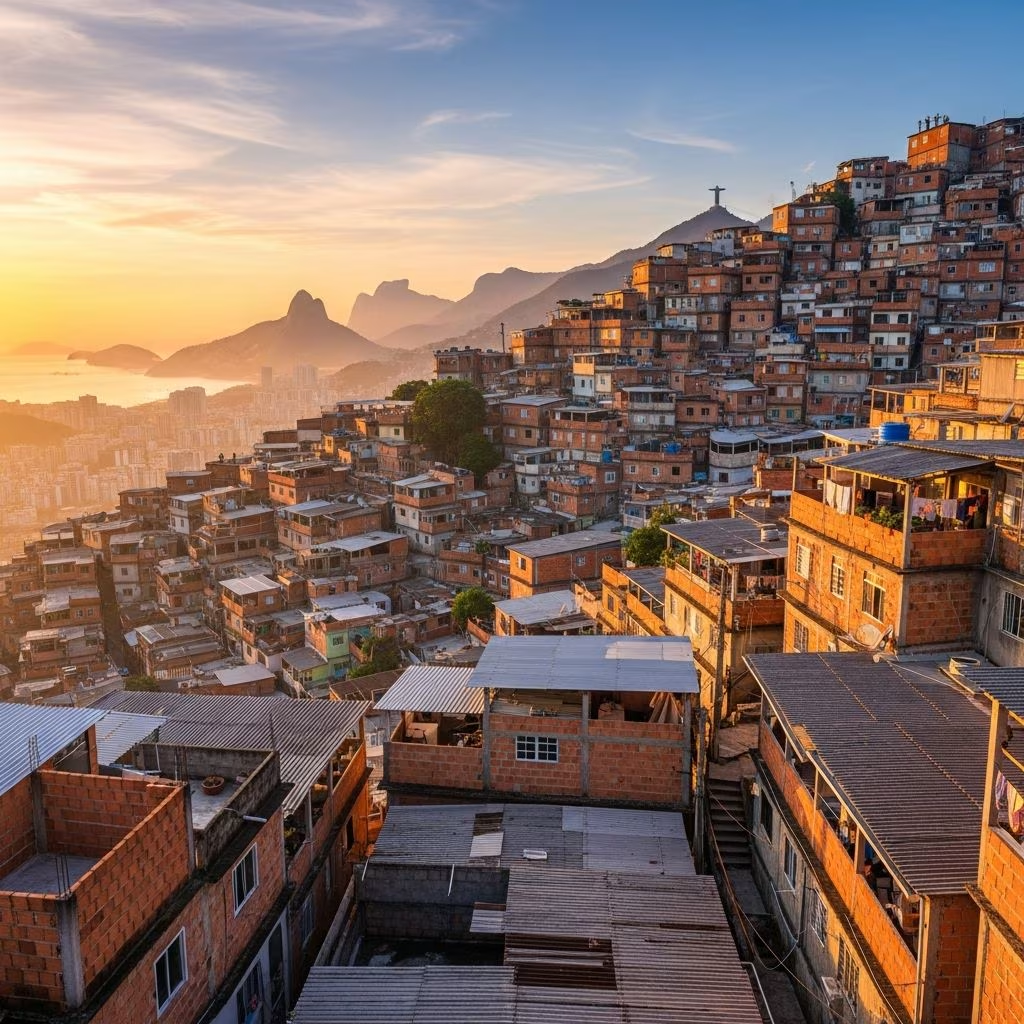
Brazil’s favelas represent dynamic urban communities shaped by history, migration, and resilience. Housing over 16 million residents nationwide, these neighborhoods offer insights into the nation’s social fabric.
The story of favelas begins in the late 19th century, coinciding with Brazil’s shift from monarchy to republic and the abolition of slavery in 1888. Freed slaves and rural migrants flooded cities like Rio de Janeiro seeking opportunities, but affordable housing was scarce. Veterans of the Canudos War (1896-1897) were among the first to settle Rio’s hillsides, naming their makeshift community after the favela shrub prevalent there, as they awaited unpaid government wages that never arrived.
By the 1920s, rapid urbanization fueled expansion. Economic downturns in the 1940s, including export collapses, drove mass rural-to-urban migration. Unable to afford formal housing, people constructed homes from scavenged materials on unoccupied land, creating self-built settlements. This pattern persisted through the 1970s rural exodus, when modern favelas proliferated amid Brazil’s unequal wealth distribution.
According to Brazil’s 2022 Population Census by the Brazilian Institute of Geography and Statistics (IBGE), 12,348 favelas and urban communities house 16,390,815 people—8.1% of the national population, up from 6% (11.4 million) in 2010. Rio de Janeiro leads with around 1,000 favelas accommodating 23-24% of the city’s 6.7 million residents, equivalent to Brazil’s ninth-largest city if combined.
São Paulo follows with approximately 1,600 favelas. The largest include Rocinha in Rio (72,021 residents), Sol Nascente in Brasília (70,908), Paraisópolis in São Paulo (58,527), and Cidade de Deus in Manaus (55,821). Favelas span 323 of Brazil’s 5,565 municipalities, with younger demographics: median age 30 versus the national 35.
| Favela | Location | Population (2022) | Housing Units |
|---|---|---|---|
| Rocinha | Rio de Janeiro | 72,021 | 30,371 |
| Sol Nascente | Brasília | 70,908 | 21,889 |
| Paraisópolis | São Paulo | 58,527 | N/A |
| Cidade de Deus | Manaus | 55,821 | N/A |
Life in favelas is marked by resourcefulness amid hardships. Basic services vary: 99.7% have electricity, 88.3% piped water, but only 67.3% proper sanitation. Poor infrastructure leads to unreliable plumbing, electricity outages, and waste management issues, fostering health risks from overcrowding and pollution. Life expectancy averages 48 years in some areas, compared to Brazil’s national 68.
Despite challenges, communities thrive with small businesses, schools, and markets. Youthful populations drive innovation, from tech startups to cultural events.
Favelas are often stereotyped for crime, particularly drug trafficking since the 1980s. Gangs recruit young males, who face heightened mortality—four times more likely to die before 21. Police-gang clashes escalate tensions, as seen during Rio’s 2016 Olympics.
Government responses include Pacifying Police Units (UPPs), launched in 2008 to reclaim gang-held areas through community policing. While initially reducing violence, sustainability wanes; some UPPs have scaled back. Eradication policies under the 1960s-1970s military dictatorship displaced thousands to projects like Cidade de Deus, which later became new favelas. Post-2009, over 77,000 were evicted for mega-events like the Olympics.
Beyond struggles, favelas pulse with culture. Samba schools originate here, powering Carnival. Rocinha hosts vibrant parties, street art, and sports like futebol. Community organizations advocate for rights, turning favelas into hubs of resilience.
Residents emphasize self-reliance: informal economies sustain families, and NGOs support education and health.
Tourism boomed post-2000s, offering authentic glimpses if done respectfully. Choose community-led tours avoiding sensationalism.
| Do | Don’t |
|---|---|
| Book with local guides from NGOs or residents. | Visit unguided or at night. |
| Respect privacy; ask before photos. | Flash valuables or wander into unknown areas. |
| Support businesses: buy local crafts, eat at spots. | Assume all areas are unsafe. |
| Learn basics in Portuguese. | Ignore local advice. |
Popular spots like Rocinha or Vidigal offer hikes with ocean views. Tourism injects income but risks gentrification.
Brazil’s 1988 Constitution guarantees housing rights, curbing evictions until mega-events revived them. Recent policies focus integration: urban upgrading improves infrastructure. IBGE data aids planning.
Challenges persist—dynamic boundaries complicate censuses—but progress includes electrification drives and sanitation projects. Experts advocate participatory governance, empowering residents.
Many are, with guided tours. Risks vary; stick to reputable operators and daytime visits.
About 1.5 million, or 23-24% of the city.
Favelas are Brazil-specific, often self-built with community ties, unlike generic slums.
Yes, via ethical tours supporting locals. Avoid peak violence alerts.
Rapid urbanization outpaced housing; inequality forces informal settlements.
