

 Travel Essentials
 Travel Essentials

Explore the Indigenous Peoples' Games in Brazil's Amazon region, featuring athletics, crafts, seed trading, and unity among tribes from across the nation and beyond.
 Travel Essentials
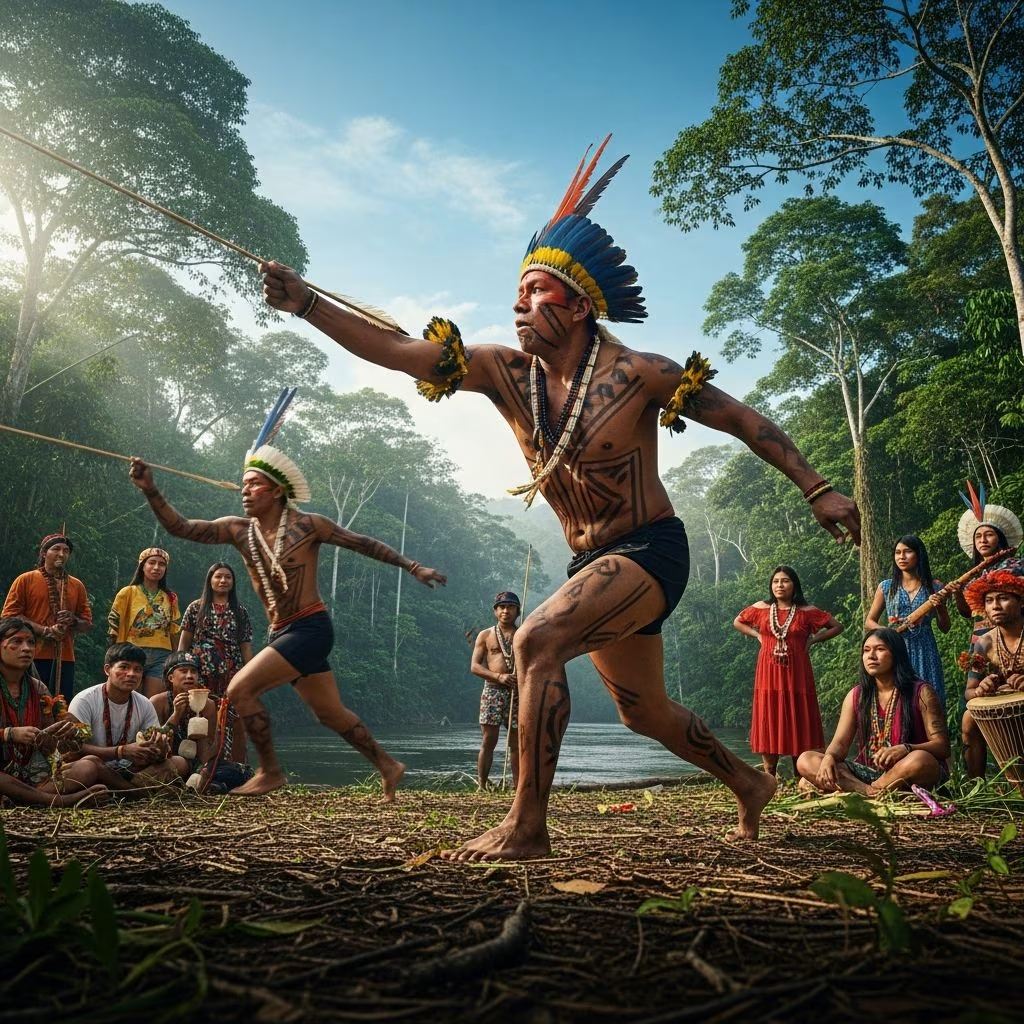
The Indigenous Peoples’ Games stand as a powerful testament to the resilience and diversity of Brazil’s native communities. Held annually in various locations across the Amazon region, this event brings together athletes, families, and leaders from numerous tribes to compete in traditional sports while fostering cultural preservation and exchange. Unlike mainstream Olympics, these games emphasize holistic participation over victory, with awards crafted from natural materials symbolizing harmony with nature.
Launched in 1996, the Indigenous Peoples’ Games, known as Jogos dos Povos Indígenas, have grown from a modest gathering into a national spectacle representing over 200 indigenous groups in Brazil. Early editions focused on core athletic disciplines, evolving to include cultural workshops and sustainability initiatives. By the 12th games in 2013 in Cuiabá, Mato Grosso, participation swelled to over 1,500 individuals from 48 tribes, plus international contingents.
Each hosting city infuses the event with local flavor. For instance, the 2009 edition in Paragominas, Pará, highlighted archery, spear toss, tug-of-war, canoeing, sprints, cross-country runs, football, and swimming. Subsequent events in Porto Nacional (2011) and Cuiabá (2013) expanded outreach, drawing global attention to indigenous athletic traditions. Recent iterations, like the one in Porto Seguro, featured 800 athletes from 30 groups engaging in spear throwing, archery, and pirogue racing.
The games showcase a unique array of sports rooted in ancestral practices, adapted for fair competition across diverse tribes. Participants arrive with body paint instead of uniforms and barefoot, embodying a rejection of commercial athletic gear.
These events rotate based on host region, ensuring representation of local customs. In 2013, the tree-trunk relay captivated crowds as nine-plus runners per team powered through the heat. All competitors receive wooden or seed-based medals, underscoring participation as the true reward.
Far from mere athletics, the games serve as a vibrant cultural hub. A 17-acre park transforms into a village of white tents displaying handmade crafts: pottery figures, wooden bowls, woven textiles, and bird-mimicking instruments. Artisans trade intricate pieces, preserving artisanal skills passed down generations.
Food security emerges as a pivotal theme, with tables laden with seeds from edible plants nationwide. Tribes exchange varieties, bolstering biodiversity and agricultural resilience in remote villages. This seed bank initiative combats deforestation’s impact, promoting self-sufficiency.
Opening ceremonies ignite an Olympic-style flame, signaling unity. Dances, songs, and storytelling sessions fill evenings, where participants share myths and histories. Families camp together, turning the event into a multi-day festival that strengthens intertribal bonds.
Hosting rotates to spotlight different ecosystems, from riverine lowlands to upland savannas. Cuiabá’s 2013 games leveraged Mato Grosso’s central location, accessible yet immersed in Amazon fringes. Paragominas in Pará offered Pará’s lush rainforests, ideal for water sports.
| Edition | Year | Host City | Key Features |
|---|---|---|---|
| X | 2009 | Paragominas, Pará | Archery, canoeing, football |
| XI | 2011 | Porto Nacional, Tocantins | Expanded tribal participation |
| XII | 2013 | Cuiabá, Mato Grosso | Tree-trunk relay, 1,500+ athletes |
Future hosts like Porto Seguro continue this tradition, blending coastal and Amazonian influences. Proximity to Manaus, with its Arena Amazonia stadium from the 2014 World Cup, hints at synergies between global events and indigenous showcases.
These games counter marginalization by amplifying indigenous voices. With Brazil home to over 200 peoples, the event unites 40-50 groups annually, bridging linguistic and cultural divides. It promotes health through physical activity tailored to traditional lifestyles, vital amid urbanization pressures.
Sustainability weaves through every aspect: natural medals, seed trades, and low-impact venues minimize environmental footprint. Amid Amazon deforestation, the games advocate land rights and ecological stewardship, drawing media like Fox News for their “holistic” ethos versus mega-events like World Cup and Olympics.
International participation from over a dozen nations fosters diplomacy, positioning Brazil’s indigenous heritage globally. Youth involvement ensures traditions endure, with children learning sports alongside elders.
Travelers seeking authentic Amazon experiences find the games ideal. Access via flights to host cities like Cuiabá or Manaus, then buses or boats to venues. Expect humid conditions; pack light, breathable clothing and insect repellent.
Accommodations range from eco-lodges to campsites. Engage respectfully: observe protocols, seek permission for photos, and support local vendors. Combine with river tours or Manaus opera house visits for fuller itineraries. Events span 7-10 days, with free public access to many activities.
Despite vibrancy, threats loom: climate change alters training grounds, while land encroachments displace communities. Funding relies on government and NGOs, vulnerable to policy shifts. Yet, growing visibility—via YouTube coverage—bolsters support.
Post-2013, editions persisted, adapting to pandemics and politics. Organizers aim for inclusivity, incorporating women’s divisions and adaptive sports.
A biennial or annual multi-sport event for Brazil’s indigenous tribes, emphasizing traditional athletics and culture since 1996.
Locations vary across Amazon states like Pará, Tocantins, Mato Grosso; typically October, lasting a week.
Yes, as spectators; entry is often free, promoting cultural exchange.
Natural awards, barefoot competition, seed trading, and focus on unity over winning.
Visit events, donate to organizers, or advocate for indigenous rights via official channels.
In a globalized world, the Indigenous Games preserve irreplaceable heritage. They model sustainable sport, cultural diplomacy, and community resilience—lessons for all. As Brazil balances modernity with roots, events like these illuminate paths forward.
