

 Travel Essentials
 Travel Essentials

Discover how Bristol transforms centuries of maritime history and Georgian architecture into a thriving cultural hub celebrated for street art, innovative museums, and independent spirit.
 Travel Essentials
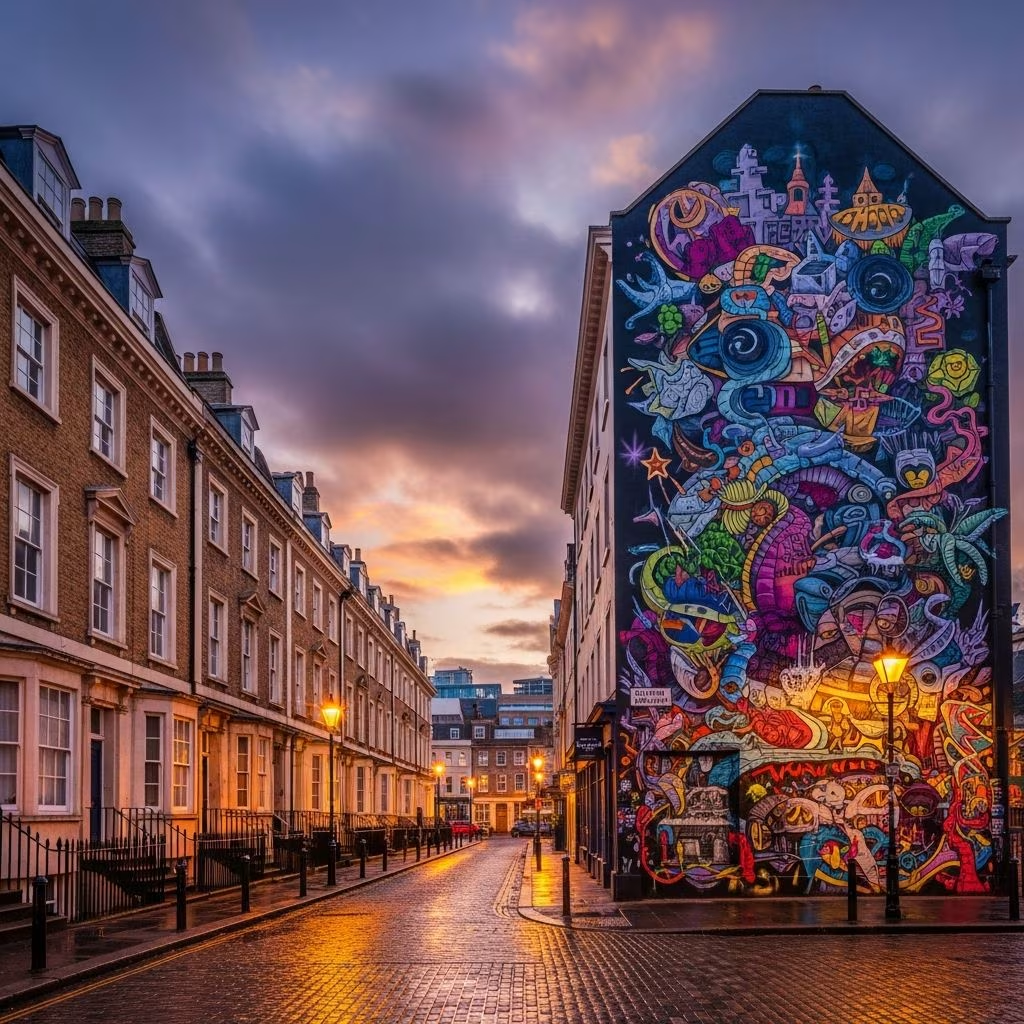
Bristol stands as one of England’s most compelling destinations for travelers seeking authentic cultural experiences beyond the conventional tourist trail. This West Country city defies easy categorization, presenting itself as a sophisticated blend of centuries-old heritage and relentlessly cutting-edge artistic expression. The city’s character emerges from the dynamic tension between its carefully preserved medieval core and its globally recognized contemporary street art scene, creating an environment where every neighborhood tells a different story about British identity and creative possibility.
Understanding Bristol requires acknowledging its profound historical significance, a dimension often overlooked by visitors focused exclusively on its modern reputation. Once among England’s three most important cities from the 13th through 18th centuries, Bristol functioned as a crucial commercial and maritime hub that connected Britain to global trade networks. The city’s wealth during these centuries translated into architectural investments that remain visible today, with Georgian squares and medieval street layouts providing physical evidence of prosperity and influence.
The devastation inflicted during World War II fundamentally altered Bristol’s landscape and trajectory. The 1940 air raids destroyed significant portions of the city, killing over 200 residents and displacing countless more. This catastrophic event, while devastating at the time, paradoxically opened pathways for reimagining urban space in the post-war era. The reconstruction efforts of the subsequent decades created opportunities to integrate modern developments alongside historical preservation, setting the stage for the eclectic aesthetic that characterizes contemporary Bristol.
Bristol’s industrial heritage extends far beyond conventional historical narratives, embodied most dramatically in the engineering achievements that shaped both the city and national infrastructure. Isambard Kingdom Brunel’s presence in Bristol represents one of the most significant intersections of genius and geography in British engineering history. The Clifton Suspension Bridge stands as the most visible manifestation of this legacy, spanning the Avon Gorge with distinctive elegance. However, Brunel’s influence permeates the city through numerous other projects and innovations that demonstrate Victorian-era ambition and technical capability.
The industrial structures that once powered Bristol’s economy have undergone thoughtful transformation. Gray Stothert & Pitt cranes still occupy the City Docks, functioning as sculptural reminders of the mechanical age. Rather than demolishing these structures, Bristol has integrated them into the contemporary urban landscape, allowing visitors and residents to contemplate the relationship between industrial progress and modern living.
Bristol’s distinctive character emerges through its diverse neighborhoods, each cultivating a particular aesthetic and cultural orientation. This distributed approach to urban culture prevents the city from cohering into a single dominant identity, instead encouraging visitors to traverse multiple distinct environments within a relatively compact geography.
The Harbourside district functions as Bristol’s contemporary social hub, where waterfront development has created spaces for gathering, eating, and cultural consumption. Waterfront bars, pubs, and restaurants spill onto terraces overlooking the Floating Harbour, establishing an environment where leisure and social interaction become primary activities. Street musicians perform regularly along the waterfront, contributing ambient sound to the visual spectacle of water-based entertainment and commerce.
Few neighborhoods in Britain embody artistic resistance and creative autonomy as comprehensively as Stokes Croft. This area throbbing with Bristolian rebellion, heavy reggae sound systems and some of the UK’s best street art represents a particular vision of urban culture fundamentally opposed to homogenization and corporate standardization. The neighborhood’s most famous work of street art, Banksy’s “Mild Mild West,” depicts a teddy bear hurling a Molotov cocktail at riot police, encapsulating the area’s confrontational aesthetic stance.
Stokes Croft’s cultural significance extends beyond visual art into music, community organizing, and alternative economics. Craft breweries and live music venues proliferate throughout the district, establishing spaces where independent cultural production occurs outside mainstream commercial channels. The neighborhood maintains a deliberate opposition to corporate gentrification, preserving spaces for experimental performance, grassroots creativity, and community-driven cultural expression.
Clifton presents an entirely different cultural proposition from Stokes Croft’s rebellious energy. This suburban area offers chic cocktail bars and intimate dining spots, catering to Bristol’s more affluent residents and visitors seeking refined leisure experiences. The neighborhood’s Georgian architecture and carefully maintained aesthetic appeal to those prioritizing elegance and polish over creative roughness.
Bristol maintains a remarkably robust infrastructure of cultural institutions that serve as repositories for historical memory, contemporary artistic expression, and educational programming. These spaces function not merely as repositories of objects, but as active participants in ongoing conversations about Bristol’s identity and significance.
M Shed operates as a free museum charting Bristol’s history and cultural significance across two millennia, functioning as an unusually compelling municipal space. The museum’s collections span from contemporary memorabilia associated with Wallace and Gromit, the beloved television animation series with Bristol origins, to historical artifacts documenting the city’s maritime and industrial past. This institutional approach to local culture validates both serious historical study and popular cultural expression as equally worthy of curatorial attention.
The Arnolfini functions as an international centre for contemporary arts, hosting cutting-edge exhibitions and performances on the harbourside. This institution positions Bristol within global networks of artistic innovation, attracting international artists and curators while supporting local creative practitioners. The Bristol Museum & Art Gallery maintains collections ranging from ancient Egyptian artifacts to masterpieces by global and local artists, providing comprehensive art historical education.
Beyond these major institutions, smaller galleries in Stokes Croft and Bedminster showcase Bristol’s vibrant grassroots creativity, cementing the city as one of the UK’s leading cultural capitals. This distributed gallery system ensures that artistic expression occurs throughout the city rather than concentrating cultural consumption in a single district or institutional setting.
Food and drink occupy a central position in Bristol’s contemporary identity. The city’s culinary scene reflects both historical immigration patterns and contemporary entrepreneurial energy, with restaurants, food stalls, and beverage establishments offering cuisine from multiple cultural traditions and culinary philosophies.
St Nicholas Market in the Old City dates back to the 1700s with over 90 independent food and shopping stalls, providing access to diverse ingredients and prepared foods reflecting the city’s multicultural population. This market functions as a working manifestation of Bristol’s diversity, where shoppers encounter culinary traditions and ingredients from multiple geographical origins.
The city’s restaurant scene ranges from street food offerings including sourdough pizza and Caribbean curries to fine dining establishments, accommodating diverse budgets and culinary preferences. This gastronomic pluralism reflects Bristol’s broader cultural orientation toward inclusion and resistance to culinary homogenization.
Bristol’s cultural calendar extends beyond permanent institutions to encompass numerous festivals that temporarily transform urban space into concentrated sites of artistic and community expression. These festivals serve as annual anchor points around which Bristol’s cultural identity organizes itself.
These festivals attract visitors from beyond Bristol’s metropolitan area, generating economic activity while reinforcing the city’s cultural reputation. More significantly, festivals create moments when the city’s diverse populations congregate around shared cultural experiences, temporarily suspending the everyday separation that typically characterizes urban life.
Bristol has cultivated a global reputation for rebellion and creativity as evidenced by its street art, museums, university and galleries. Street art in Bristol functions not as peripheral decoration or vandalism, but as a central component of urban identity and cultural expression. Banksy, the most celebrated contemporary graffiti artist, maintains historical connections to Bristol, contributing to the city’s international reputation for artistic innovation.
The prevalence of street art throughout Bristol’s neighborhoods reflects a particular cultural orientation toward public space. Rather than maintaining pristine, unmarked surfaces, Bristol embraces temporary and permanent artistic interventions on buildings, walls, and infrastructure. This tolerance for street art creates an environment where artistic expression occurs within public view, accessible to all residents and visitors regardless of economic status or museum attendance.
Bristol’s population exceeds 479,000 people, hailing from over 185 different countries with over 90 different languages spoken and 45 religions practised. This extraordinary demographic diversity fundamentally shapes cultural production, food traditions, festival celebrations, and artistic expression throughout the city. Rather than representing a superficial multiculturalism, Bristol’s diversity generates genuine cross-cultural exchange and hybrid cultural forms that reflect genuine intermingling of populations.
Bristol’s cultural identity increasingly incorporates environmental consciousness and ethical commitment. The Green Party holds significant representation in both Bristol City Council and the Welsh Parliament, reflecting the city’s political orientation toward environmental sustainability. This political commitment translates into cultural practices emphasizing sustainable consumption, ethical commerce, and environmental responsibility.
Bristol presents itself as a city fundamentally in motion, where historical preservation coexists with relentless innovation, where medieval street plans accommodate contemporary street art, and where global immigration generates new hybrid cultural forms. The city refuses neat categorization, instead embodying contradictions that somehow cohere into a distinctive urban personality. For travelers seeking authentic cultural experiences that challenge conventional expectations about British cities, Bristol offers compelling rewards. The city remains committed to accessibility, diversity, and creative expression, ensuring that cultural consumption need not require significant financial investment or institutional membership. Past and present sit side by side, Bristol is still evolving, offering visitors continuous discovery regardless of visit duration.
