

 Travel Essentials
 Travel Essentials

Comprehensive guide to exploring the British Virgin Islands, covering transportation, attractions, accommodations, and insider tips for unforgettable island adventures.
 Travel Essentials
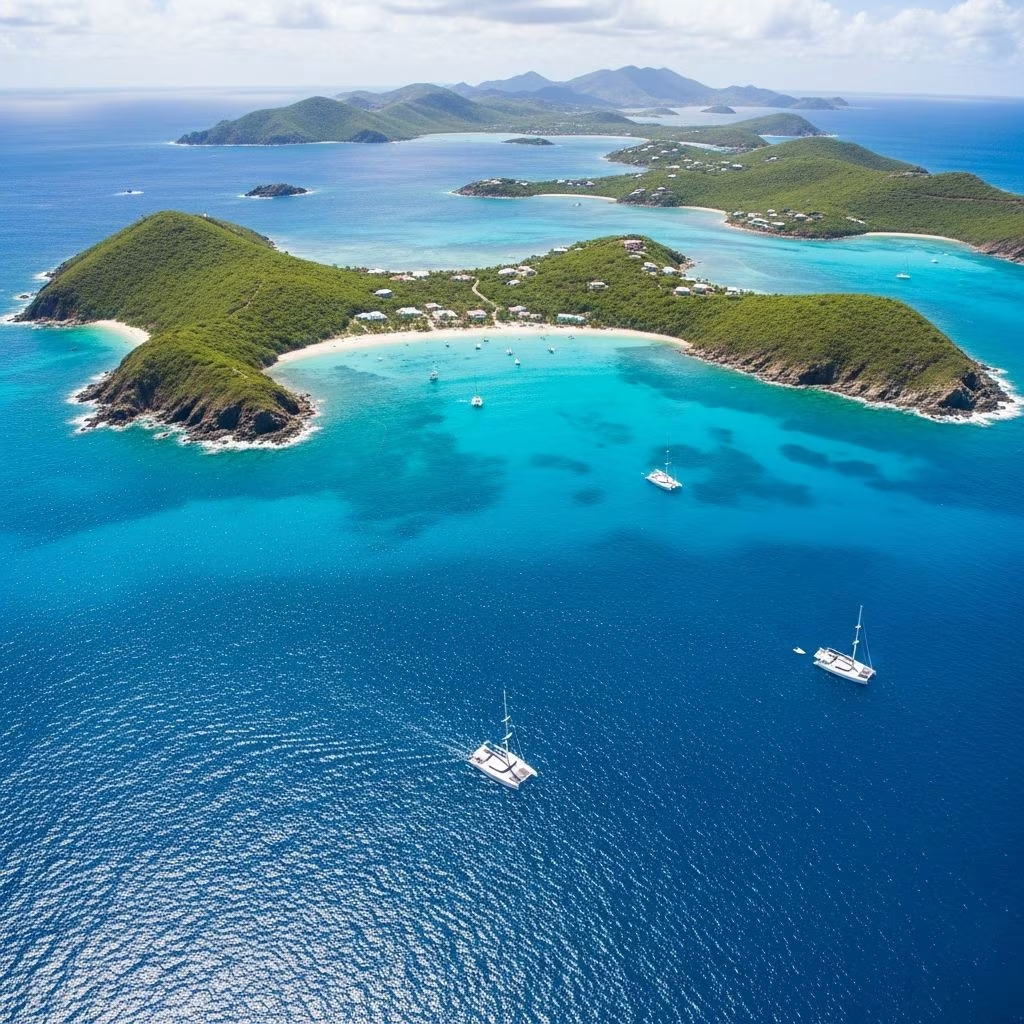
The British Virgin Islands represent one of the Caribbean’s most enchanting destinations, comprising over 60 islands and keys scattered across pristine turquoise waters. This archipelago has transformed from a historical haven for maritime adventurers into a world-class vacation destination that balances natural beauty with modern amenities. Whether you seek adventure on the open water, relaxation on secluded beaches, or cultural immersion in charming island communities, the BVI offers an unparalleled tropical experience that caters to diverse travel preferences.
The British Virgin Islands present a fascinating geographical diversity that shapes each island’s unique character. The archipelago consists of approximately 60 islands and keys, with more than 43 remaining uninhabited and accessible primarily by private boat or chartered vessel. The islands fall into two distinct geological categories: the majority are steep volcanic islands featuring dramatic landscapes and lush vegetation, while a smaller collection comprises relatively flat coral islands characterized by pristine white-sand beaches and lagoons.
The four primary islands—Tortola, Virgin Gorda, Jost Van Dyke, and Anegada—serve as the main hubs for visitors and contain the majority of accommodations, restaurants, and commercial infrastructure. Tortola stands as the largest island and serves as the administrative and economic center, home to the capital city of Road Town. Virgin Gorda offers dramatic natural attractions and exclusive resort experiences, while Jost Van Dyke attracts visitors seeking a more laid-back, bohemian atmosphere. Anegada, described as “the drowned island” due to its exceptionally low elevation, presents a stark contrast with its flat terrain and remarkable biodiversity.
One of the defining characteristics of a BVI vacation involves strategically moving between islands to maximize your exploration opportunities. The archipelago’s compact geography and reliable ferry systems make island-hopping accessible and enjoyable for travelers of all experience levels.
Ferries operate regularly between the larger islands, providing the most economical and authentic way to experience inter-island travel. Multiple ferry operators service different routes throughout the day, with schedules varying by season and day of the week. The ferry system connects Tortola to Virgin Gorda, Jost Van Dyke, Anegada, and nearby smaller islands. Journey times typically range from 20 minutes to over an hour, depending on your origin and destination. Before planning your itinerary, consult the BVI Tourism website for current ferry schedules, as these undergo regular updates and adjustments.
Water taxis provide flexible alternatives to scheduled ferries, offering point-to-point transportation and the ability to access more remote anchorages and secluded beaches. Charter boats and sailing vessels represent another popular transportation method, particularly for visitors interested in multi-day sailing adventures or those traveling in larger groups seeking customized routes.
For those with higher budgets or time constraints, regional airlines including Caribbean Wings and Air Sunshine operate chartered flights between islands, dramatically reducing travel time. Landing facilities on smaller islands remain limited, so this option works best for connecting the main islands during inclement weather or when maximizing daylight hours for activities proves essential.
On the larger islands, car rentals provide independence for exploring interior regions, accessing trailheads, and visiting attractions beyond the immediate waterfront. Tortola offers the most extensive car rental infrastructure. Alternatively, reliable and affordable taxi services operate on most larger islands, with drivers typically offering island tours and recommendations for lesser-known attractions.
Road Town, located on Tortola’s southern coast, functions as the BVI’s capital and primary urban center, housing approximately 81 percent of the archipelago’s population. While primarily oriented toward business and maritime commerce, the town offers several worthwhile experiences that provide insight into local life and culture.
The main waterfront street, Waterfront Drive, stretches along the harbor and features gift shops, international restaurants, and tourist-oriented establishments. However, the authentic character of Road Town emerges on Main Street, where pastel-painted colonial-era structures from the 18th century line the thoroughfare. These beautifully preserved buildings include historic churches and the former colonial prison, now converted into a small museum housed in the Old Government House.
The town’s artisan market near the main harbor showcases local craftspeople and food vendors selling traditional Caribbean fare, with jerk chicken representing a particularly popular street food option. Morning visits allow adequate time for exploring the market’s offerings before proceeding to other island destinations.
Few Caribbean destinations can match the otherworldly appeal of The Baths, located on Virgin Gorda’s western shore. This natural wonder comprises a series of enormous granite boulders creating hidden grottos, tidal pools, and secluded sandy coves. The main beach provides the most accessible entry point, though navigating between the massive rocks toward Devil’s Bay Beach creates a memorable adventure through the boulder field.
Visitors typically spend 2-3 hours exploring the interconnected pools and caves, splashing through shallow waters and discovering miniature beaches nestled between the rocks. The experience combines active exploration with moments of peaceful contemplation in this geologically unique landscape.
Anegada presents an entirely different natural experience compared to the volcanic islands. This flat coral island remains largely undeveloped and relatively undiscovered, making it ideal for travelers seeking authentic, uncrowded environments. The island features an iguana sanctuary where visitors observe these prehistoric-looking creatures in their natural habitat, along with flamingo-filled lagoons populated by birds reintroduced after historical extinction on the islands.
Herds of wild cattle roam freely across parts of Anegada, adding to the island’s frontier character. Accommodations such as the Anegada Beach Club offer unique experiences through thatched-roof glamping tents on stilts, combining adventure with unexpected comfort. The island’s numerous trails and lagoons provide excellent opportunities for nature photography and wildlife observation.
Beyond beach lounging, the BVI offers diverse recreational opportunities:
The British Virgin Islands maintain a centuries-long relationship with maritime activity, evolving from a pirate haven into the Caribbean’s premier sailing destination. The archipelago’s unique combination of moderate trade winds, minimal currents, virtually nonexistent tidal variations, and few underwater obstructions creates near-perfect sailing conditions.
Road Town functions as one of the Caribbean’s primary bareboat chartering centers, welcoming sailors of all skill levels seeking self-hired yacht experiences. Crewed yacht charters provide excellent alternatives for those preferring professional guidance and crew-managed vessels. The short distances between islands—typically ranging from 30 minutes to two hours of sailing—make the BVI ideal for island-hopping itineraries where daily anchorages allow exploration ashore.
The famous BVI Painkiller cocktail, traditionally served at beachfront establishments including Pusser’s, has become synonymous with the relaxed sailing culture and island lifestyle.
Understanding and engaging with local culture enhances any BVI vacation beyond typical tourist activities. The islands reflect a unique blend of African heritage, British colonial history, and contemporary Caribbean culture.
Several locations provide context for the archipelago’s complex history. Road Town’s small museums and preserved colonial structures document the islands’ administrative past. Historic churches throughout the islands showcase architectural styles reflecting centuries of spiritual life and community gathering.
Caribbean cuisine features prominently in both casual street food and upscale restaurant settings. Traditional preparations emphasize fresh seafood, tropical fruits, and spice-forward flavor profiles. Local markets offer opportunities to purchase fresh produce and artisanal goods created by island residents.
The BVI experiences a tropical climate with consistent warm temperatures year-round. Hurricane season (June through November) brings increased rainfall and potential storm systems, though the islands remain accessible during shoulder months. Peak tourism season (December through April) coincides with optimal weather conditions and higher accommodation rates. Consider visiting during shoulder seasons (May or November) for moderate weather and fewer crowds.
Accommodation options range from luxury resorts and exclusive villas to budget-friendly guesthouses and unique glamping experiences. Tortola offers the most diverse selection given its size and infrastructure, while smaller islands feature limited but often distinctive properties emphasizing local character and natural surroundings.
The BVI positions itself as a relatively expensive Caribbean destination, reflecting its developed tourism infrastructure and upscale clientele. Ferry fares between islands typically range from $15-$35 USD depending on distance. Car rentals cost $50-$75 USD daily, while taxi rides average $10-$20 USD for standard distances. Restaurant dining varies widely, from $8-$15 USD for casual meals to $30-$60+ USD for upscale establishments.
A successful BVI vacation typically balances multiple islands with adequate time for activity and relaxation. A 7-day itinerary might allocate 3 nights on Tortola as a base for day trips, followed by 4 nights on Jost Van Dyke or Virgin Gorda for extended exploration. This structure allows experiencing diverse island characters while minimizing travel disruption.
Ferry schedules should dictate your itinerary rather than vice versa, as regular schedule changes require flexibility. The BVI Tourism interactive map provides helpful planning tools for visualizing island locations and inter-island distances.
Ferries provide the most economical and frequently available transportation between larger islands. Water taxis offer flexibility, while crewed or bareboat charters allow custom routing and extended exploration.
5-7 days allows adequate time to visit 2-3 islands and enjoy both active activities and relaxation. Shorter visits risk spending excessive time traveling between islands.
The BVI maintains strong tourism infrastructure and generally welcomes visitors safely. Standard travel precautions apply, including avoiding remote areas after dark and securing valuables.
Gentle trade winds, minimal currents, virtually no tidal variations, and short distances between islands create exceptional sailing conditions throughout most of the year.
The British Virgin Islands represent a destination where natural beauty, cultural richness, and recreational opportunities converge to create unforgettable vacation experiences. Whether you pursue active adventures across multiple islands, immerse yourself in sailing traditions, or simply unwind on pristine beaches, the BVI delivers authentic Caribbean experiences that justify its reputation as a premier tropical destination. Strategic planning, flexibility regarding ferry schedules, and curiosity about local culture will enhance your journey through this remarkable archipelago, ensuring memories that linger long after you return home.
