

 Travel Essentials
 Travel Essentials

A comprehensive guide to exploring Brittany's dramatic coastline, charming villages, and cultural heritage across France's northwestern peninsula.
 Travel Essentials
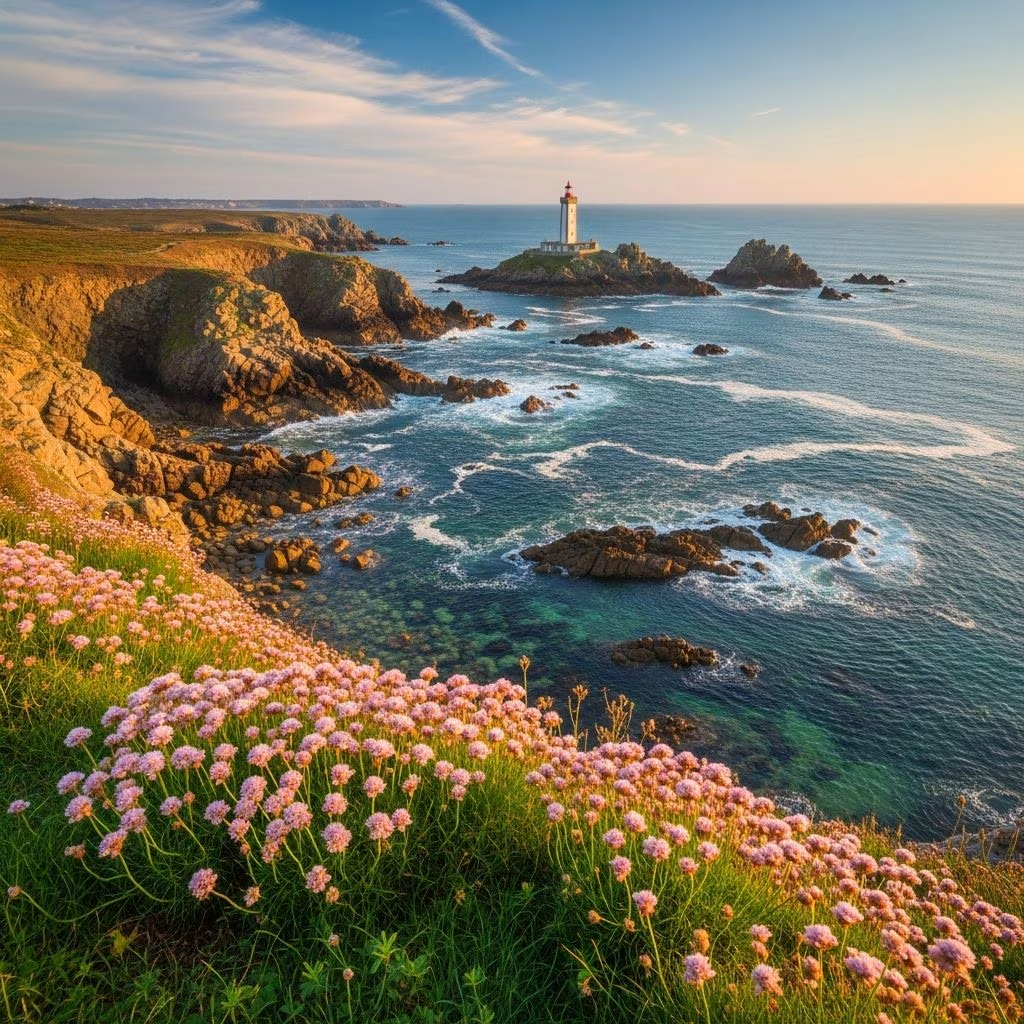
Brittany represents one of France’s most distinctive regions, characterized by its windswept terrain, independent cultural identity, and spectacular maritime landscapes. This northwestern peninsula stretches dramatically along the Atlantic Ocean, presenting travelers with an extraordinary blend of natural beauty, historic significance, and local traditions. The region’s 750-mile coastline forms a rugged boundary against the Atlantic, creating some of Europe’s most compelling coastal experiences. Unlike the rest of France, Brittany maintains its own linguistic heritage, with Breton and Gallo languages still spoken in various communities throughout the area.
Brittany’s appeal extends far beyond its physical geography. The region maintains strong Celtic connections and preserves traditions that date back centuries, particularly among farming and fishing communities that continue to shape the local economy. This cultural distinctiveness creates an authentic travel experience where visitors encounter genuine Breton heritage rather than commercialized tourism alone. The peninsula’s landscape reflects thousands of years of geological and human history, with each coastal section offering distinct characteristics shaped by different rock formations, weather patterns, and settlement histories.
The region’s independence-minded residents have cultivated a proud identity separate from the rest of France, visible in everything from architectural styles to culinary traditions. Understanding this cultural context enriches the travel experience, allowing visitors to appreciate why Brittany attracts those seeking something beyond typical French destinations.
Among Brittany’s most celebrated features is the GR34 footpath, also known as the Sentier des Douaniers or Customs Officers’ Path. This legendary hiking trail stretches over 1,200 miles, following Brittany’s entire coastline from Mont Saint-Michel to Saint-Nazaire. The GR34 meanders through approximately 150 kilometers of landscape featuring pine trees, fragrant heather, small coves, and sandy beaches overlooking the Atlantic. Year-round accessibility from numerous entry points makes this trail adaptable to various fitness levels and time constraints.
The trail’s red-and-white markings guide hikers consistently, while the changing scenery ensures that no two sections feel identical. Different seasons present varied experiences—spring brings wildflower blooms, summer offers warm coastal breezes, autumn showcases dramatic storm systems, and winter provides solitude and dramatic skies. Many visitors choose to tackle manageable sections rather than attempting the entire route, allowing for flexibility in trip planning.
Stretching over a dozen kilometers between Perros-Guirec and Trébeurden, the Pink Granite Coast stands as one of Brittany’s most photographed regions. The distinctive blush-colored rocks owe their remarkable appearance to rare chemical composition, formed through volcanic activity approximately 300 million years ago. This geological phenomenon creates a surreal landscape where soft pink rock formations meet shades of sea blues and earthy greens, particularly stunning during sunset hours.
The GR34 footpath winds directly through this region, offering accessible vantage points for appreciating the rocks’ varied formations. Local guides often highlight fantastically shaped rocks bearing playful names—the “painter’s palette” and “crab claw” in Trégastel, the “upside down bottle” and “Napoleon’s hat” in Ploumanac’h. Mean Ruz lighthouse, constructed from pink granite, stands as an emblematic structure representing the region.
A popular access point near Perros-Guirec allows visitors to complete manageable hiking distances of several miles while absorbing the coastal scenery. The clarity of aquamarine waters contrasting with pink rock formations creates conditions ideal for photography and contemplation.
Located at the very tip of the peninsula, Cap de la Chèvre presents dramatic cliffs, windswept moors, and sweeping Atlantic vistas. A marked parking area facilitates access to a loop trail exceeding three miles that winds along the coast. The landscape here captures Brittany’s wild character, with minimal development and maximum natural drama. Along the trail, visitors discover a crêperie and naval memorial, though the primary attraction remains the scenery itself.
Saint-Malo functions as Brittany’s most iconic coastal city, historically serving as a critical port and pirate stronghold. The Les Remparts de Saint-Malo ramparts remain free to explore, offering excellent views of the old city and the English Channel. These fortifications provide perspectives on both the historic city and modern harbor activity. Several beaches, including Plage de l’Éventail, are accessible from the ramparts, combining cultural exploration with beach relaxation.
The Saint-Vincent Cathedral features impressive stained glass and commemorates Jacques Cartier, the famous explorer who departed from Saint-Malo on voyages of discovery. A small boat sculpture marks what remains of his tomb, providing tangible connection to the city’s maritime history. Fort National, constructed in 1689, exemplifies military architecture from the period when France sought to protect its Atlantic ports.
Dinan captivates visitors with its steep streets descending to a charming riverside port. The town’s medieval character remains remarkably well-preserved, with narrow cobblestone pathways and traditional architecture creating an authentic medieval atmosphere. For visitors with additional energy, a half-hour walk from the town center reaches the Castle of Léhon, with an optional stop at Abbaye Saint-Magloire de Léhon along the route.
Dinard presents a different coastal character through its Promenade du Clair de Lune, serving as the town’s heart and perfect starting point for coastal walks. This elegant promenade is surrounded by Belle Époque villas and pristine beaches, reflecting the town’s development as a 19th-century seaside resort destination. The architectural style and maintained gardens distinguish Dinard from rougher, more natural coastal towns elsewhere in Brittany.
Cancale maintains its identity as a working fishing port while welcoming visitors interested in local culinary traditions. The town’s connection to oyster farming represents an important aspect of Breton maritime culture. Fresh seafood remains central to the local gastronomic experience, with numerous restaurants and market establishments showcasing daily catches.
The scenic coastline east of Saint-Malo and west of Cap Fréhel registers as a must-visit region according to many travelers. Cap Fréhel features distinctive rocky formations and provides commanding views of the Atlantic. The area combines accessibility with dramatic natural scenery, making it suitable for visitors with varying mobility levels.
This headland offers excellent sea views and perspectives of Brest harbor. Rocky cliffs combined with historic fortifications make this location particularly appealing for photographers and history enthusiasts. The site represents the intersection of Brittany’s military heritage and natural landscape.
Perched above Camaret-sur-Mer, this charming chapel dedicated to the Virgin Mary draws pilgrims seeking its serene atmosphere. The location combines spiritual significance with attractive coastal positioning, creating a destination appealing to both religious and secular travelers.
Plage Saint-Guirec, situated on the pink granite coastline, offers sandy beaches ideal for swimming in clear aquamarine waters, complementing the dramatic rock formations surrounding the beach. The combination of natural beauty and swimming opportunities makes this location particularly attractive during warmer months. The unusual rock formations create protected swimming areas while maintaining scenic appeal.
The Quiberon Peninsula extending from Brittany’s south coast demonstrates dramatically different conditions on opposite sides despite its narrow width. The western side, known as the Côte Sauvage, features crashing waves and strong currents that prohibit official swimming, though surfers frequent the area despite warnings. The eastern side offers millpond-like waters where paddle boarders drift idly through bays, presenting completely different water sports and relaxation opportunities.
Brittany’s largest cities—Nantes, Rennes, and Brest—provide transportation hubs for regional exploration. Rennes connects to Paris via TGV rail service in approximately two hours, making Brittany accessible as a weekend escape from the French capital. The region’s positioning just a few hours from Paris offers perfect timing for travelers combining Parisian visits with Breton exploration.
Brittany’s Atlantic location creates variable weather conditions depending on season. Summer months offer warm temperatures suitable for extended coastal walks and beach activities, though tourist crowds increase correspondingly. Spring and autumn provide moderate temperatures with fewer visitors, presenting appealing compromises. Winter brings dramatic coastal conditions—stormy seas, moody skies, and the region’s most solitary experiences, appealing to adventurous travelers seeking authentic Breton atmosphere.
Beyond physical landscape exploration, Brittany’s cultural traditions provide enriching experiences. The region’s proud tradition of crêpe preparation represents far more than simple street food—crêpes reflect generations of culinary refinement. Local markets showcase seasonal produce, fresh seafood, and artisanal products representing Breton heritage. Exploring towns during market days provides authentic encounters with local residents and traditional commerce patterns.
The preservation of Breton and Gallo languages throughout certain communities offers opportunities for cultural learning and linguistic appreciation. Many establishments display signage in regional languages alongside French, maintaining visible cultural identity.
Summer provides warmest temperatures and longest daylight hours, ideal for extended hiking and beach activities. Spring and autumn offer comfortable temperatures with reduced crowds, making these shoulder seasons appealing for many travelers. Winter delivers dramatic coastal scenery and solitude, though weather becomes unpredictable.
The GR34 accommodates various fitness levels since hikers can choose specific sections rather than attempting the entire 1,200-mile route. Accessible entry points throughout Brittany allow customization based on individual capabilities and available time.
Yes, the GR34 footpath providing access to the Pink Granite Coast remains open throughout the year. Seasonal variations create different atmospheric conditions, with each season offering distinct photographic and experiential possibilities.
Brittany maintains distinct Celtic heritage, linguistic traditions, and cultural practices separate from the rest of France. The geology differs dramatically, particularly regarding the pink granite formations unique to specific coastal sections. Local character and traditions remain more preserved than in heavily commercialized French destinations.
Many beaches, particularly on the eastern side of the Quiberon Peninsula and sheltered areas like Plage Saint-Guirec, offer calm waters ideal for families. However, the Côte Sauvage features dangerous currents and remains unsuitable for young swimmers despite its appeal to experienced surfers.
