

 Travel Essentials
 Travel Essentials

Discover how to explore Brittany, France, without a car: navigate by public transport, savor local culture, and embrace mindful journeys across this rugged peninsula.
 Travel Essentials
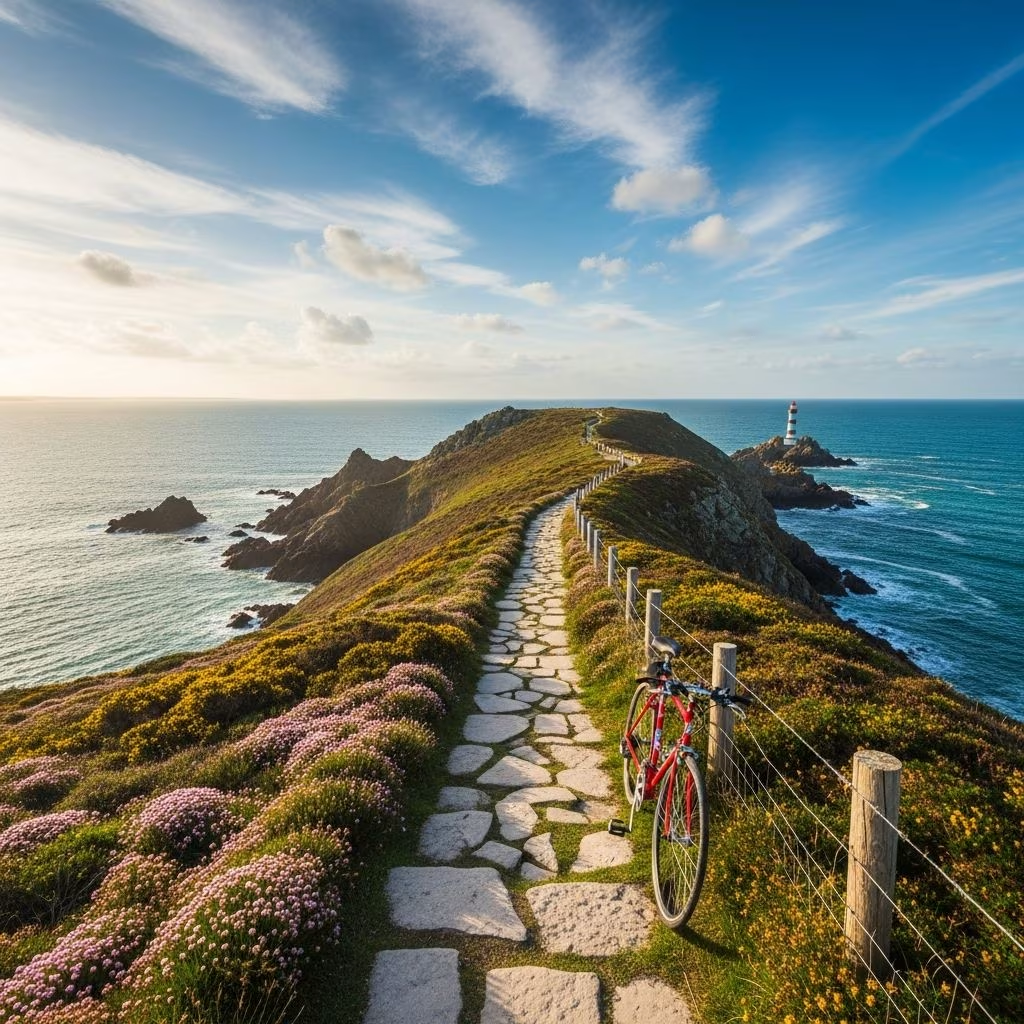
Immerse yourself in the wild beauty of Brittany, France’s northwestern peninsula, where jagged coastlines, ancient megaliths, and Celtic heritage await without the need for a personal vehicle. This guide reveals practical ways to traverse the region using efficient public transport, fostering deeper connections with locals and landscapes through deliberate, low-impact exploration.
Brittany’s compact geography and robust transport infrastructure make it ideal for car-free itineraries. Trains zip between major hubs like Rennes and Brest, while regional buses fan out to coastal gems. Ferries and bikes extend reach to islands and trails, reducing carbon footprints and enhancing mindfulness. Travelers report richer experiences, lingering in markets or seaside villages rather than rushing by road.
Sustainable tourism here aligns with Brittany’s eco-conscious ethos. The region’s 1,700 miles of coastline, protected under national parks, thrive when visitors opt for green mobility. Public options not only cut emissions but also reveal hidden paths inaccessible by car, like canal-side walks or cliff-hugging cycle routes.
Begin your journey via Rennes-Saint-Jacques Airport or ferries docking at Saint-Malo from the UK or Channel Islands. High-speed TGV trains from Paris reach Rennes in under two hours, connecting seamlessly to Brittany’s TER network.
Download the BreizhGo app for real-time schedules across buses, trains, and trams. Weekly passes (around €50) cover unlimited regional travel, simplifying multi-stop plans.
The Côte de Granit Rose captivates with its surreal rock formations. From Lannion station, buses (line 31) deliver you to Perros-Guirec in 30 minutes. Rent bikes at the tourist office for the 4-mile Sentier des Douaniers trail, weaving past wind-sculpted boulders and hidden coves.
Nearby, Trégastel offers free beach shuttles in summer. For a day trip, train to Saint-Brieuc then bus to Paimpol, a fishing port famed for its oyster beds. Sample seafood at harborside stalls, where vendors explain sustainable harvesting.
| Route | Transport | Duration | Cost (approx.) |
|---|---|---|---|
| Rennes to Saint-Malo | Bus/Train | 1-1.5 hrs | €10-15 |
| Lannion to Perros-Guirec | Bus 31 | 30 min | €2 |
| Saint-Malo to Dinard | Bus C1 | 15 min | €1.50 |
This tidal island abbey, a UNESCO site, lies 1 hour by direct bus from Rennes (Keolis lines). Buses drop at the mainland parking, where free shuttles or a 30-minute walk cross the causeway. Time visits with low tides for mudflat walks guided by locals—book via the tourist office.
Avoid peak crowds by departing early; return shuttles fill up post-4pm. Combine with a Pontorson train stop for quieter abbey approaches.
Rennes pulses with half-timbered houses and crêperies. Trams link the historic center to Thabor Gardens. Venture inland via train to Vitré, a fortified town with ramparts rivaling Carcassonne. Bikes available at stations explore surrounding forests.
The Nantes-Brest Canal, France’s longest, invites boat rentals from Redon. Paddle or pedal-boat 2-hour segments amid heron-filled marshes. Buses from Redon station access Pontivy, Napoleon-era canal hub with markets selling artisanal cider.
The Golfe du Morbihan, a ‘beautiful sea’ of submerged mountains, sparkles with 365 islets. Trains to Vannes, then ferries to Île-aux-Moines for car-free biking (rentals €15/day). Kayak tours reveal megalithic sites like Locmariaquer’s table des Marchands.
Quiberon Peninsula: Bus from Auray (30 min) to Belle-Île ferries. Hike the wild coast or cycle 20 miles around the island’s cliffs. Lorient’s naval base offers submarine tours and jazz festivals via local trams.
Brest’s téléphérique crosses the harbor to Oceanopolis aquarium. Trains hug the coast to Quimper’s Gothic cathedral and Breton lace workshops. From Quimper, buses reach Pointe du Raz, continental Europe’s western tip, for dramatic cliff views.
Ouessant Island ferries from Brest (2 hours) deliver to untamed moors and lighthouses. Bike the interior trails, spotting rare seabirds. Return via evening sailings for sunset panoramas.
Yes, TER trains and BreizhGo buses run frequently, with apps for live updates. Delays rare outside strikes.
May-June or September-October: mild weather, fewer crowds, full schedules.
Absolutely—short hops, kid-friendly sites like beaches and aquariums suit all ages.
€50-100 with passes, plus €20-30 ferries/bikes.
Tourist offices, apps, and signs multilingual; staff welcoming.
Beyond logistics, car-free travel unveils Brittany’s festivals like Lorient’s Interceltique, reached by train. Hike Carnac’s 3,000 megaliths via bus, pondering prehistoric mysteries. Join pardon pilgrimages or seaweed foraging walks—experiences rooted in community, not highways.
This approach not only preserves Brittany’s allure but rejuvenates the traveler, turning transit into discovery. From granite shores to oyster shores, every stop deepens the narrative of a land where sea meets stone.
