


 Food & Culture
Food & Culture
Brno Travel Guide: Architecture, Underground Tours & Moravian Wine
Explore Brno's medieval castles, modernist icons, underground wonders, and Moravian wine scene in this comprehensive guide to Czechia's underrated destination.
 Food & Culture
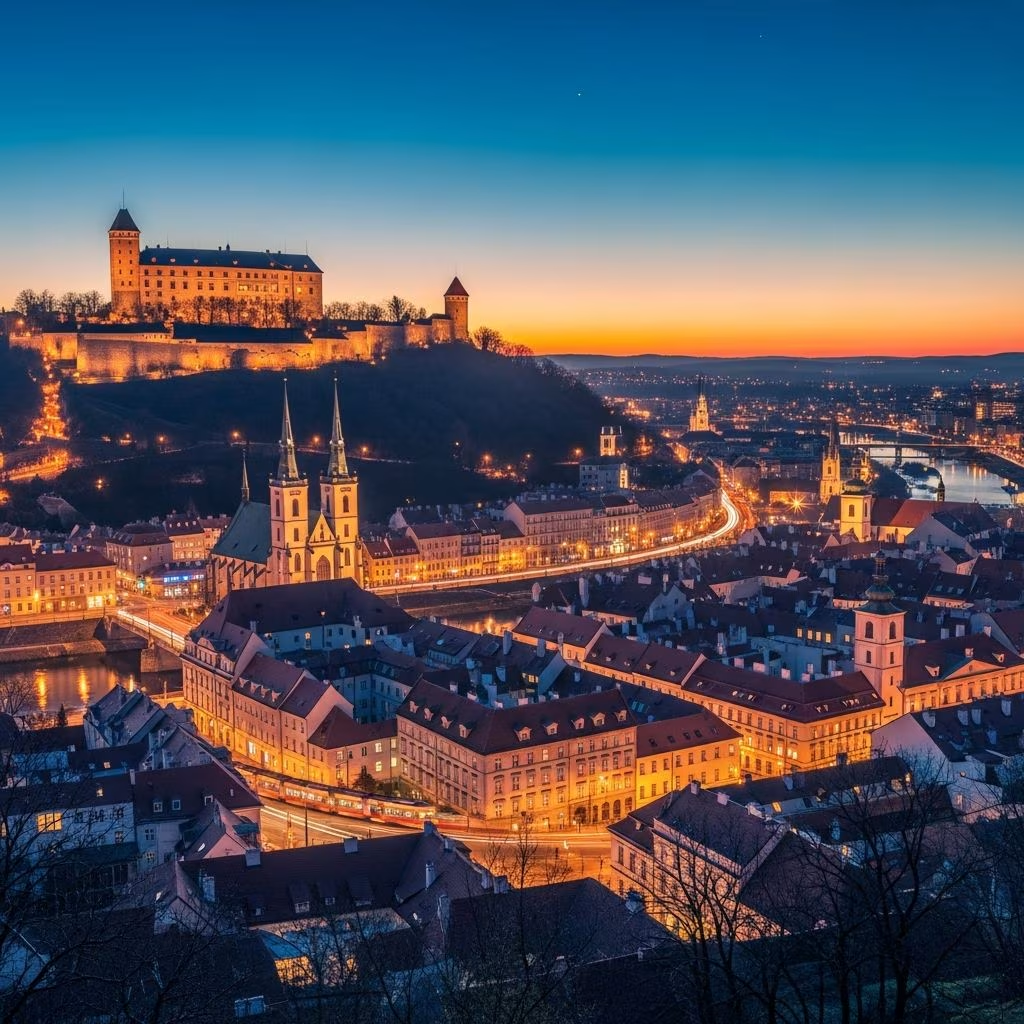
Brno, the vibrant heart of Moravia in Czechia, beckons travelers seeking an authentic European escape. As the country’s second-largest city, it offers a perfect blend of historical depth, architectural innovation, and lively local culture without the overwhelming tourist presence of Prague. Founded around 1030, Brno flourished under the Austro-Hungarian Empire, leaving behind a rich tapestry of baroque, functionalist, and modernist landmarks. Its pedestrian-friendly center, buzzing cafes, and easy access to surrounding natural wonders make it ideal for both short visits and extended stays.
Unveiling Brno’s Architectural Marvels
Brno’s skyline is a testament to its layered history, where medieval fortresses meet cutting-edge 20th-century design. Start your exploration in the pedestrian core along Masarykova Street, linking the train station to Náměstí Svobody (Freedom Square). This bustling avenue features ornate facades, shops, and trams, inviting leisurely wanders to spot intricate building details.
The **Old Town Hall** stands as Brno’s oldest structure, with its iconic clock tower rising 63 meters. Ascend the 173 wooden steps for sweeping panoramic views encompassing the city’s rooftops, churches, and distant hills. It’s a quintessential vantage point for orienting yourself in Brno’s medieval heart.
Nearby, the **Cathedral of St. Peter and Paul** dominates with its Gothic spires. Venture to its balconies for vistas stretching to the Pálava Hills, a green ridge perfect for future day trips. Inside, the serene interior offers a moment of reflection amid elegant arches and historical artifacts.
Modernist Masterpieces and Art Nouveau Elegance
Brno shines as a hub of functionalist architecture, rivaling global icons. The **Villa Tugendhat**, designed by Ludwig Mies van der Rohe between 1928 and 1930, exemplifies International Style with its glass walls, open spaces, and innovative use of materials. Originally built for a Jewish industrialist family who fled during World War II, it’s now a UNESCO site open for guided tours, revealing meticulous details like onyx walls and hidden lighting.
Complementing this are Art Nouveau gems like the turquoise **Omega Palace** near Freedom Square and the white, geometric **Moravian Bank** building from 1930. These structures blend seamlessly with pastel baroque facades, creating a dynamic urban mosaic.
Delving into Brno’s Underground Secrets
Beneath Brno’s streets lie a network of subterranean attractions, from medieval passageways to Cold War bunkers, offering thrilling contrasts to surface sights.
- Labyrinth under the Vegetable Market: The largest underground complex, plunging 8 meters deep and spanning 1 km. These Middle Ages wine cellars and siege tunnels provide an immersive glimpse into Brno’s defensive past.[10]
- Water Tanks: Three 19th-century reservoirs mimic cathedrals with vaulted ceilings and echoing chambers, showcasing early engineering prowess in urban water supply.
- Capuchin Crypt and Ossuary at St. James’ Church: Witness naturally mummified monks and bones from 50,000 plague and war victims in Europe’s second-largest ossuary—a poignant, macabre highlight.[10]
- Cold War Bunkers: Explore fallout shelter 10-Z, declassified in 1993, and the 1-km Bunker Denis carved into rock under Petrov Cathedral hill.
These sites, accessible via guided tours, add an adventurous layer to Brno’s appeal, perfect for history buffs and thrill-seekers.
Iconic Landmarks and Green Escapes
Brno’s surface treasures include **Špilberk Castle**, a 13th-century fortress turned Habsburg prison, now housing city history museums and art exhibits. Stroll through Špilberk Park to the castle walls for sunset views, or climb the lookout tower for 360-degree panoramas.
In the city center, **Náměstí Svobody** pulses with life around its quirky black astronomical clock. Nearby, the **Cabbage Market** and **Brno Dragon** statue—a crocodilian landmark—offer photo ops amid bar-lined streets.
For respite, **Lužánky Park**, Brno’s oldest public green space, features lush paths, monuments, and picnic spots. It’s an ideal unwind after urban explorations.
Moravian Wine and Culinary Delights
Unlike beer-dominated Czechia, Brno champions Moravian wines from nearby vineyards. Sample varieties in city cellars or join trails to towns like Mikulov and Znojmo. The region’s UNESCO-listed sites and rolling hills make it a wine lover’s paradise.
Brno’s cafe culture thrives, with cozy spots serving robust coffee and pastries. Food tours highlight local flavors: hearty goulash, svíčková (marinated beef), and fresh Moravian cheeses. Evening vibes shift to vibrant nightlife in the Old Town’s Empire, Neoclassical, and Art Nouveau bars.
| Top Culinary Experiences | Description | Location Tip |
|---|---|---|
| Wine Tasting Tours | Sample St. Laurent and Riesling | Moravian trails from Brno |
| Cafe Hopping | Artisan coffee and cakes | Masarykova Street |
| Traditional Pubs | Goulash and local beers | Náměstí Svobody area |
Day Trips from Brno: Moravia’s Treasures
Brno serves as a gateway to Moravia’s highlights, reachable by bus or train.
- Punkva Caves and Macocha Abyss: Boat through underground rivers and gaze into a 138m chasm—a natural spectacle.
- Lednice-Valtice Palaces: UNESCO complex of chateaus and gardens rivaling Versailles.
- Třebíč: Jewish Quarter and St. Procopius Basilica, both UNESCO-listed.
- Austerlitz Battlefield: Historic Napoleonic site for history enthusiasts.
Organized tours cover these efficiently, blending nature, history, and culture.
Practical Tips for Visiting Brno
Getting There and Around
Brno Airport connects via low-cost flights; high-speed trains from Prague take 2.5 hours. The compact center is walkable, with efficient trams and buses. Rent bikes for parks and outskirts.
Where to Stay
- Old Town: Vibrant, central (e.g., near Freedom Square).
- Modern Districts: Quieter, with functionalist vibes.
Highly-rated options blend affordability and comfort.
Best Time to Visit
Spring (April-June) and fall (September-October) offer mild weather and festivals; summers bring wine harvests.
Frequently Asked Questions (FAQs)
Is Brno worth visiting over Prague?
Yes, for an authentic Czech experience with fewer crowds, superior cafe culture, and Moravian uniqueness.
How many days do I need in Brno?
2-3 days for the city, plus 1-2 for day trips.
What’s the top attraction in Brno?
Villa Tugendhat for architecture fans; Špilberk Castle for history lovers.
Is Brno family-friendly?
Absolutely—parks, caves, and interactive museums suit all ages.
Can I drink tap water in Brno?
Yes, it’s safe and high-quality.
References
- Is Brno worth visiting? A guide to Czechia’s second city — The Travel Tortoise. 2023. https://thetraveltortoise.com/czech-republic/is-brno-worth-visiting/
- Brno Travel Guide – The best experiences in the Czech Republic — In Between Travels. 2023. https://inbetweentravels.com/brno-travel-guide-the-best-experiences-in-the-czech-republic/
- Brno, the Czech Republic Travel Guide — Guide to Europe. 2024. https://guidetoeurope.eu/czechia/destinations/brno
- 20 Great Things to Do in Brno, Czech Republic — My Wanderlust. 2023. https://www.mywanderlust.pl/things-to-do-in-brno-czech-republic/
- Brno, Czech Republic: All You Must Know Before You Go (2026) — TripAdvisor. 2026. https://www.tripadvisor.com/Tourism-g274714-Brno_South_Moravian_Region_Moravia-Vacations.html
- Why you should visit Brno, Czechia’s second city — Lonely Planet. 2023. https://www.lonelyplanet.com/articles/why-you-should-visit-brno-czechia
- Visit Brno, Czech Republic – a perfect Central European city — My Wanderlust. 2023. https://www.mywanderlust.pl/visit-brno-czech-republic/
← Previous
Holi in India: Best Places, Dates & Travel Tips
Next →
Best Surf Spots in Costa Rica: Top Beaches by Skill Level
Related Reading
More in Food & Culture
Food & Culture Food & Culture
 Food & Culture
Best Places to Eat in Rome: Neighborhood Dining Guide
 Food & Culture
 Food & Culture