

 Travel Essentials
 Travel Essentials

Explore Bryce Canyon National Park and Grand Staircase-Escalante National Monument through sustainable travel tips, highlighting their geological wonders, cultural heritage, and ongoing conservation battles.
 Travel Essentials
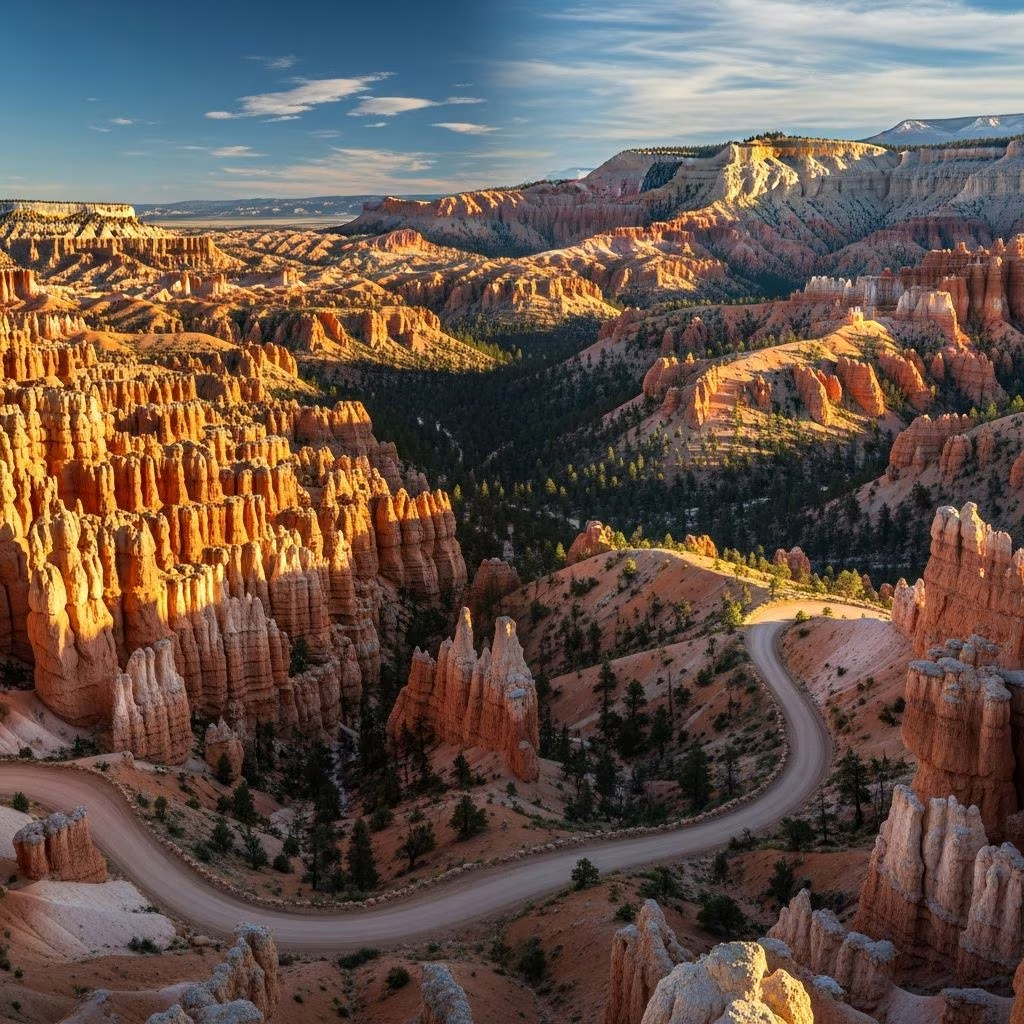
Utah’s southern landscapes, featuring **Bryce Canyon National Park** and **Grand Staircase-Escalante National Monument**, represent some of the most breathtaking natural formations in the United States. These areas boast towering hoodoos, vast slot canyons, and rich paleontological records, drawing over a million visitors annually. However, their fragility demands careful stewardship to counter threats from development, climate change, and overtourism.
Bryce Canyon, perched on the eastern edge of the Paunsaugunt Plateau, showcases an otherworldly array of hoodoos—tall, thin spires of rock sculpted by frost-wedging and erosion. Formed from colorful limestones and sandstones deposited 60 million years ago in ancient lakes and seas, these formations glow in hues of red, orange, and pink during sunrise and sunset. The park spans just 35,835 acres but offers viewpoints like Sunrise Point and Inspiration Point that reveal amphitheaters plunging over 800 feet.
Unlike typical canyons carved by rivers, Bryce’s features result primarily from freeze-thaw cycles, where water seeps into cracks, expands upon freezing, and chips away at the rock. This process continues today, with hoodoos forming and collapsing at a visible pace. The park’s high elevation—8,000 to 9,000 feet—brings cool summers and heavy snowfall, enhancing its unique microclimate that supports diverse plant life, including ancient bristlecone pines over 1,000 years old.
Adjacent to Bryce, the 1.9 million-acre **Grand Staircase-Escalante National Monument** unfolds as a rugged tapestry of plateaus, buttes, and deeply incised canyons. Designated in 1996 under the Antiquities Act by President Clinton, it protects a “staircase” of colorful cliffs rising from the Grand Canyon to Bryce, encompassing five life zones from desert to forest.
This monument harbors a “dinosaur Shangri-La,” with over 20 new dinosaur species discovered since its creation, including well-preserved fossils from the Late Cretaceous. Archaeological sites number over 20,000, featuring Ancestral Puebloan granaries, petroglyphs, and artifacts spanning 12,000 years of human history. Its ecological intactness ranks in the top 4% of western landscapes, fostering biodiversity hotspots for species like desert bighorn sheep and peregrine falcons.
Grand Staircase-Escalante’s boundaries have fluctuated amid political debates. Shrunk by nearly half in 2017 under President Trump to favor mining and grazing, it was restored to original size in 2021 by President Biden following lawsuits from tribes and conservationists. Recent congressional efforts via the Congressional Review Act seek to dismantle the 2025 management plan, potentially opening lands to extraction industries that threaten water sources and habitats.
Bryce Canyon, established as a national monument in 1923 and park in 1928, faces fewer boundary disputes but shares pressures from proximity to these contested areas. Both sites underscore the Antiquities Act’s role in presidential conservation, having elevated many monuments to full national park status like Zion and Arches.
To experience these gems responsibly, opt for a 5-day itinerary emphasizing low-impact travel. Arrive during shoulder seasons (spring or fall) to avoid peak crowds and heat, using free park shuttles to reduce vehicle emissions. Pack out all waste, stick to trails, and camp in designated sites to minimize cryptobiotic soil disturbance—delicate crusts that prevent erosion and store carbon.
| Day | Focus Area | Activities | Sustainability Tip |
|---|---|---|---|
| 1 | Bryce Canyon | Shuttle to viewpoints; Navajo Loop Trail | Use shuttle; no drones |
| 2 | Bryce Rim Trail | Hike rim; stargazing | Leave no trace |
| 3 | Escalante Canyons | Drive scenic Hwy 12; Peek-a-Boo Slot | Permit for camping |
| 4 | Waterpocket Fold | Hike Coyote Gulch | Water conservation |
| 5 | Return via Tropic | Visitor centers; reflection | Support local outfitters |
Off-trail gems include the Agua Canyon hoodoos and Spooky Gulch’s twisted corridors, accessible via high-clearance vehicles on dirt roads. Always check weather, as flash floods reshape canyons swiftly.
These landscapes face mining proposals for uranium and coal, which could scar watersheds vital for downstream parks like Zion. Overgrazing erodes soils, while visitor numbers—800,000 annually at Escalante—risk trail braiding and cryptobiotic damage. Climate change exacerbates droughts, shrinking water holes for wildlife.
Conservation wins include restored boundaries and management plans prioritizing science and recreation. Tribes like the Kaibab Paiute advocate for cultural protections, emphasizing sacred sites. Visitors contribute by volunteering with trail crews or donating to groups like the National Parks Conservation Association.
Spring (April-May) or fall (September-October) offer mild weather (50-70°F) and fewer crowds. Summers exceed 90°F; winters bring snow but fewer visitors.
Day hikes generally don’t require permits, but overnight camping and popular slots like Peek-a-Boo do. Check BLM visitor centers.
Yes, congressional moves aim to overturn management plans, risking mining. Support advocacy to maintain safeguards.
Dispersed camping is allowed but follow Leave No Trace; designated sites preferred near roads.
Scenic 1.5-hour drive via Highway 12; shuttles unavailable between sites—personal vehicle or tour needed.
Ongoing legal battles and management plans will shape these lands’ fate. Bryce’s stable status contrasts Escalante’s volatility, but both benefit from visitor mindfulness. By treading lightly, travelers ensure hoodoos stand tall and canyons echo for generations. Engage with official apps for real-time conditions and contribute photos to citizen science projects monitoring change.
