

 Travel Essentials
 Travel Essentials

Journey through Hungary, Croatia, Serbia, Bulgaria, and Romania on a 9-day river cruise from Budapest to Bucharest with cultural experiences and scenic highlights.
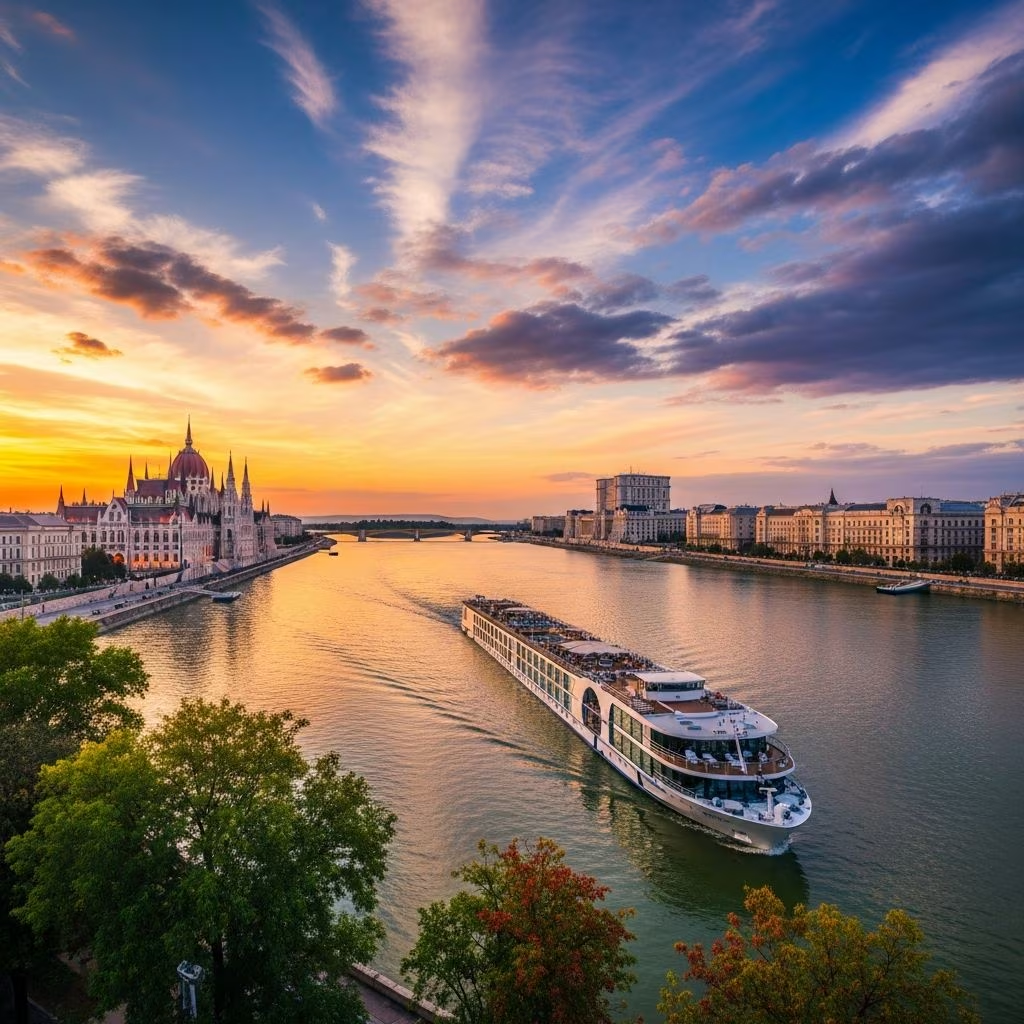 Travel Essentials
River cruises along the Danube have long captivated travelers seeking an immersive way to experience Europe’s most culturally rich regions. While many traditional river cruises terminate in Budapest after traversing the waterways of Germany and Austria, a growing number of travelers are discovering that the journey southward from Hungary’s capital offers equally compelling experiences. The route from Budapest to Bucharest presents an exceptional opportunity to traverse five distinct nations over nine days, each with its own architectural heritage, culinary traditions, and storied past.
This southbound itinerary stands apart from conventional European river cruises by venturing into less frequently visited territories of Eastern Europe. Rather than retreating to familiar Western European landscapes, passengers aboard these cruises penetrate deeper into the heart of a region where history, culture, and natural beauty converge in unexpected ways. The voyage captures the essence of five countries—Hungary, Croatia, Serbia, Bulgaria, and Romania—presenting travelers with a comprehensive portrait of this dynamic region.
Choosing to cruise southbound from Budapest rather than northbound toward Vienna or westward toward Germany opens access to destinations that remain refreshingly authentic and less commercialized than their Western European counterparts. The Danube, Europe’s second-longest river, flows through or borders ten countries, yet few cruise experiences exploit the full potential of this magnificent waterway as thoroughly as the Budapest-to-Bucharest route.
The significance of this particular itinerary extends beyond mere geography. Passengers embarking on this journey position themselves to witness the transformation of European landscape and culture as they progress southeastward. The terrain shifts from the gentle Hungarian plains to the dramatic gorges of the Iron Gates, while cultural influences transition from Central European refinement to Balkan heritage and Eastern Orthodox traditions. This gradual evolution of geography and culture creates a narrative arc that unfolds naturally over the course of the voyage.
Modern river cruise operators have evolved beyond presenting passengers with a series of tourist attractions and historical monuments. Contemporary cruise experiences emphasize authentic engagement with local communities and cultures. Rather than simply observing destinations from a distance, travelers increasingly seek opportunities to participate in genuine cultural exchanges and learn from the people who inhabit these regions.
Specialized excursion programs designed specifically for river cruise passengers offer multiple avenues for meaningful interaction. These may include:
Budapest serves as the logical starting point for this eastbound adventure. The first evening aboard ship typically includes dinner while cruising through Budapest’s illuminated waterfront, allowing passengers to settle into their accommodations while absorbing initial impressions of the Hungarian capital. This gentle introduction to shipboard life establishes a comfortable rhythm before the more intensive shore excursions commence.
From Budapest, the ship begins its journey toward the lesser-known gems of Eastern Europe. Intermediate stops often include Kalocsa, a charming Hungarian settlement known for its paprika production and traditional embroidery, providing an early taste of rural Hungarian life before entering the Balkans.
The itinerary’s Croatian segment introduces passengers to the Pannonian Basin’s eastern reaches. Towns such as Osijek and Vukovar represent the complex history of this region, where Austro-Hungarian architectural influences blend with contemporary Central European culture. These communities have undergone significant transformations in recent decades, and experiencing them firsthand provides context that guidebooks alone cannot convey.
Optional excursions in Croatian ports may involve:
Serbia’s capital represents a pivotal juncture in the cruise itinerary, both geographically and culturally. Belgrade sits at the confluence of the Danube and Sava Rivers, creating a natural focal point for regional commerce and culture. The city’s architectural landscape tells stories of multiple periods: Ottoman occupation, Austro-Hungarian rule, Yugoslav independence, and post-2000 reconstruction.
Passengers typically enjoy substantial time in Belgrade, as the city’s attractions require more than cursory visits to appreciate fully. Architectural walking tours reveal layers of history embedded in the urban fabric. The Danube’s role in shaping Belgrade’s development becomes apparent when viewing the city from the river’s perspective, understanding why this location attracted successive civilizations and empires.
The passage through the Iron Gates represents the cruise’s most geographically dramatic segment. This narrow gorge, where the Danube cuts through limestone cliffs, marks the natural border between Serbia and Romania and separates the Balkan Mountains from the Carpathian range. Towering rock formations rise precipitously from the water, creating an awe-inspiring natural spectacle.
This section of the Danube holds profound cultural significance throughout the region. The Iron Gates have inspired centuries of artistic expression, appearing in poetry, music, and visual art across multiple cultures. The gorge’s dramatic topography also influenced historical events, as the narrow passage served as both a natural barrier and a crucial transportation corridor throughout history.
Following passage through the Iron Gates, cruises typically include stops in Bulgaria, particularly in Vidin and other Danube towns. Bulgaria occupies a unique position in Eastern Europe, with cultural influences extending from the Mediterranean and Byzantine worlds. Wine tasting excursions introduce passengers to Bulgaria’s underrated viticultural traditions, which have flourished for millennia despite limited international recognition.
Bulgarian sections of the itinerary often feature:
The journey culminates in Romania, the final country encompassed by this ambitious itinerary. The transition from Bulgaria into Romania represents another cultural and geographic shift, as travelers encounter Carpathian Mountain landscapes and the distinctive character of Romanian communities. The river journey concludes in Bucharest, Romania’s sprawling capital, a city that synthesizes Eastern European, Ottoman, and Soviet-era architectural influences in ways that perplex and fascinate visitors.
Bucharest serves as an appropriate terminus for this voyage, representing both an endpoint and a new beginning for travelers seeking to extend their Eastern European exploration beyond the river cruise’s conclusion.
| Cruise Duration | Typical Days | Countries Visited | Departure Points |
|---|---|---|---|
| Standard Eastern Europe Cruise | 9 days | 5 countries | Budapest |
| Extended Danube Journey | 10-11 days | 5-6 countries | Budapest or Vienna |
| Specialized Itinerary | Variable | 4-5 countries | Multiple starting points |
Multiple cruise operators offer variations on the Budapest-to-Bucharest route, with differences in ship size, excursion philosophy, and pricing structure. Some operators emphasize active adventures with cycling and hiking components, while others focus on cultural immersion and academic enrichment. Still others balance both approaches, offering optional activities suited to varying fitness levels and interests.
The timing of travel significantly affects the cruise experience. Spring and early autumn typically offer ideal conditions, with moderate temperatures and lower water levels that still permit navigation while minimizing extreme heat or cold. Late summer travel coincides with peak tourism in Eastern European capitals but may feature uncomfortably warm weather during daytime hours. Winter cruises are generally unavailable, as water levels and ice conditions prevent regular navigation along most sections of the lower Danube.
Modern river cruise ships offer substantially different accommodations compared to ocean-going vessels. Cabins tend toward the compact but efficiently designed, with bathrooms featuring showers rather than bathtubs and windows positioned to maximize river views. Common areas typically include multiple lounges, dining facilities, and often a small fitness room or spa area. The intimate scale of river cruise ships—typically carrying 100-200 passengers rather than 3,000-5,000—creates a more collegial atmosphere among passengers than large ocean cruises.
Booking 6-9 months in advance typically provides optimal pricing and cabin selection. However, last-minute deals sometimes emerge for cruises departing within 2-3 months, particularly for travelers with flexible schedules.
Visa requirements depend on your nationality and passport. Citizens of most Western nations enjoy visa-free or visa-on-arrival access to all five countries on this route. Checking current requirements with your nation’s diplomatic offices remains essential.
While some excursions involve walking and cycling, most can be customized to accommodate varying fitness levels. Many optional activities offer both active and less demanding alternatives, allowing passengers to select experiences matching their physical capabilities.
The standard cruise duration is nine days, encompassing travel time and port stops. However, extending the trip to encompass 10-14 days allows for deeper exploration of specific regions before or after the river portion.
English-speaking guides typically accompany excursions on international river cruises. However, learning basic phrases in Hungarian, Croatian, Serbian, Bulgarian, and Romanian enriches interactions with local communities.
