

 Travel Essentials
 Travel Essentials

Discover key insights for traveling to Budapest: from thermal baths and ruin bars to currency tips, safety advice, and must-see landmarks across Buda and Pest.
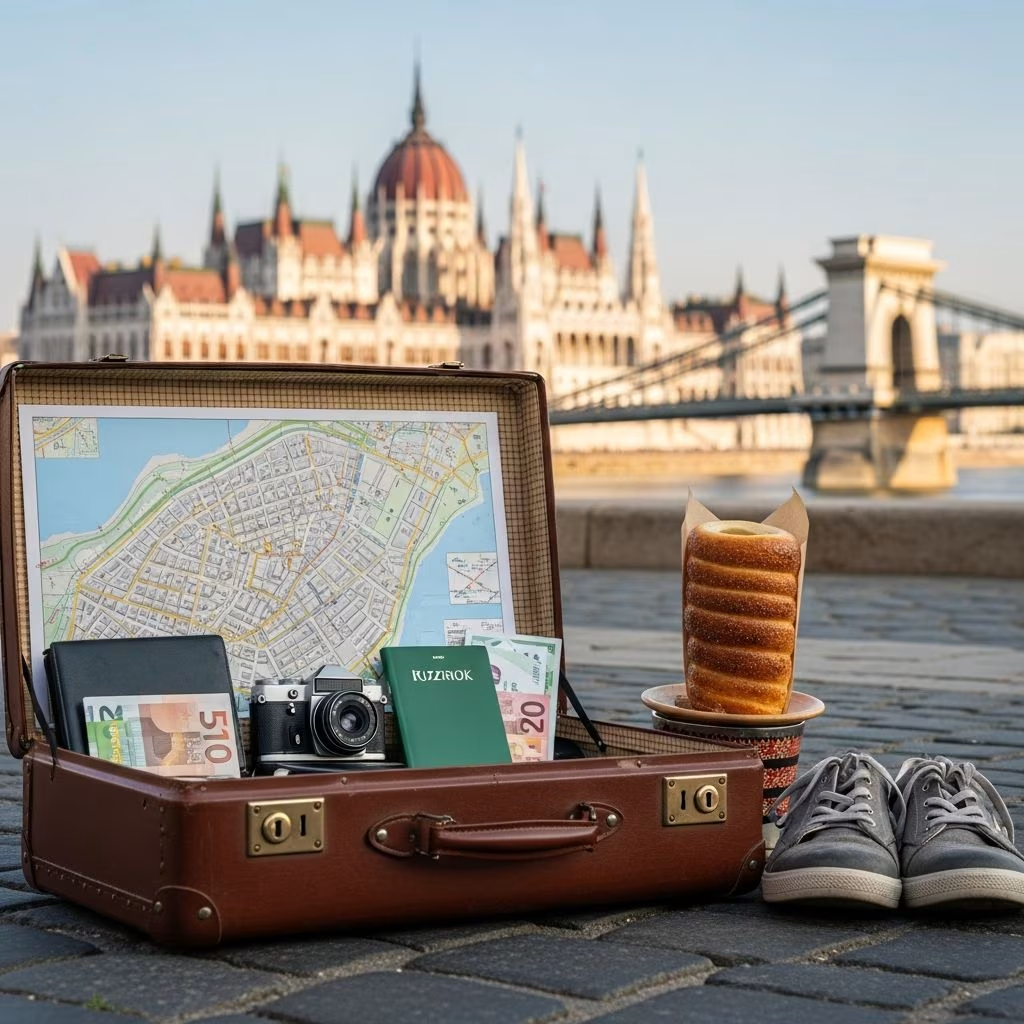 Travel Essentials
Budapest, Hungary’s dynamic capital, captivates with its thermal springs, historic landmarks, and lively nightlife. Divided by the Danube River into hilly Buda and bustling Pest, the city offers a perfect blend of relaxation and exploration for every traveler.
Understanding Budapest’s unique geography is crucial for efficient navigation. The Danube River splits the city into Buda on the west bank, known for its rolling hills, castles, and serene vistas, and Pest on the east, home to grand boulevards, vibrant districts, and modern energy. Iconic bridges like the Chain Bridge connect these halves, providing scenic walkways and photo opportunities.
Key districts include the Castle District in Buda, offering panoramic views from Fisherman’s Bastion, and the Jewish Quarter in Pest, famous for its eclectic ruin bars and synagogues. Plan your itinerary around this divide to maximize time—start days in Buda for quieter mornings and shift to Pest for evenings.
Budapest’s Ferenc Liszt International Airport is about 30 minutes from the center. Taxis, airport shuttles, and the efficient 100E bus provide reliable transfers. Once in the city, walking is ideal in compact Pest, while trams, metro, and buses cover longer distances. Purchase a Budapest Card for unlimited public transport and free attractions.
Ride-sharing apps like Uber operate widely, but validate all public transport tickets immediately to avoid fines. Trams along the Danube offer the best city views, especially at dusk when lights illuminate bridges and parliament.
Hungary uses the Hungarian Forint (HUF), not the Euro. Exchange rates fluctuate, so withdraw from ATMs for the best deals rather than airport kiosks. Cards are accepted at most hotels, restaurants, and shops, but carry cash for markets, small vendors, and ruin bars.
Tipping is customary: round up bills or add 10-15% at eateries. ATMs are plentiful, but notify your bank of travel to prevent card blocks.
| Item | Cost in HUF (approx.) | USD Equivalent |
|---|---|---|
| Public Transport Ticket | 450 | $1.20 |
| Thermal Bath Entry | 10,000-15,000 | $27-40 |
| Meal at Ruin Bar | 3,000-5,000 | $8-13 |
| Uber Ride (City Center) | 1,500-3,000 | $4-8 |
Budapest boasts over 118 thermal springs producing 15 million gallons of water daily, fueling world-renowned spas. Széchenyi Baths, Europe’s largest, feature massive outdoor pools amid neo-baroque architecture—perfect for sunny afternoons. Gellért Baths dazzle with Art Nouveau mosaics and indoor elegance, while Rudas preserves 16th-century Ottoman domes for a historic soak.
Visit mid-week to avoid crowds; bring a towel, flip-flops, and cabin rental for changing. These aren’t just baths—they’re cultural rituals blending relaxation with Hungary’s mineral-rich geology.
Hungarians value politeness; greet with ‘Jó napot’ (good day) and avoid clinking glasses during toasts—a nod to historical uprisings. Smoking is common outdoors, so expect it in open bar areas. Public toilets often charge a small fee—carry coins.
Vegetarians and vegans will find options in trendy Pest spots, though meat-heavy goulash and lángos dominate traditional fare. Learn basics: ‘Kérek’ (please), ‘Köszönöm’ (thank you).
Budapest is generally safe, with low violent crime rates per U.S. State Department advisories. Petty theft targets tourists in crowded areas like tram 4/6. Watch for taxi overcharges—use apps or metered cabs—and bar scams where inflated bills arrive after drinks.
Women should note occasional reports of overly persistent approaches in nightlife zones. Stick to well-lit areas, secure valuables, and trust your instincts. The city ranks high in walkability even at night.
The neo-Gothic Parliament Building stuns along the Danube—book guided tours for interior access. Heroes’ Square honors Magyar leaders, while St. Stephen’s Basilica houses a revered hand relic. In Buda, Matthias Church and Fisherman’s Bastion offer fairy-tale views.
The Jewish Quarter reveals poignant WWII history at Dohány Street Synagogue, Europe’s largest, amid trendy cafes. Ruin bars like Szimpla Kert repurpose Soviet-era ruins into eclectic nightlife hubs.
Savor chimney cake (kürtőskalács), paprika-spiced stews, and fresh langos at markets like Great Market Hall. Ruin bars serve affordable craft beers and fusion bites. Danube cruises at sunset pair well with Hungarian wines—Tokaji sweetens any meal.
Party districts buzz till dawn, but pace yourself amid potent pálinka spirits.
Summers are hot and humid; winters crisp with possible snow. Pack layers, rain gear for unpredictable weather, and modest swimwear for baths. Comfortable shoes conquer worn streets and hills.
From Budapest, venture to Szentendre’s artists’ village or Eger’s wine cellars via train. The zoo, one of Europe’s oldest, delights families.
Yes, with standard precautions against pickpockets.
Széchenyi for its lively outdoor pools.
$50-100 covers food, transport, and sights.
No, Forints only; cards widely accepted.
Spring (April-June) or fall for mild weather.
