

 Travel Essentials
 Travel Essentials

Discover free and low-cost activities across Patagonia's most iconic destinations, from glacier viewpoints to mountain trails and cultural sites.
 Travel Essentials
Patagonia stands as one of South America’s most captivating destinations, drawing travelers from across the globe to witness its dramatic landscapes, pristine wilderness, and unique wildlife. The region spans across Argentina and Chile, encompassing vast glacial fields, towering mountain peaks, wind-swept steppes, and remote communities that seem to exist at the edge of the world. However, the reputation of Patagonia as an expensive destination often deters budget-conscious travelers from experiencing this remarkable corner of Earth. The truth is that while guided tours and premium experiences come with substantial price tags, numerous opportunities exist to explore Patagonia’s wonders without incurring significant costs.
Before diving into specific budget-friendly activities, it’s essential to understand Patagonia’s vast geographic scope. The region encompasses multiple distinct areas, each offering unique experiences and varying costs. El Calafate serves as the primary gateway to the Perito Moreno Glacier and numerous glacial formations, while El Chaltén attracts rock climbers and serious hikers seeking to summit legendary peaks. Ushuaia, positioned as the world’s southernmost city, provides access to Tierra del Fuego’s subpolar landscapes. Meanwhile, towns like Futaleufú and Puerto Río Tranquilo offer alternative perspectives on Patagonian beauty, often with fewer crowds and lower costs than the major tourist hubs.
The Perito Moreno Glacier represents Patagonia’s most recognizable feature, attracting hundreds of thousands of visitors annually. This massive glacier stretches over 30 kilometers in length and rises more than 60 meters above the surrounding landscape, creating an awe-inspiring natural monument. While guided ice-trekking expeditions and boat tours command premium prices, visitors can experience the glacier’s grandeur through more economical approaches. A park entry fee of approximately US$13 grants access to extensive viewing platforms that provide unobstructed perspectives of the glacier’s face. These platforms showcase the glacier’s calving activity, where enormous chunks of ice periodically break free and crash into the waters below—a spectacular natural phenomenon visible without additional expenses.
Traveling to the glacier requires planning to minimize transportation costs. Rather than booking organized tour packages that include transfers and guides, independent travelers can utilize local bus services connecting El Calafate to the glacier, reducing overall expenditure significantly. The 80-kilometer journey takes approximately two hours, making it feasible as a day trip from El Calafate’s town center.
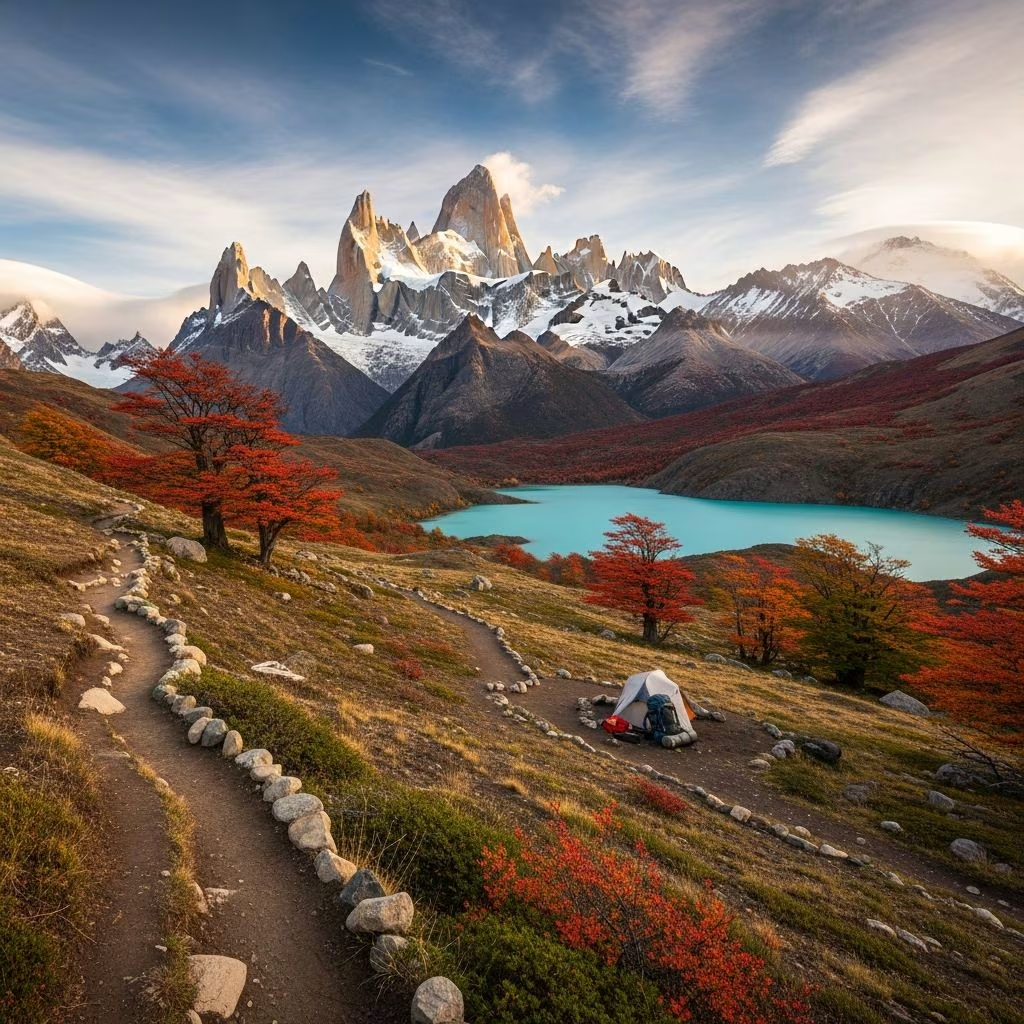
El Chaltén has earned recognition as Argentina’s hiking capital, attracting trekkers of all ability levels. The town provides access to two legendary mountains: Mount Fitz Roy and Cerro Torre, peaks that challenge experienced climbers and inspire admiration in casual hikers. A distinctive advantage of pursuing climbing objectives in El Chaltén involves the absence of park entry fees for this section of Parque Nacional Los Glaciares. Climbers must register with local rangers and obtain a complimentary climbing permit, but no monetary charge applies. This policy makes El Chaltén exceptionally accessible for budget travelers intent on mountain pursuits.
Beyond technical climbing routes, numerous hiking trails radiate from El Chaltén, offering panoramic vistas without requiring climbing equipment or specialized skills. Day hikes to scenic viewpoints take between two and eight hours, depending on destination and fitness level. These trails wind through beech forests, traverse boulder fields, and deliver hikers to locations where Fitz Roy’s distinctive silhouette dominates the landscape.
Futaleufú has cultivated a worldwide reputation as a premier white-water rafting destination, with commercial outfitters charging substantial fees for guided descents down this turquoise river. However, the valley surrounding Futaleufú offers splendid natural beauty that can be appreciated without paddling rapids or hiring professional guides. Mountain biking represents an economical alternative for exploring the region’s terrain and hydrology. Local bike rental establishments offer daily rates considerably lower than typical tour packages. A well-established 20-kilometer loop near Futaleufú provides access to riverside trails, suspension bridge crossings, and forest pathways that culminate at lookout points overlooking both the town and surrounding peaks. This route combines moderate physical effort with remarkable scenic payoff, making it an excellent choice for travelers seeking adventure without premium expenditure.
Few visitors to Patagonia are aware of the region’s remarkable archaeological significance. Cueva de las Manos, located along Argentina’s legendary Route 40, represents one of Earth’s most extraordinary examples of prehistoric rock art. This UNESCO World Heritage site contains over 800 distinct images created approximately 7,370 years ago, with human handprints forming the most iconic motifs. The images, rendered in ochres and reds, depict not only hands but also hunting scenes, guanacos (wild relatives of llamas), and abstract patterns from later cultural periods. A US$20 entrance fee provides access to these ancient artworks, allowing contemporary visitors to forge a tangible connection with cultures that thrived millennia before modern civilization.
Reaching Cueva de las Manos requires patience and planning. The site sits approximately midway between the settlements of Perito Moreno and Bajo Caracoles along Route 40. This remote location discourages casual tourist traffic, preserving the site’s authenticity and ensuring that visitors who make the effort encounter fewer crowds than at more accessible attractions.
Patagonian towns offer their own attractions that cost nothing to experience. El Calafate’s central thoroughfare, Avenida Libertador, combines souvenir shopping opportunities, inviting cafés, and restaurants serving traditional Patagonian cuisine. Strolling this street provides cultural immersion and opportunities to interact with local merchants and other travelers. Similarly, Ushuaia’s downtown area, with its steep streets descending toward the Beagle Channel, offers free exploration opportunities. The city’s distinctive architecture reflects its history as a territorial settlement, and simply wandering its avenues provides authentic glimpses into how residents live in the world’s southernmost city.
El Calafate’s surrounding landscape contains multiple natural features accessible at minimal or no cost. Laguna Nimes functions as a nature reserve situated merely minutes from the city center, providing exceptional opportunities for observing Patagonian birdlife, including the region’s iconic flamingos. While accessing the complete trail system requires a fee, public areas near the lagoon remain free to visitors, enabling wildlife observation and photography without expenditure. The trail circumnavigating the lagoon delivers spectacular views of Lago Argentino, Argentina’s largest lake, with sunset presentations considered among the region’s most beautiful natural displays.
Laguna Azul, formed within a volcanic crater approximately 60 kilometers from El Calafate, presents another cost-free natural attraction. Crystal-clear waters fill the crater, creating striking visual contrast against the surrounding landscape. The hike to the crater rim requires minimal physical exertion, making it accessible to travelers across fitness spectrums. The scenic drive itself across Patagonian plains constitutes a worthwhile experience, with opportunities to observe indigenous wildlife including guanacos and rheas across the steppe.
Ushuaia offers a compelling cost-free excursion to Cerro Martial, accessible via frequent minibus service departing from downtown. This mountain overlooks the world’s southernmost city, and a 40-minute trail ascends to a lookout point delivering unobstructed vistas. From this vantage point, visitors observe Ushuaia’s steep streets cascading downward toward the Beagle Channel’s turbulent waters. The small glacier bearing the mountain’s name lies visible in the distance, and on clear days, the panoramic scope extends across multiple geographic features that define Tierra del Fuego’s landscape. The only expense involves the minibus fare, making this activity remarkably economical.
Villa O’Higgins, a hamlet accessible primarily by boat and characterized as Chile’s most isolated village, offers an entirely distinct Patagonian experience. The settlement contains no roads; transportation within the village occurs via boat exclusively. Even emergency services—police and fire brigades—operate via watercraft rather than vehicles. This unusual infrastructure creates an authenticity rare in contemporary tourism, and simply wandering the village’s wooden structures, breathing the scent of cypress trees, and observing daily life provides genuine cultural exposure. Villa O’Higgins serves as the departure point for visits to Isla de Los Muertos (Island of the Dead), a mysterious location that intrigues travelers seeking offbeat experiences.
Estancia Harberton, located near Ushuaia and representing one of Patagonia’s oldest European settlements, welcomes visitors through guided tours included in the entry fee. The fourth and fifth generations of the Bridges family maintain the historic buildings and operate the on-site Museo Acatushún, which houses extensive collections of marine mammal and bird specimens, including the skeleton of a rare Hector’s beaked whale. Visitors also examine replica Yámana dwellings and access Isla Martillo, home to the Beagle Channel’s only penguin colony. For travelers interested in natural history and indigenous cultures, this experience delivers substantial value relative to its cost.
Budget travelers can experience Patagonia’s highlights for approximately US$30-50 daily when utilizing free activities, public transportation, and modest accommodations. Major expenses involve accommodation and basic meals, while most natural attractions carry minimal or no entry fees.
Climbing permits in El Chaltén are free and mandatory, obtained through registration with local rangers. The parks containing these mountains charge no entry fees within El Chaltén’s section, unlike the Perito Moreno Glacier area accessed from El Calafate.
Yes, most remote Patagonian attractions remain accessible via independent travel. Public buses, rental vehicles, and hitchhiking provide transportation alternatives to organized tours, though journey planning requires patience and flexibility.
Free wildlife viewing opportunities include guanacos on the open steppe, flamingos at various lagoons, rheas, and various bird species throughout the region. Penguin viewing at Isla Martillo requires paying Estancia Harberton’s entry fee.
Patagonia’s reputation as an expensive destination obscures the reality that this magnificent region welcomes budget-conscious travelers through numerous cost-effective pathways. Iconic glaciers, legendary mountains, remote communities, and archaeological wonders remain accessible without premium tour expenditures. The region rewards independent travelers willing to navigate public transportation networks, research trail conditions independently, and embrace flexibility in their itineraries. By prioritizing free and low-cost activities, visitors discover that Patagonia’s true value lies not in exclusive experiences, but in the unmediated connection with landscapes that have shaped human imagination for generations.
