

 Travel Essentials
 Travel Essentials

Complete guide to traveling India affordably, covering accommodation, transportation, food, timing strategies, and destination selection for budget-conscious explorers.
 Travel Essentials
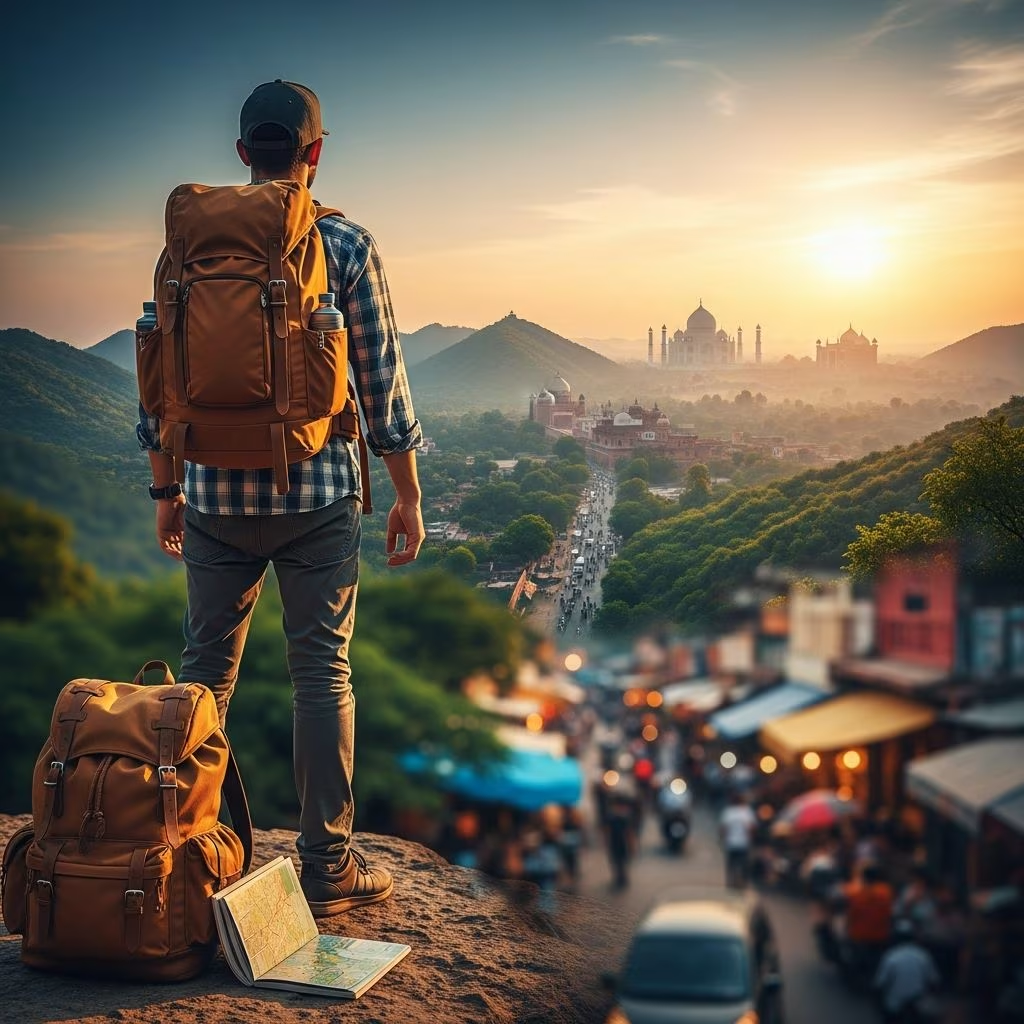
India stands as one of the world’s most accessible travel destinations for budget-conscious travelers, offering extraordinary cultural experiences, diverse landscapes, and world-class attractions without the hefty price tag associated with many other global destinations. Whether you’re a first-time backpacker or a seasoned traveler seeking to stretch your rupees further, understanding the mechanics of affordable travel in India can transform your journey from a financial burden into a liberating adventure.
The fundamental advantage of traveling through India lies in its dramatically low cost of living compared to Western nations. Daily expenses for accommodations, meals, and transportation remain remarkably affordable throughout most regions, allowing travelers to extend their stays and explore more extensively than budgets might permit elsewhere. A conservative daily budget of approximately $33 to $50 USD provides comfortable travel experiences, while those willing to embrace hostel stays and street food can reduce daily expenditures to $20 or less.
The currency advantage plays a crucial role in budget planning. Exchange rates typically favor Western travelers, meaning that modest daily allocations convert into substantial purchasing power locally. This economic reality enables visitors to access experiences—from private guided tours to luxury wellness retreats—at prices that would be considered economy or mid-range in most developed nations.
Seasonal variations dramatically influence accommodation and activity pricing throughout India. The monsoon season (June through September) and peak summer months (April and May) typically offer the lowest accommodation rates, as these periods see reduced tourist traffic. During these off-peak windows, hostel beds and budget hotel rooms become significantly cheaper, sometimes dropping to half their peak-season rates.
Festival periods present a paradoxical opportunity: while major celebrations like Diwali or Holi drive up prices in metropolitan areas, smaller towns and rural regions experience minimal price fluctuations. Travelers who time their visits around regional festivals in less-touristy areas can witness authentic cultural celebrations without absorbing the premium prices charged in popular tourist zones.
Lodging represents one of the largest potential expenses, yet numerous options exist for economical stays:
The geographic location significantly impacts accommodation pricing. Metropolitan centers like Mumbai and Delhi command premium rates, while secondary cities such as Hyderabad and Jaipur offer equivalent amenities at 30-50% lower costs. Strategic accommodation booking during off-peak seasons and in less-touristed destinations allows budget travelers to redirect savings toward experiences and longer stays.
India’s extensive public transportation network provides affordable mobility options across vast distances. Train networks, buses, and domestic flights offer various price points accommodating different budget levels:
Booking long-distance trains during advance booking windows (up to 60 days prior) significantly reduces ticket prices compared to walk-up purchases. Sleeper class accommodations on overnight trains provide comfortable budget alternatives while eliminating a night’s hotel expense, effectively combining two costs into one economical transaction.
India’s street food and restaurant landscape caters to virtually every budget category, with exceptional meals available for minimal investment. A traditional vegetarian thali (complete meal) costs as little as ₹100 ($1.20 USD), providing balanced nutrition with rice, lentils, vegetables, and bread.
Regional specialties offer outstanding value across different areas:
Travelers comfortable consuming vegetarian options unlock additional savings, as meat-based meals command higher prices than plant-based alternatives. Visiting local markets and eating where residents gather—rather than established tourist restaurants—consistently provides superior value with more authentic preparations.
Major tourist destinations often inflate prices in anticipation of visitor spending. Strategically selecting less-visited alternatives provides equivalent or superior experiences at substantially lower costs. While iconic sites like the Taj Mahal remain worthwhile despite premium pricing, numerous alternatives deserve consideration:
Certain regions have earned reputations for exceptional value among budget travelers. Rajasthan combines heritage experiences, desert landscapes, and cultural immersion with widespread budget accommodations. Cities like Udaipur (lake city charm), Jodhpur (blue city architecture), and Jaisalmer (desert gateway) offer hostel dorms for ₹500-1000 ($6-$12 USD).
Himalayan regions including Himachal Pradesh provide mountain scenery, trekking, and adventure activities with minimal costs. Manali offers budget stays alongside free trekking opportunities, while Dharamshala combines Tibetan culture with affordable monastery accommodations. Kasol, nestled in Parvati Valley, has developed into a major backpacker hub offering inexpensive lodging and vibrant community atmospheres.
South India delivers distinct cultural experiences at favorable budgets. Kerala’s Alleppey provides backwater experiences and budget houseboats, while Varkala offers clifftop beach locations with modest accommodations. Munnar’s tea plantations feature affordable lodge stays, and Kochi combines historical significance with budget-friendly infrastructure.
India’s spiritual heritage creates naturally budget-conscious tourist circuits. Varanasi accommodates travelers from ₹300-3000 ($4-$36 USD) nightly, with vegetarian meals available for under ₹200 ($2.40 USD). The city’s spiritual experiences—sunrise boat rides, Ganga Aarti ceremonies, and ghat explorations—remain free or minimal cost.
Rishikesh, the yoga capital, attracts spiritually-oriented travelers with hostels and private rooms from ₹400-2000 ($5-$24 USD). Yoga classes, meditation sessions, and spiritual teachings often operate on donation bases or participate-what-you-can models.
Many of India’s most memorable experiences require minimal or no financial investment. Temple visits, walking through bazaars, exploring ghat areas, mountain trekking, and cultural interactions happen free or nearly free:
Strategic advance planning consistently reduces overall expenses. Booking trains 30-60 days ahead provides significantly lower fares compared to last-minute purchases. Reserving accommodations during booking windows that offer discounts, while allowing flexibility for spontaneous destination changes, balances planning security with budget optimization.
Traveling with companions enables shared expenses on private transportation, guided tours, and accommodation. Four travelers splitting a private taxi’s cost pay roughly one-quarter the per-person autorickshaw expense while gaining comfort and flexibility advantages.
Extended stays in individual locations reduce transportation frequency and daily accommodation average costs. A two-week stay in one location costs substantially less per day than rapid city-to-city traveling, while enabling deeper cultural immersion and local business patronage at discounted rates for extended guests.
Utilizing travel apps, reading recent traveler reviews, and consulting with hostel staff regarding current local prices prevents overpayment. Recommendations from fellow travelers often identify genuine bargains that guidebooks have missed.
Tourist-oriented establishments consistently charge premium prices compared to local alternatives. Restaurants displaying English menus and employing aggressive solicitation typically mark up prices by 200-400% compared to neighborhood establishments serving local customers. Walking slightly away from main tourist areas reveals dramatically cheaper dining and accommodation options with equivalent or superior quality.
Scams targeting budget travelers—from inflated taxi fares to unauthorized guide services—proliferate in major tourist zones. Establishing reasonable price expectations through research and favoring official channels and established businesses mitigates financial losses from misleading schemes.
| Expense Category | Daily Cost (INR) | Daily Cost (USD) |
|---|---|---|
| Hostel Dormitory Bed | ₹400-600 | $5-7 |
| Meals (3 meals daily) | ₹300-500 | $4-6 |
| Local Transportation | ₹200-300 | $2-3 |
| Activities & Attractions | ₹100-300 | $1-4 |
| Miscellaneous | ₹150-250 | $2-3 |
| Daily Total | ₹1150-1950 | $14-24 |
Extremely budget-conscious travelers practicing careful spending habits can travel India for approximately $15-20 USD daily, though $25-35 USD provides more comfort and flexibility.
Monsoon travel offers advantages including reduced crowds, dramatic landscapes, lower prices, and lush natural scenery. While rainfall creates inconveniences, it doesn’t prevent travel; many regions remain perfectly accessible with appropriate preparation.
A one-month trip averaging $25-35 USD daily costs approximately $750-1050 USD. Adding contingencies and occasional splurges, a realistic month-long budget ranges from $1000-1500 USD depending on travel style.
Secondary cities including Hyderabad, Jaipur, Udaipur, Varanasi, and smaller Rajasthan towns consistently offer superior value compared to metropolitan centers like Delhi and Mumbai.
Yes—budget hotel rooms costing ₹500-1500 ($6-18 USD) provide private accommodations with basic amenities while remaining genuinely affordable compared to global standards.
