

 Travel Essentials
 Travel Essentials

A comprehensive guide to exploring Bulgaria's most historically significant destinations, from Sofia's architectural wonders to Veliko Tarnovo's medieval splendor.
 Travel Essentials
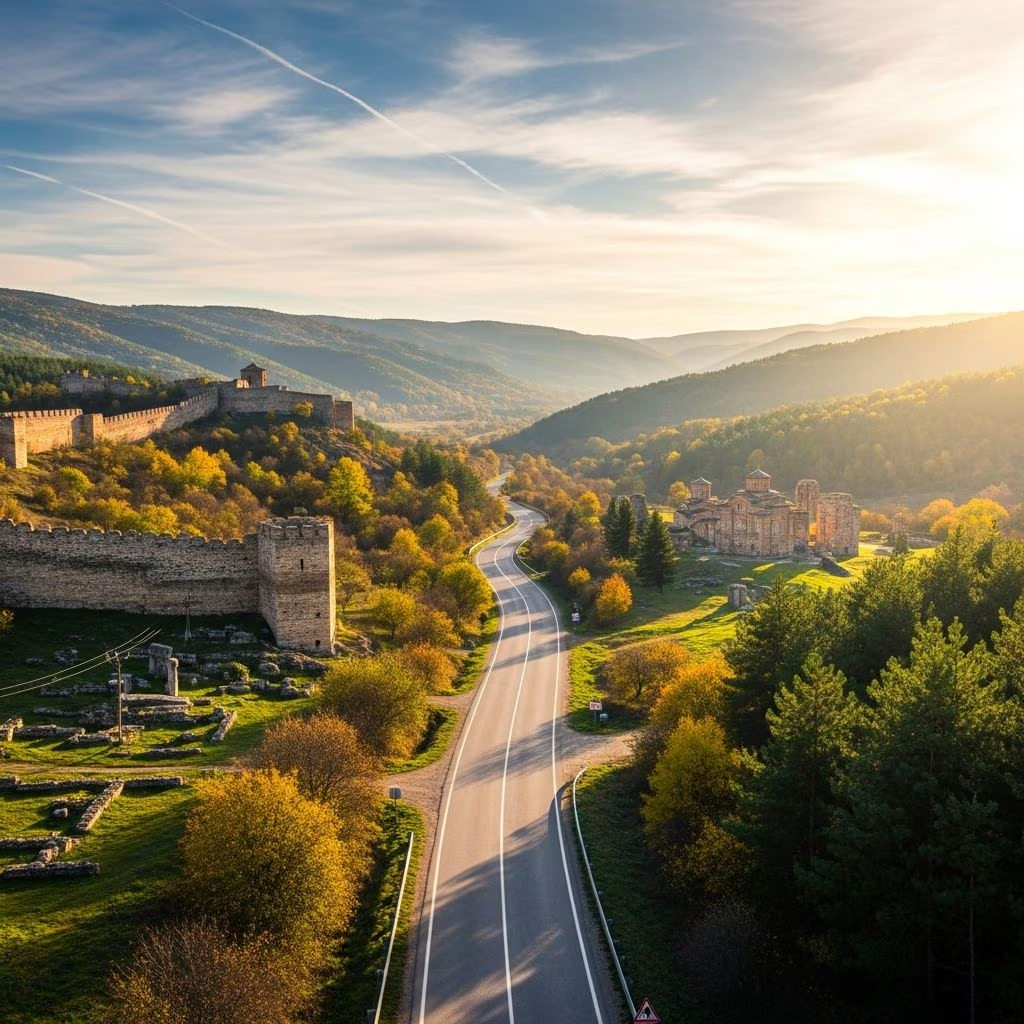
Bulgaria stands as one of Europe’s most compelling destinations for travelers seeking to combine natural beauty with profound historical significance. A self-guided driving journey through this Balkan nation offers an intimate exploration of centuries-old architecture, medieval fortifications, and vibrant cultural traditions that remain largely untouched by mass tourism. The route from Sofia, Bulgaria’s capital, to Veliko Tarnovo, often called the City of the Tsars, unveils a narrative of empires, artistic achievement, and resilience spanning over a thousand years.
Bulgaria presents an exceptional value for travelers seeking authentic European experiences without overwhelming crowds. The country’s diverse landscapes encompass lush mountain ranges, ancient ruins, Orthodox monasteries, and coastal beauty along the Black Sea. What distinguishes Bulgaria from other Balkan destinations is its accessibility—modern highways connect major cities, car rentals remain affordable, and the driving culture welcomes international visitors.
The journey from Sofia to Veliko Tarnovo specifically traces the threads of Bulgarian imperial history, revealing how this nation shaped Eastern European civilization. Each destination along this route represents a distinct chapter in Bulgaria’s evolution, from Roman settlements to medieval kingdom capitals to modern urban centers.
Sofia, Bulgaria’s capital and largest city, serves as the natural departure point for most road trips through the country. The city itself warrants at least two full days of exploration before heading outward, as its architectural fusion of Byzantine, Ottoman, and socialist-era structures creates a truly distinctive urban environment. Sofia has earned the nickname “Jerusalem of the East” because of its remarkable religious diversity—within walking distance you’ll encounter Orthodox cathedrals, mosques, synagogues, and Armenian churches, each reflecting different periods of the city’s complex history.
Begin your time in Sofia at Alexander Nevsky Cathedral, an imposing golden-domed structure that dominates the city’s skyline and represents one of the Balkans’ most impressive Orthodox monuments. The cathedral’s interior features stunning iconography and creates an atmosphere of peaceful contemplation. Nearby, Tsar Ivan Shishman Street captures Sofia’s contemporary character, lined with cafes, galleries, and locals engaged in daily life.
The Regional History Museum offers essential context for understanding Bulgaria’s past, from ancient Thracian artifacts to Ottoman-period treasures. Meanwhile, Boyana Church, located just outside the city center, showcases 10th-century Byzantine frescoes and earned UNESCO World Heritage recognition for its exceptional artistic preservation.
Before departing Sofia’s immediate vicinity, consider a detour to experience Bulgaria’s natural landscapes. Vitosha Boulevard represents Sofia’s most fashionable thoroughfare, while Borisova Gradina Park and South Park provide green spaces for reflection. These areas offer respite from urban exploration and prepare your mind for the countryside journey ahead.
The drive from Sofia to Plovdiv spans approximately 148 kilometers and takes roughly two hours and forty-five minutes. This journey transitions you from the capital’s bustle to Bulgaria’s second-largest city, which boasts an even older history. Plovdiv was known in antiquity as Philippopolis and served as a crucial trading hub for centuries.
Spend two nights in Plovdiv to properly appreciate this layered city. The Ancient Theatre of Philippopolis stands as the primary archaeological attraction, offering insights into Roman theatrical culture and occasionally hosting performances during summer months. The Old Town represents another essential experience—its cobblestone streets wind between multi-story houses featuring traditional Balkan architecture, creating an atmosphere that seems frozen in time.
The Regional Ethnographic Museum Plovdiv showcases traditional Bulgarian crafts, costumes, and household items, providing understanding of rural life throughout the centuries. Don’t miss the Monument of the Red Army “Alyosha,” a massive Soviet-era statue overlooking the city—its presence reflects the complex geopolitical history of this region. Tsar Simeon Garden offers peaceful respite amid floral displays and fountains.
From Plovdiv to Veliko Tarnovo represents Bulgaria’s most historically charged journey—approximately 219 kilometers and three hours and twenty-seven minutes of driving. This route carries you toward the medieval heart of Bulgaria, where the Second Bulgarian Empire flourished centuries ago. Veliko Tarnovo earned its designation as “City of the Tsars” because it functioned as the Bulgarian capital during the medieval period and still retains the palatial remnants of that era.
Veliko Tarnovo’s exceptional appeal stems from its dramatic geography and architectural treasures. The city sprawls across three hills—Tsarevets, Trapezitsa, and Sveta Gora—each connected by narrow streets and offering distinct historical attractions. The Yantra River winds through the valley below, creating natural boundaries and enhancing the strategic defensive position that made Veliko Tarnovo an ideal capital location.
Tsarevets Fortress represents the undisputed highlight of Veliko Tarnovo. This medieval stronghold housed the royal palaces and patriarchal cathedral, serving as the power center of the Bulgarian medieval state. Walking the fortress walls provides panoramic vistas of the surrounding landscape and allows visitors to visualize the empire that once controlled this territory. The evening Sound and Light Show brings the fortress’s history to vivid life, projecting imagery onto the ancient stones while dramatic narration recounts pivotal historical moments.
Trapezitsa Fortress complements Tsarevets as another essential medieval site. Less crowded than its more famous counterpart, Trapezitsa reveals the sophisticated urban planning of medieval Bulgaria, with archaeological evidence showing residential and administrative buildings that housed the empire’s nobility and government officials.
Beyond the major fortresses, Veliko Tarnovo’s character emerges through its everyday streetscapes. Samovodska Charshia and Gurko Street represent the old bazaar and traditional commercial quarters, where narrow passages open into small shops selling local crafts, regional foods, and artisanal products. Walking these passages, you encounter residents engaged in generations-old trades and traditions that seem largely unchanged from medieval times.
The Stambolov Bridge provides the most celebrated photographic vantage point in the city, capturing the dramatic sweep of the Yantra River and the fortress-crowned hills. Visiting at sunset transforms this view into a golden spectacle that explains why Veliko Tarnovo captivates travelers seeking authentic medieval atmosphere.
Approximately seven kilometers from Veliko Tarnovo lies the village of Arbanasi, a destination often overlooked by visitors but offering unique architectural and historical insights. This small settlement preserves traditional Bulgarian village construction and maintains customs that reflect centuries of cultural continuity. The journey to Arbanasi can be undertaken by car or on foot, with walking providing the most intimate engagement with the landscape and rural life surrounding Veliko Tarnovo.
Planning your Bulgaria road trip requires attention to several practical elements. Car rentals remain remarkably affordable, with economy vehicles suitable for navigating Bulgarian highways available at minimal daily rates. International driving licenses are recognized, and the driving culture generally welcomes foreign visitors, though Bulgarian road conditions vary—major routes between cities receive adequate maintenance, while secondary roads may require careful navigation.
Accommodation options span from luxury hotels in Sofia and Plovdiv to charming guesthouses in Veliko Tarnovo. Booking accommodations in advance ensures optimal availability, particularly during summer months when tourism peaks. Many establishments provide English-language support, though learning basic Bulgarian phrases enhances interactions with locals.
The journey from Sofia to Veliko Tarnovo ideally spans eight to ten days, allowing genuine engagement with each destination rather than rushed surface-level tourism. A typical itinerary allocates three nights in Sofia, two nights in Plovdiv, and two nights in Veliko Tarnovo, with the remaining time devoted to travel and spontaneous discoveries.
Spring (April-May) and autumn (September-October) offer optimal travel conditions—pleasant temperatures, manageable crowds, and clear skies suitable for fortress exploration and photography. Summer presents scorching conditions in some regions, while winter brings unpredictable weather that may complicate mountain driving.
Bulgarian cuisine reflects Mediterranean, Ottoman, and Central European influences, creating distinctive flavors rarely encountered elsewhere. Each city along your route offers regional specialties—Sofia showcases modern interpretations of traditional dishes at contemporary restaurants, Plovdiv maintains family-run establishments serving authentic preparations, and Veliko Tarnovo features rustic taverns emphasizing local ingredients and time-honored techniques.
This road trip transcends conventional tourism by offering genuine engagement with history, culture, and landscape. Rather than passively consuming attractions, travelers actively participate in discovering Bulgaria’s medieval heritage, engaging with local communities, and experiencing the Balkan landscape as it has existed for centuries. The combination of Sofia’s cosmopolitan sophistication, Plovdiv’s ancient ruins, and Veliko Tarnovo’s medieval majesty creates a comprehensive narrative of Bulgarian civilization’s enduring significance in European history.
