


 Food & Culture
Food & Culture
Burgundy Travel Guide: Vineyards, Villages & UNESCO Sites
Explore the best of Burgundy: from Dijon and Beaune's wine heritage to stunning abbeys, hilltop castles, and picturesque villages amid rolling vineyards.
 Food & Culture
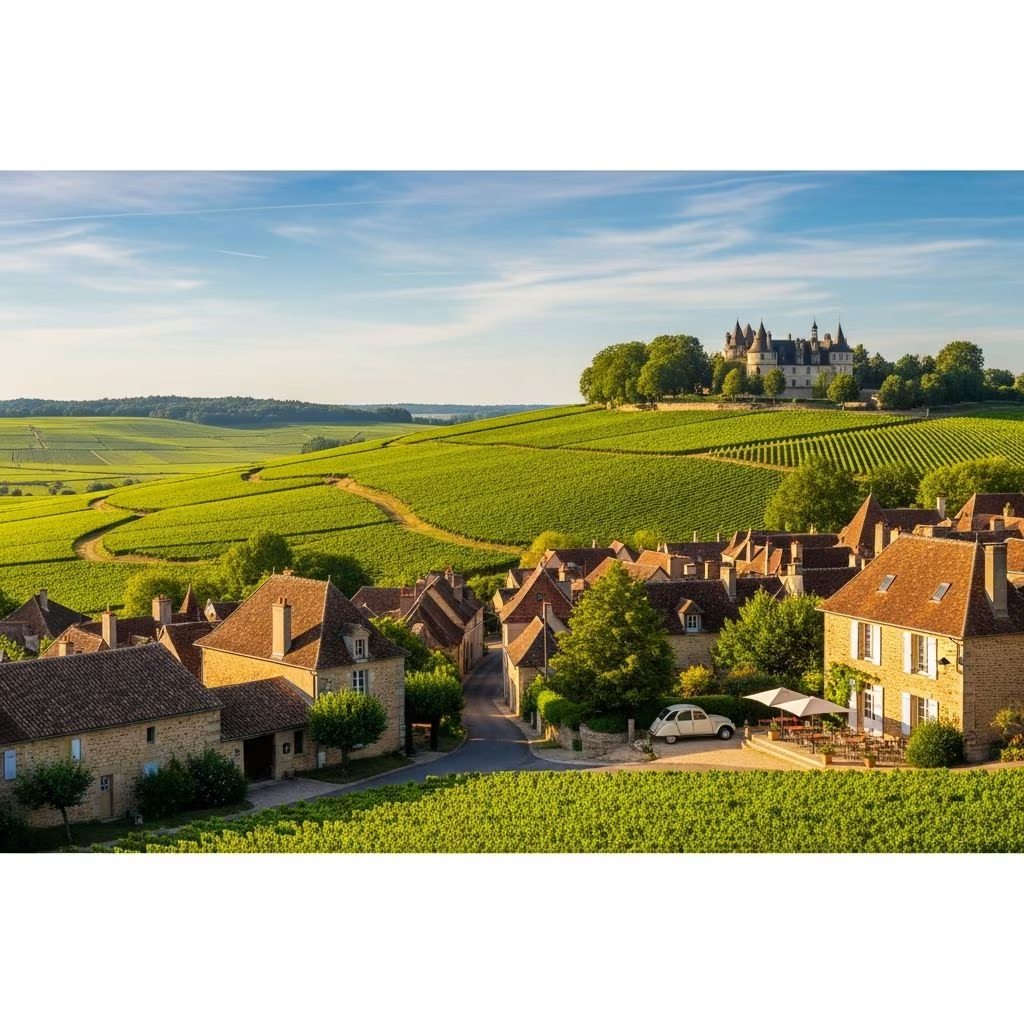
Burgundy, or Bourgogne in French, captivates travelers with its blend of world-class vineyards, medieval architecture, and serene countryside. This eastern French region boasts UNESCO World Heritage sites, ancient abbeys, and charming villages that whisper tales of dukes, monks, and winemakers. Whether you’re a wine aficionado or history buff, Burgundy’s diverse attractions offer endless discovery.
Gateway Cities: Dijon and Beaune
Start your adventure in Burgundy’s urban hearts. Dijon, the historic capital, dazzles with Renaissance palaces and Gothic churches. Wander the pedestrian-friendly old town, admiring half-timbered houses and the intricate **Owl’s Trail**, a self-guided path marked by bronze owls leading to key landmarks. The Palais des Ducs de Bourgogne houses the Musée des Beaux-Arts, showcasing art from the region’s ducal past. Don’t miss the Les Halles market, designed by Gustave Eiffel, brimming with local cheeses, escargot, and the famous Dijon mustard.
Just south, Beaune emerges as the wine epicenter. Encircled by vine-covered hills, this compact town pulses with enoteca and festivals. The star is the **Hôtel-Dieu Museum**, a 15th-century hospital with its iconic multicolored tile roof, now a museum of medical history and Burgundian philanthropy. Nearby, the Fallot Mustard Factory offers hands-on tastings and production demos, revealing the sharp secret behind the condiment named for Dijon. Beaune’s cobbled lanes and ramparts make it ideal for evening strolls.
UNESCO Treasures: Sacred Sites of Spirituality
Burgundy’s spiritual legacy shines in its four UNESCO-listed gems, each a testament to Romanesque mastery and monastic influence.
- Vézelay Basilica and Hill: Perched atop a hill, this 11th-12th century basilica glows with stained glass illuminating Romanesque carvings of biblical scenes. A pilgrimage stop on the Way of St. James, it offers panoramic views and a sense of timeless reverence.
- Fontenay Abbey: Tucked in a forested valley, this 12th-century Cistercian abbey exemplifies austere beauty with its church, cloister, and forge—Europe’s oldest preserved industrial site.
- La Charité-sur-Loire Priory: Overlooking the Loire, this Cluniac priory features exceptional Romanesque capitals and frescoes, a hidden jewel of 11th-century artistry.
- Climats of Burgundy Vineyards: These precisely delineated plots, from Chablis to Mâcon, represent a 1,000-year viticultural system, with stone walls (clos) and toponyms shaping global wine culture.
These sites, managed by official tourism bodies, draw pilgrims and scholars alike, preserving Burgundy’s role in medieval Christendom.
Medieval Villages: Fairytale Fortresses and Cobblestone Lanes
Burgundy’s countryside sparkles with villages classified among France’s most beautiful. Châteauneuf-en-Auxois crowns a hill with its brooding château, offering vistas of the Canal de Bourgogne. Explore duke’s chambers and ramparts for €6, evoking feudal life.
Flavigny-sur-Ozerain, filming site of Chocolat, clusters around an ancient abbey where monks craft aniseed candies. Tour the ruins and factory for a sweet, aromatic experience. Semur-en-Auxois, an “island city” girded by the Armançon River, connects via medieval bridges like Pont Joly. Its preserved castle and sloping streets invite fireside cafés with canal views.
| Village | Highlight | Best For |
|---|---|---|
| Châteauneuf-en-Auxois | Hilltop Château | History & Views |
| Flavigny-sur-Ozerain | Abbey Candy Factory | Culture & Film Fans |
| Semur-en-Auxois | River Bridges & Castle | Picturesque Walks |
Premier Wine Estates: Tastings in the Côte d’Or
The Côte d’Or, Burgundy’s golden slope, hosts legendary wineries. Château de Vougeot, vineyard icon, features a 16th-century press house amid premier cru vines—perfect for tours symbolizing Burgundian viticulture.
Château Pommard, a 300-year-old UNESCO-protected estate, blends grand architecture with modern tastings of Pinot Noir and Chardonnay. Château de Meursault traces back a millennium, offering elegant cellars and whites from its namesake village. For self-guided fun, Beaune’s Marché aux Vins lets you pour Chardonnays in atmospheric caves. Moillard and Château de Chassagne-Montrachet provide intimate cellar visits.
Cycling the South Vineyard Loop from Beaune to Château de la Rochepot combines pedaling with stops at family domaines. Official tourism notes over 1,800 Climats, each with unique terroir.
Ancient Echoes: Prehistory and Ducal Legacy
Burgundy’s past spans epochs. Scale the prehistoric Rock of Solutré, site of 20,000-year-old horse hunts, for Morvan views. Bibracte and Alésia host archaeological parks with reenactments; Autun’s sound-and-light spectacles animate Roman walls; Châtillon-sur-Seine displays Celtic treasures. Cluny Abbey, once Christianity’s largest church, ruins evoke 12th-century grandeur.
Practical Planning: Itineraries and Tips
3-Day Itinerary:
- Day 1: Dijon – Old town, Owl’s Trail, market.
- Day 2: Beaune – Hôtel-Dieu, mustard factory, wine tasting.
- Day 3: Villages & Vineyards – Châteauneuf, Flavigny, Côte d’Or loop.
Drive or cycle; base in Beaune for vineyards. Spring (April-June) or fall (Sept-Oct) avoid crowds, aligning with harvest. TGV from Paris reaches Dijon in 1.5 hours.
Frequently Asked Questions
What is the best time to visit Burgundy?
Spring and autumn offer mild weather and fewer tourists; September for harvest festivals.
Is Burgundy good for wine lovers?
Exceptional—home to Pinot Noir and Chardonnay in UNESCO Climats.
How to get around Burgundy?
Rent a car for flexibility; bikes for vineyards; trains link Dijon-Beaune.
Are there family-friendly activities?
Yes—candy factories, castle explorations, easy trails.
What should I eat in Burgundy?
Escargot, boeuf bourguignon, époisses cheese, mustard, paired with local wines.
References
- The must-see sights of Burgundy — Burgundy Tourism. 2023. https://www.burgundy-tourism.com/discover-burgundy/heritage-sites-and-museums/the-unmissable-places-of-burgundy/
- Burgundy Itinerary – 3 Days In Burgundy, France — A Lovely Planet. 2023. https://www.alovelyplanet.com/burgundy-itinerary/
- The Best Wineries in Burgundy to Visit — The Wanderbug. 2023. https://thewanderbug.com/best-wineries-burgundy-to-visit/
- The most beautiful villages in France — Journeys 6 Senses. 2023. https://www.journeys6senses.com/en/the-most-beautiful-villages-in-france/
- 13 Things to Do in Burgundy: From Châteaus to Cheesy Delights — Enriching Pursuits. 2023. https://enrichingpursuits.com/things-to-do-in-burgundy-france/
- Burgundy – Rick Steves Europe — Rick Steves. 2026. https://www.ricksteves.com/europe/france/burgundy
- THE 15 BEST Things to Do in Burgundy (2026) — TripAdvisor. 2026-04-23. https://www.tripadvisor.com/Attractions-g187105-Activities-Burgundy_Bourgogne_Franche_Comte.html
On This Page
Gateway Cities: Dijon and Beaune UNESCO Treasures: Sacred Sites of Spirituality Medieval Villages: Fairytale Fortresses and Cobblestone Lanes Premier Wine Estates: Tastings in the Côte d'Or Ancient Echoes: Prehistory and Ducal Legacy Practical Planning: Itineraries and Tips Frequently Asked Questions← Previous
Istanbul With Kids: Best Family-Friendly Things to Do
Next →
Greece in the Offseason: Best Time to Visit, Save, and Explore
Related Reading
More in Food & Culture
Food & Culture Food & Culture
 Food & Culture
Best Places to Eat in Rome: Neighborhood Dining Guide
 Food & Culture
 Food & Culture