

 Travel Essentials
 Travel Essentials

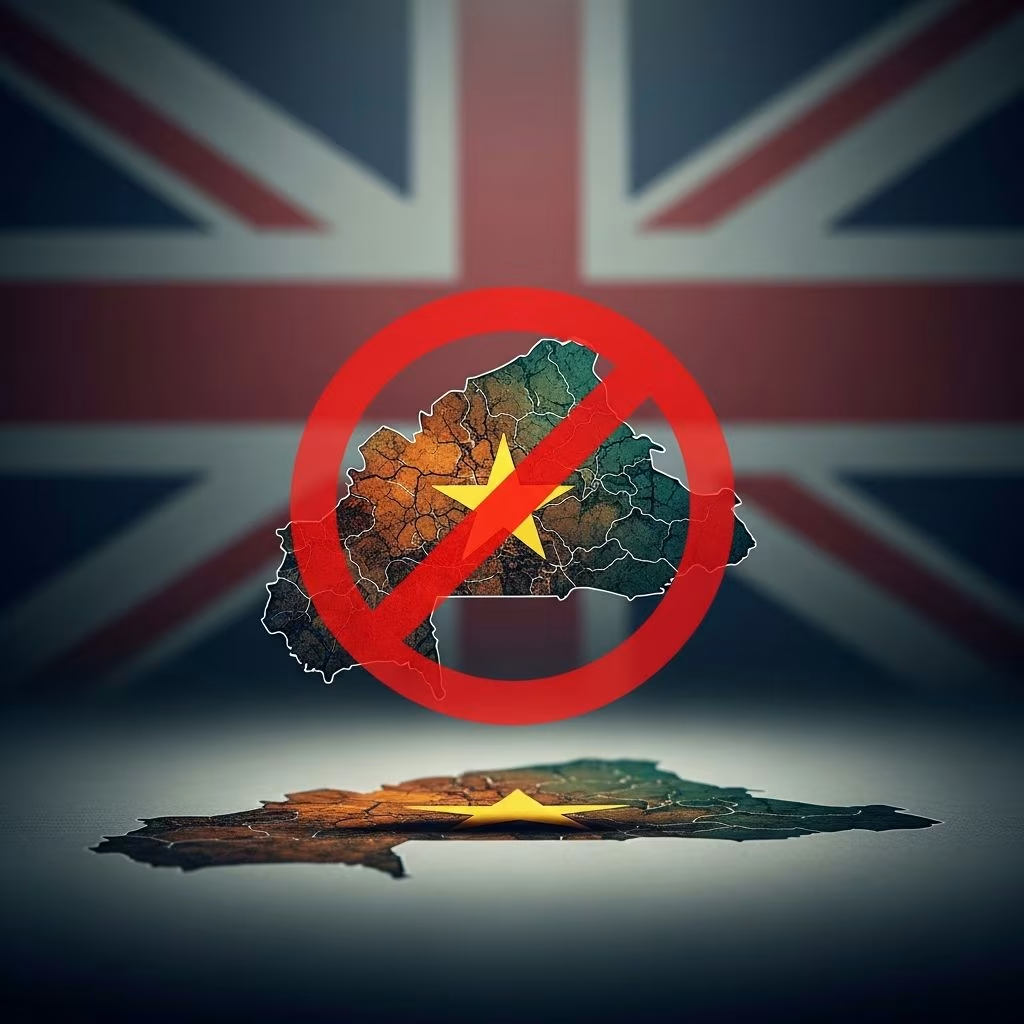
The UK Foreign Office advises against all travel to Burkina Faso due to high terrorism threats, kidnappings, and political unrest. Learn why and what alternatives exist.
 Travel Essentials
The United Kingdom’s Foreign, Commonwealth & Development Office (FCDO) has issued its highest-level warning, advising against all travel to Burkina Faso. This directive stems from severe security threats including terrorism, kidnappings, and a volatile political landscape. Similar advisories from the US State Department (Level 4: Do Not Travel) and Australia’s Smartraveller reinforce the consensus among major governments.
Burkina Faso faces multifaceted dangers that make it one of the world’s most hazardous destinations. Terrorist groups like Jama’a Nusrat ul-Islam wa al-Muslimin (JNIM) and Islamic State affiliates operate freely, launching attacks with little warning across urban and rural areas. The capital, Ouagadougou, is no longer a safe haven, with incidents reported even in central locations.
Political instability exacerbates these risks. Following a 2022 military coup, the country endures frequent unrest, states of emergency in multiple regions, and the potential for further coups. Travel insurance policies often become void if you ignore these advisories, leaving adventurers financially exposed.
| Government | Advisory Level | Key Reasons |
|---|---|---|
| UK FCDO | Against All Travel | Terrorism, kidnap, political instability |
| US State Dept. | Level 4: Do Not Travel | Terrorism, crime, kidnapping |
| Australia Smartraveller | Do Not Travel | Terrorism, kidnapping, violent crime |
Terrorists target a wide array of sites indiscriminately, using tactics like bombings, shootings, and vehicle rammings. High-risk locations include hotels, restaurants, police stations, mining sites, places of worship, military posts, and schools. In Ouagadougou, threats extend to diplomatic premises, conference centers, tourist attractions, shopping malls, and transport hubs.
Recent incidents underscore the frequency and lethality:
Attacks surge near borders with Mali, Niger, and Côte d’Ivoire, as well as in eastern regions. Festivals, religious holidays, and public events heighten vulnerabilities. Travelers must monitor local media and authority guidance at all times.
The kidnapping threat is very high nationwide, driven by Al-Qaeda-linked JNIM and Islamic State Greater Sahara (ISGS). Foreigners, especially in the northeast, face abduction for ransom or ideological motives. Kidnappings persist even in Ouagadougou, with elevated dangers in Sahel and East regions.
Vulnerable spots include crowded markets, displacement camps, religious sites, hotels, bars, nightclubs, and national parks. Experts recommend avoiding patterns in movement, sticking to daylight travel, and maintaining constant vigilance. US officials note that consular assistance is unavailable in most areas due to risks.
Burkina Faso’s junta-led government has imposed states of emergency in key regions: Sahel, East, Centre-Est, Nord, Centre-Nord, Boucle du Mouhoun, Hauts-Bassins, and Cascades. These grant security forces broad powers for searches, movement curbs, and detentions, often suspending civil liberties like protests.
Protests erupt frequently in Ouagadougou, turning violent and targeting government buildings. Neighboring Niger’s 2023 coup has sparked solidarity unrest. Further coups loom possible amid ongoing instability.
Major highways are death traps due to landmines, improvised explosives, and armed convoys by terrorists. Problem routes include:
High crime rates plague Ouagadougou’s Balkiui and Rayongo neighborhoods, especially at night. Dual nationals may face non-recognition of foreign passports by local authorities.
Violent crime, including robbery and assault, is rampant. Do not resist robberies physically. US personnel avoid nighttime travel in certain capital areas. A nationwide state of emergency limits movement and gatherings.
Governments urge against travel, but if unavoidable:
Limit exposure in high-risk regions like Sahel, East, and border provinces (Kossi, Sourou, Kenedougou, Loroum, Koulpelogo).
Entry requirements persist amid chaos, but focus on safety. Health threats include poor medical facilities; carry medications and evacuation insurance. Dual nationals risk detention or conscription. Check latest FCDO entry rules.
Opt for stable neighbors like Ghana or Senegal for cultural immersion without extreme risks. Ghana offers vibrant markets and beaches; Senegal boasts Dakar’s historic sites. Both have lower advisories and robust tourism infrastructure.
No. Terrorism reaches the capital; FCDO advises against all travel.
Absolutely not. Roads are mined and ambushed frequently.
It’s likely invalidated. Confirm with providers re: FCDO warnings.
No region is deemed safe; emergencies cover most territory.
UK: Updated Dec 2025, current Apr 2026. US: Apr 2025.
Burkina Faso’s beauty—its savannas, music, and hospitality—is overshadowed by unrelenting dangers. Heed global advisories to protect yourself and support stability efforts. Explore safer destinations until conditions improve.
