

 Travel Essentials
 Travel Essentials

Comprehensive guide to Burning Man: from its San Francisco origins to the 10 principles, packing essentials, and navigating the playa for first-timers.
 Travel Essentials
The Burning Man festival transforms Nevada’s Black Rock Desert into a vibrant temporary metropolis each year, drawing tens of thousands to embrace art, community, and radical self-reliance.Burning Man began as a modest beach ritual in 1986 and has grown into a global cultural phenomenon centered on 10 core principles that define its ethos.
In the summer of 1986, Larry Harvey and Jerry James ignited the spark of Burning Man on San Francisco’s Baker Beach. They constructed and burned a 9-foot wooden effigy during the summer solstice, an act of spontaneous creativity that symbolized personal liberation. What started as a small gathering among friends evolved rapidly; by the early 1990s, the event migrated to the Black Rock Desert, where vast open space allowed for expansive art and unbridled expression.
Today, this annual late-summer event—typically spanning nine days—sees up to 80,000 participants, known as “Burners,” construct Black Rock City from scratch. The city’s layout mimics a massive semicircle around the central playa, with streets named after real cities and themed camps dotting the landscape. The festival culminates in the symbolic burning of a towering 40-to-50-foot wooden “Man” effigy, a fiery spectacle that marks the week’s peak.
Burning Man’s philosophy is codified in 10 principles that govern behavior and interactions, fostering a unique gift-based society. These guidelines, established by organizers, reject commercialism and emphasize participation.
These principles create a micro-society where mutant vehicles—art cars roaming the playa—serve as mobile parties, and massive interactive installations challenge perceptions. Each year features a unique theme, influencing art and camp designs, from past motifs like “Cargo Cult” to evolving concepts that inspire collective creativity.
Black Rock City emerges as a planned community with a central axis: the Esplanade lines the inner arc, hosting major sound camps and performance venues. Spokes radiate outward to 2:00 through 10:00 positions on a clock face, where theme camps offer workshops, food shares, and interactive experiences. The open playa beyond is reserved for art installations, dust storms notwithstanding.
Daily rhythm pulses with sunrise yoga, daytime bike explorations, evening costume parades, and all-night raves. Dust masks and goggles are non-negotiable due to alkaline playa dust that infiltrates everything. Bicycles dominate transport, with art bikes and trailers enhancing mobility across the 7-mile expanse.
| City Zone | Description | Key Activities |
|---|---|---|
| Esplanade (Inner Ring) | High-energy hub | Live music, bars (gifting-based), performances |
| Theme Camps (Mid-Ring) | Themed enclaves | Workshops, lectures, skill shares |
| Open Playa (Outer) | Art wilderness | Installations, mutant vehicles, Temple visits |
| Center Camp | Cultural core | Coffee gifting, lectures, chill zones |
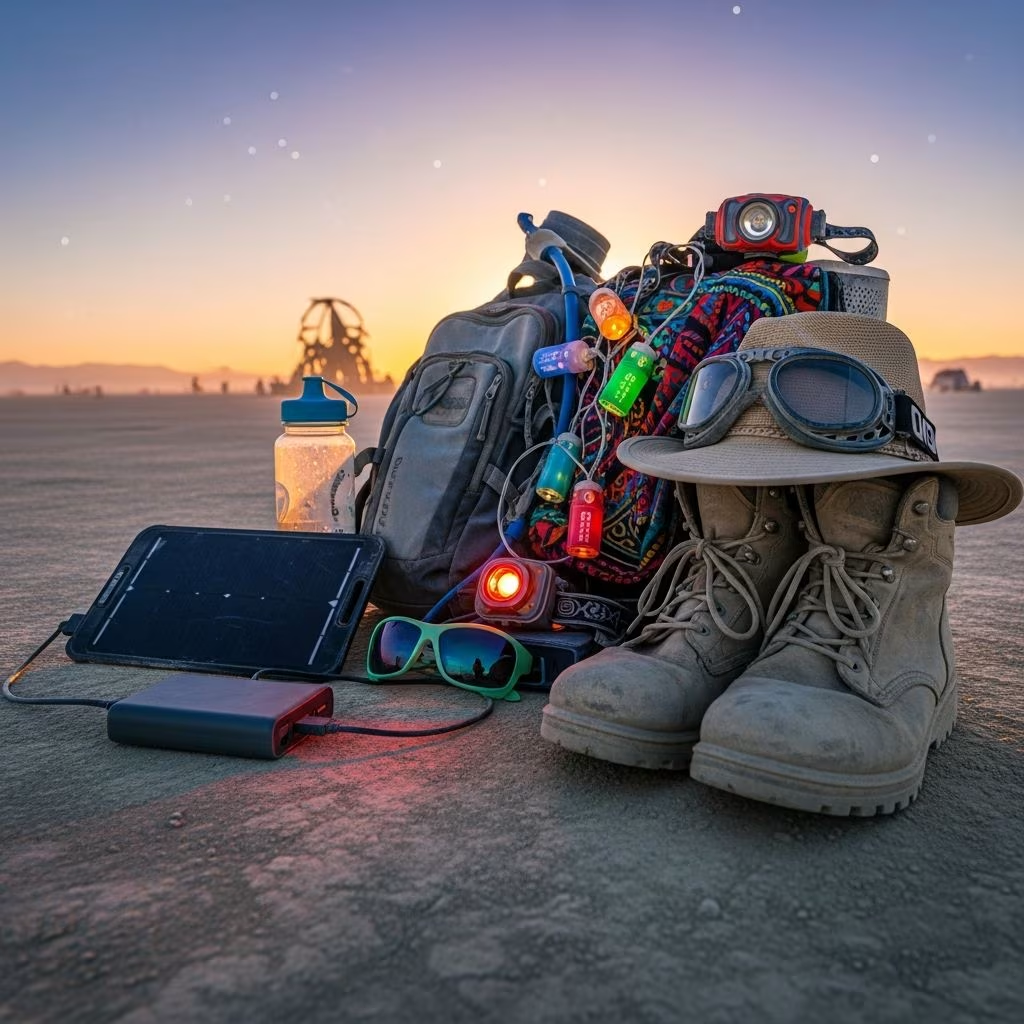
The Black Rock Desert’s extremes—daytime temps over 100°F (38°C), nights dipping to 30°F (-1°C), high winds, and whiteout dust storms—demand meticulous preparation. Radical self-reliance means no infrastructure; bring shade, water (1.5 gallons per person per day minimum), and shelter.
Essentials Checklist:
Tickets sell out months in advance via the official Burning Man website; vehicle passes are separate. Arrive early for gate waits up to 8 hours. Post-event, the exodus requires patience amid traffic.
Burning Man’s art scene features hundreds of pieces, from towering sculptures to immersive environments, funded by grants and donations. The Temple—a non-denominational wooden structure—serves as a space for reflection; it’s burned on the penultimate night, contrasting the celebratory Man burn.
Interactive works invite participation: climbable structures, fire spinners, and LED-lit wonders illuminate the night. Mutant vehicles, approved art cars, ferry revelers while blasting music, embodying communal creativity.
Newcomers, or “Virgins,” receive a ceremonial initiation. Join a camp for support—many offer plug-and-play options with shared resources. Prioritize hydration, consent culture (check ins are paramount), and consent in all interactions. Avoid overpacking; simplicity rules in the dust.
Health tips: Combat dehydration with electrolyte mixes; protect skin from UV and dust. Mental prep: Embrace chaos—lost items, sensory overload are norms. Post-burn depression is common; plan decompression.
Leave No Trace is rigorously enforced; post-event cleanup crews remove every trace of the city. The event generates zero permanent waste, modeling sustainability. Economically, it boosts Reno-Tahoe via pre/post-event influxes.
Vehicle passes required; low-income waivers available. Prices range $500+; buy early.
Teens 12+ with guardians; under 12 free but rare due to conditions.
Search official directories; contribute skills or dues.
Legal risks apply; personal choice within consent principles. Nudity common but not mandatory.
Only with pass; inside, bikes rule. Mutant vehicle builds enhance fun.
Monitor official channels for theme announcements, ticket drops. Prep gear months ahead. Burning Man transcends festival—it’s a transformative plunge into self-discovery amid art and dust.
