

 Travel Essentials
 Travel Essentials

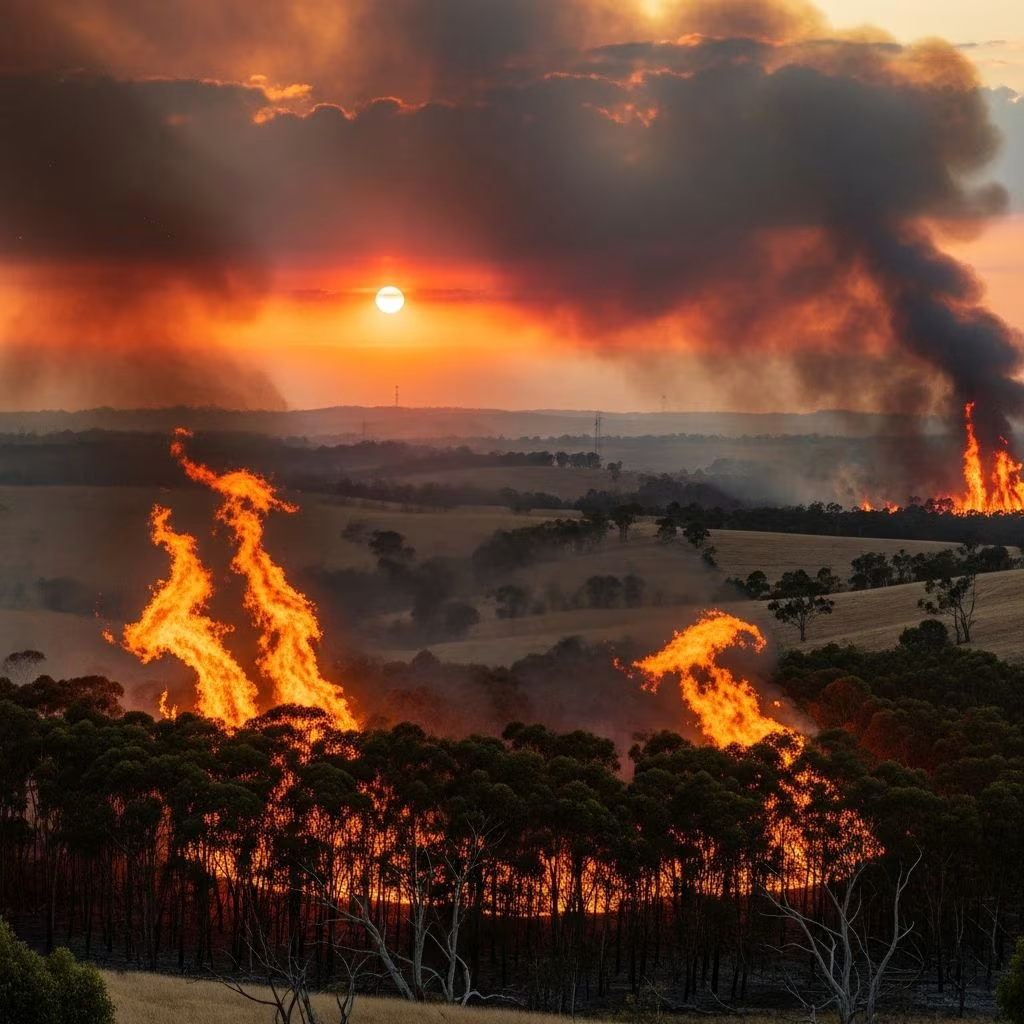
A massive out-of-control bushfire north of Adelaide threatens communities, shuts down key roads, and prompts emergency responses with firefighters and aircraft battling the flames.
 Travel Essentials
Intense flames from a rapidly spreading bushfire north of Adelaide have sparked widespread emergency measures, including highway closures and mass evacuations. Fire authorities are deploying heavy resources to combat the blaze fueled by strong winds and dry terrain.
The bushfire erupted in rural areas north of South Australia’s capital, quickly escalating due to adverse weather. High winds have propelled the fire towards populated zones, endangering homes and infrastructure. Parts of the Port Wakefield Highway, a vital route connecting Adelaide to northern regions, have been shut down to ensure public safety and facilitate firefighting operations. Multiple aerial bombers are actively dropping retardant to curb the fire’s advance, highlighting the severity of the situation.
Local residents in the affected zones have been ordered to evacuate immediately, with emergency alerts disseminated via official channels. The proximity of the fire to residential areas has heightened fears, reminiscent of past devastating events in the region.
South Australia, particularly the areas surrounding Adelaide, has a long history of severe bushfires driven by its Mediterranean climate—hot, dry summers and strong northerly winds. The 2015 Sampson Flat bushfires, starting on January 2, scorched over 20,000 hectares in the northern Adelaide Hills and outer metropolitan areas. Originating near Sampson Flat, the fire spread southeast towards Kersbrook and the Mount Lofty Ranges, destroying at least 26 homes and injuring 134 people, with damages estimated at A$13 million.
More recently, the 2019-2020 Black Summer fires devastated the Adelaide Hills, with the Cudlee Creek blaze burning 23,000 hectares, claiming one life, razing 84 homes, and injuring dozens including firefighters. Extreme heat reaching 43.9°C in Adelaide on December 20, 2019, combined with low humidity and gale-force winds, created catastrophic conditions, affecting townships like Mount Pleasant and Gumeracha. These events underscore the recurring vulnerability of the region.
Bushfires in this region thrive on a perfect storm of dry fuels, high temperatures, and wind. Prolonged drought conditions desiccate vegetation, turning eucalyptus forests and grasslands into tinderboxes. Northerly winds, often exceeding 40-80 km/h, accelerate fire spread, as seen in historical cases like the Pinery fire.
Climate patterns exacerbate risks: South Australia’s forest fire danger index hit record highs in recent Decembers, with temperatures soaring past 45°C in some areas. Human activities, such as unregulated burning in rural zones, have been suspected in ignitions, though official causes often remain undetermined.
| Factor | Impact on Fire Spread | Historical Example |
|---|---|---|
| High Winds | Drives embers ahead, spot fires | Pinery 2015: 80 km/h gusts |
| Extreme Heat | Dries fuels, increases intensity | Black Summer: 49.9°C west SA |
| Drought | Low moisture in vegetation | Sampson Flat 2015 |
| Topography | Hills funnel winds, steep slopes | Mount Lofty Ranges |
The Country Fire Service (CFS) leads the response, coordinating ground crews, water bombers, and helicopters. In the current incident, aerial support is crucial as the fire approaches homes, mirroring tactics used in prior crises. Evacuation centers are operational, providing shelter and essentials to displaced families.
Authorities emphasize a ‘leave early’ strategy: monitor warnings via the CFS app, ABC radio, or official websites. Prepare a bushfire survival plan, including go-bags with medications, documents, and pet supplies. For those unable to leave, defendable space around homes—clearing 20m of flammable material—is vital.
Beyond immediate threats, bushfires disrupt daily life. Schools and businesses close, power outages affect thousands, and smoke plumes degrade air quality, posing health risks especially to the vulnerable. The Port Wakefield Highway closure strands motorists and hampers freight.
Tourists in the Adelaide Hills or Barossa Valley should reroute, avoiding northern access. Iconic wine regions nearby face smoke taint risks, potentially impacting vintages as in 2019-2020. Long-term, soil erosion and biodiversity loss follow, with wildlife casualties in the thousands.
Mitigation involves community education, prescribed burns, and infrastructure upgrades. The CFS promotes firebreaks, hazard reduction burns, and early detection tech like cameras and drones. Climate adaptation includes resilient landscaping and updated building codes for ember resistance.
Government investments post-Black Summer bolster aerial fleets and training. Residents can join local brigades, contributing to resilience. Tracking fire danger ratings daily during summer is essential.
Smoke from these fires contains particulates linked to respiratory issues; masks and indoor stays are advised. Post-fire, flash floods from bare slopes threaten downstream areas. Rehabilitation efforts replant natives, monitoring regrowth in scarred landscapes.
In Sampson Flat, recovery saw community rebuilds, but psychological scars linger. Support services aid mental health recovery.
Q: What caused the current bushfire?
A: Investigations ongoing; historical fires often from dry lightning, machinery, or burns.
Q: Is Port Wakefield Highway open?
A: Currently closed in sections due to the fire; check live updates.
Q: How can I help?
A: Donate to CFS or Red Cross, avoid travel areas, follow official advice.
Q: What’s the fire danger rating system?
A: Ranges from low to catastrophic; SA uses Forest Fire Danger Index.
Q: Are there travel insurance implications?
A: Policies often cover evacuations; declare pre-existing risks.
Q: When is bushfire season in SA?
A: Peaks November-March, but can occur anytime in dry conditions.
Real-time updates via CFS website, app, or 1800 362 361 hotline. International visitors: register with Smart Traveller. Respect roadblocks and firefighter zones. Post-incident, await all-clear before returning.
This blaze, while challenging, showcases Australia’s robust emergency framework honed by past tragedies. Vigilance saves lives.
