

 Travel Essentials
 Travel Essentials

Analysis of security challenges in Cairo, including incident patterns, emergency response measures, and safety protocols for residents and visitors.
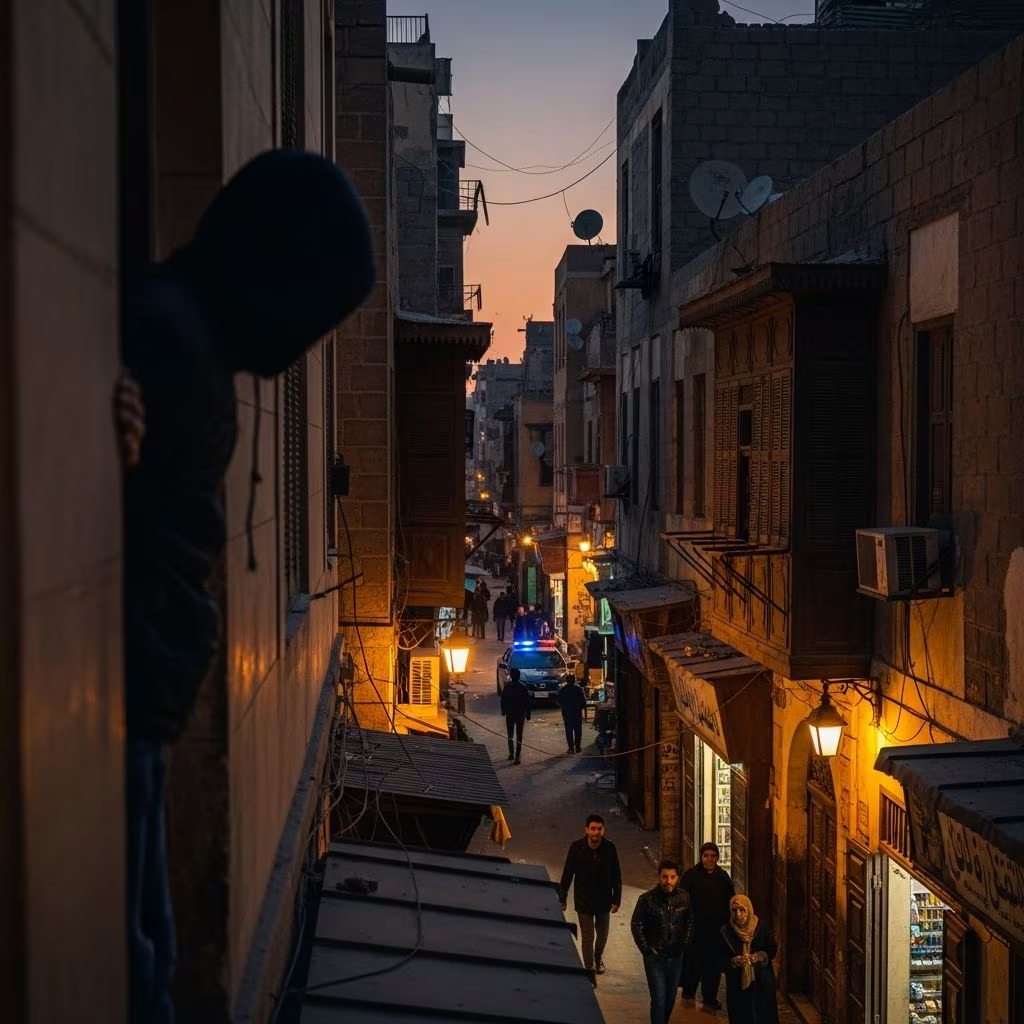 Travel Essentials
Cairo, Egypt’s expansive capital city, faces ongoing security challenges that impact both residents and visitors. Understanding the nature of these threats, how authorities respond, and what safety measures exist is essential for anyone living in or traveling to this historic metropolitan area. This examination explores the multifaceted security landscape, the circumstances surrounding significant incidents, and the broader implications for urban safety in one of the Middle East’s largest cities.
Metropolitan areas across the globe occasionally experience security incidents, and Cairo is no exception. The city has witnessed various attacks targeting government and security infrastructure, reflecting broader regional tensions and extremist activities. These incidents, while significant, represent specific events rather than systematic conditions affecting everyday life for the majority of residents.
One notable incident involved a car bomb targeting a security building in a residential district. The explosion occurred in the early morning hours, causing structural damage to the facility and resulting in multiple injuries to security personnel. Such attacks typically involve coordinated planning and are often claimed by extremist organizations operating in specific regions, particularly in the Sinai Peninsula.
Security incidents in Cairo typically follow patterns that emergency responders and security forces have learned to manage. A significant incident occurred in the Shubra al-Khama district, a northern suburban area of Cairo. The attack involved a vehicle being positioned near a government security facility, with the perpetrator fleeing the scene before detonation.
The sequence of events demonstrates tactical methods employed by extremist groups: an individual drives a vehicle to a predetermined location near a security target, then abandons the vehicle and escapes on an alternative form of transportation, such as a motorcycle, before the explosive device is detonated remotely.
The physical destruction caused by such incidents extends beyond the immediate blast radius. The explosion that targeted the security building demolished protective walls and damaged the facility’s structure. Multiple security personnel sustained injuries, though casualty figures varied depending on reporting timing and scope of assessment.
The initial reports indicated that six police officers were injured in the incident, though some sources later reported higher casualty numbers as assessments became more comprehensive. The variation in reported figures is typical in emergency situations, as initial counts are often revised as full damage assessments are completed.
Egyptian security forces and emergency services maintain protocols for responding to explosive incidents. When attacks occur, multiple agencies coordinate response efforts, including medical personnel, law enforcement, and investigative teams. The immediate priorities involve securing the area, providing medical assistance to the injured, and gathering evidence.
The Egyptian interior ministry actively investigates such incidents and releases information to the public regarding the nature of attacks. This transparency, while limited by operational security concerns, helps the public understand the threats being addressed and the effectiveness of preventive measures.
When significant attacks occur, various extremist organizations may claim responsibility. In some cases involving Cairo incidents, organizations with presence in the Sinai region have claimed attacks on security forces. These claims are typically investigated and verified by security agencies and international analysts.
The motivation for attacks on security infrastructure relates to broader insurgent activities in specific regions. Groups operating in the Sinai Peninsula, for example, have demonstrated a pattern of targeting Egyptian security forces as part of their operational strategy. Understanding these motivations helps analysts predict potential targets and improve protective measures.
Government security buildings in Cairo incorporate protective design elements intended to minimize blast effects. These may include reinforced concrete walls, setback distances from public areas, and vehicle barriers. The structural damage observed in incidents involving car bombs demonstrates the tremendous force of explosive devices but also shows that properly designed buildings can mitigate casualties.
After significant incidents, security authorities often reassess and upgrade protective measures at vulnerable facilities. This ongoing evolution of security infrastructure reflects lessons learned from previous attacks and improvements in protective engineering.
Security checkpoints, barriers, and controlled access points are standard features at government facilities in Cairo. These measures aim to prevent unauthorized vehicles from approaching buildings and to screen personnel entering facilities. The effectiveness of these measures is regularly tested by security drills and evaluated based on their performance during actual incidents.
Cairo’s security situation exists within a broader regional context involving extremist activity in neighboring areas, particularly the Sinai Peninsula. Insurgent groups have historically focused operations in these regions but occasionally extend activities to the capital and surrounding areas. Understanding these regional dynamics is essential for comprehending Cairo’s specific security challenges.
The variety of potential threat actors, ranging from established insurgent organizations to smaller cells, creates a complex security environment requiring multifaceted responses from authorities. Different organizations employ different tactics, from vehicle-borne explosive devices to other methods, necessitating diverse countermeasures.
While security incidents receive significant media attention, it is important to contextualize their frequency and impact. Cairo, a city of over 20 million people, continues to function as a major commercial, cultural, and governmental center. Daily life for the vast majority of residents proceeds normally, with security incidents representing exceptions rather than the rule.
Nonetheless, these incidents do influence decision-making by residents, businesses, and visitors. Enhanced security measures at government buildings and increased police presence in certain areas are visible reminders of the threat environment. Businesses may adjust operational practices, and some international organizations implement additional security protocols for their personnel.
Cairo’s healthcare system includes facilities equipped to handle mass casualty incidents resulting from explosions. Emergency rooms at major hospitals maintain trauma capabilities and coordination procedures for surge situations. The quick transport of injured individuals from incident sites to medical facilities significantly affects survival rates and outcomes.
Citizens and residents benefit from understanding basic safety principles relevant to urban security environments. Awareness of surroundings, familiarity with emergency procedures, and knowledge of safe routes can help individuals minimize personal risk. Educational campaigns by authorities and international organizations provide guidance on recognizing suspicious activities and reporting concerns to appropriate authorities.
| Security Challenge | Characteristics | Response Measures |
|---|---|---|
| Vehicle-Borne Explosives | High destructive capacity, planned attacks | Perimeter barriers, access controls, surveillance |
| Targeted Infrastructure | Focus on government/security facilities | Building fortification, protective design |
| Perpetrator Escape | Use of motorcycles, alternate transportation | Enhanced checkpoint protocols, pursuit procedures |
| Investigation Requirements | Complex forensic and intelligence analysis | Specialized investigative units, international cooperation |
Security threat assessments evolve based on ongoing intelligence and incident patterns. While specific threat levels vary over time, Cairo maintains security infrastructure and protocols commensurate with identified risks. International organizations and embassies issue updated security advisories reflecting current conditions.
Major incidents may temporarily impact tourism flows and business operations, particularly in the immediate aftermath. However, long-term impacts depend on the frequency and severity of incidents. Cairo’s historical significance and economic importance have historically supported recovery of tourism and business activity following security incidents.
International organizations, including the United Nations, World Bank, and various bilateral partners, provide technical assistance, training, and intelligence sharing to Egyptian security forces. Cooperative arrangements strengthen Egypt’s capacity to address transnational security challenges and extremist threats.
Standard personal security practices include remaining aware of surroundings, avoiding large crowds during sensitive periods, maintaining distance from government buildings, and following guidance from local authorities. Registering with embassies and maintaining communication with trusted contacts also supports safety.
Incidents involving explosives trigger comprehensive investigations involving forensic specialists, intelligence analysts, and law enforcement agencies. Evidence collection, witness interviews, and technical analysis contribute to understanding perpetrators’ identities and operational methods.
Cairo’s security environment continues to evolve in response to emerging threats, technological developments, and lessons learned from previous incidents. Investment in intelligence capabilities, protective infrastructure, and emergency response systems reflects ongoing efforts to maintain safety for residents and visitors.
The balance between security and maintaining the open character of a major metropolitan area represents an ongoing challenge for authorities and society. As threats and tactical methods evolve, security responses must adapt correspondingly, requiring sustained investment and cooperation among diverse stakeholders.
Understanding Cairo’s security situation in its full complexity—acknowledging both the real threats that exist and the remarkable resilience and normalcy that characterize daily life for millions—provides essential context for anyone seeking to comprehend this historic and vibrant city.
