

 Travel Essentials
 Travel Essentials

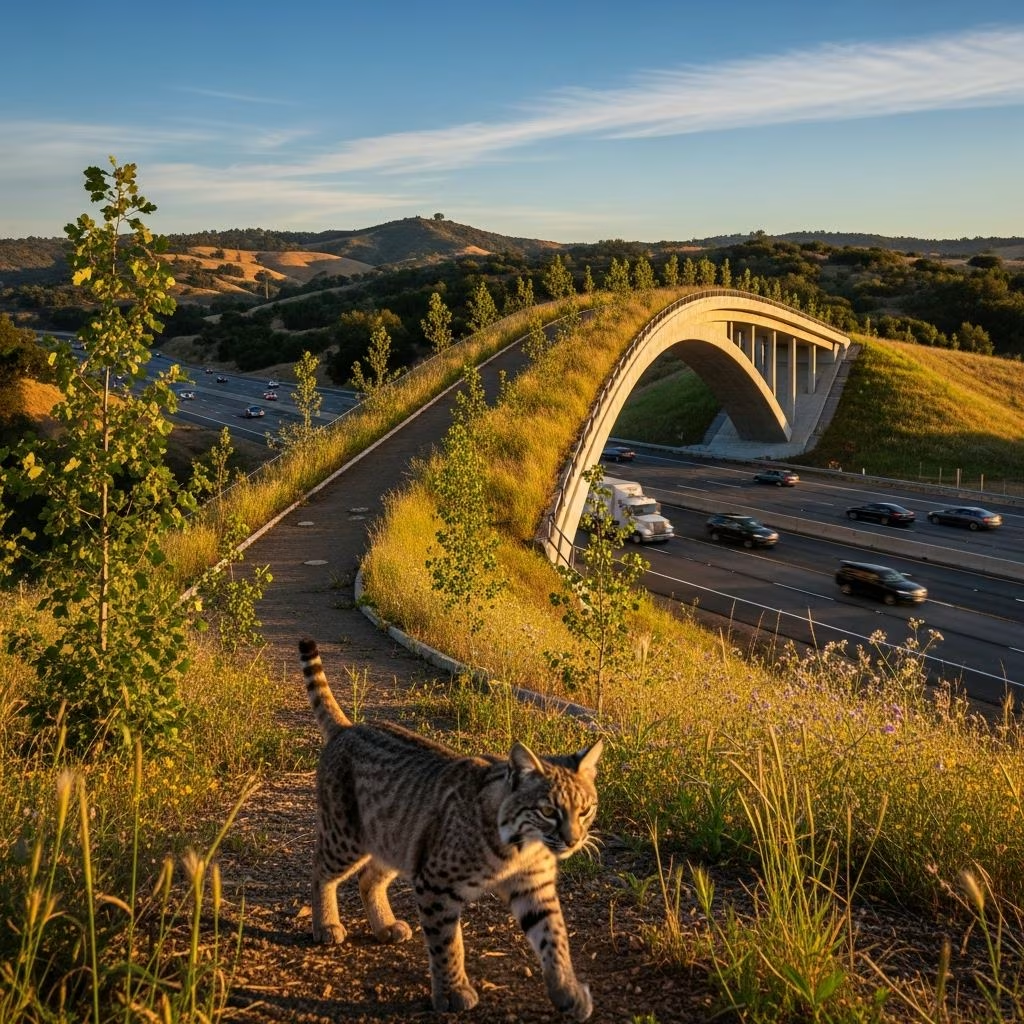
Explore California's groundbreaking wildlife crossing initiatives designed to reconnect isolated animal populations and reduce vehicle collisions while preserving natural ecosystems.
 Travel Essentials
California’s landscape has undergone dramatic transformation over the past century, with highways carving through pristine ecosystems and fragmenting wildlife habitats into isolated pockets. The state’s transportation infrastructure, while essential for human connectivity, has inadvertently created barriers that prevent animals from accessing food sources, mates, and genetic diversity. In response to this environmental challenge, California has become a pioneer in developing innovative solutions that allow wildlife to safely traverse major thoroughfares. These wildlife crossings represent a paradigm shift in how transportation and conservation can coexist, offering a blueprint for other regions facing similar ecological challenges.
The construction of highways throughout California during the twentieth century fundamentally altered the state’s ecological landscape. Major transportation corridors, particularly the Ventura Freeway and similar high-capacity routes, have effectively severed critical wildlife pathways that species depended upon for centuries. Mountain lions, deer, coyotes, and countless other animals now find themselves confined to increasingly isolated populations, unable to move freely across landscapes that were once contiguous.
This fragmentation creates serious consequences for wildlife populations. When animals cannot migrate across divided landscapes, genetic diversity within populations diminishes, reproductive opportunities become limited, and species become increasingly vulnerable to local extinction. Additionally, desperate animals attempting to cross highways face significant mortality risks, contributing to traffic accidents that endanger both wildlife and human travelers.
Modern wildlife crossing design draws upon decades of ecological research and engineering innovation. These structures are far more sophisticated than simple bridges; they represent carefully engineered ecosystems designed to encourage safe animal passage while maintaining natural behaviors and movement patterns.
The engineering challenge of constructing these crossings over active, high-capacity freeways involves complex coordination between environmental specialists, civil engineers, and transportation authorities. Materials must withstand constant exposure to vehicle vibrations, extreme weather, and heavy animal usage while maintaining ecological function.
Located in Agoura Hills at Liberty Canyon, the Wallis Annenberg Wildlife Crossing represents the most ambitious wildlife crossing project ever undertaken in North America. Originally conceived as the Liberty Canyon Wildlife Crossing, this structure will span the ten-lane Ventura Freeway, creating the first bridge in California’s highway system specifically designed for wildlife connectivity.
The crossing holds particular significance for Southern California’s isolated mountain lion population. The Santa Monica Mountains, surrounded by sprawling urban development and fragmented by major highways, has become increasingly isolated from other mountain ranges. This geographic isolation threatens the genetic viability of the region’s mountain lion population, making habitat connectivity a conservation priority.
Initial planning for this project targeted completion in 2025, with an estimated budget of approximately $90 million. However, the complexity of the undertaking has proven more challenging than originally anticipated. Construction timelines extended to 2026, and project costs escalated to over $114 million—an increase attributed to inflation, labor market constraints, and the inherent difficulties of building a functioning ecosystem over one of California’s busiest highways.
The Wallis Annenberg Wildlife Crossing encompasses far more than a simple overpass structure. Engineers are effectively constructing a complete living ecosystem capable of supporting diverse plant and animal life while facilitating safe passage for wildlife traversing the Ventura Freeway.
| Feature | Purpose | Specification |
|---|---|---|
| Vegetated Surface | Create natural habitat conditions | Native plants and specialized soils mimicking local ecosystems |
| Sound Barriers | Reduce highway noise impact | Specialized walls dampening traffic vibrations and sound |
| Guidance Infrastructure | Direct animals toward crossing | Strategic fencing and landscaping patterns |
| Wildlife Monitoring | Track crossing usage and success | Camera systems and population data collection |
The crossing’s design accommodates a remarkable diversity of species. While mountain lions represent the most charismatic animals benefiting from this infrastructure, the crossing also facilitates passage for mule deer, coyotes, bobcats, badgers, and numerous smaller mammals and reptiles. Even aerial corridors for birds and flying insects have been incorporated into the design through strategic vegetation patterns.
The Wallis Annenberg Wildlife Crossing is situated within a landscape of significant ecological value. The Santa Monica Mountains National Recreation Area encompasses thousands of acres of locally, state, and federally protected lands stretching from Los Angeles into Ventura County. This corridor represents one of California’s most important biodiversity hotspots, home to species found nowhere else on Earth.
The Ventura Freeway has historically created an impenetrable barrier across this landscape, preventing the Santa Monica Mountains population from connecting with other mountain ranges and wildlife populations in surrounding regions. The crossing promises to restore ecological connectivity that has been severed for decades, allowing genetic exchange and population mixing that will strengthen the long-term viability of affected species.
The financial structure of the Wallis Annenberg Wildlife Crossing reflects the innovative approach required to fund large-scale conservation infrastructure. Originally designed to be financed primarily through private donations and specialized funding sources, the project has evolved to involve increased public investment as costs have escalated.
Rising construction expenses stemmed from multiple factors, including general inflation affecting materials and labor, widespread labor shortages in the construction industry, and the specialized nature of the work required. Building a functioning ecosystem over an active freeway demands expertise, materials, and construction techniques that significantly exceed standard bridge construction costs.
While the Wallis Annenberg Wildlife Crossing captures headlines as the most prominent project, California’s commitment to wildlife connectivity extends throughout the state. The success of this flagship initiative will likely catalyze additional crossing projects addressing fragmentation in other regions.
State transportation agencies and environmental organizations recognize that addressing habitat fragmentation requires a network approach rather than isolated interventions. Future planning encompasses additional crossing locations along major highways that fragment critical wildlife corridors, potentially creating a statewide system of connectivity infrastructure.
The Wallis Annenberg Wildlife Crossing, despite its innovative design and conservation potential, has attracted criticism regarding timeline delays and budget overruns. Critics have pointed to the escalating costs and extended completion dates as examples of mismanagement or unnecessary complexity. The shift in funding sources, from predominantly private contributions toward greater public investment, has also generated debate about the appropriate allocation of public resources.
However, proponents argue that these challenges reflect the genuine complexity inherent in pioneering work. Creating the first major wildlife crossing of its kind over one of North America’s busiest highways inevitably involves unforeseen technical challenges and cost adjustments. The expertise required, specialized materials needed, and coordination demands among multiple agencies naturally increase project complexity compared to conventional infrastructure.
Once the Wallis Annenberg Wildlife Crossing opens, comprehensive monitoring systems will track its effectiveness in facilitating animal movement. Camera technology and population genetics research will provide data about crossing usage patterns, species movements, and population impacts over time.
Success metrics extend beyond simple usage counts. Researchers will examine whether crossing infrastructure successfully improves genetic diversity in isolated populations, whether vehicle collision rates decline in the crossing vicinity, and whether wildlife populations expand into previously inaccessible habitats. Long-term data collection will inform the design of future crossing projects, creating a feedback loop of continuous improvement.
The Wallis Annenberg Wildlife Crossing and related California initiatives represent a fundamental shift in conservation philosophy. Rather than attempting to preserve wildlife exclusively within protected reserves, this approach acknowledges that modern landscapes require active management of connectivity between fragmented habitats.
This strategy recognizes that protected lands, no matter how large, become ecological islands if they become isolated from other protected areas and natural landscapes. Creating infrastructure that facilitates movement between these islands—allowing animals to access resources, find mates, and maintain genetic diversity—represents a more sophisticated and realistic approach to conservation in heavily developed regions.
The crossing accommodates diverse species including mountain lions, mule deer, coyotes, bobcats, badgers, and numerous smaller mammals and reptiles. The design even considers aerial corridors for birds and flying insects through strategic vegetation patterns.
The project experienced extended timelines, with completion originally targeted for 2025 before shifting to 2026 as construction challenges and material complexities prolonged the work.
Cost escalations resulted from inflation affecting materials and labor, labor shortages in the construction industry, and the specialized engineering complexity involved in building a functioning ecosystem over an active freeway.
By providing safe passage over the freeway, the crossing should reduce wildlife-vehicle collisions in the area, benefiting both animals and human drivers. Post-opening monitoring will document this impact.
The success of the Wallis Annenberg Wildlife Crossing is expected to stimulate additional crossing projects throughout California, addressing fragmentation along other major highways.
California’s wildlife crossing initiatives, exemplified by the Wallis Annenberg Wildlife Crossing, demonstrate that sophisticated conservation solutions can be integrated into modern transportation infrastructure. While the project has faced timeline extensions and budget increases, these challenges reflect the genuine complexity of pioneering work in wildlife conservation. As this crossing begins operations, it will provide invaluable data and experience that shapes future conservation strategies throughout California and beyond. The project ultimately represents a commitment to ensuring that human infrastructure and thriving wildlife populations can coexist within California’s increasingly crowded landscape.
