

 Travel Essentials
 Travel Essentials

Explore Calvados, Normandy's prestigious apple brandy. Learn production methods, regional varieties, aging classifications, and how to properly enjoy this French spirit.
 Travel Essentials
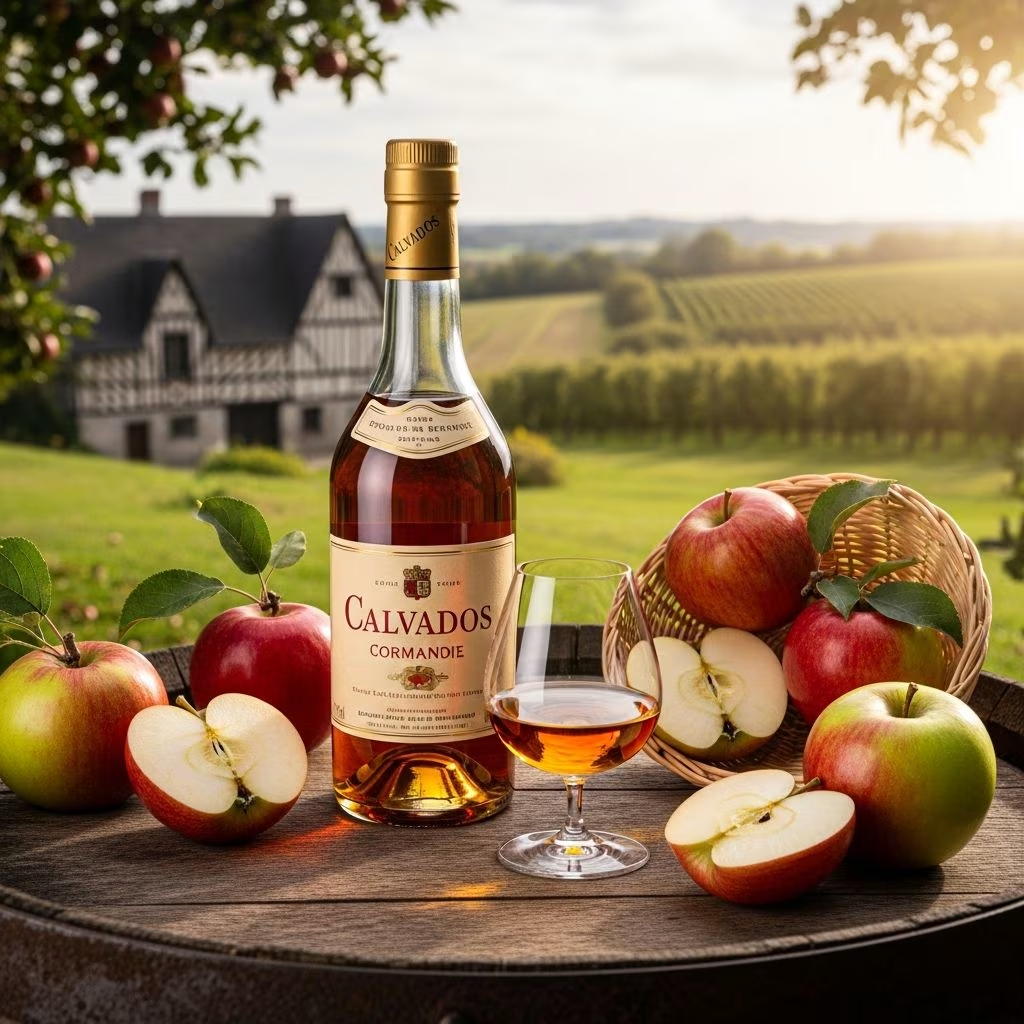
Nestled in the rolling orchards of Normandy, France, a centuries-old tradition continues to produce one of the world’s most distinguished spirits: Calvados. This prestigious apple brandy represents far more than a simple distilled beverage—it embodies the region’s terroir, the expertise of generations of producers, and a commitment to quality that rivals the finest cognacs and armagnacs. From its humble beginnings in Norman farmhouses to its status as a globally recognized luxury spirit, Calvados has earned its place among France’s most celebrated exports.
Calvados is a distinctive brandy produced exclusively from apples and, in certain regional variations, pears, grown in the Normandy region of northwestern France. Like cognac and Champagne, it operates under the strict Appellation d’Origine Contrôlée (AOC) system, which guarantees authenticity and maintains rigorous production standards. What sets Calvados apart from other brandies is its exclusive reliance on fruit as its base material, rather than grapes, creating a flavor profile that is uniquely complex and regionally specific.
The spirit represents a remarkable achievement in agricultural craftsmanship. Producers do not rely on a single apple variety; instead, they deliberately cultivate and select from more than 200 different apple varieties available in the region. These selections include sweet, bitter, tart, and even varieties considered inedible for fresh consumption. This intentional diversity serves a critical purpose: it intensifies the complexity and depth of flavor in the final product. The tradition emphasizes that quality begins in the orchard, where growers maintain the same pride in their terroir as the most prestigious wine producers in other French regions.
The landscape of Normandy provides the perfect environment for cultivating the distinctive apples required for Calvados production. The region’s shallow clay-limestone soil imparts unique mineral characteristics to the fruit, contributing essential flavor compounds that distinguish Calvados from apple brandies produced elsewhere. Normandy’s climate—marked by moderate temperatures and adequate rainfall—creates conditions ideal for growing the specific apple varieties that producers have cultivated for centuries.
The famous Route du Cidre, a 40-kilometer circuit located approximately 20 kilometers east of Caen, winds through the heart of Pays d’Auge and showcases the picturesque villages where apple cultivation remains central to the economy and culture. Towns like Cambremer and Beuvron-en-Auge dot this scenic route, offering visitors an opportunity to experience the landscape that produces this celebrated spirit. Traditional orchards in this region maintain relatively low tree density—typically no more than 100 trees per hectare—to ensure optimal sunlight exposure and fruit quality.
The creation of Calvados follows a time-honored methodology that begins each autumn. Apple harvesting typically commences in early October and continues through early December, with apples either shaken from trees or carefully gathered from the ground. This careful timing ensures that fruit reaches optimal maturity and sugar content before processing.
Following harvest, apples undergo a crucial maturation period. Producers store the fruit for two to three weeks after gathering, allowing natural processes to develop deeper flavors and increase sugar concentration. This patient approach distinguishes quality Calvados production from mass-market alternatives that rush fruit to processing.
The apples are then pressed to extract their juice, a process that includes solid matter left from pressing. This raw apple juice undergoes fermentation lasting approximately six months, typically following a pattern of rapid initial fermentation followed by a slower, more controlled secondary fermentation. This extended fermentation transforms the juice into a dry cider with a minimum alcohol content of 4.5% by volume, which serves as the essential base for all Calvados production.
The distillation process represents another critical stage where Calvados demonstrates its versatility. Unlike some production methods that employ a single distillation, many premium Calvados expressions undergo double distillation, following the methodology associated with cognac production. The spirit is first distilled to approximately 60 proof, then distilled again to achieve the desired alcohol content and flavor concentration. This double-distillation approach allows producers to create expressions of remarkable depth and refinement.
Calvados production operates under three primary regional classifications, each governed by distinct regulations that influence the final spirit’s character:
Representing approximately 29% of all Calvados production, Pays d’Auge holds the distinction of being the largest and most prestigious appellation. Producers operating within this region must adhere to stringent regulations that define their craft. A minimum of 30% bitter apples must be incorporated into the cider base, with pears constituting no more than 30% of the total blend. Production methods remain restricted to traditional pot still distillation, and the spirit must age for a minimum of two years before bottling and commercial release.
This traditional production method yields Calvados of remarkable character—robust yet nuanced, with flavor profiles that reflect centuries of accumulated knowledge. Pays d’Auge expressions typically exhibit rich apple character combined with sophisticated oak influence from aging in French oak barrels.
Standing apart through its distinctive pear content, Domfrontais Calvados must contain at least 30% pear alongside apples in its composition. This requirement creates a notably different sensory experience compared to other regional variations. Domfrontais producers employ continuous column still distillation rather than the traditional pot still method, and the resulting spirit must age for a minimum of three years.
The higher pear content in Domfrontais imparts distinctive characteristics to the final product. The spirit tends toward a lighter, more aromatic profile, with delicate notes of honey, pear, and subtle spice notes creating a more accessible entry point for those preferring less intensely oaked expressions. The crisp acidity and floral character associated with Domfrontais make it an excellent choice for those seeking a more refined, subtly perfumed brandy experience.
Beyond the two primary regional classifications, broader Calvados production occurs throughout the approved appellations, following regulations that allow greater flexibility than Pays d’Auge while maintaining quality standards. These expressions often showcase remarkable diversity, reflecting the skill and vision of individual producers working within the established framework.
The age classification system for Calvados indicates minimum maturation requirements and provides consumers with reliable guidance regarding flavor intensity and complexity:
| Classification | Minimum Age | Typical Flavor Profile | Serving Recommendation |
|---|---|---|---|
| Fine/Trois Étoiles/Trois Pommes | 2 years | Fresh apple, spice, bright acidity | Aperitif or mixed drinks |
| Vieux/Réserve | 3 years | Balanced apple and oak, emerging complexity | Sipping or light meals |
| VO/Vieille Réserve/VSOP | 4 years | Developed fruit, caramel, vanilla notes | After-dinner sipping |
| Extra/XO/Napoléon/Hors d’Âge | 6+ years | Baked apple, toffee, dried fruit, toasted almonds | Neat in tulip glass |
The aging process itself transforms Calvados profoundly. Producers initially age the spirit briefly in lightly charred oak for approximately three months, then transfer it to older oak casks that impart less tannin influence than heavily charred barrels. This staged approach allows the spirit to develop nuanced oak character without overwhelming its essential fruit character. The practice of allowing a portion of spirit to evaporate during aging—known as “the angel’s share”—actually enhances the final product’s depth and complexity.
Quality Calvados presents a remarkable range of flavor experiences depending on its age and production method. Younger expressions, typically those aged two to three years, emphasize fresh apple character combined with subtle spice notes and bright acidity. These spirits prove particularly versatile, functioning effectively as aperitifs or as components in creative cocktails.
Intermediate-aged Calvados, classified as Vieux or VSOP, develops increasingly sophisticated flavor layers. Baked apple notes emerge alongside vanilla and caramel characteristics imparted by oak aging. The spirit begins to display the finesse that Calvados is celebrated for, balancing fruit character with wood influence in harmonious proportion.
Mature expressions aged six years or longer—classified as XO or Hors d’Âge—achieve remarkable depth and complexity. These expressions showcase layers of baked apple, toffee, dried fruit, and toasted almond notes, rounded out by oak spice and extended finish. The finest examples merge finesse and power with remarkable elegance, representing the pinnacle of the producer’s art.
Proper service enhances the Calvados experience significantly. The choice of glassware matters considerably—a tulip-shaped glass concentrates the spirit’s aromatic compounds and reveals its smooth, full character. For premium aged expressions, serving neat at room temperature allows consumers to fully appreciate the complexity developed through years of maturation.
Calvados pairs beautifully with Normandy cheeses, particularly creamy Camembert and the pungent Pont-l’Évêque. In Normandy restaurants, mature Calvados frequently accompanies apple-based desserts, creating complementary flavor combinations that highlight the spirit’s fruit-forward nature. Younger expressions function effectively as aperitifs, preparing the palate for meals to follow.
The tradition of serving Calvados with cheese and desserts reflects the spirit’s essential role in Norman culinary culture. Unlike aged spirits meant primarily for contemplative sipping, Calvados maintains an integral position within dining culture, complementing and enhancing food experiences rather than standing apart from them.
While Calvados is technically an apple brandy, the term “apple brandy” encompasses various spirits produced globally. Calvados specifically refers to brandy produced in Normandy under AOC regulations, distinguishing it from other apple brandies produced elsewhere. The term “cider eau-de-vie” technically describes Calvados more precisely, as it derives from fermented cider rather than fresh fruit distillation.
The primary distinction lies in the fruit base: Calvados derives from apples and pears, while Cognac derives exclusively from grapes. Both operate under strict AOC regulations and share similar production methodologies including pot still distillation and aging in oak. Calvados typically exhibits brighter, more fruit-forward character, while Cognac emphasizes grape-derived complexity and smooth elegance.
Properly stored Calvados remains stable for decades or longer. The spirit benefits from consistent cool temperatures, darkness, and minimal light exposure. Unlike wine, Calvados does not continue aging significantly in the bottle once sealed, though it maintains its character indefinitely under proper storage conditions.
Yes, Calvados functions excellently in culinary applications. Its apple character complements both savory and sweet preparations. Younger, less expensive expressions work well for cooking applications, while premium aged Calvados deserves appreciation as a finished beverage rather than a cooking ingredient.
Calvados has transcended its regional origins to achieve international recognition among spirits enthusiasts and connoisseurs. The spirit’s versatility—functioning effectively as an aperitif, digestif, or component in sophisticated cocktails—contributes to its global appeal. Premium expressions command prices comparable to fine cognacs, reflecting their complexity and the craftsmanship required for production.
The tradition of Calvados production remains remarkably resilient despite modern pressures and changing drinking preferences. Producers continue employing time-honored methods passed through generations, maintaining quality standards that honor the spirit’s heritage while accommodating contemporary tastes and market demands. This balance between tradition and evolution ensures that Calvados remains relevant to contemporary consumers while maintaining the authenticity that defines its character.
Whether approached as an entry-level aperitif or a contemplative aged expression worthy of extended study, Calvados offers drinkers an authentic connection to Normandy’s agricultural heritage and the skill of its producers. Each bottle tells a story of orchard stewardship, seasonal rhythms, and the patient craft that transforms humble apples into a spirit of remarkable sophistication and depth.
