

 Travel Essentials
 Travel Essentials

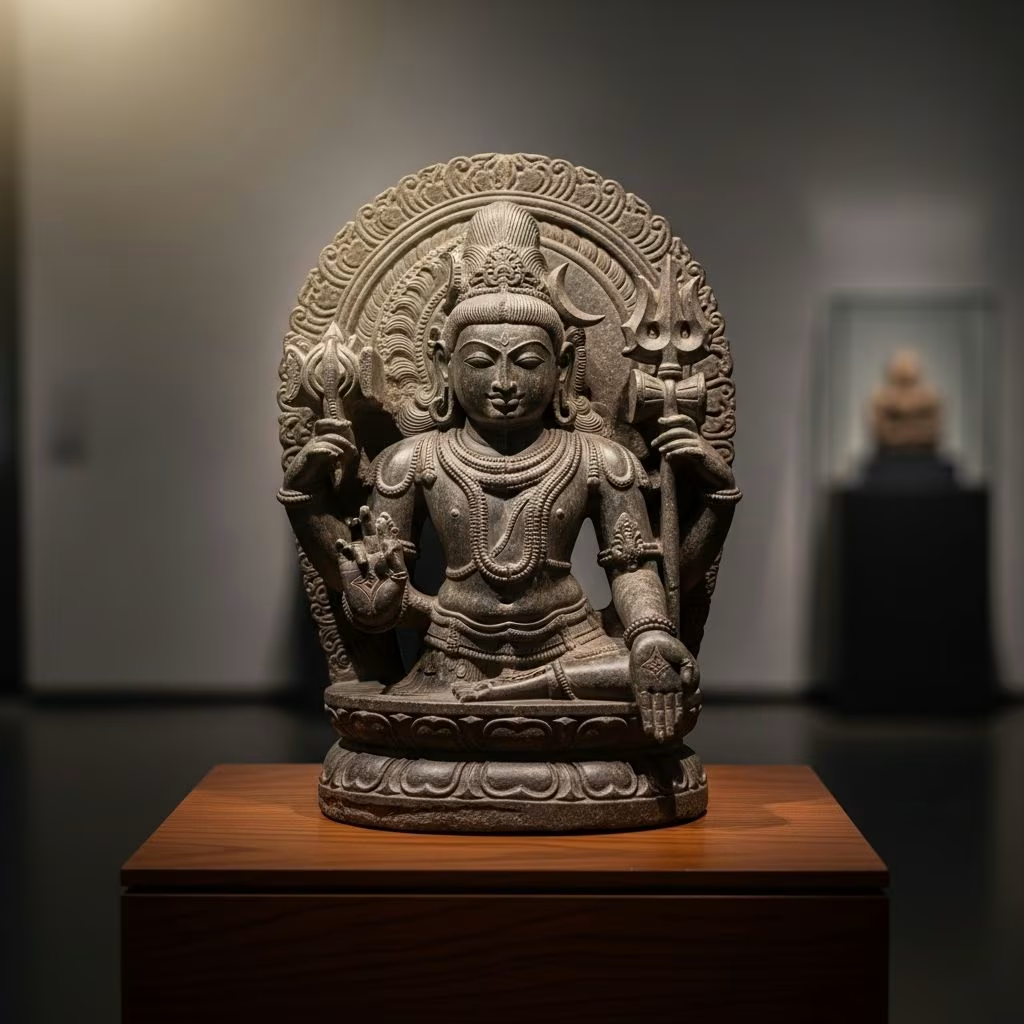
France repatriated the head of the 7th-century Harihara statue to Cambodia after 130 years, reuniting it with its body at the National Museum in a ceremony attended by officials.
 Travel Essentials
The repatriation of ancient artifacts represents a pivotal moment in global cultural diplomacy. In a ceremony held at Cambodia’s National Museum, the severed head of a 7th-century Hindu deity statue was reattached to its torso, marking the end of a 130-year separation. This event underscores the ongoing international efforts to return colonial-era looted treasures to their countries of origin.
Harihara, a composite deity embodying the divine qualities of Vishnu the preserver and Shiva the destroyer, holds profound importance in Hindu cosmology. In Khmer sculpture from the pre-Angkorian period, such figures symbolize the cyclical nature of creation and destruction, reflecting the spiritual worldview of early Southeast Asian kingdoms. The statue in question, carved from sandstone, exemplifies the masterful artistry of 7th-century craftsmen at the Phnom Da temple complex in Takeo province.
These sculptures were not mere decorations but integral to temple rituals, where devotees sought blessings for prosperity and cosmic balance. The detailed carving of facial features, serene expressions, and symbolic adornments like the crown and jewelry highlight the technical prowess and religious devotion of Khmer artisans during the Chenla period.
During the late 19th century, as France solidified its colonial presence in Indochina, French archaeologists and collectors systematically documented and removed artifacts from remote temple sites. Around 1882-1883, researchers visited Phnom Da, a hilltop temple in southern Cambodia, and detached the head of the Harihara statue for transport to Paris. This practice was common, justified under the guise of scientific study and preservation, but often resulted in permanent displacement of cultural patrimony.
The head found its way to the Musée Guimet, France’s premier museum for Asian arts, where it was displayed for decades. Meanwhile, the body remained at the temple, exposed to the elements, suffering gradual deterioration. Such separations fragmented not only physical objects but also the cultural narratives they embodied.
The return of the Harihara head was the culmination of years of diplomatic engagement between Cambodian authorities and French institutions. Initiated through UNESCO’s framework for cultural restitution, negotiations emphasized ethical considerations over legal claims. Cambodia’s Ministry of Culture and Fine Arts advocated for the reunification, arguing that the artifact’s integrity was compromised in separation.
In 2016, following formal agreements, the Guimet Museum consented to the permanent transfer. The ceremony, presided over by Cambodian Deputy Prime Minister Sok An, symbolized mutual respect and a commitment to shared heritage preservation. Sok An remarked on the emotional significance of witnessing the statue’s wholeness restored after generations.
| Year | Event |
|---|---|
| 1882-1883 | Head removed from Phnom Da temple by French researchers. |
| Late 1800s | Head displayed at Musée Guimet in Paris. |
| 2010s | Cambodia initiates formal repatriation requests via UNESCO. |
| 2016 | Head returned and reattached at National Museum ceremony. |
Reuniting the statue posed significant conservation challenges. Experts at the National Museum employed non-invasive techniques to assess compatibility between the head and body. Advanced imaging, including 3D scanning, confirmed a precise fit despite weathering. Specialized adhesives and supports ensure long-term stability without altering the original stone.
Cambodia’s National Museum, home to over 14,000 artifacts, plays a crucial role in safeguarding Khmer heritage. Post-reunification, the Harihara statue underwent meticulous cleaning and documentation, preparing it for public display. This process highlights the evolution of conservation science in Southeast Asia.
The Harihara repatriation sets a precedent for other nations seeking the return of displaced artifacts. It aligns with movements in Africa and Oceania, where colonial museums face increasing pressure to deaccession looted items. Organizations like the International Council of Museums advocate for “encyclopedic” collections that include loans and digital access rather than outright ownership.
In Cambodia, this event bolsters national pride and tourism. Visitors to Phnom Da and the National Museum can now appreciate the statue in context, fostering education on Khmer history. It also encourages domestic protection of archaeological sites against looting and climate threats.
| Artifact | Origin | Returned From | Year Returned |
|---|---|---|---|
| Harihara Statue Head | Cambodia | France | 2016 |
| Koh Ker Statue | Cambodia | USA | 2014 |
| Benin Bronzes | Nigeria | Multiple (UK, France) | Ongoing |
For Cambodian Hindus and Buddhists, the Harihara statue revives ancient devotional practices. Temples like Phnom Da continue to host rituals honoring syncretic deities, blending Hindu and indigenous beliefs. The reunification reinforces cultural identity amid modernization, reminding younger generations of their ancestral legacy.
Scholars note that such artifacts provide insights into the Funan and Chenla kingdoms, precursors to the Angkor Empire. Iconographic analysis reveals influences from Indian Pallava art, illustrating maritime trade routes that disseminated Hinduism across Asia.
Cambodia has strengthened laws against illicit trafficking, collaborating with Interpol and neighboring countries. International loans, like those from the Guimet Museum, offer models for shared access. Digital twins—high-fidelity 3D models—allow global audiences to experience artifacts virtually, reducing repatriation pressures.
Funding from UNESCO and private donors supports site management at Phnom Da, including erosion control and visitor facilities. These efforts ensure that stories like Harihara’s endure for future generations.
Harihara is a syncretic Hindu deity combining Vishnu and Shiva, symbolizing preservation and destruction.
French colonial researchers removed it from Phnom Da temple around 1882-1883 for study and museum display.
It is housed at Cambodia’s National Museum in Phnom Penh.
It enhances attractions at Phnom Da and the National Museum, drawing heritage enthusiasts.
Yes, including Cambodian statues from the US and European museums.
