

Food & Culture Stays Travel Essentials Travel Guides Trip Ideas
Categories
From the Blog
Remy’s Ratatouille Adventure at EPCOT: Ride Review, Tips & 2D Update
Travel Essentials

Camino de Santiago Guide: Routes, Planning & Packing Tips

Comprehensive guide to walking the Camino de Santiago: popular routes, planning advice, packing essentials, daily life, and reaching the iconic cathedral.
Travel Essentials

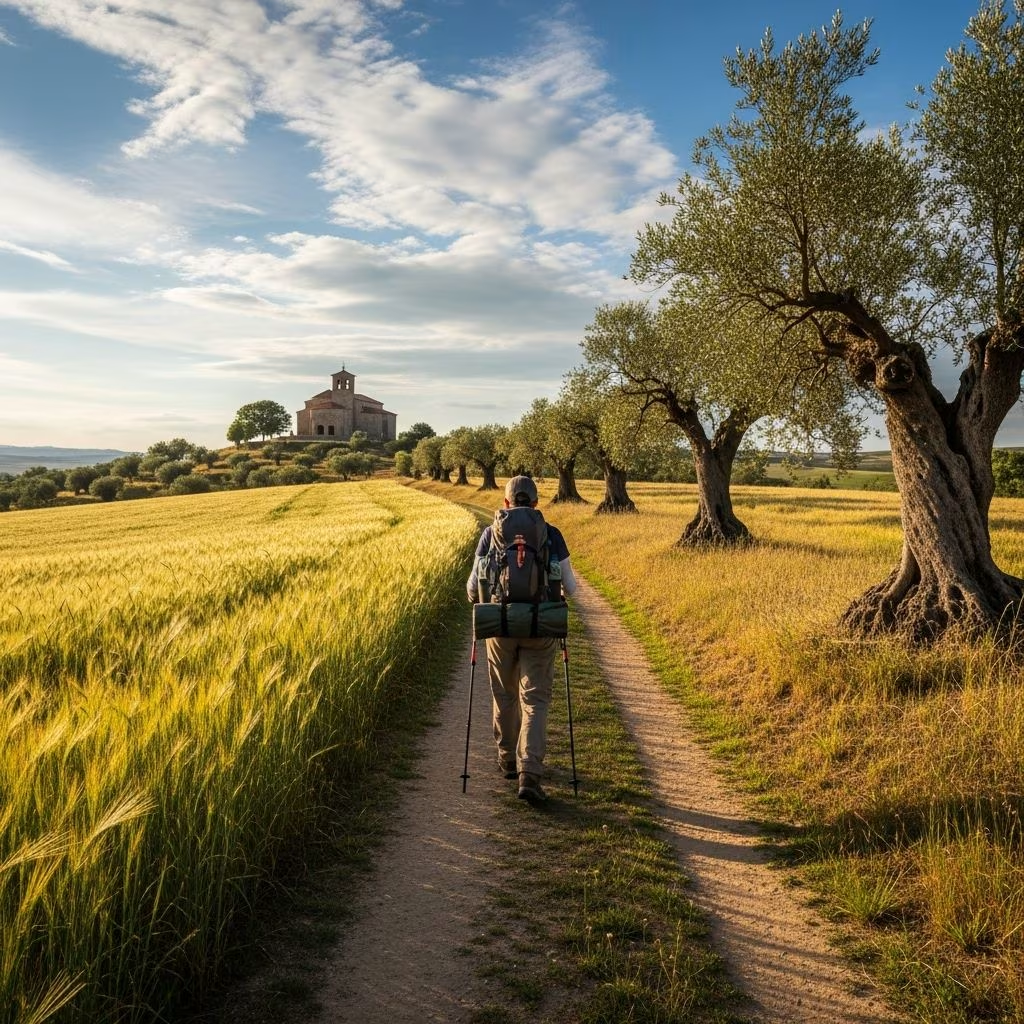
The Camino de Santiago, a network of ancient pilgrimage paths converging on Santiago de Compostela in northwest Spain, draws walkers from around the world for its blend of physical challenge, cultural immersion, and spiritual reflection. Legend ties the destination to the tomb of Saint James the Apostle, making it a profound journey for centuries.

Understanding the Pilgrimage Network

Multiple routes form this extensive trail system, each offering unique landscapes and experiences. Pilgrims select paths based on time, fitness, and preferences, with all leading to the Cathedral of Santiago de Compostela.

  • Camino Francés (French Way): The most renowned route starts in Saint-Jean-Pied-de-Port, France, spanning about 780 km across northern Spain through cities like Pamplona, Burgos, and León. It takes roughly 30-35 days and features diverse terrain from Pyrenees mountains to meseta plains.
  • Camino Portugués (Portuguese Way): Beginning in Lisbon or Porto, this coastal and inland path covers 240-620 km, passing historic sites like Fátima and Tui. The Porto to Santiago segment (270 km) suits two-week trips with seaside views and fewer crowds.
  • Camino Primitivo (Original Way): The oldest route from Oviedo, around 320 km of rugged mountains, forests, and hills in Asturias and Galicia. Challenging ascents reward with stunning vistas and quieter paths, joining the Francés near Melide.
  • Camino del Norte (Northern Way): Hugging Spain’s northern coast from Irún, this 825 km trail offers beaches, cliffs, and Basque cuisine but demands stamina due to constant ups and downs.
  • Camino Inglés (English Way): A shorter 115 km option from Ferrol or A Coruña in Galicia, completable in 5-6 days with coastal starts transitioning to inland greenery and modern waymarking via QR codes.
  • Camino Finisterre-Muxía: Post-Santiago extensions (90-120 km) to the ‘end of the world’ at Finisterre or Muxía, through eucalyptus groves and fishing villages, ideal for extended reflection.
  • Other Paths: Vía de la Plata from Seville (1,000 km) or longer European variants from further afield.

Choosing Your Ideal Route

For beginners, the final 100 km of the Camino Francés from Sarria qualifies for the Compostela certificate in about 7 days, balancing accessibility and authenticity. Experienced walkers opt for full routes like the Francés for infrastructure or Primitivo for challenge. Consider season: summer crowds peak on popular paths, while spring/fall offer milder weather.

RouteDistance (km)DaysDifficultyHighlights
Camino Francés78030-35ModerateHistoric cities, varied terrain
Camino Portugués (Porto-Santiago)27012-14Easy-ModerateCoastal towns, rivers
Camino Primitivo32014-16ChallengingMountains, forests
Camino Inglés1155-6ModerateSea views, quick access
Finisterre904-5ModerateAtlantic coast, sunsets

Planning Your Journey

Start preparations months ahead: secure a Pilgrim’s Credential (passport) from associations or starting points for albergue access and stamps. Book flights to hubs like Biarritz (Francés), Porto (Portugués), or Santiago airport. Trains/buses connect to trailheads; from Sarria, it’s a simple ride. Budget €30-50 daily for food, beds, and incidentals—albergues cost €5-15.

Timing matters: avoid July-August heat/crowds; May-June or September-October ideal. Holy Years (next 2027, when July 25 falls on Sunday) amplify visitors.

Packing Essentials for the Trail

A 30-40L backpack keeps loads light (under 10% body weight). Focus on quick-dry, layered clothing for variable weather.

  • Clothing: 2-3 moisture-wicking shirts, shorts/skirt, fleece, rain jacket/pants, hat, 2 pairs socks, underwear, sleepwear, sturdy trekking shoes (broken in), sandals for evenings.
  • Gear: Sleeping bag liner (albergues provide blankets), headlamp, water bottle (1-2L), lightweight towel, sunscreen, blister kit (Compeed), trekking poles.
  • Documents: Credential, passport/ID, cash/credit card, health insurance proof, journal/pen in waterproof pouch.
  • Optional: Earplugs, snacks, power bank, first-aid basics.

Avoid overpacking; laundry facilities abound.

Daily Life on the Camino

Days begin early (6-7 AM) with café con leche, walking 20-25 km to next albergue by 2-3 PM. Follow yellow arrows/scallop shells for navigation. Meals feature pilgrim menus (€10-15): hearty soups, paella, tortilla.

Albergues (hostels) foster community; private rooms available for comfort. Socialize at communal dinners, but respect ‘buen camino’ silence. Challenges include blisters (prevent with fitted shoes), weather, and fatigue—rest days help.

Highlights: Pamplona’s energy, Puente la Reina’s bridge, Irache wine fountain, León’s cathedral, O Cebreiro’s pallozas, and rural Galician forests.

Arriving in Santiago de Compostela

The cathedral’s grandeur caps the journey. Queue for Compostela (proof of 100km stamps + motivation letter) at Pilgrim Office. Attend Pilgrim Mass (noon daily, 12-13 Sundays/Holy Years) for the swinging botafumeiro censer. Celebrate with pulpo gallego and albariño wine.

Extensions Beyond Santiago

Many continue to Finisterre (5 days, 90 km) for oceanic closure or Muxía (extra 28 km). These earn separate certificates amid dramatic cliffs.

Frequently Asked Questions

What is the minimum distance for a Compostela?

Walk the last 100 km to Santiago on foot or cycle 200 km; stamps every 100m prove progress.

Is the Camino safe for solo walkers?

Yes, trails are well-traveled with supportive pilgrim culture; women report positive experiences.

What fitness level is required?

Moderate: daily 20 km hikes with elevation. Train with loaded walks beforehand.

Can I bring a dog or bike?

Dogs allowed on some routes with rules; biking permitted (separate credentials).

How much does the Camino cost?

€500-1,000 for 2-4 weeks, excluding travel: albergues €10/night, meals €15-20.

Tips for a Transformative Experience

Embrace flexibility—detours enrich. Practice mindfulness amid scenery. Connect with diverse pilgrims. Journal reflections. The Camino’s true reward is personal growth beyond the physical trek.

References

  1. Walking the Camino de Santiago: A Beginner’s Guide — Camino Ways. 2023. https://caminoways.com/walking-the-camino-de-santiago-a-beginners-guide
  2. The Camino de Santiago Pilgrimage: A Beginner’s Guide — Outside Online. 2023. https://www.outsideonline.com/adventure-travel/destinations/europe/walking-camino-de-santiago-beginners-guide/
  3. Which Camino de Santiago route is right for you? — Lonely Planet. 2023. https://www.lonelyplanet.com/articles/choose-which-camino-de-santiago-route
  4. Walking the Camino de Santiago: A First-Timers Guide — Taylors Tracks. 2023. https://www.taylorstracks.com/walking-the-camino-de-santiago/
  5. Camino Routes — Follow the Camino. 2023. https://followthecamino.com/en/camino-de-santiago-routes/
  6. 14 Camino de Santiago tips for planning and walking — Stingy Nomads. 2023. https://stingynomads.com/camino-de-santiago-tips/
  7. Camino de Santiago – Rick Steves Europe — Rick Steves. 2023. https://www.ricksteves.com/europe/spain/camino-de-santiago
ME
medha deb
Medha Deb is an editor with…

Medha Deb is an editor with a master's degree in Applied Linguistics from the University of Hyderabad. She believes that her qualification has helped her develop a deep understanding of language and its application in various contexts. Medha specializes in the areas of beauty, health, sports, and wellness and is committed to ensuring that the content on the website is of the highest quality.Medha's passion for writing and editing began early in life when she joined a book writer's club with her mother. It was there that she discovered her love for the written word and the power it holds to inform, inspire, and transform lives. Since then, she has honed her skills as a writer and editor, working with a variety of clients and publications to produce compelling and informative content. Currently, she writes and edits for CultureTreker.She is also an ardent animal lover and dedicates her time and resources to the foster care of neonatal kittens, providing them with the love and attention they need to thrive. Her commitment to animal welfare is a testament to her compassion and empathy, and it underscores her belief in the importance of caring for the most vulnerable members of our society.

← Previous
Best Places to Visit in Vermont: Mountains, Lakes & Charming Towns
‹›
