

 Travel Essentials
 Travel Essentials

Learn TSA rules for carrying water through airport security, including the 3-1-1 liquid rule and creative alternatives to bypass restrictions.
 Travel Essentials
Staying hydrated during air travel is essential for your health and comfort, yet airport security regulations often create obstacles for travelers attempting to bring water through checkpoints. Understanding the Transportation Security Administration’s (TSA) rules surrounding liquid containers can help you navigate the process smoothly while maintaining adequate hydration throughout your journey. This comprehensive guide explores the regulations, exceptions, and practical strategies for managing water and beverages when flying.
The TSA’s 3-1-1 rule forms the cornerstone of all liquid restrictions at airport security checkpoints. This regulation establishes clear parameters that all passengers must follow when transporting liquids, gels, and aerosols in their carry-on luggage.
The rule breaks down as follows: each individual liquid container must not exceed 3.4 fluid ounces (100 milliliters), all containers must fit comfortably within a single quart-sized transparent plastic bag, and each passenger may carry only one such bag through security. For perspective, a standard disposable water bottle typically holds approximately 16.9 ounces, which significantly exceeds the allowable limit by more than four times.
Any liquid container with more than 3.4 ounces of liquid will be confiscated at the security checkpoint, meaning travelers risk losing their beverages if they attempt to bring filled bottles through the terminal. However, TSA regulations provide a clear pathway for passengers seeking to maintain their hydration without violating these restrictions.
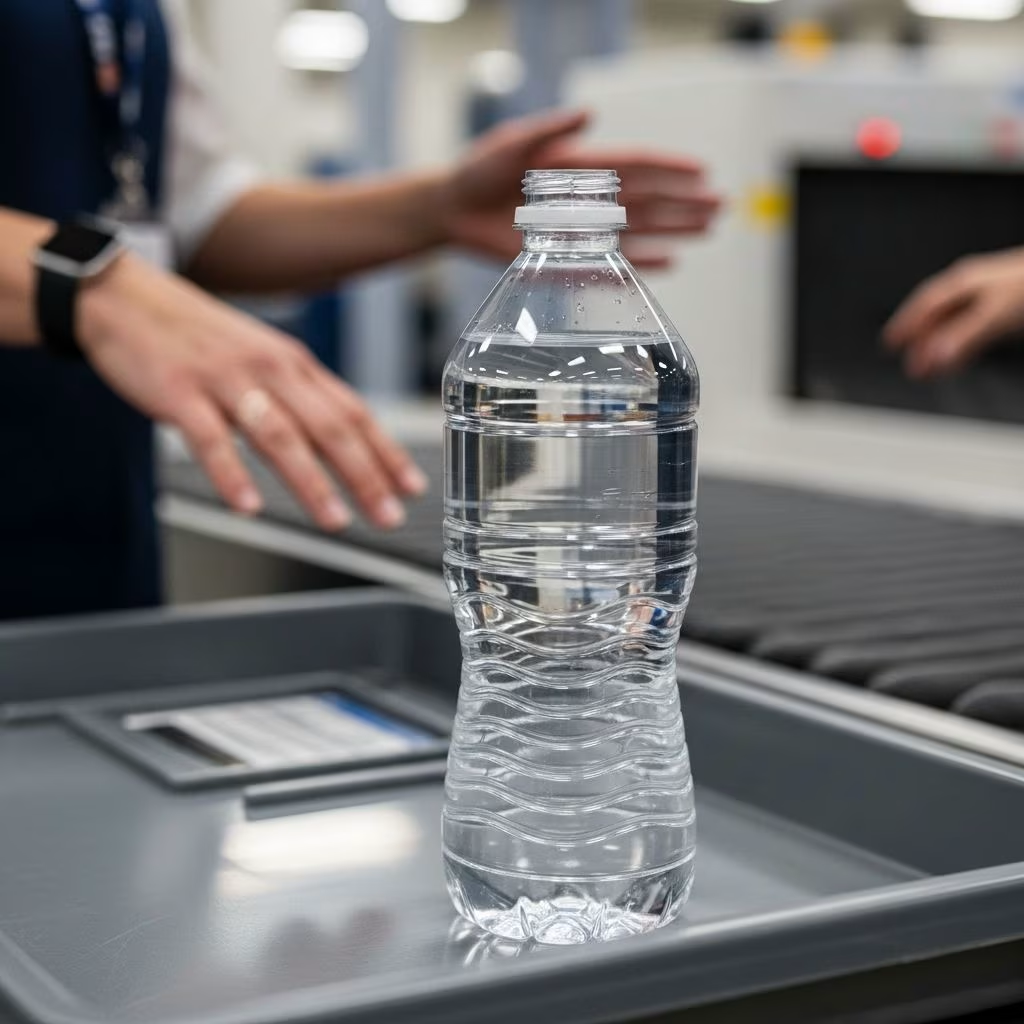
The most straightforward solution to the water bottle dilemma involves bringing an empty container through security and refilling it at designated stations located beyond the checkpoint. TSA permits empty water bottles of any size in carry-on luggage, regardless of whether they are constructed from plastic, stainless steel, or glass materials. TSA agents will inspect these bottles to verify they are completely empty before allowing them through the security line.
When packing an empty water bottle for inspection, ensure it is thoroughly cleaned and dried. If your bottle has a removable base or multiple components, consider disassembling it during the security screening process to demonstrate to agents that every part is empty and ready for inspection. This transparency can expedite the security process and prevent unnecessary delays or confusion.
Once you successfully pass through security, locate a water refill station or drinking fountain to fill your container. Many modern airports have installed filtered hydration stations specifically designed to encourage travelers to refill reusable bottles rather than purchasing expensive bottled water at retail prices. These stations offer an economical alternative to the inflated costs of airport concourse beverages, which frequently exceed $8 to $10 per bottle.
Not all water bottles are created equal when it comes to air travel. Choosing the appropriate container can enhance your travel experience and ensure compliance with TSA regulations.
Consider the following features when selecting a travel water bottle:
Filtered water bottles with integrated filtration systems offer an additional advantage, allowing you to safely fill your container from airport water sources while removing impurities. These bottles represent a smart investment for frequent travelers who prioritize both health and budget consciousness.
TSA regulations include a notable exception to the standard liquid restrictions that many travelers overlook: frozen water is permitted in carry-on baggage. According to TSA guidelines, frozen liquid items are allowed through security checkpoints as long as they remain completely frozen solid at the time of screening. This exception opens interesting possibilities for travelers seeking to bring water through security while bypassing the 3-1-1 rule’s limitations.
However, this exception comes with important caveats. If frozen water becomes partially melted, transforms into a slushy consistency, or contains any liquid pooling at the bottom of its container, it immediately falls under standard 3-1-1 liquid requirements and may be confiscated. The determination of whether frozen items meet requirements occurs at the security checkpoint, and TSA agents have discretion in assessing whether items are sufficiently frozen.
To maximize success with frozen water bottles, freeze them solid the night before travel and transport them in insulated sleeves or bags that help maintain frozen conditions during the security screening process. While this method requires advance planning, it offers a legitimate pathway to bring larger quantities of water through checkpoints compared to the standard liquid restrictions.
Passengers who pack filled water bottles in checked baggage rather than carry-on luggage face different rules and considerations. TSA regulations permit filled bottles in checked bags without the 3.4-ounce restriction, allowing you to pack as much water as you desire in luggage bound for the cargo hold.
However, practical concerns accompany this approach. Extreme temperature fluctuations in cargo holds can affect bottle integrity, and the pressurization process may cause caps to loosen, leading to potential leaks that damage other items in your luggage. Additionally, the significant weight of water makes it an inefficient use of checked baggage allowances, particularly for travelers with strict weight limitations.
For these reasons, checked luggage water bottles work best as a supplementary hydration source rather than your primary strategy. Consider this option only if you have substantial checked baggage allowance remaining and prioritize cost savings over weight efficiency.
Maintaining proper hydration requires planning that extends beyond just the security checkpoint. Airport environments present multiple opportunities for obtaining water throughout your travel experience.
Before reaching security, purchase a filled water bottle if available in the pre-security terminal area. While you cannot bring this bottle through the checkpoint, consuming it beforehand hydrates you before the dehydrating effects of flight begin.
After clearing security, seek designated water refill stations, often prominently displayed near restrooms or in central terminal areas. Many airports now feature hydration stations that provide filtered water at no cost, recognizing the growing demand from environmentally conscious travelers. If refill stations are not immediately visible, ask airport staff or consult terminal maps available near information desks.
Once aboard the aircraft, request water from flight attendants during beverage service. Airlines typically provide complimentary water to passengers upon request, though availability varies by flight duration and current service level. Carry your filled water bottle to your seat and sip regularly throughout the flight to counteract the dehydrating effects of cabin air, which contains significantly lower humidity than sea-level environments.
| Travel Stage | Hydration Options | TSA Compliance Status |
|---|---|---|
| Before Security | Purchase filled bottle at airport retailers | Allowed (must finish before security) |
| Security Checkpoint | Empty reusable bottle (refill after security) | Allowed if empty |
| After Security | Refill at airport water stations | Allowed |
| During Flight | Request water from flight attendants | Allowed and complimentary |
| Checked Baggage | Pack filled bottles in checked luggage | Allowed (not recommended due to weight) |
Q: Will TSA confiscate my empty water bottle at security?
A: No. TSA allows empty water bottles of any size through security. Agents will inspect the bottle to confirm it is empty, but confiscation should not occur if the bottle genuinely contains no liquid.
Q: Can I bring a water bottle with a filter through airport security?
A: Yes, as long as the filtered water bottle is completely empty. After passing through security, you can fill it at airport water stations or fountains. Filtration systems do not violate TSA regulations when the container itself is empty.
Q: What if a TSA agent tells me I cannot bring my empty water bottle through security?
A: TSA regulations clearly permit empty bottles. If an agent denies entry for an empty bottle, politely request to speak with a supervisor who can clarify the regulation. Having this information readily available helps resolve any confusion quickly.
Q: Is frozen water actually allowed through security?
A: Yes. Frozen water that is completely solid at the checkpoint is permitted in carry-on baggage. If it becomes partially melted or contains any liquid, standard 3-1-1 liquid rules apply.
Q: How much does airport water typically cost?
A: Airport water bottles generally range from $6 to $10, representing a significant markup compared to retail prices. Bringing your own empty bottle and refilling it saves substantial money across multiple flights.
International travelers face additional hydration considerations. When traveling to countries outside the United States, research that destination’s TSA equivalent agency regulations, as rules may differ. If your international flight includes a connection through a U.S. airport, note that you must discard any liquids purchased on the international segment before proceeding through U.S. security for your connecting flight.
For connecting flights within U.S. airports, you may carry water purchased in the secure area of the first airport to your connecting gate. However, purchasing water after clearing security at your final departure airport ensures optimal freshness.
Beyond regulatory compliance and health benefits, bringing your own reusable water bottle aligns with environmental sustainability goals. Reducing single-use plastic consumption decreases waste at airports and landfills. Economically, bringing a reusable bottle saves $40 to $50 annually for frequent travelers who fly multiple times per year, representing meaningful savings accumulated across a travel lifetime.
Understanding and working within TSA regulations regarding water bottles allows you to prioritize your health through proper hydration while maintaining full compliance with airport security requirements. By employing the strategies outlined above, you can navigate airport terminals confidently, knowing you have taken deliberate steps to stay hydrated throughout your journey.
