

 Travel Essentials
 Travel Essentials

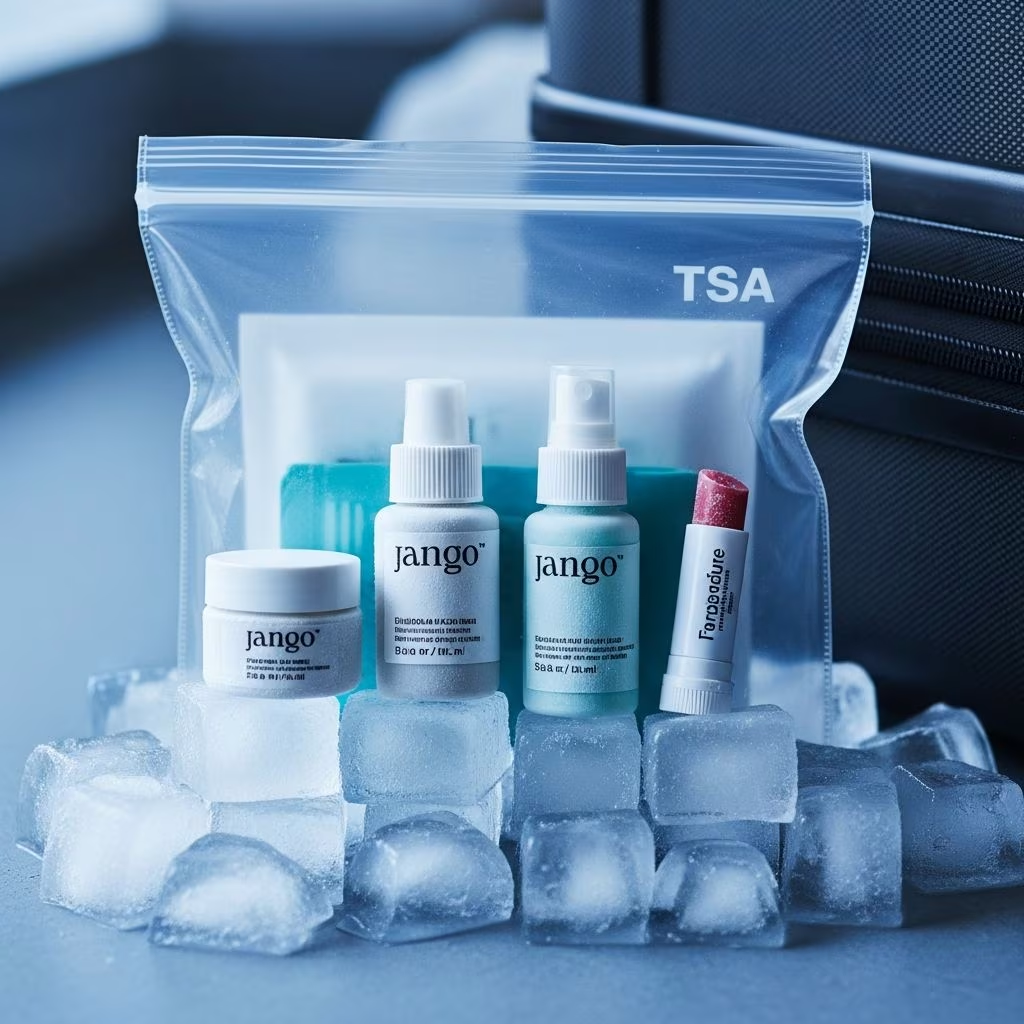
Learn how to freeze skincare products to comply with TSA liquid restrictions and travel confidently with your complete beauty regimen.
 Travel Essentials
Air travel presents a unique challenge for beauty enthusiasts and skincare devotees. The Transportation Security Administration’s liquid restrictions can make it difficult to bring your favorite serums, moisturizers, and cleansers aboard commercial flights. However, a creative solution has emerged in recent years that allows travelers to bypass these limitations: freezing skincare products. By converting liquid or gel-based products into solid form, you can transform them into items that fall outside TSA liquid regulations, enabling you to maintain your complete skincare routine throughout your journey.
The TSA’s 3-1-1 rule has been in place for nearly two decades, restricting passengers to containers holding 3.4 ounces or fewer of liquids, aerosols, gels, creams, and pastes in their carry-on bags. This regulation applies to most skincare products, as moisturizers, face masks, and serums are classified as gels or creams. Many travelers find themselves forced to check baggage or sacrifice their preferred products entirely, disrupting carefully curated skincare regimens that often took months or years to perfect.
The challenge intensifies for those with sensitive skin, specific dermatological needs, or products prescribed by skincare professionals. Checking bags introduces the risk of damage, temperature fluctuations, and product separation. Additionally, purchasing travel-sized versions or airport alternatives can become expensive and often prove ineffective, as smaller quantities may not contain the same formulations as full-size products.
Freezing skincare products operates on a straightforward scientific principle. When water-based products reach freezing temperatures, their liquid components solidify into ice, technically transforming them into solids rather than liquids. The TSA’s definition of a liquid includes any substance that flows or takes the shape of its container at room temperature. Frozen products, by contrast, maintain a rigid form and do not conform to this definition.
However, not all skincare products freeze equally. Water-based formulations—such as toners, essences, and lightweight hydrating serums—freeze most effectively. Oil-based products present greater challenges, as oils have lower freezing points than water. Products with high alcohol content may also resist complete freezing due to alcohol’s antifreeze properties. Emulsified creams and complex formulations with multiple ingredients may freeze unevenly, creating an inconsistent texture that could compromise product efficacy.
The freezing process typically requires 24 to 48 hours in a standard freezer set to 0°F or below. Some travelers have reported success using deep-freezer units that reach -4°F, which may accelerate the process. The key is achieving complete solidification throughout the entire product, not just on the surface.
Successful product freezing requires careful preparation and strategic planning. Begin by inventorying your skincare collection several weeks before your travel date, prioritizing items that provide the most value to your routine. Water-based products should be your primary focus, as these consistently produce reliable results.
Container Considerations:
Product Selection Strategy:
Focus on skincare items that represent the core of your routine. Essences, hydrating serums, and lightweight moisturizers freeze most reliably. Avoid attempting to freeze products with uncertain formulations or those that have never been refrigerated previously. Test freeze a small quantity of any product you’re uncertain about at least two weeks before your departure date, giving yourself time to troubleshoot if issues arise.
Proper timing ensures your products reach complete solidification without refreezing multiple times, which can degrade formulations. Begin the freezing process at least 48 hours before your flight, ideally longer. Many experienced travelers recommend starting three to four days prior to departure to allow ample margin for error.
Place containers in the coldest section of your freezer, typically at the back on a lower shelf where temperatures remain most consistent. Avoid areas near the freezer door, which experiences temperature fluctuations each time the appliance opens. Check products after 24 hours to assess freezing progress. Some items may achieve complete solidification faster than others depending on container size, product density, and freezer efficiency.
Once your products have frozen solid, packing them strategically becomes essential. Maintain frozen conditions from your home through airport security screening and onto the aircraft. Several packing approaches can help achieve this goal:
Insulated Container Method: Place frozen products in an insulated cooler or thermal bag with ice packs. This maintains freezing temperatures during transport and through security lines. TSA agents can physically handle the products to verify they’re frozen, confirming their solid status. Once through security, keep products in your carry-on near other cold items if possible.
Timing Your Journey: Schedule flights during cooler months when ambient temperatures are naturally lower. Winter travel provides natural advantages for maintaining frozen product integrity. For summer travel, consider flights during early morning hours when airport temperatures tend to be cooler.
Direct Airport Transport: Plan your travel timeline to minimize time between leaving your freezer and arriving at the airport. Drive directly to the airport rather than making additional stops. If possible, arrange for a family member or friend to drive you rather than using rideshare services that may take indirect routes.
TSA agents may examine frozen skincare products more closely than regular carry-on items. They need to verify that products are genuinely frozen and not simply packed in ice. Be prepared to remove products from your bag for inspection. Agents may physically touch or slightly manipulate containers to confirm solid consistency.
Having detailed product labels and original containers available can expedite this process. Some travelers find it helpful to bring documentation showing product composition or ingredients, though this typically isn’t required. Remain patient and cooperative during examination, as TSA personnel follow protocols to ensure aviation security.
If a product has begun thawing before security screening, be honest with TSA agents. A partially frozen product that’s still predominantly solid may be acceptable, but this remains within individual agent discretion. Expect that some frozen products might not pass inspection depending on their condition and that agent’s interpretation of guidelines.
Once through security, your challenge shifts to maintaining product integrity through your flight and to your final destination. Keeping products frozen on the aircraft presents particular challenges, as cabin temperatures are typically maintained at comfortable levels for passengers rather than for product preservation.
Options for onboard maintenance include requesting ice from flight attendants, though availability and willingness to provide this vary by airline. A small insulated bag with ice packs remains one of the most reliable methods. Some travelers place frozen products in their checked baggage after security clearance, accepting the risk of potential damage in exchange for guaranteed temperature control, though this defeats some of the purpose of carrying items on board.
Upon arrival at your destination, immediately place products in a hotel room refrigerator or freezer if continued freezing is necessary. Many travelers find that once through security, allowing products to thaw slightly for normal use actually proves convenient, as completely frozen products can be difficult to apply.
For some products or travel circumstances, freezing may not represent the optimal solution. Understanding complementary strategies ensures you always have options for maintaining your skincare routine while traveling.
Solid Skincare Alternatives: Beauty brands increasingly offer solid versions of popular products. Solid moisturizers, cleansing bars, and concentrated serums in stick form naturally comply with TSA regulations. These products offer similar efficacy to liquid counterparts while providing convenient travel formats.
Decanting Strategy: Instead of freezing full containers, decant small quantities of your preferred products into travel-sized containers that fall within the 3.4-ounce limit. This approach requires accepting some modification to your routine but provides reliable compliance without freezing complications.
Checked Baggage Option: If your travel itinerary allows checked baggage, packing skincare products in luggage checked to your final destination eliminates carry-on restrictions entirely. This approach works well for longer trips where wrinkled clothes matter less than having your complete skincare collection.
| Product Type | Freezing Success Rate | Ideal Container Size | Estimated Freeze Time |
|---|---|---|---|
| Hydrating Toners | Excellent | 2-3 oz | 24 hours |
| Essence Products | Excellent | 2-3 oz | 24-30 hours |
| Water-Based Serums | Very Good | 1-2 oz | 20-24 hours |
| Light Moisturizers | Good | 2-3 oz | 36-48 hours |
| Face Masks (Water-Based) | Very Good | 2-3 oz | 30-36 hours |
| Oil-Based Serums | Poor | Not Recommended | May Not Freeze |
| Heavy Creams | Fair | 1-2 oz | 48+ hours |
Q: Will freezing damage my skincare products?
A: Properly frozen and thawed skincare products generally maintain their efficacy. However, repeated freezing and thawing cycles can potentially degrade certain formulations. Freeze products only once for travel purposes, and allow them to thaw naturally at room temperature rather than using heat to accelerate the process.
Q: What if my product isn’t completely frozen when I reach the airport?
A: Partially frozen products may still pass TSA inspection if the majority of the product remains solid. However, this remains subject to individual agent interpretation. Allowing additional freezing time before travel remains the safest approach.
Q: Can I refreeze products after they’ve begun thawing?
A: Yes, you can refreeze products, though repeated cycles may affect formulation integrity. Minimize refreezing by maintaining cold conditions throughout your journey when possible.
Q: Will frozen skincare products melt during airport security screening?
A: Airport security areas maintain typical indoor temperatures. Products may begin thawing slowly, but properly insulated frozen items typically remain mostly solid through the screening process. The duration of security screening usually doesn’t allow complete thawing.
Q: Which skincare products are most problematic to freeze?
A: Oil-based products, serums with silicone bases, and products with high alcohol content often resist complete freezing. Heavier creams may freeze unevenly. Stick with water-based formulations for most reliable results.
Q: Is the frozen product method actually legal according to TSA rules?
A: TSA regulations define liquids as substances that flow or conform to container shape at room temperature. Frozen solid products technically fall outside this definition. However, TSA maintains discretionary authority, and individual agents may interpret guidelines differently. The method exists within a gray area of TSA regulations.
Freezing skincare products represents a creative solution to TSA restrictions that can help maintain your complete beauty routine while traveling by air. Success requires careful planning, strategic product selection, and proper execution throughout the freezing, packing, and transport process. By understanding which products freeze successfully, preparing adequately in advance, and packing with insulation in mind, you can navigate airport security with your skincare collection intact.
Whether you opt for this method, explore solid alternatives, or embrace a simplified travel routine, the key remains prioritizing your skin health and well-being throughout your journey. Experiment with freezing techniques before your first trip, giving yourself confidence and knowledge for future travels.
