


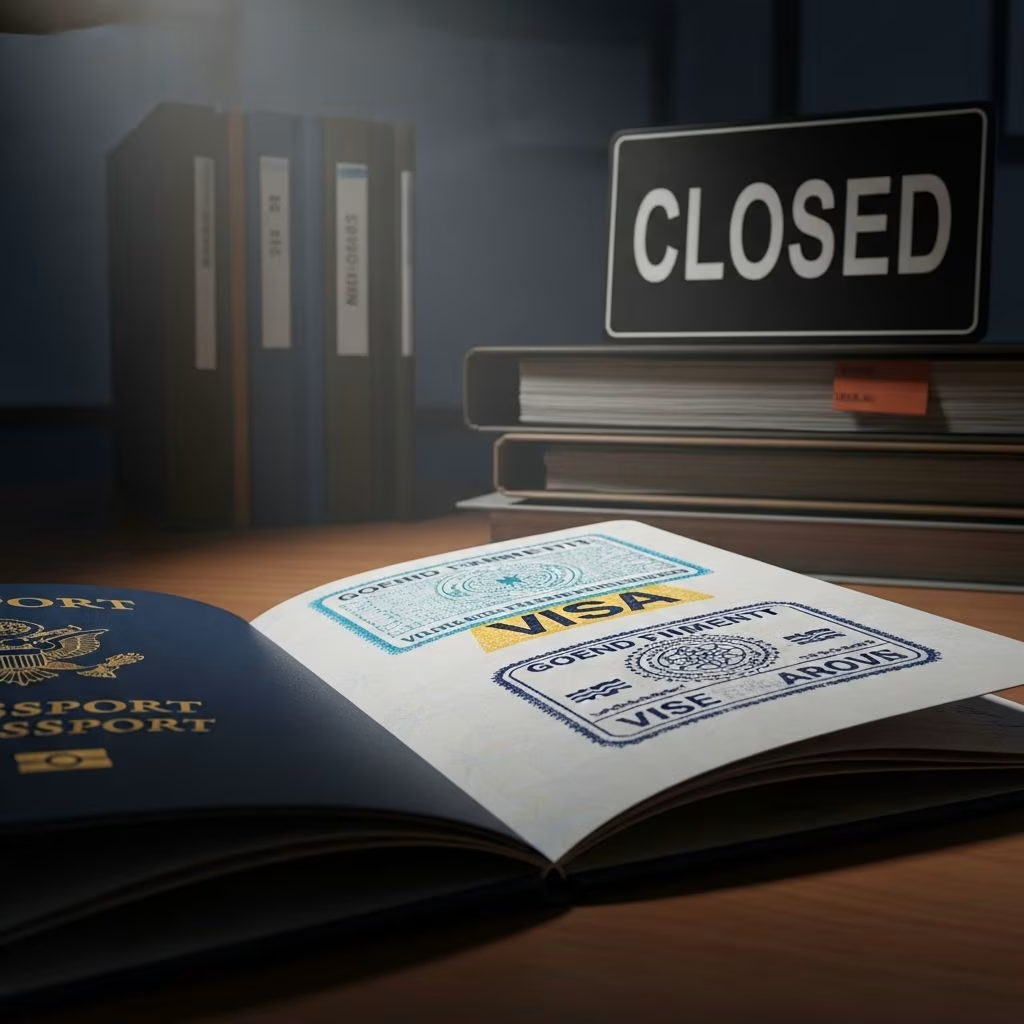
When a government shutdown occurs, uncertainty pervades the minds of travelers worldwide. Questions about essential services flood immigration forums and travel websites. Among the most pressing concerns is whether Americans can obtain or renew passports during these periods of federal funding lapses. The answer provides reassurance: passport operations continue functioning despite broader governmental disruptions, though understanding the mechanisms and procedures remains crucial for timely travel preparation.
Understanding Why Passport Services Remain Operational
The fundamental reason passport services persist during government shutdowns traces back to their unique funding structure. Unlike most federal agencies that depend on congressional budget appropriations, the Bureau of Consular Affairs operates on a self-sustaining revenue model. This system generates income through application fees collected directly from individuals seeking passport services, creating financial independence from annual legislative funding cycles.
When Congress fails to approve appropriations bills and discretionary spending halts, the State Department’s consular operations continue uninterrupted. This fee-based funding mechanism means that embassy personnel, consulate staff, and domestic passport agencies maintain their normal operational capacity. The distinction between fee-funded and appropriation-funded services explains why vital travel documentation remains accessible when numerous other government functions temporarily cease.
During the 2025 government shutdown, the Bureau of Consular Affairs issued an official notice confirming that domestic passport agencies, overseas embassies, and U.S. consulates would remain fully operational. This reassurance proved accurate, with thousands of Americans successfully obtaining and renewing passports throughout the funding lapse period.
Current Processing Timeframes and Service Options
Understanding processing timeframes helps travelers plan accordingly. The State Department maintains consistent processing standards regardless of shutdown status:
- Routine service: Four to six weeks for standard passport processing
- Expedited service: Two to three weeks with an additional $60 fee
- Mailing time: Up to four additional weeks when documents travel via postal service
These timeframes apply whether government operations function normally or during appropriations lapses. The consistency reflects the fee-funded nature of passport services, which maintains staffing and processing capabilities independent of congressional appropriations cycles.
For individuals requiring faster processing, expedited service provides a viable option despite shutdown conditions. The expedited pathway reduces waiting periods by roughly half, though it necessitates paying premium fees. Strategically timing applications well in advance of international travel dates remains the most reliable approach to ensure timely passport delivery, particularly during potential shutdown periods.
First-Time Passport Applications: What You Need
Citizens applying for their first passport must complete the process in person at designated application facilities. This requirement persists during government shutdowns, as in-person verification remains essential for initial passport issuance.
Required documentation and fees:
- Completed Form DS-11 application
- Proof of U.S. citizenship (birth certificate, naturalization certificate, or citizenship certificate)
- Valid government-issued identification (driver’s license, military ID, or state ID)
- One passport photograph meeting State Department specifications
- Separate payments for application fee ($130 for passport book, $30 for card, or $160 for both) and execution fee ($35)
Total fees for a first-time passport book application amount to $165, while combination book-and-card applications total $195. Payment must be submitted separately from the application, and applicants should bring exact payment amounts or be prepared with accepted payment methods.
During government shutdowns, the U.S. Postal Service emerges as the most dependable application submission point. Because postal operations continue independently during federal funding lapses, postal facilities accepting passport applications maintain regular hours and services. Many postal locations operate as official passport acceptance facilities, offering applicants reliable access to in-person application processes.
For first-time applicants, verification of document authenticity occurs during the in-person appointment. Applicants must bring original documents; copies alone prove insufficient for initial passport issuance. The in-person requirement protects against identity fraud and ensures accurate passport records from inception.
Renewal Options for Existing Passport Holders
Citizens with valid passports enjoy flexibility in renewal methods, particularly during government shutdowns. The State Department offers three distinct pathways for passport renewal, each with specific eligibility requirements and procedures.
Online Renewal: The Modern Pathway
Launched in 2024, the State Department’s online renewal system provides the most convenient option for eligible applicants. This digital platform operates independently of federal appropriations, relying entirely on fee-based funding, making it completely unaffected by government shutdowns.
Online renewal eligibility requirements:
- Passport currently valid or expired less than five years
- Passport validity period of ten years
- Applicant age 25 or older
- No personal information changes (name, sex, or other identifying details)
- No international travel planned for at least six weeks from submission date
- Applicant location within a U.S. state or territory
The online platform accepts digital passport photographs and processes electronic payments through Pay.gov. Applicants must personally complete and electronically sign their applications; third-party submission services cannot legally handle online renewals. The State Department specifically warns that applications not personally completed by the applicant may face rejection or significant delays.
Mail Renewal: Traditional Approach
Traditional mail-based renewal using Form DS-82 continues processing normally during government shutdowns. This method suits applicants ineligible for online renewal, particularly those with personal information changes or those planning imminent international travel.
Mail renewal requires submission of the most recent passport, a new photograph, Form DS-82 completed and signed, and payment of $130. The U.S. Postal Service continues accepting mail-based passport renewal applications throughout government shutdowns, with processing occurring at normal pace.
In-Person Renewal: Agency Services
Citizens can renew passports in person at passport agencies or postal facilities accepting passport applications. In-person renewal accommodates those with complications, time-sensitive travel needs, or preference for direct interaction with processing officials.
Addressing Service Disruptions and Office Closures
While passport services continue during shutdowns, potential complications can arise when passport agencies locate within federal office buildings that temporarily close. However, the State Department maintains alternative processing locations, ensuring continued service access despite individual office closures.
Applicants should verify appointment availability through the State Department website before visiting any regional passport agency. This precautionary step prevents wasted travel to temporarily closed facilities and confirms current office operational status.
For remote applicants, postal facilities provide consistent service alternatives. Because the U.S. Postal Service operates independently, postal passport acceptance services maintain regular hours and availability. Applicants can locate nearby postal facilities offering passport services and schedule appointments accordingly.
Critical Application Requirements and Common Mistakes
Successful passport applications hinge on meticulous attention to documentation and submission procedures. Several common errors can trigger delays or application rejection, even during normal operations.
Frequent application pitfalls:
- Incomplete forms with missing signatures or dates
- Photographs not meeting State Department specifications
- Incorrect payment amounts or payment method issues
- Illegible or missing identification information
- Original documents not provided (copies alone insufficient)
- Evidence of third-party completion or submission
For renewal applicants, including the current passport proves essential. Applicants must understand that renewal invalidates previous passports for international travel; the old passport becomes unusable once renewal processing begins. Travelers should never attempt international travel using a canceled or renewed passport, as such attempts violate federal regulations.
Applicants completing online renewals particularly risk rejection if third parties submit applications on their behalf. The State Department implements strict verification procedures to confirm personal application submission and signature. Applications submitted by services claiming to handle online renewal on the applicant’s behalf face potential denial and administrative complications.
Tracking Application Status and Timeline Management
Applicants anxious about processing status can monitor progress through official State Department channels. Checking application status online provides peace of mind and alerts applicants to any document deficiencies requiring correction.
Status tracking methods:
- State Department website status portal
- Telephone inquiry at 1-877-487-2778
- In-person inquiry at passport agencies
Early application submission remains the most effective strategy for ensuring timely passport receipt, particularly relevant given potential shutdown-related uncertainties. Submitting applications eight to twelve weeks before planned international travel accommodates routine processing timeframes and provides buffer time for potential complications or expedited processing requests.
Applicants should retain confirmation documentation from their applications, whether submitted online, by mail, or in person. This documentation provides essential reference information for status inquiries and demonstrates proper application submission if complications arise.
Strategic Planning for International Travel
Proactive planning minimizes shutdown-related travel disruptions. Travelers should evaluate current passport validity well in advance of planned international trips, ideally several months beforehand.
Recommended planning timeline:
- Six months prior to travel: Check passport expiration date and eligibility for renewal
- Four to five months prior: Initiate renewal applications using preferred method
- Two to three months prior: Confirm application status and verify processing progress
- One month prior: Verify receipt of renewed passport before travel dates
This timeline accommodates standard processing periods while providing contingency time for unexpected delays. Even during government shutdowns, this proactive approach ensures passport availability for intended travel dates.
Travelers planning international trips during known or suspected shutdown periods should apply earlier than normal timeframes suggest. Expedited processing provides additional insurance, though premium fees apply.
Key Takeaways for Shutdown Navigation
Government shutdowns need not derail passport applications or renewals. Understanding the fee-based funding structure, knowing available processing methods, and planning applications strategically allows travelers to obtain essential travel documentation despite federal funding lapses.
The State Department’s commitment to maintaining passport services during shutdowns reflects the critical importance of international travel documentation. By following established procedures, submitting complete documentation, and applying early, Americans can successfully navigate passport processes regardless of federal appropriations status.
Frequently Asked Questions
Can I apply for a passport during a government shutdown?
Yes. Passport services continue during government shutdowns because they are funded through application fees rather than congressional appropriations. You can apply for new passports or renew existing ones through normal channels at passport agencies, post offices, or online renewal systems.
Will my passport processing take longer during a shutdown?
Processing timeframes generally remain unchanged during shutdowns. Routine service typically requires four to six weeks, while expedited service requires two to three weeks, plus mailing time. However, if passport agencies located in federal buildings temporarily close, minor delays may occur, though alternative processing locations remain available.
How much does a passport cost?
First-time passport book applications cost $130 for the book plus $35 execution fee ($165 total). Passport cards cost $30 plus $35 execution fee ($65 total). Combined book-and-card applications cost $160 plus $35 execution fee ($195 total). Expedited service adds an additional $60 fee.
Can I renew my passport online?
Yes, if you meet eligibility requirements. Online renewal is available for applicants 25 or older with valid or recently expired passports (expired less than five years ago) requiring no personal information changes and with no international travel planned for six weeks after submission. You must personally complete the application; third-party services cannot submit for you.
Which passport renewal method is fastest during a shutdown?
Online renewal typically processes fastest during shutdowns because it’s completely unaffected by federal funding status. Expedited processing (mail or in-person) reduces timeframes by roughly half but requires additional fees.
Where should I submit my passport application during a shutdown?
The U.S. Postal Service remains the most dependable option during shutdowns, as postal operations continue independently. Many postal facilities serve as official passport acceptance locations. Alternatively, regional passport agencies continue operations, though verify office status before visiting to confirm availability.
References
- Passport Services During Government Shutdown: How to Apply or Renew — Backroad Planet. Accessed April 2026. https://backroadplanet.com/how-to-apply-or-renew-your-passport-during-a-government-shutdown/
- State Department Confirms Passports and Visas Will Continue During Shutdown — VisaHQ. February 2, 2026. https://www.visahq.com/news/2026-02-02/us/state-department-confirms-passports-and-visas-will-continue-during-shutdown/
- Renew Your Passport Online — U.S. Department of State Travel. https://travel.state.gov/content/travel/en/passports/have-passport/renew-online.html
- Renew Your Passport by Mail — U.S. Department of State Travel. https://travel.state.gov/content/travel/en/passports/have-passport/renew.html

