

 Travel Essentials
 Travel Essentials

Explore Capitol Reef National Park's Gold-tier International Dark Sky status, prime stargazing spots, best times, and ranger programs for unforgettable celestial views.
 Travel Essentials
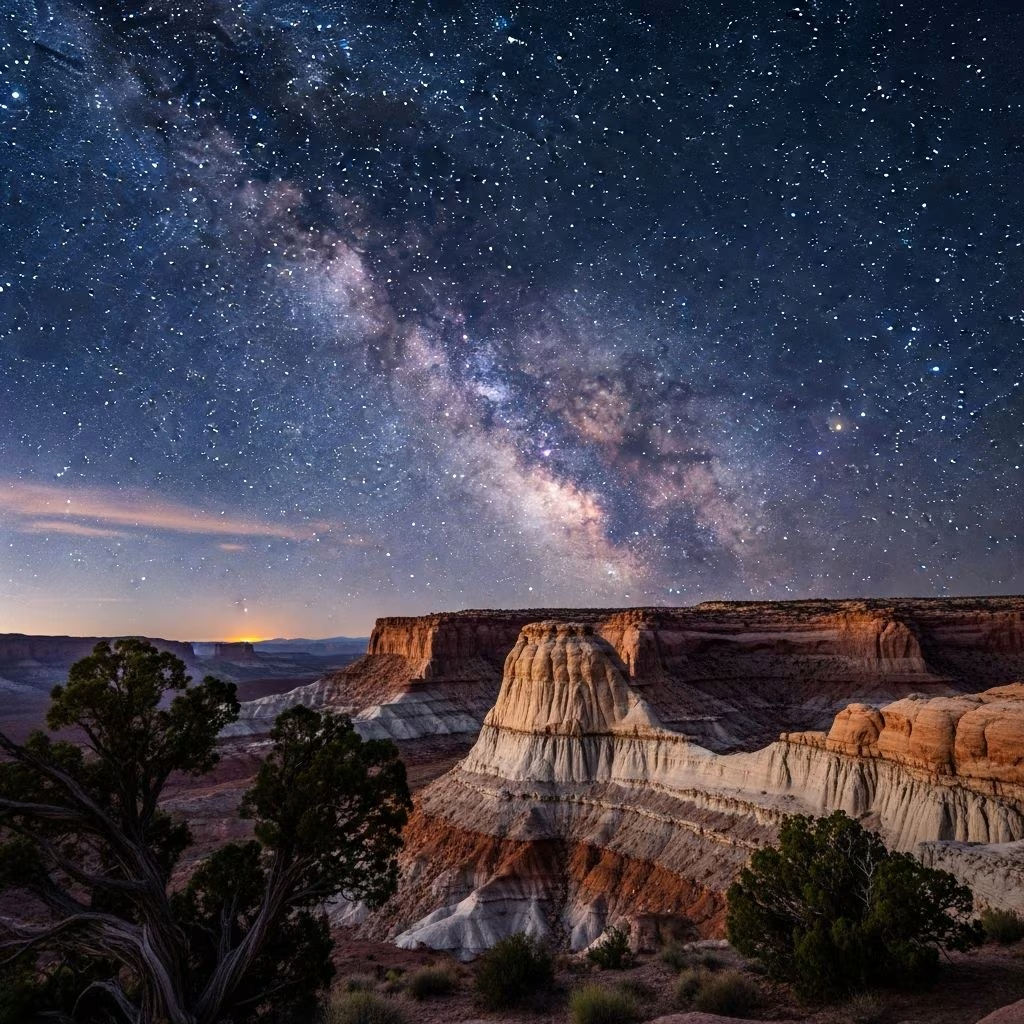
Capitol Reef National Park stands out as one of the premier locations worldwide for observing the night sky in its natural splendor. Designated as a Gold-tier International Dark Sky Park in 2015 by the International Dark-Sky Association, this Utah gem offers exceptionally low light pollution, allowing visitors to witness stars, constellations, and the Milky Way with remarkable clarity.
The park’s remote position in southern Utah, far from urban glow, creates optimal conditions for astronomy lovers. Utah boasts the world’s highest concentration of International Dark Sky Parks and Places, with 21 such sites, yet Capitol Reef’s vast expanse and minimal artificial lighting set it apart. Dry desert air enhances visibility, making celestial bodies appear sharper and brighter than in more humid regions.
Unlike city skies obscured by light pollution, Capitol Reef preserves natural darkness essential for ecosystems and human well-being. The National Park Service emphasizes that dark skies support wildlife behaviors tied to lunar cycles and circadian rhythms, while human exposure to unfiltered starlight promotes mental restoration.
Stargazing thrives year-round, but strategic planning maximizes the experience. New moon phases provide the darkest conditions, as a full moon can wash out fainter stars—aim for visits around these times or after moonset.
Consult the park’s sky chart for forecasts on cloud cover, transparency, and seeing conditions to fine-tune your plans.
Diverse terrains within Capitol Reef provide varied vantage points, from accessible pullouts to remote backcountry sites. Many spots offer unobstructed 360-degree views, ideal for both casual observers and photographers.
| Region | Key Spots | Accessibility | Highlights |
|---|---|---|---|
| Fruita Area | Panorama Point, Danish Hill, Slickrock Divide, Fruita Campground Amphitheater | Easy parking, short walks | Proximity to visitor center; open skies |
| South (Waterpocket) District | Cedar Mesa Campground, Burr Trail Switchbacks Picnic Area, Halls Creek Overlook | Some rugged roads, primitive sites | Dramatic red rock silhouettes against stars |
| North (Cathedral) District | Cathedral Valley Campground | High-clearance vehicle recommended | Secluded, minimal light interference |
Panorama Point, just two miles west of the visitor center on State Route 24, serves as an entry-level favorite with paved access. For immersion, backcountry options like the end of the Scenic Drive or Capitol Reef Field Station in the southwest corner deliver solitude.
No advanced equipment is necessary; the naked eye reveals thousands of stars on clear nights. However, enhancements elevate the experience:
Arrive post-sunset, let eyes adapt 20-30 minutes, and scan methodically from horizon up. Lie back to trace the Milky Way’s arc or spot meteors during showers.
The park’s visitor center acts as a stargazing hub, offering resources since 2000 and partnering with the NPS Night Sky Team since 2010 for expert-led sessions. Programs include:
Check the park calendar for schedules; no reservations needed for most, but arrive early for popular events. These free programs educate on constellations, mythology, and light pollution impacts.
Maintaining Capitol Reef’s dark skies requires collective effort. Key guidelines:
These practices protect not just views but biodiversity—sea turtles, birds, and insects rely on natural light cues.
Astrophotographers capture iconic scenes of the Waterpocket Fold under starry vaults. Professional tours offer guided Milky Way portraits amid landscapes. Tips include long exposures (15-30 seconds), ISO 1600-3200, and stacking software for noise reduction.
Backcountry stargazing from mountaintop tents pairs cosmic wonders with rugged beauty, though weather vigilance is key—elevations vary, influencing clouds.
Entrance fees apply year-round; no reservations for stargazing, but campgrounds book up. Dress in layers, monitor forecasts, and note accessible parking at many sites. Combine with daytime hikes for full immersion in this geologic marvel.
Yes, viewing is free with park entry; programs are typically complimentary.
Core visible March-November under new moon skies.
No, naked-eye viewing suffices; binoculars enhance it.
Ranger-led events and private astrophotography tours available.
Gold-tier rating places it among the darkest, rivaling top western U.S. sites.
Beyond spectacle, stargazing fosters mindfulness. Studies link dark sky exposure to reduced stress and improved sleep patterns, countering urban light’s disruptions. In Capitol Reef, the sensory shift from day’s reds to night’s infinities recharges the spirit.
For families, it sparks curiosity—children trace Orion or count Perseids, forging lifelong astronomy bonds. Solo visitors find meditative peace amid silence broken only by coyote howls.
