

 Travel Essentials
 Travel Essentials

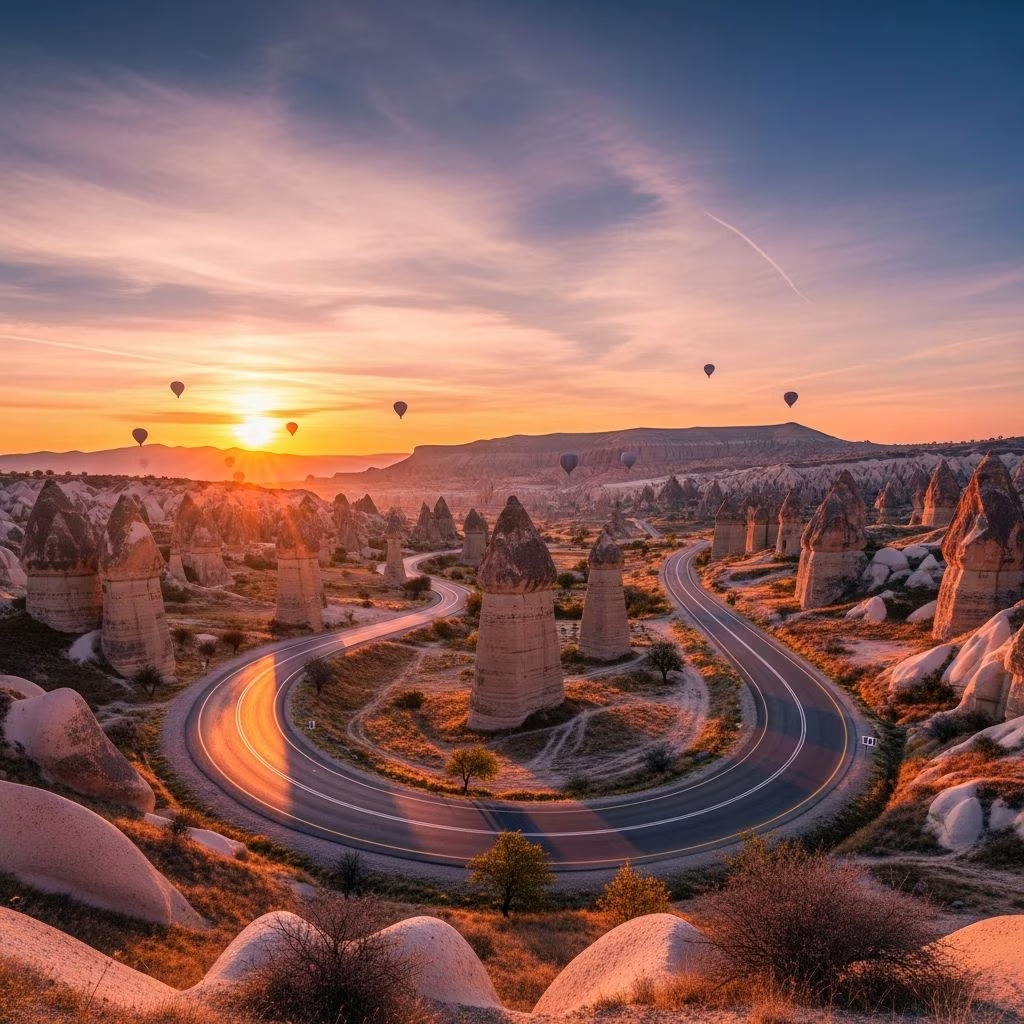
Explore Cappadocia's magical terrain by car with comprehensive driving routes, essential tips, and must-visit destinations across Turkey's most enchanting region.
 Travel Essentials
Cappadocia represents one of Turkey’s most extraordinary destinations, featuring otherworldly volcanic rock formations, ancient cave dwellings, and a landscape that seems plucked from fantasy. Exploring this region by private vehicle offers unparalleled flexibility and the opportunity to discover hidden gems beyond conventional tourist circuits. Rather than relying on organized bus tours with rigid schedules, self-driving through Cappadocia allows travelers to dictate their own pace, linger at breathtaking vistas, and access remote valleys that showcase the region’s authentic character.
Cappadocia spans central Turkey across portions of Nevşehir, Kayseri, Niğde, and Aksaray provinces. The region’s distinctive topography resulted from millions of years of volcanic activity and erosion, creating a landscape unlike anywhere else on Earth. The iconic cone-shaped rock spires, locally called “fairy chimneys,” dot hillsides across multiple valleys. Understanding the general geographic distribution helps travelers plan efficient driving routes that minimize backtracking while maximizing exploration time.
The central hub for most travelers is Göreme, positioned strategically to access major attractions within 30 to 60-minute driving distances. From Göreme, visitors can fan out toward different valleys, ancient settlements, and natural wonders, each offering distinct perspectives on Cappadocia’s geological and cultural heritage.
Before embarking on your driving adventure, ensuring your rental vehicle suits Cappadocia’s varied road conditions is essential. While main highways connecting major towns are well-maintained and paved, many routes to scenic viewpoints and remote valleys involve unpaved dirt tracks that demand appropriate vehicle capabilities.
The northern driving loop encompasses Cappadocia’s most recognizable formations and historically significant sites. This route typically requires four to five hours of driving spread across one to two days, allowing ample time for stops, photography, and exploration.
Begin in Göreme, home to the UNESCO-listed Open-Air Museum featuring rock-cut churches decorated with Byzantine frescoes. From here, drive toward Uçhisar Castle, perched atop the region’s highest point. The 20-minute journey rewards visitors with panoramic vistas encompassing the entire Cappadocia landscape. Time your arrival around sunset when golden light transforms the formations into glowing masterpieces.
Continue north toward Avanos, a pottery-producing town along the Kızılırmak River. Local artisans maintain centuries-old ceramic techniques, and visitors can observe craftspeople working at traditional wheels. The town’s riverside location provides respite from driving, with cafes offering refreshment while overlooking the crimson-hued water.
From Avanos, venture toward the Paşabagı Valley, where towering rock pillars create a surreal landscape. These formations, sometimes called “Monks’ Valley,” hosted Christian monastic communities during the Byzantine period. Walking trails wind between fairy chimneys, providing opportunities for photography and contemplation.
Complete the northern circuit by visiting the Zelve Open-Air Museum, an abandoned settlement carved entirely into volcanic rock. The site contains residential chambers, churches, and monastic spaces spanning multiple centuries. Plan your visit during early morning or late afternoon when sunlight dramatizes the rock formations and crowds diminish.
East of Göreme lies a spectacular driving route through remote valleys featuring some of Cappadocia’s most pristine natural scenery. This less-traveled circuit reveals authentic village life and minimizes tourist density compared to northern routes.
The Ihlara Valley represents the centerpiece of this eastern exploration. Carved by the Melendiz River over millennia, this 13-kilometer gorge contains tree-lined riverbanks, steep canyon walls, and numerous Byzantine cave churches. While the valley itself demands hiking to explore fully, the surrounding ridges accessible by vehicle offer commanding views of the entire chasm. Several established settlements—Ihlara, Belisirma, Yaprakhisar, and Selime—provide access points and parking facilities for valley exploration.
The Rose Valley, positioned near Çavuşin Village, offers another driving destination combining natural beauty with historical significance. Rock-cut houses integrated into the landscape demonstrate ancient construction ingenuity, while hiking trails lead past churches and monasteries carved into canyon walls. Local guides available at the valley entrance provide context about the area’s Byzantine heritage and monastic traditions.
Soğanlı Valley, located approximately 30 minutes south of Ürgüp, represents a genuine off-the-beaten-path discovery. This remote location contains nearly two dozen rock-cut churches, courtyard monasteries dating to the 10th and 11th centuries, and hundreds of pigeon houses carved into cliff faces. The valley’s relative isolation ensures a more contemplative experience compared to heavily promoted attractions.
Cappadocia’s underground cities represent engineering achievements spanning thousands of years. Multiple subterranean complexes exist throughout the region, with Özkonak, Derinkuyu, and Kaymaklı ranking among the most extensive and well-preserved examples.
These cities served various purposes throughout history, functioning as refuges during invasions, storage facilities for agricultural products, and permanent dwellings for significant populations. Some underground complexes descend 60 meters or more beneath the surface, containing ventilation shafts, carved chambers, and tunnel networks demonstrating sophisticated planning and construction.
Visiting underground cities requires descent through narrow stairways and low passages, demanding physical capability and comfort in confined spaces. Most facilities maintain cool temperatures year-round, providing refuge during hot summer months. Allow 45 to 90 minutes per site for thorough exploration, and consider limiting visits to one or two underground cities per day to prevent fatigue.
South-central Cappadocia offers a distinct character emphasizing viticulture, elevated viewpoints, and quieter village experiences. This route provides balance for travelers seeking less-crowded alternatives to heavily trafficked northern attractions.
Ürgüp serves as the gateway to southern Cappadocia, renowned for boutique cave hotels and local wine production. The town’s hillside location provides elevated perspectives of surrounding fairy chimneys. Temenni Hill, accessible by short drive from town center, offers 360-degree vistas spanning the entire region. Several local wineries welcome visitors for tastings and vineyard tours, combining cultural education with sensory experiences.
The Devrent Valley, sometimes called “Imagination Valley,” features naturally sculpted rock formations resembling animals and human figures. This geological curiosity provides excellent opportunities for creative photography and family engagement, as visitors often recognize different shapes and share imaginative interpretations.
Successfully navigating Cappadocia requires awareness of road conditions, local driving customs, and seasonal variables affecting travel safety and comfort.
Road Conditions and Weather: Main highways maintain reasonable condition throughout the year, though winter weather occasionally affects southern routes. Unpaved roads become treacherous following rain, with mud making traction problematic. Summer heat can cause asphalt deterioration and vehicle overheating on uphill climbs. Spring and autumn provide optimal driving conditions with moderate temperatures and stable weather patterns.
Driving Etiquette and Regulations: Turkish traffic rules require valid driver’s licenses and international driving permits for foreign nationals. Speed limits typically range from 50 kilometers per hour in urban areas to 90 kilometers per hour on regional roads. Traffic police conduct regular speed enforcement, and fines for violations are immediate and substantial. Seat belts are mandatory for all occupants, and mobile phone use while driving is prohibited.
Parking and Accommodation: Major attractions feature designated parking areas, though spaces fill quickly during peak tourist seasons. Most parking is complimentary at scenic viewpoints and museum sites. Overnight parking at hotels generally remains secure and supervised. Remote valley parking areas lack facilities, so plan accordingly with fuel, water, and provisions.
Emergency Services: Mobile coverage exists in populated areas but becomes unreliable in remote valleys. Pharmacy services and medical facilities concentrate in Göreme, Ürgüp, and Avanos. Carry basic first aid supplies and maintain contact information for your vehicle rental company and embassy.
Several strategies enhance the self-driving experience in Cappadocia beyond simply reaching destinations.
Wake early to access attractions before crowds arrive. Sunrise at Göreme or Uçhisar reveals the landscape in soft, diffused light favored by photographers. Morning hours also ensure parking availability at popular sites.
Schedule sunset viewings at strategically positioned locations. Zelve, Uçhisar Castle, and Rose Valley transitions transform dramatically as afternoon light intensifies, creating photographic opportunities unavailable during midday hours.
Incorporate unplanned stops and detours. Cappadocia’s visual density means scenic discoveries appear constantly along driving routes. Pulling over at seemingly random viewpoints often reveals unexpected perspectives or local activities worth observing.
Engage with local communities respectfully. Small villages welcome visitors who demonstrate genuine interest in local culture, craftsmanship, and traditions. Purchasing pottery directly from Avanos artisans or sampling regional products at family-run establishments provides authentic cultural exchange while supporting local economies.
Two-Day Driving Route: Day one covers northern attractions including Göreme Open-Air Museum, Uçhisar Castle, Avanos pottery studios, and Paşabagı Valley. Day two explores Zelve Open-Air Museum and either Devrent Valley or underground cities depending on interests.
Three-Day Driving Route: Add eastern circuit elements, incorporating Ihlara Valley rim views, Rose Valley, and Soğanlı Valley to the two-day itinerary. This expanded timeline allows leisurely exploration and accommodation for hiking expeditions within valleys.
Four-Plus Day Driving Route: Comprehensive explorations include northern, eastern, and southern circuits with time for underground city visits, wine country experiences, and multiple valley explorations. Extended stays enable spontaneous discoveries and deeper cultural engagement.
Spring (March-May): Moderate temperatures and wildflower blooms create ideal conditions. Occasional spring storms may briefly affect unpaved roads.
Summer (June-August): Peak tourist season brings crowds and intense heat exceeding 35°C. Early morning and late afternoon driving becomes preferable to midday exploration.
Autumn (September-November): Comfortable temperatures and reduced crowds make this an excellent driving season. Harvest activities in wine country add cultural richness.
Winter (December-February): Snow occasionally affects southern routes, and freezing temperatures create hazardous driving conditions. Northern attractions remain generally accessible, though fewer tourists mean quieter experiences.
