

 Travel Essentials
 Travel Essentials

Explore Cappadocia's iconic fairy chimneys: their geological origins, rich history of human habitation, UNESCO status, and top activities like balloon rides and cave stays.
 Travel Essentials
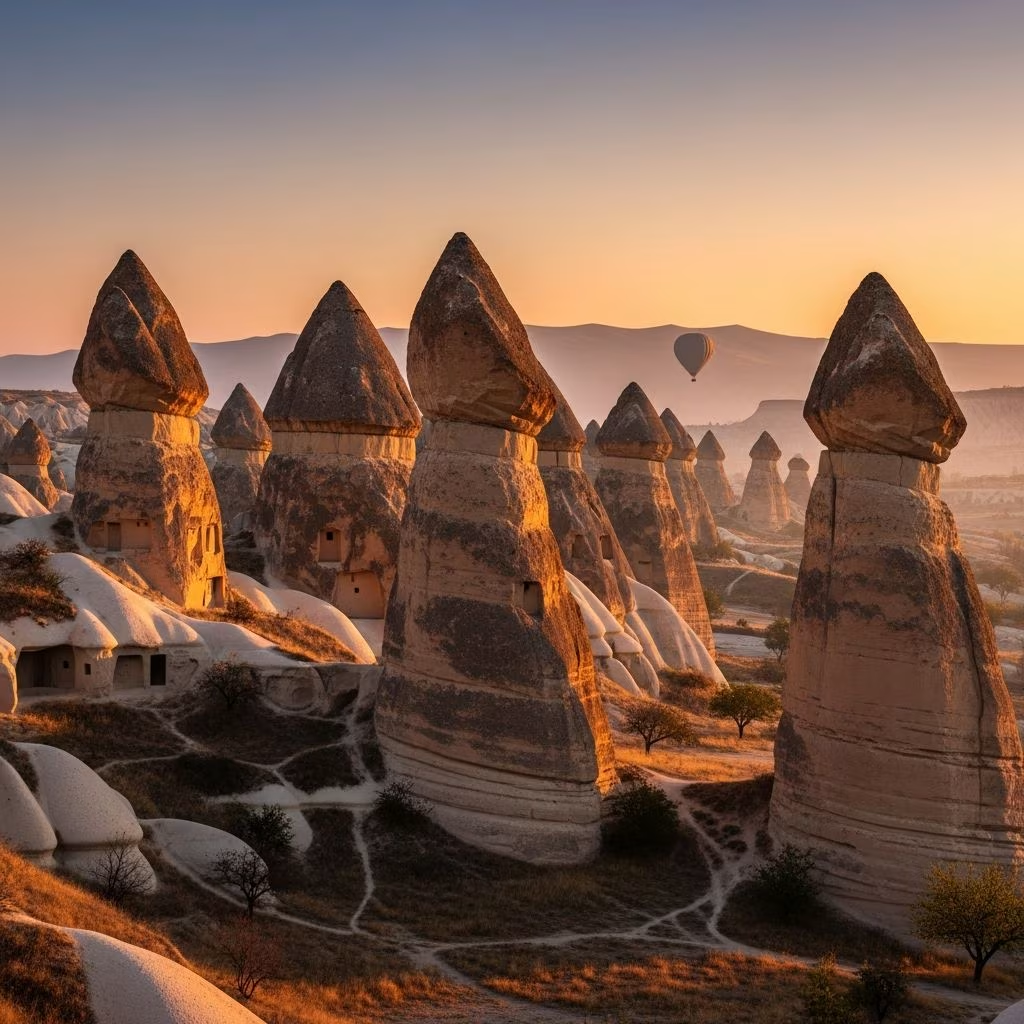
Cappadocia, nestled in central Turkey’s Anatolian plateau, captivates visitors with its otherworldly landscape dominated by towering **fairy chimneys**—natural rock spires that resemble whimsical structures from a fantasy realm. These formations, reaching heights of up to 130 feet, result from millions of years of volcanic activity and relentless erosion, creating a surreal environment that has drawn humans for millennia.
The story of Cappadocia’s fairy chimneys begins eons ago with massive volcanic eruptions that blanketed the region in ash, which compacted into tuff, a soft, porous rock. Overlying layers of denser basalt formed protective caps as wind, rain, and temperature fluctuations sculpted the landscape. Softer tuff eroded faster, leaving behind slender pillars topped by mushroom-like basalt hats—a process that defines these **hoodoos**, the geological term for such spires.
Located primarily in Göreme National Park at coordinates approximately 38.66°N, 34.82°E, thousands of these chimneys dot valleys like Love Valley, painting a scene that shifts hues from earthy tones by day to ethereal glows at sunset and under moonlight. UNESCO recognizes Göreme National Park and Cappadocia’s rock sites as a World Heritage Site since 1985, praising the area’s vast cave complexes as one of the world’s largest.
While nature laid the foundation, humans transformed Cappadocia into a testament to resilience and creativity. As early as 1800–1200 B.C., the Hittites tunneled into the soft rock for shelter, expanding networks that later served Romans, Byzantines, and others fleeing invasions along the ancient Silk Road.
Early Christians, escaping Roman persecution, hollowed out churches, monasteries, and homes within the chimneys and valleys. Soot-marked walls from ancient kitchens and vibrant frescoes in sites like the Dark Church reveal Byzantine artistry preserved in the cool, stable rock interiors.
Beneath the surface lie sprawling underground cities, exemplifying ancient engineering. Derinkuyu, rediscovered in 1963 during a home renovation, plunges 85 meters across 18 levels, accommodating up to 20,000 people with living quarters, wineries, wells, and defensive boulders to seal passages.
These networks, initially Hittite but expanded by later groups, allowed communities to thrive aboveground in peace and retreat below during threats.
Cappadocia’s landscape inspired unique spiritual practices. In the 6th century, Stylite monks perched atop natural pillars for ascetic isolation, leveraging the existing fairy chimneys as divine platforms for prayer and contemplation. This tradition blended human devotion with the region’s dramatic geology.
Post-1960s, Cappadocia evolved from hidden refuge to global destination. The 1963 Derinkuyu find sparked interest, leading to UNESCO protection and boutique transformations. Today, many chimneys host cave hotels with modern comforts, blending luxury with history—guests sleep in rooms once hewn by hand.
Cappadocia offers immersive experiences amid its spires:
| Activity | Description | Best Time |
|---|---|---|
| Hot Air Ballooning | Float over valleys at dawn for panoramic views of chimneys glowing in sunrise. | Spring/Fall |
| Hiking Trails | Explore Love Valley or Rose Valley on foot, spotting carved facades. | Anytime |
| Cave Hotel Stay | Luxuriate in restored troglodyte suites with terraces. | Year-round |
| Underground Tours | Descend into Derinkuyu or Kaymakli for a glimpse of ancient life. | Morning |
| ATV/Jeep Safaris | Adventure through rugged terrains and hidden churches. | Afternoon |
Hot air ballooning stands out, with hundreds of balloons dotting the sky daily, offering a bird’s-eye perspective of the chimneys’ scale and the park’s lunar-like expanse.
To make the most of a visit:
Tourism surges demand sustainable practices. UNESCO’s designation aids conservation, but visitors must minimize impact—opt for eco-hotels and low-emission transport. The fairy chimneys, millions of years in creation, remind us of nature’s fragility and humanity’s harmonious adaptations.
Volcanic ash turned to tuff, capped by basalt, eroded over millions of years by wind and water into tall spires.
Yes, designated areas like Derinkuyu are structurally reinforced and professionally guided.
Absolutely—many are converted into boutique cave hotels with amenities.
Yes, primarily flown in calm mornings; operators monitor conditions closely.
Some date to Hittite times (1800 B.C.), with Byzantine churches from 4th–12th centuries.
From geological spectacle to historical sanctuary, Cappadocia’s fairy chimneys embody timeless allure. Whether hiking moonlit trails, descending ancient depths, or soaring above at dawn, this Turkish gem offers unparalleled immersion in a landscape where myth meets reality.
