

 Travel Essentials
 Travel Essentials

Explore the sargassum seaweed phenomenon overwhelming Caribbean beaches, affecting tourism, health, wildlife, and economies, with insights on causes and solutions.
 Travel Essentials
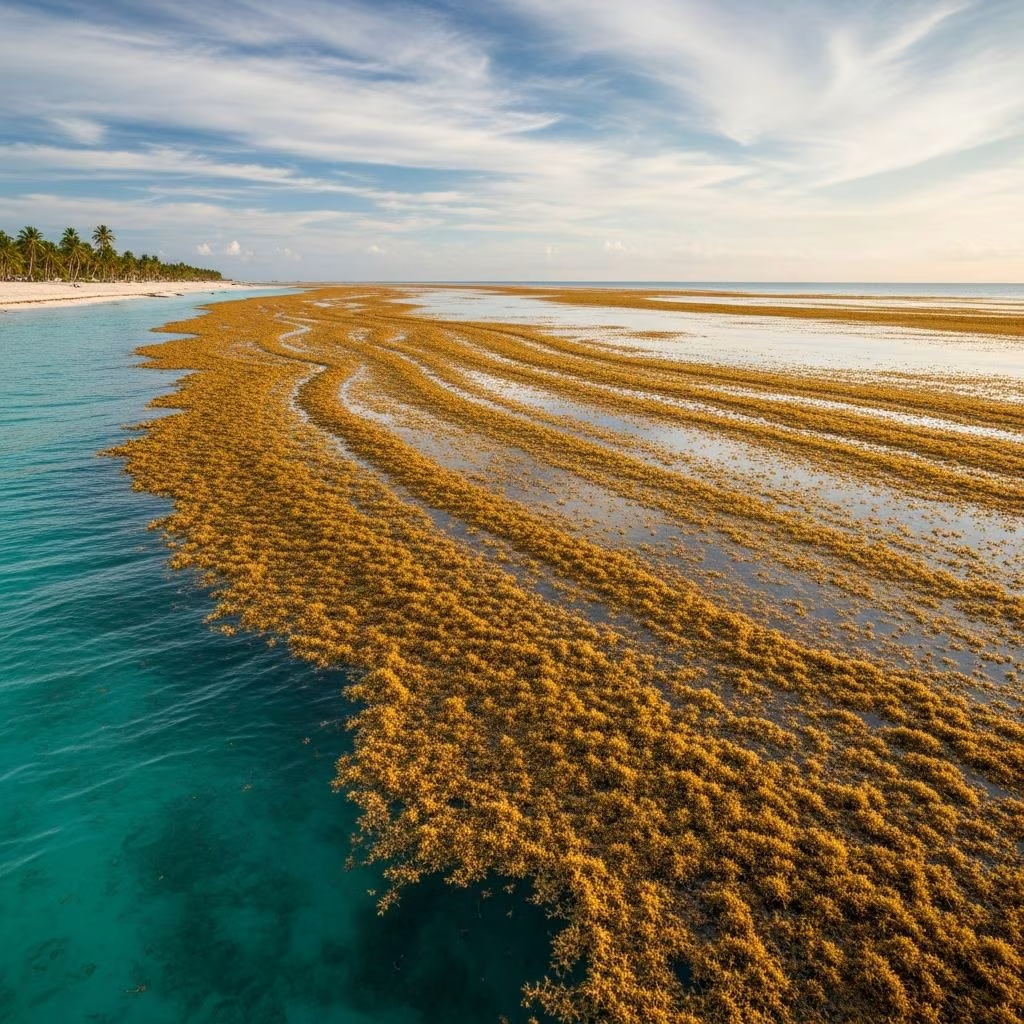
The Caribbean’s pristine beaches face an escalating environmental challenge from massive sargassum seaweed influxes, disrupting tourism, ecosystems, and public health across the region.
Sargassum is a type of brown macroalgae that naturally forms floating mats in tropical ocean waters, serving as vital habitats for marine species like turtles, fish, and crabs. These pelagic ecosystems drift with currents, providing nurseries and shelter. However, recent years have seen unprecedented blooms forming the ‘Great Atlantic Sargassum Belt,’ stretching thousands of kilometers from West Africa to the Gulf of Mexico.
Normally beneficial at sea, sargassum turns problematic when winds and currents push vast quantities ashore. Blooms have grown exponentially since 2011, with peaks smashing records—such as 38 million metric tons in a single month, far exceeding prior highs.
Several interconnected factors fuel these massive proliferations. Warming sea surface temperatures from climate change accelerate growth rates, creating ideal conditions for rapid multiplication.
Nutrient pollution plays a starring role: agricultural fertilizers, sewage, and urban runoff rich in nitrogen and phosphorus pour into the Atlantic from rivers like the Amazon and Mississippi, supercharging algal growth far offshore.
Shifts in wind patterns and ocean currents, influenced by phenomena like El Niño, transport these blooms toward Caribbean shores. Saharan dust may also contribute nutrients, though research continues.
Once ashore, decomposing sargassum unleashes havoc. Thick mats smother beaches, blocking sunlight to seagrasses and corals, leading to oxygen depletion and dead zones.
Marine life suffers: fish and shrimp struggle in low-oxygen waters, while sea turtles face entangled hatchlings and disrupted nesting. Loggerhead turtle critical habitats in the U.S. South Atlantic and Gulf are particularly vulnerable during inundation events.
Beach erosion accelerates as heavy piles grind away sand, and mangroves/seagrasses fail to regenerate under the weight. Toxic leachates introduce heavy metals, altering food webs and benthic communities.
| Impacted Ecosystem | Key Effects |
|---|---|
| Coral Reefs | Light blockage, bleaching acceleration |
| Seagrasses | Oxygen depletion, seedling smothering |
| Sea Turtles | Nesting disruption, embryo lethality |
| Fish/Shrimp | Habitat loss, mass die-offs |
As sargassum rots, it emits hydrogen sulfide (rotten egg smell) and ammonia gases, peaking 48 hours post-landing. Exposure triggers respiratory issues, skin rashes, eye irritation, and neurological symptoms like headaches or confusion.
Studies document cases where prolonged contact led to breathing difficulties, nausea, and even school closures, as in Martinique. Vulnerable groups—children, elderly, asthmatics—face heightened risks. While not lethal in typical exposures, cumulative effects burden public health systems.
Tourism, fueling up to 70% of GDP in many islands, bears the brunt. Foul odors, murky waters, and buried beaches deter visitors, slashing arrivals and bookings.
Cleanup costs soar: Quintana Roo, Mexico, spends $1.1 million per kilometer annually. U.S. territories like Puerto Rico and USVI face multi-million-dollar losses, with Florida’s Atlantic coast at risk of billions.
Fisheries falter too—nets clog, gear damages, and fish flee affected zones. Hotels report cancellations, layoffs, and revenue drops, amplifying post-COVID recovery struggles.
Blooms peak May-October, aligning with hurricane season, intensifying impacts. Worst-hit: Puerto Rico, Jamaica, Bahamas, Mexico’s Riviera Maya, Barbados, and Lesser Antilles.
Western/central Caribbean sees most severity due to belt trajectories. 2023 data showed 200,000 tons battering key sites, with 2025 trends suggesting longer, earlier seasons.
Advanced satellite imagery tracks the belt’s extent, density, and trajectory. Agencies like NOAA provide forecasts, helping destinations prepare.
Apps and websites aggregate data for real-time updates—travelers check beach cams and advisories before booking. Community surveys reveal perceptions: tourism tops concerns, followed by cleanup efficacy.
Strategies evolve from reactive to proactive:
Mexico invests heavily in fleets; Barbados explores biochar. Challenges persist—logistics, costs, methane emissions from landfills.
Projections indicate worsening with unchecked warming and pollution. Integrated approaches needed: upstream nutrient controls, resilient tourism diversification, sargassum tech innovation.
Governments allocate funds—France pledged millions for research. International forums urge Amazon basin regulations to curb runoff.
What does sargassum smell like?
Foul, like rotten eggs from hydrogen sulfide during decay.
Is sargassum dangerous to touch?
Can cause skin/eye irritation; avoid direct contact, rinse promptly.
How to check bloom status before travel?
Use NOAA Sargassum Watch, local tourism sites, satellite apps.
Does it ruin all beaches year-round?
Seasonal (summer-fall); many areas clear quickly with efforts.
Can sargassum be good for anything?
Yes—compost, animal feed, biofuels when processed safely.
Opt for windward beaches less prone to influxes. Inland adventures, catamaran tours, or northern/eastern islands often evade worst piles. Support eco-initiatives funding cleanups. With planning, the Caribbean’s allure endures amid this challenge.
