

 Travel Essentials
 Travel Essentials

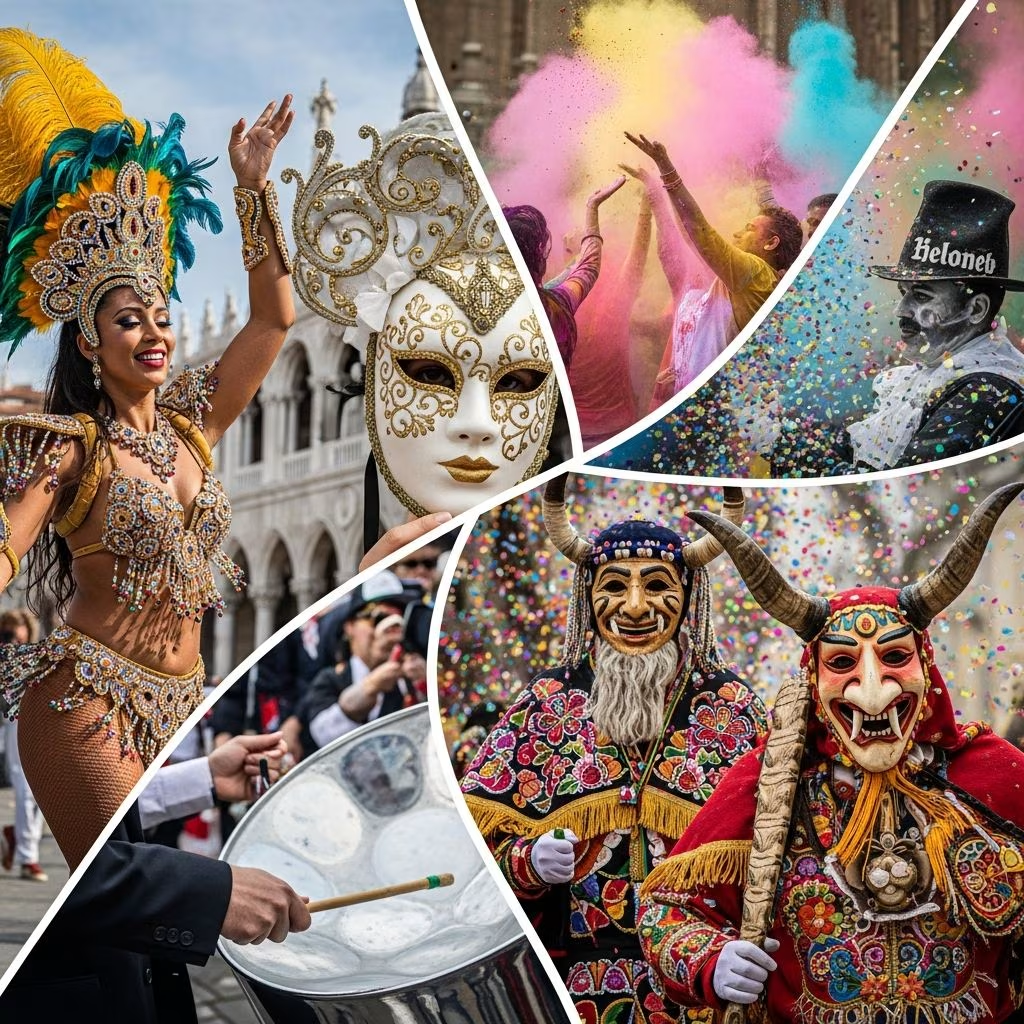
Explore how different regions celebrate carnival with unique traditions, from Brazilian samba to Venetian masquerades, showcasing cultural diversity.
 Travel Essentials
Carnival represents one of humanity’s most exuberant expressions of cultural celebration, bringing millions of people into the streets across multiple continents to commemorate pre-Lenten traditions through music, dance, and artistic expression. This festival phenomenon transcends geographical boundaries, with over 50 countries participating in some form of carnival observance, each adding its own distinct cultural flavor to the festivities. Whether through elaborate parades, traditional costumes, or rhythmic performances, carnival celebrations demonstrate humanity’s universal desire for collective joy and community engagement.
Carnival emerged as a pre-Lenten celebration tied to the Christian calendar, occurring in the weeks before Ash Wednesday when believers traditionally begin their Lenten fasting period. The festival’s historical roots trace back centuries, representing a time when social norms were temporarily suspended and people from all walks of life could participate equally in celebrations. This democratizing aspect of carnival remains central to its modern iterations, though the specific customs and traditions have evolved to reflect local cultural values and historical circumstances.
The festival combines multiple entertainment forms into cohesive public spectacles. Public celebrations typically include parades, street parties, musical performances, costume displays, and various interactive entertainments that engage spectators and participants alike. Each region has adapted these core elements to showcase its unique heritage, creating a diverse tapestry of carnival expressions worldwide.
Rio de Janeiro hosts the world’s largest carnival celebration, drawing approximately 5 million attendees and involving around 200 million people when considering broader participation across the region. The event’s origins trace back to the early 1700s, making it one of the longest-established carnival traditions globally. The Rio Carnival distinguishes itself through its massive samba school competitions, where hundreds of organized samba schools and street bands, known as blocos, parade through the city streets with elaborate choreography and contemporary samba music.
The Sambadrome represents the architectural heart of Rio’s celebration—a purpose-built parade avenue surrounded by grandstands specifically designed for samba school competitions. This infrastructure allows multiple samba schools to parade simultaneously in direct rivalry with one another, creating an atmosphere of organized chaos and unbridled passion. The floats, often reaching 20 meters in height, feature thousands of performers adorned in sequined costumes, feathered headdresses, and intricate designs that showcase months of preparation and artistic craftsmanship. Daily street parades draw approximately 2 million people, transforming the city into a living celebration of Brazilian rhythm and cultural pride.
While Rio dominates international attention, Brazil’s northeastern coast offers equally vibrant alternatives. Recife and Olinda celebrate carnival with frevo, a distinctive frenetic and fast-paced musical style featuring rapid percussion and energetic dancing that differs substantially from Rio’s samba tradition. These celebrations maintain stronger connections to local cultural practices, offering visitors a more intimate carnival experience rooted in regional heritage rather than the commercialized spectacle of Rio’s internationally recognized festival.
Trinidad and Tobago hosts the Caribbean’s most prominent carnival celebration, recognized as the largest in the region. Unlike Rio’s concentrated celebration, Trinidad’s carnival extends over several months, building to culminating festivities occurring three days before Ash Wednesday. The extended celebration structure reflects the island’s unique cultural approach, allowing gradual community participation rather than a compressed intensive experience. The final carnival days feature three distinct celebrations: Dimanche Gras, J’ouvert, and Mas (masquerade), each offering different atmospheres and participation levels.
Trinidad’s carnival showcases distinctive musical genres including soca, calypso, rapso, and the more recently popularized chutney and chutney soca. The celebration combines elaborate costumes, energetic dance performances, musical competitions, and street festivities centered on rum consumption and extensive partying. Tobago’s carnival culminates on a smaller scale on Monday and Tuesday, though the island established an inaugural standalone carnival celebration in October 2022, demonstrating the evolving nature of Caribbean carnival traditions.
The Carnival of Venice, known as Carnevale di Venezia, represents Europe’s most iconic and elaborate carnival celebration, renowned for its sophistication and historical continuity. The festival is famous for revelers wearing traditional 18th-century masks and costumes, with mask-wearing traditions dating back to the 13th century when people would disguise themselves to temporarily transcend social class boundaries and engage in social activities normally prohibited by their station. This historical practice of using masks for social liberation remains central to Venice’s modern carnival identity, offering participants psychological freedom through anonymous costume participation.
Venice’s carnival transforms the entire city into a magical masquerade where festival-goers don elaborate 18th-century costumes complete with vibrant masks and velvet cloaks. The celebration emphasizes artistic elegance and historical authenticity over sheer scale, attracting connoisseurs of refined carnival experiences who appreciate the artistic craftsmanship and cultural depth the festival embodies. Many participants create or purchase handmade Venetian masks, supporting local artisans and maintaining centuries-old mask-making traditions.
Beyond Venice, Italy hosts several significant carnival celebrations. Carnevale di Viareggio, held annually in this Tuscan city for approximately one month before Lenten observance, attracts millions of spectators to view amazing parades featuring incredible floats. This celebration emphasizes parade spectacle and artistic float design, creating a distinct Italian carnival experience characterized by creative engineering and visual presentation.
The Kölner Karneval, or Cologne Carnival, attracts over a million visitors annually, establishing itself as one of the world’s most important carnival celebrations. Occurring the week before Shrove Tuesday, the festival features elaborate fancy dress parades throughout the city center. The festivities emphasize singing, dancing, and drinking traditions, with street parades led by the Dreigestirn—a symbolic group of three individuals dressed as a prince, farmer, and virgin—representing traditional Germanic carnival characters. This parade leadership structure has maintained continuity across centuries, anchoring modern celebrations to historical carnival traditions.
The Nice Carnival in France represents one of the world’s major carnival events, operating as the largest carnival celebration in France and attracting millions of international visitors. The festival runs for two weeks prior to Ash Wednesday and features 11 different parades with thousands of dancers and musicians. Each year, organizing committees select a different thematic focus, with artisans crafting 18 elaborate floats and miniature representations using traditional paper-mâché construction methods. These parades occur at all hours of the day and night, maintaining continuous celebratory momentum throughout the festival period. The renowned Flower Parade constitutes the celebration’s signature event, featuring over 100,000 flowers thrown from floats to enthusiastic crowds lining the Promenade des Anglais—a tradition that has become synonymous with Nice’s carnival identity.
New Orleans represents North America’s primary carnival epicenter, hosting Mardi Gras celebrations that rival Rio de Janeiro in terms of revelry, scale, and international recognition. The city’s carnival traditions, deeply rooted in French colonial heritage combined with African American, Caribbean, and Native American cultural influences, have created a uniquely American festive expression. New Orleans’ celebration emphasizes street parties, musical performances featuring jazz, blues, and funk traditions, and the famous krewe parades—organized social groups that construct elaborate floats and throw beads, doubloons, and trinkets to parade spectators.
The New Orleans celebration maintains distinct characteristics separating it from its South American counterparts. While Rio’s carnival centers on organized samba school competitions and choreographed performances, New Orleans’ Mardi Gras prioritizes spontaneous street celebration, informal neighborhood parties, and the participatory tradition of spectators collecting thrown objects. This emphasis on accessible, inclusive celebration regardless of social status or organizational affiliation reflects distinctly American democratic carnival principles.
| Celebration | Primary Location | Attendance | Musical Tradition | Distinctive Feature |
|---|---|---|---|---|
| Rio Carnival | Rio de Janeiro, Brazil | 5 million+ annually | Samba | Sambadrome competitions |
| Venice Carnevale | Venice, Italy | Millions annually | Classical/ambient | 18th-century masks |
| Nice Carnival | Nice, France | Millions annually | Contemporary | Flower Parade tradition |
| Cologne Karneval | Cologne, Germany | 1+ million annually | Traditional German | Dreigestirn leadership |
| New Orleans Mardi Gras | New Orleans, Louisiana | Millions annually | Jazz, blues, funk | Krewe parades |
| Trinidad Carnival | Trinidad and Tobago | Millions annually | Soca, calypso | Multi-month celebration |
Despite geographical separation and cultural differences, carnival celebrations worldwide share fundamental components. Costume participation represents a universal carnival element, whether manifesting through Rio’s elaborate feathered headdresses, Venice’s ornamental masks, or New Orleans’ colorful streetwear. Music and rhythmic performance similarly transcend cultural boundaries, with each celebration featuring distinctive musical traditions that define regional identity while maintaining the core function of creating celebratory communal atmosphere.
Parade structures constitute another universal carnival characteristic, from Rio’s organized samba school processions through the Sambadrome to Venice’s informal masked processions through historic piazzas. Street parties and public gathering spaces provide essential carnival infrastructure in every celebration, creating physical environments where community members congregate for collective enjoyment. The temporary suspension of normal social hierarchies—originally enabled through mask-wearing in Venice and maintained through inclusive participation policies in modern celebrations—persists as a fundamental carnival principle enabling cross-social interaction.
Carnival celebrations traditionally occur during the pre-Lenten period, typically several weeks before Ash Wednesday, which shifts annually based on the Christian calendar. Most carnival festivities culminate in the three days immediately preceding Ash Wednesday, though extended celebrations may span several weeks or months leading to this date.
Carnival originated as a pre-Lenten celebration allowing people to participate in festivities and social activities normally restricted by religious or social class boundaries before entering the fasting period of Lent. This tradition democratized social interaction, temporarily erasing class distinctions through costume and anonymous participation.
Carnival is celebrated in over 50 countries worldwide, demonstrating the festival’s global cultural penetration and adaptation across diverse societies. Each country has developed distinctive carnival traditions reflecting local history, music, and cultural values.
Common carnival activities include elaborate parades featuring decorated floats and performers, costume wearing, live musical performances, street dancing, themed parties, and community gatherings. Many celebrations incorporate traditional beverages, particularly alcoholic drinks, and feature competitive elements such as parade judging or musical performance contests.
Major carnival celebrations generate significant economic activity through tourism, hospitality, entertainment, costume and float production, and merchandise sales. Cities hosting prominent carnivals experience substantial temporary population increases, boosting revenue for hotels, restaurants, retailers, and entertainment venues.
Carnival celebrations worldwide offer visitors diverse festival experiences reflecting cultural heritage and contemporary artistic expression. Rio’s carnival provides an introduction to Brazilian samba culture at massive scale, appropriate for those seeking intense, visually spectacular celebrations. Venice’s carnival appeals to those preferring refined, historically-conscious festivities emphasizing artistic craftsmanship and elegant costume traditions. New Orleans’ Mardi Gras accommodates visitors seeking accessible, street-level celebration emphasizing music and neighborhood culture. Nice’s carnival attracts those appreciating floral artistry and Mediterranean ambiance, while Trinidad’s extended celebration allows gradual cultural immersion in Caribbean musical traditions.
Attending global carnival celebrations requires advance planning for accommodation, tickets to organized events, and understanding regional celebration customs. Most celebrations welcome international visitors, though peak periods may result in overcrowding and elevated prices. Understanding each carnival’s unique traditions, costume requirements, and schedule facilitates more rewarding participation and cultural appreciation.
Carnival celebrations continue evolving as communities adapt traditional practices to contemporary circumstances while maintaining cultural continuity. Modern carnivals increasingly emphasize sustainability, cultural authenticity, and community participation alongside tourism infrastructure. As global travel increases, more individuals experience multiple carnival celebrations, contributing to cross-cultural exchange and potential innovation in festival traditions.
The enduring appeal of carnival celebrations reflects fundamental human desires for communal celebration, artistic expression, and temporary liberation from daily constraints. Whether through Brazil’s samba schools, Venice’s masked elegance, France’s floral pageantry, Germany’s traditional customs, or North America’s jazz-infused festivities, carnival remains a vital cultural institution connecting millions of people across geographical and cultural boundaries through shared celebration.
