

 Travel Essentials
 Travel Essentials

Discover proven techniques to pack everything you need for weekend getaways in a single carry-on bag without sacrificing comfort or style.
 Travel Essentials
Traveling with only a carry-on bag requires strategic planning and intentional decision-making. Whether you’re heading out for a long weekend or a brief business trip, understanding how to maximize limited luggage space can transform your travel experience. This comprehensive guide explores practical approaches to packing that eliminate unnecessary items while ensuring you have everything needed for a comfortable journey.
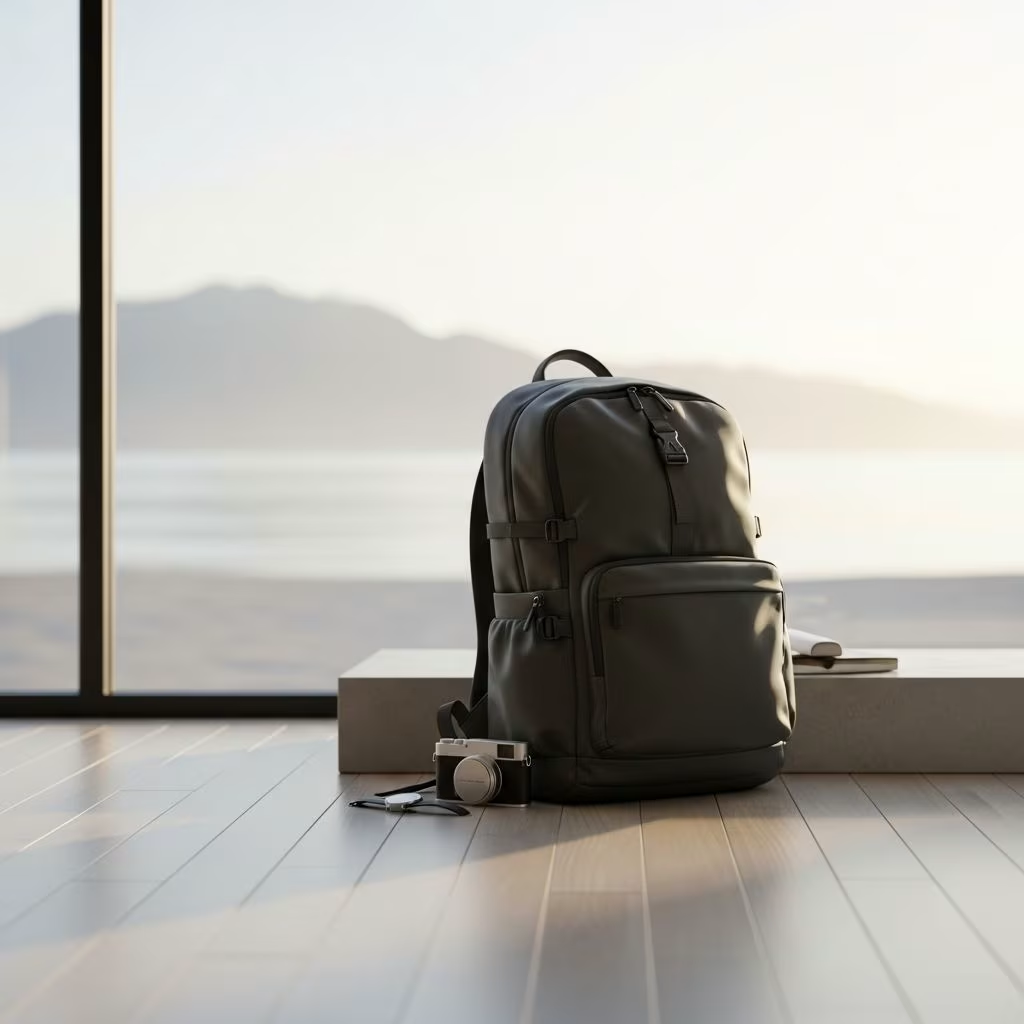
The foundation of successful carry-on travel begins with understanding your specific airline requirements and luggage dimensions. Different carriers impose varying restrictions on cabin baggage, and familiarizing yourself with these limits prevents last-minute complications at the airport. Beyond the standard carry-on dimensions, many airlines offer options for additional personal items, such as backpacks or cross-body bags, which can significantly expand your packing capacity.
When selecting your carry-on suitcase, prioritize models that maximize internal volume while adhering to airline specifications. Hard-sided cases often provide better protection for fragile items, while soft-sided luggage offers flexibility when trying to fit your bag into overhead compartments. Consider the weight distribution features, as a well-designed bag makes airport navigation considerably easier. Additionally, evaluate whether your chosen bag includes compartments for organization, compression straps to reduce volume, and a durable exterior that withstands frequent handling.
The cornerstone of efficient packing lies in constructing a cohesive wardrobe built around a unified color palette. This approach allows individual pieces to function across multiple outfit combinations, dramatically reducing the total number of items required. Rather than packing complete outfits, you’re assembling a collection of interchangeable components that work harmoniously together.
A practical methodology involves selecting three to four core tops that coordinate with two to three bottoms. This seemingly limited collection generates approximately nine distinct outfit combinations simply through strategic mixing and matching. The key is ensuring every top pairs seamlessly with every bottom, creating flexibility without redundancy.
Sample Wardrobe Framework:
Including one versatile dress that functions as both a casual day option and a dressier evening choice provides additional outfit variety without consuming significant luggage space. When selected thoughtfully, dresses can replace both a top and bottom in your packing equation, offering surprising efficiency.
The materials you choose directly impact both luggage volume and practicality during travel. Lightweight fabrics such as linen, cotton blends, and technical materials occupy less space while providing comfort in various climates. Linen specifically offers the advantage of appearing relatively unwrinkled despite compression, making it ideal for minimalist packing.
For travelers concerned about wearing the same garment multiple times within a short trip, quick-drying materials become essential. Technical fabrics designed for outdoor or athletic use often feature moisture-wicking properties that facilitate rapid drying, enabling laundering in hotel sinks or bathtubs. This capability extends your effective wardrobe beyond what the physical item count might suggest, as pieces can be refreshed overnight rather than requiring multiple variants.
Even in cooler destinations, prioritizing lightweight base layers that can be stacked rather than heavy single pieces reduces overall luggage weight and volume. Layering strategies allow temperature control without the bulk of traditional bulky garments.
Shoes represent one of the most challenging packing variables due to their bulk and weight. However, thoughtful shoe selection can cover all necessary occasions within a remarkably compact collection. The most efficient approach involves selecting three distinct styles that address different travel scenarios.
Essential Shoe Categories:
| Shoe Type | Primary Function | Versatility Factor | Packing Consideration |
|---|---|---|---|
| Comfortable Sneakers or Walking Shoes | Daytime exploration and casual activities | High – works with most casual outfits | Wear during travel to save luggage space |
| Flat Dress Shoes or Elegant Sandals | Semi-formal occasions and dinner outings | Medium – complements dressier attire | Choose collapsible or flexible styles when possible |
| Versatile Middle Ground Footwear | Can transition between casual and dressy settings | High – adaptable to multiple occasions | Select styles suitable for your destination climate |
A strategic approach involves wearing your bulkiest shoe option during travel, immediately freeing valuable luggage space. This practice not only reduces what you pack but also provides a seamless transition to your destination without the awkward process of changing shoes immediately upon arrival.
Packing cubes represent transformative tools for carry-on travel, providing multiple organizational and space-saving benefits. These lightweight fabric containers compress contents while maintaining separation, allowing systematic access to items without unpacking your entire bag.
An effective organizational strategy uses different cube sizes for distinct clothing categories:
Compression-enabled packing cubes can reduce enclosed volume by nearly fifty percent compared to loosely folded clothing, substantially increasing effective luggage capacity. This compression becomes particularly valuable when traveling to destinations requiring layering or varied outfit styles within confined space constraints.
Every item packed should ideally serve multiple functions, reducing total item count while maintaining versatility. This principle extends beyond clothing to encompass all travel necessities.
Multi-Functional Item Examples:
A versatile crossbody bag serves dual purposes as your travel companion and your primary day-to-day bag at your destination, eliminating the need to pack a separate purse. Similarly, a collapsible tote bag packed specifically for the return journey provides unexpected storage for souvenirs acquired during your trip, which passengers can use as their personal item on the flight home.
Before packing any items, create a detailed outline of your anticipated activities and occasions. This planning phase prevents packing inappropriate garments while identifying genuine needs versus emotional wants.
For weekend getaways, consider the following planning elements:
Writing your packing list several days before departure allows time to confirm that all items are clean, functional, and weather-appropriate. This advance preparation prevents panic-packing, which typically results in including numerous unnecessary items.
Liquids represent significant luggage volume consumers, making toiletry minimization a priority for carry-on travel. Strategic approaches to toiletry reduction include:
Minimizing liquids not only conserves luggage space but also simplifies security screening at airports, particularly when traveling internationally where liquid restrictions apply. A compact toiletries bag signals to security personnel that you’ve deliberately limited restricted items, potentially expediting the screening process.
Accessories provide visual interest and outfit variation with negligible space consumption. Strategic accessory selection multiplies outfit combinations without adding significant luggage volume.
Consider packing:
These minimal additions provide substantial visual transformation to repeated clothing pieces, creating the impression of a more extensive wardrobe than actually packed.
Rather than packing multiple heavy garments, adapt to climate variations through strategic layering with lightweight pieces. This approach maintains temperature control while minimizing bulk.
Effective layering combinations include:
For warmer destinations, prioritizing breathable, quick-drying materials prevents excessive perspiration while maintaining comfort. For cooler climates, focusing on versatile neutral layers that coordinate across your entire wardrobe provides flexibility without redundancy.
Your travel outfit represents strategic luggage savings, as whatever you wear on the plane doesn’t occupy interior space. Select your bulkiest or least flexible items—typically jeans, heavier shoes, or structured jackets—for wearing during travel.
This practice accomplishes multiple objectives simultaneously: it reduces luggage volume, ensures comfortable clothing for extended periods seated, and provides seamless transitions between locations without wardrobe adjustments. If arriving at a significantly warmer destination, pack easily accessible sandals at the top of your carry-on for convenient changing upon arrival.
Beyond clothing, organize all critical travel documents in a dedicated, easily accessible location within your carry-on. Essential documentation includes:
Maintaining organized documentation prevents frantic searching at security checkpoints and ensures compliance with travel requirements.
Most airlines permit an additional personal item beyond your carry-on bag. Strategic use of this allowance provides extra capacity for electronics, valuable items, or frequently accessed materials. Selecting a bag that compresses when empty but expands to accommodate contents—such as a structured tote or expandable backpack—maximizes this space advantage without consuming permanent luggage volume.
Before sealing your carry-on, review each item with critical evaluation: Does this piece coordinate with at least two other items in your bag? Can any item serve multiple purposes? Is this genuinely necessary or emotionally desired? This final verification prevents overpacking while confirming you’ve included everything essential for your journey.
