

 Travel Essentials
 Travel Essentials

Discover expert strategies for efficient carry-on packing, from organizational systems to smart gear selection that transforms your travel experience.
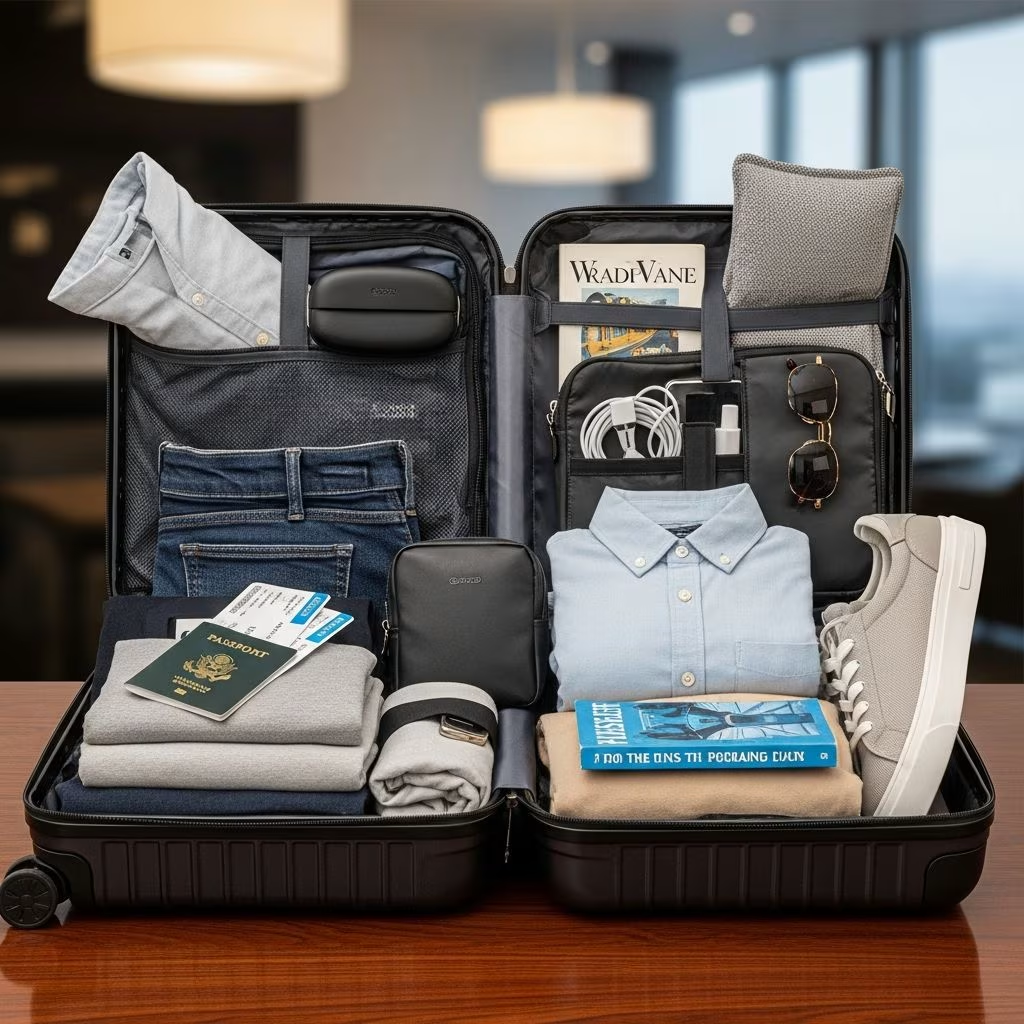 Travel Essentials
The ability to travel with only a carry-on bag represents the pinnacle of packing efficiency. Whether you’re embarking on a weekend getaway or a week-long business trip, mastering carry-on packing transforms your travel experience from stressful to streamlined. This comprehensive guide explores proven techniques, organizational systems, and strategic gear selection that enable you to pack smarter, not harder.
The first step in successful carry-on packing involves understanding your constraints. Most airlines allow carry-on dimensions of approximately 22 x 14 x 9 inches, with weight limits typically ranging from 25 to 40 pounds depending on the carrier. Rather than viewing these limitations as obstacles, savvy travelers recognize them as parameters that encourage intentional decision-making.
Before selecting any item for your carry-on, ask yourself three critical questions: Do I need this? Will I use this? Can I borrow or purchase this at my destination? This filtering process prevents impulse packing and ensures every item serves a distinct purpose. Strategic planning begins days before your departure, not hours. Creating destination-specific lists based on weather, activities, and cultural norms prevents both overpacking and the frustration of arriving unprepared.
Professional packers understand that different clothing items benefit from different organization methods. The traditional folding technique works exceptionally well for delicate garments, structured pieces, and items that wrinkle easily. Folding requires minimal preparation time and maintains the condition of formal wear or sensitive fabrics that might sustain creasing from alternative methods.
Rolling, by contrast, represents an ideal space-saving strategy for casual clothing categories including t-shirts, jeans, activewear, and casual shorts. This technique creates compact cylinders that fit efficiently into tight spaces while simultaneously preventing wrinkles in most standard fabrics. The physics of rolling compresses garments more effectively than stacking, making it particularly valuable for maximizing limited luggage volume.
Advanced packers employ a hybrid approach, combining folding for delicate items with rolling for everyday wear. Experimentation reveals the optimal combination for your personal travel style. Some travelers discover that rolling 80 percent of their wardrobe while folding formal pieces yields the best results. Others find that compartmentalized rolling within designated sections prevents unnecessary searching through their entire suitcase.
Packing cubes represent one of the most transformative innovations in travel organization. These lightweight fabric containers segment your luggage into logical zones, preventing the chaotic mixing of clean and worn items while simultaneously maximizing space efficiency. Compression cubes feature zipper mechanisms that reduce volume for bulky items like sweaters, jackets, and activewear.
A practical compartmentalization strategy involves dedicating specific cubes to clothing categories: one for tops, another for bottoms, a third for undergarments, and separate cubes for outerwear and accessories. This system enables rapid identification of required items without unpacking your entire suitcase upon arrival. Additionally, using compression cubes for dirty laundry during your trip maintains separation from clean clothing.
Beyond fabric cubes, specialized organizers serve distinct purposes. Tech organizers consolidate chargers, cords, adapters, and cables into a single accessible location. Toiletry organizers with multiple compartments accommodate liquids, serums, and creams while reducing the risk of leakage. Small vitamin organizers are particularly valuable for travelers requiring daily medications or supplements, eliminating the need to carry full-size bottles.
The TSA 3-1-1 rule governs liquid and gel transport in carry-on baggage: containers must be 3.4 ounces or smaller, all containers must fit within a single quart-sized clear bag, and each passenger is limited to one bag. Rather than viewing this restriction as inconvenient, experienced travelers embrace it as an opportunity for lightweight packing.
Silicone travel bottles in TSA-approved sizes enable travelers to transport only necessary quantities of shampoo, conditioner, body wash, and skincare products. Solid alternatives like dry shampoo, cleansing wipes, and compact bars reduce liquid volume while maintaining personal hygiene. A collapsible cup serves dual purposes: rinsing hair during showers and providing a drinking vessel for hydration.
A strategic mini first-aid kit containing pain relievers, antihistamines, antibiotic ointment, and adhesive bandages addresses common travel ailments without requiring a pharmacy-sized collection. Reusable water bottles with integrated filters reduce plastic waste while maintaining hydration throughout your journey. Filling these bottles at airport water stations after security checkpoint passage eliminates weight and space waste.
The cornerstone of effective carry-on packing begins with appropriate luggage selection. A quality carry-on spinner suitcase with expandable compartments adapts to varying packing volumes while maintaining stability during transit. Expandable compartments accommodate unexpected purchases or souvenirs without forcing you to check a bag.
Weekender bags serve as excellent alternatives for shorter trips, particularly when traveling via ferry or when minimalist packing appeals to your travel philosophy. These compact bags encourage ruthless editing of your packing list while remaining accessible for weekend adventures. For travelers pursuing multiple destinations, lightweight tech organizers and collapsible tote bags provide storage flexibility without consuming significant luggage space.
Material selection matters considerably. Hard-shell luggage offers superior protection for fragile items and resists wear from airport conveyor systems, though it’s less flexible for overpacking. Soft-sided luggage compresses more easily into overhead compartments and expands when necessary. Hybrid designs combining rigid frames with flexible exteriors offer compromise benefits. Regardless of material, selecting luggage with four spinner wheels rather than two-wheel designs provides superior maneuverability through crowded airports.
Strategic clothing layering maximizes outfit combinations while minimizing total garments. This principle involves selecting foundational neutral pieces that coordinate across multiple outfits, then introducing accent pieces and layers that transform basic combinations into varied ensembles.
A practical layering strategy begins with a neutral color palette: black, navy, gray, white, or beige. Selecting three to four neutral bottoms in these colors ensures compatibility with multiple tops. Incorporating three to four neutral tops provides base layers that work in various combinations. One to two accent pieces in complementary colors or patterns introduce visual interest while maintaining versatility.
Layer pieces with varied temperatures in mind. A lightweight cardigan, chambray shirt, or denim jacket adapts to temperature fluctuations without consuming significant luggage space. Merino wool or moisture-wicking base layers provide thermal regulation without bulk. Formal layers such as blazers or structured jackets elevate casual ensembles for dressier occasions. This intentional approach to clothing selection prevents both excessive heat and inadequate insulation during your travels.
Footwear decisions significantly impact both packing efficiency and travel comfort. Rather than packing multiple shoe options, strategic travelers select multipurpose footwear that accommodates varying activities. A comfortable walking shoe serves daily exploration, casual dining, and general transportation. A dressier option suitable for upscale restaurants or cultural venues addresses formal occasions. Depending on destination activities, specialized footwear might include athletic shoes for hiking or water shoes for beach environments.
Packing shoes vertically within your suitcase rather than horizontally maximizes space efficiency. Stuffing socks or small items inside shoes eliminates wasted space while organizing accessories. Shoe bags prevent direct contact between footwear and clothing, maintaining garment cleanliness. For shorter trips, limiting yourself to two pairs of shoes remains entirely feasible when selections demonstrate genuine versatility.
Contemporary carry-on packing must accommodate essential technology. A universal power adapter enables device charging across international destinations. A portable charging bank maintains device functionality during extended airport layovers or travel days exceeding available outlet access. USB-C cables and multi-port charging stations consolidate multiple cables into single devices, reducing cable volume and complexity.
Noise-canceling earbuds provide acoustic comfort during flights while supporting relaxation and sleep. A travel pillow with neck support, though occupying minimal space, dramatically improves in-flight comfort. Digital copies of essential documents stored in cloud storage and accessible offline provide backup access if physical documents become unavailable.
Compression bags for clothing items maximize volume reduction for bulky garments. GPS-enabled luggage tags incorporate modern technology into practical problem-solving, enabling real-time tracking of potentially delayed or lost baggage. While premium options exist, basic versions provide substantial peace-of-mind benefits without significant expense or luggage space consumption.
Effective carry-on packing requires destination awareness. Tropical destinations demand lightweight, moisture-wicking fabrics, sun protection items, and minimal heavy layers. Mountain or temperate destinations require layering strategies and potentially heavier outerwear. Urban destinations emphasize versatile, dressy-casual clothing, while adventure destinations prioritize functional, durable activewear.
Cultural norms influence clothing selection significantly. Destinations requiring conservative dress necessitate additional coverage and structured pieces. Beach-focused vacations emphasize swimwear and casual comfort. Business travel destinations require professional attire and appropriate footwear. Researching your destination’s climate, culture, and planned activities informs intelligent packing decisions that prevent regrettable oversights.
Implementing effective packing requires systematic execution. Begin by laying out all selected items on your bed, enabling visualization of your complete packing contents. This preview step identifies duplicates or unnecessary items before they occupy luggage space. Packing heaviest items at the bottom of your suitcase maintains balanced weight distribution and prevents crushing delicate items.
Arrange organized compartments strategically: daily essentials near the top for quick access, formal wear in easily removable sections, toiletries in waterproof containers, and shoes in designated areas. This intentional organization prevents desperate searching through your entire suitcase for essential items immediately after arrival.
Frequent packing errors undermine otherwise sound strategies. Overpacking occurs when travelers select items for hypothetical situations rather than realistic itineraries. Solution: rigidly limit clothing selections to planned activities plus one contingency outfit. Inadequate protection for liquids causes laundry disasters. Solution: utilize waterproof bags as backup containment beyond TSA-required containers. Neglecting underwear calculations forces laundry during short trips. Solution: pack 50 percent more underwear than day-duration, enabling laundry flexibility.
How many days can I realistically pack in a carry-on? Week-long trips remain feasible with intentional packing, though 5-6 tops, 3-4 bottoms, and corresponding accessories represent practical limits. Laundry access during your trip extends possibilities. Planning laundry time on mid-trip days eliminates overpacking pressure.
Should I pack shoes with specific purposes or versatile options? Versatile footwear serving multiple purposes justifies luggage space more effectively than specialized options. A quality walking shoe accommodating both casual and slightly dressy contexts proves more valuable than specialized fashion footwear.
What should I do about unexpected liquid purchases? Purchasing any additional liquids during your trip requires either removing equivalent liquids before return flights or purchasing them post-security. Planning for this possibility prevents disappointing situations where desirable purchases cannot accompany you home.
How do I prevent wrinkles in carry-on packed clothing? Rolling clothing rather than folding, using packing cubes designed with wrinkle prevention in mind, and removing garments from your bag immediately upon arrival minimize wrinkles. Hanging garments in your destination bathroom during showers leverages steam for wrinkle removal.
