


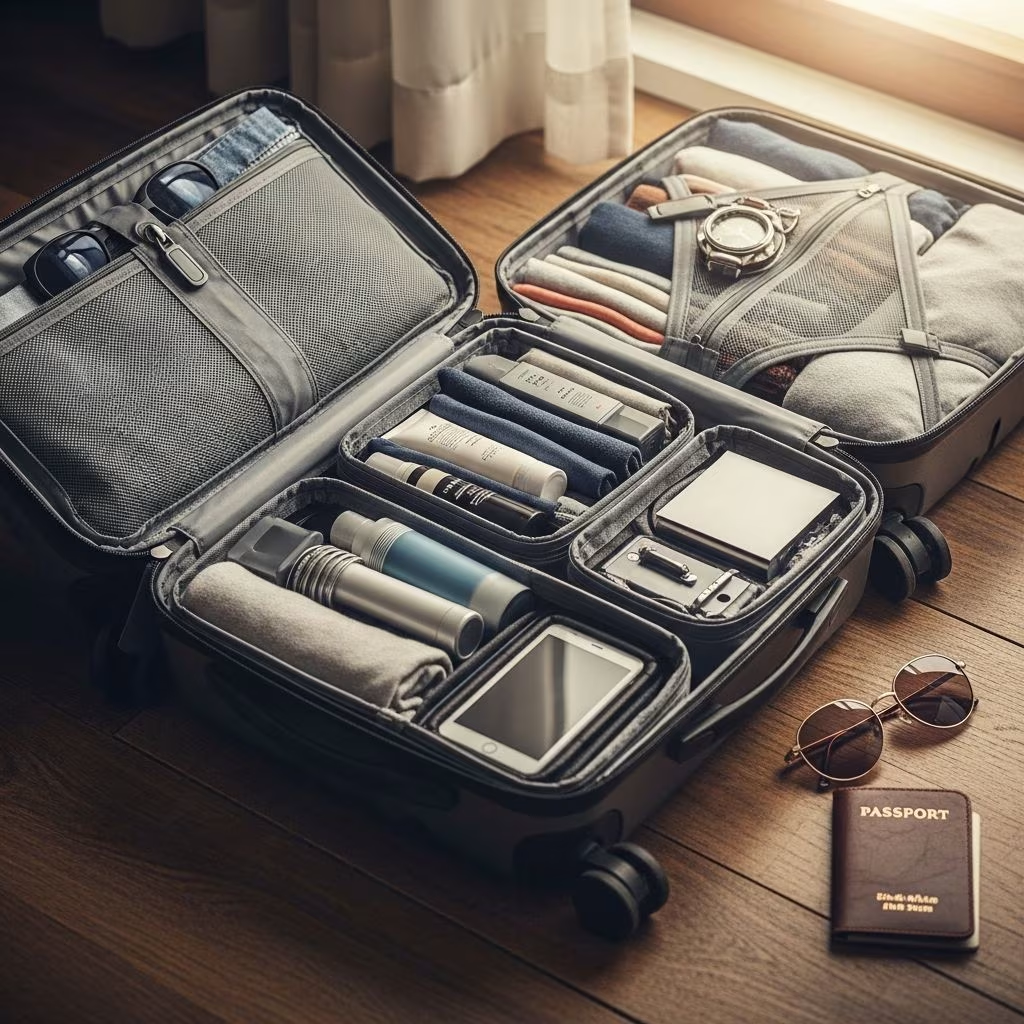
Packing efficiently for air travel has become an essential skill in modern travel culture. Whether you’re embarking on a weekend getaway or a business trip, the ability to pack strategically into a carry-on bag can save time, reduce costs, and eliminate unnecessary stress at the airport. This guide explores the methodologies that experienced travelers use to maximize their luggage capacity while maintaining their belongings in pristine condition.
Understanding Carry-On Dimensions and Airline Requirements
Before diving into packing techniques, it’s crucial to understand the constraints you’re working within. Most airlines permit a personal item measuring approximately 18 x 14 x 8 inches, which typically accommodates backpacks or small suitcases without charge. Your carry-on bag usually has standard dimensions of around 22 x 14 x 9 inches, though these specifications can vary by carrier. Familiarizing yourself with your specific airline’s requirements prevents last-minute complications at the gate and ensures your bag passes inspection without issues.
Beyond dimensions, weight restrictions also apply to carry-on luggage. Knowing these limits beforehand allows you to distribute your belongings strategically and avoid exceeding thresholds. The combination of your personal item and carry-on creates a complete portable travel system that should contain everything necessary for your journey.
The Science Behind Effective Clothing Organization
Successful packing begins with intentional clothing selection. The 5-4-3-2-1 method provides a systematic framework: five tops, four bottoms, three accessories, two shoes, and one jacket. This formula forces you to think critically about versatility and eliminates redundancy from your packing list. Each piece should coordinate with multiple other items, creating numerous outfit combinations from a minimal wardrobe.
Rolling versus folding represents one of the most debated packing decisions. Rolling clothes tightly serves multiple purposes: it minimizes wrinkles, saves substantial space, and allows you to see all items at a glance when searching your bag. Rolling works particularly well for casual garments like t-shirts, jeans, and athletic wear. However, delicate or structured items such as blazers and dress shirts benefit from folding, which preserves their shape and appearance.
For travelers combining both methods, the hybrid approach maximizes efficiency. Roll your everyday casual pieces while folding formal attire. This balanced strategy provides the benefits of both techniques without compromising your wardrobe quality.
Advanced Compression and Space Optimization
Compression cubes and specialized packing containers have revolutionized how travelers maximize luggage space. These tools allow you to compartmentalize clothing by type—placing all shirts in one cube, pants in another, and undergarments in a third. This organization system delivers dual benefits: it saves considerable space through compression, and it makes unpacking remarkably simple since everything is pre-organized by category.
Micro-rolling represents an advanced technique where individual clothing pieces are rolled tightly rather than grouping multiple items together. This method proves particularly effective for filling awkward gaps and corners of your luggage that traditional packing methods leave unused. The result is a tetris-like arrangement where every cubic inch serves a purpose.
Compression bags warrant cautious use. While they excel at reducing bulky items like sweaters and winter jackets, they can add weight quickly and potentially wrinkle delicate fabrics. Reserve compression bags specifically for cold-weather gear and bulky items rather than relying on them for your entire wardrobe.
The Bundle Wrapping Technique for Wrinkle Prevention
Bundle wrapping emerges as a sophisticated alternative for travelers concerned about garment condition. This technique involves arranging your largest items flat as a base layer, progressively layering smaller pieces on top, and placing soft items like socks or undergarments at the center core. Once assembled, you wrap all layers around the central core, creating a compact, wrinkle-resistant bundle.
This method proves especially valuable for travel professionals who must arrive with crisp, presentable clothing. Dress shirts, blouses, and other wrinkle-prone fabrics maintain their integrity throughout your journey when properly bundled. The technique requires slightly more space than compression methods but delivers superior garment preservation.
Strategic Weight Distribution and Luggage Balance
How you distribute weight within your carry-on directly impacts your travel experience. Placing heavier items—shoes, books, electronics, and toiletry bags—near the wheels of your luggage maintains proper balance and makes rolling effortless. This positioning prevents your suitcase from tipping when stationary and eliminates handle wobbling during movement through crowded airports.
Conversely, lighter items like shirts and accessories should occupy the top portion of your bag. This weight distribution principle applies whether you’re using hard-shell or soft-shell luggage. Proper balance reduces strain on your arms when carrying and makes navigating airport terminals significantly more comfortable during longer journeys.
Layered Packing for Airport Security Efficiency
Modern airport security processes, while thorough, can be streamlined through intelligent packing layers. Organize your carry-on with electronics in one accessible layer, liquids in a transparent bag positioned near the top, and clothing with heavier items in the bottom compartment. This arrangement allows security personnel to inspect your bag quickly without requiring complete removal of all contents.
If traveling with carry-on only, ensure your laptop occupies an easily accessible sleeve or compartment. Positioning liquids in an outer pocket or transparent bag on top means security can access these items without extensive searching. This layered approach keeps airport lines moving smoothly and minimizes the anxiety associated with security checks.
Fabric Selection and Layering for Climate Adaptability
Choosing the right fabrics dramatically influences both packing efficiency and travel comfort. Lightweight, breathable materials that resist wrinkles allow for strategic layering across varying climates. Base layers consisting of t-shirts and tanks provide foundational coverage, mid-layers such as cardigans and hoodies add warmth when needed, and outer layers like lightweight jackets and raincoats offer protection from unexpected weather.
This layering philosophy means you can pack fewer total items while remaining prepared for temperature fluctuations. Fabrics specifically treated for wrinkle resistance maintain professional appearance without requiring a travel iron or steamer, further reducing your packing burden.
Footwear Strategy: Maximum Utility with Minimal Space
Shoes typically consume disproportionate luggage space relative to their necessity. Limiting yourself to two pairs—one for active exploration and walking, one for dressier occasions—covers most travel scenarios. This constraint forces deliberate selection of versatile footwear that functions across multiple settings.
Maximizing shoe space involves placing heavier shoes near your luggage wheels as discussed in weight distribution strategy. Filling shoe interiors with small items like socks, electronics cables, or undergarments uses otherwise wasted space efficiently. This approach simultaneously organizes small items and reduces the footprint of your shoe collection.
Multi-Purpose Items: Strategic Selection for Compact Packing
Experienced travelers deliberately select items serving multiple functions. Sarongs work as beach cover-ups, scarves, outdoor blankets, or layering pieces. Versatile shoes transition seamlessly from walking to casual dining to exploration. Lightweight cardigans function as warmth layers, shoulder coverings in conservative environments, or standalone tops.
This multi-functionality approach extends beyond clothing. A microfiber towel doubles as a beach cover-up, exercise mat, or emergency blanket. A crossbody bag worn during travel can serve as your personal item while remaining accessible for documents and electronics. Every item in your luggage should justify its presence by serving at least two distinct purposes.
Personal Item Optimization: Maximum Accessibility
Your personal item—typically a backpack or small suitcase—should contain your most essential and frequently accessed items. Travel documents, medications, electronic devices, chargers, and snacks belong in this bag, easily retrievable throughout your journey. This separation from your carry-on means you won’t need to open your main luggage during airport navigation.
Organizing your personal item with dedicated compartments ensures nothing gets lost and everything remains immediately accessible. Multiple exterior pockets allow for phone access, water bottle placement, and quick document retrieval. This level of organization reduces the stress associated with finding necessities during busy airport moments.
Business Travel: Maintaining Professional Appearance
Professionals traveling for work face unique packing challenges requiring wrinkle-free garments and technology readiness. Garment folders specifically designed for travel help maintain crisp shirts and blazers without consuming excessive space. Prioritizing neutral color palettes—blacks, grays, whites, and navy—ensures every piece coordinates effortlessly, reducing the total number of items needed.
Technology essentials for business travelers include your laptop, necessary chargers, a portable mouse, and a power bank ensuring devices remain charged throughout your journey. Compact travel steamers provide post-flight refreshment for garments, and a minimal electronics organizer keeps cables untangled and accessible. This technology-conscious approach maintains both professional appearance and productivity throughout your trip.
Selecting Luggage with Strategic Features
Not all carry-on bags are created equal. Prioritize bags featuring expandable sections that accommodate unexpected items or souvenirs without exceeding airline dimensions. TSA-approved locks provide security while permitting airport inspections without damage. Lightweight construction helps you stay within weight restrictions while making the bag easier to handle throughout your journey.
Smooth-rolling wheels, ideally 360-degree spinner wheels, eliminate the frustration of maneuvering through crowded airports. Multiple organized compartments separate different item categories—electronics, clothing, toiletries—enabling quick access without unpacking your entire bag. These features collectively transform your luggage from a storage container into a travel system optimized for efficiency.
Wear Bulky Items to Maximize Luggage Space
One of the most effective yet frequently overlooked packing strategies involves wearing bulky items during travel rather than packing them. Heavy jackets, sweaters, and boots occupy minimal space when worn and substantial space when packed. Airplane cabin temperatures remain unpredictable, so wearing layered, bulky clothing provides comfort during flight while simultaneously maximizing your luggage capacity.
This approach proves especially valuable on longer journeys where carrying extra weight becomes more taxing. Arriving at your destination in the clothes you wore on the plane means these items don’t consume precious luggage real estate, allowing that space for souvenirs, additional clothing, or business materials instead.
Creating a Permanent Travel Essentials Kit
Developing a dedicated travel kit that remains assembled between trips eliminates the need to locate scattered items before each journey. This kit should contain basic toiletries in travel-sized containers, medications, a first-aid assortment, and essential electronics like phone chargers. Maintaining a prepared kit reduces last-minute packing stress and ensures you never forget critical items.
Consider using compact, leak-proof containers for liquid toiletries and medications. Travel-sized items cost slightly more per unit but provide convenience that justifies the expense. This dedicated kit serves as your packing foundation, requiring only the addition of clothing and destination-specific items.
Liquid Management and Leak Prevention
TSA regulations limit liquids to a 3-1-1 rule: 3.4 ounces per container, 1 quart-sized bag, containing 1 bag per passenger. Beyond regulatory compliance, preventing leaks protects your clothing and other belongings. Silicone travel tubes provide leak-proof alternatives to traditional containers, featuring easier refilling than standard bottles.
Double-bagging liquids offers additional insurance against spills. Place your liquid-filled containers in a plastic bag, then position this secondary bag in an easily accessible location. This precaution contains any unexpected leaks and prevents catastrophic damage to your carefully organized luggage.
Digital Organization and Packing Lists
Modern travel benefits from digital packing list tools that create customized checklists for different trip types. Business travel, beach vacations, and city exploration each require distinct preparation. Digital lists ensure consistency across multiple trips and prevent repeated forgetfulness regarding specific items.
Photographing your packed luggage provides a visual reference if items become lost or damaged, and creates documentation for insurance purposes. Additionally, maintaining digital records of successful packing configurations for various trip types accelerates future packing processes and reduces decision fatigue.
Pre-Trip Planning and Timeline Strategy
Effective packing begins well before your departure date. Planning your outfits one week prior allows time to identify missing pieces, treat stains, or make substitutions. This advance planning reduces last-minute rushing and ensures you’re truly satisfied with your clothing selections rather than grabbing items hastily.
Laying out your complete outfit combinations on your bed or a designated space visualizes how pieces coordinate and confirms you can create multiple looks from your selected items. This practice-run catches coordination issues before you’re thousands of miles from home and prevents wardrobe regrets during your trip.
Frequently Asked Questions About Carry-On Packing
What’s the most space-efficient packing method?
Combining rolling with compression cubes generally yields the best space efficiency. Roll individual garments tightly, place them in compression cubes organized by category, then use the remaining space for shoes and heavier items near the wheels. This hybrid approach maximizes every cubic inch while maintaining organization.
How can I prevent wrinkles without a travel iron?
Bundle wrapping and strategic folding of formal pieces preserve garment appearance effectively. Hanging items in the bathroom while showering allows steam to release wrinkles naturally. For emergency wrinkle removal, placing damp garments in a dryer on low heat works, though this requires dryer access at your destination.
Should I pack electronics in carry-on or checked luggage?
Always pack valuable electronics in your carry-on bag. Airlines and baggage handlers provide no insurance coverage for damaged electronics in checked luggage. Your carry-on keeps these expensive items under your control and protection throughout your journey.
How do I handle souvenirs if my luggage is already full?
Leave approximately 10-15% of your carry-on capacity empty specifically for souvenirs and unexpected purchases. This advance planning ensures you can accommodate desired items without last-minute stress. Alternatively, wear bulky souvenirs on the return flight rather than packing them.
What’s the ideal shoe-to-outfit ratio?
Two shoes represents the practical minimum for most trips: one comfortable walking shoe and one dressier option. This limitation forces selection of genuinely versatile footwear that transitions across multiple activities and settings, reducing both weight and luggage space consumption.
Final Considerations for Seamless Travel
Mastering carry-on packing combines practical technique with intentional planning. By understanding airline requirements, selecting multi-purpose clothing, implementing space-saving strategies, and maintaining organization systems, you transform packing from a stressful chore into a streamlined process. Each journey provides opportunities to refine your approach, identify what works specifically for your travel style, and continuously improve your efficiency.
The investment in understanding these methodologies pays dividends across countless future trips, reducing airport anxiety, eliminating baggage fees, and ensuring you arrive at your destination with everything necessary and in excellent condition. Start with these foundational strategies, experiment with different techniques, and develop a personalized packing approach that aligns with your travel patterns and preferences.
References
- 12 Genius Carry-On Packing Hacks to Travel Lighter & Skip Airline Baggage Fees — Take Off Luggage. 2026. https://takeoffluggage.com/blogs/take-off-luggage-blog-travel-tips-packing-hacks/12-genius-carry-on-packing-hacks-to-travel-lighter-skip-airline-baggage-fees
- 10 Genius Packing Hacks Frequent Travelers Swear By — YouTube. 2026. https://www.youtube.com/watch?v=OqRPLCEnxyU
- 25 Genius Packing Hacks That Changed How I Travel — YouTube. 2026. https://www.youtube.com/watch?v=nIC9vakneSQ

